Chili Con Carne (Bloomed Spices, Slow Simmer, No-Beans or With Beans)
Chili built the right way — toasted whole chilies or bloomed chili powder, browned beef in batches, and a slow simmer that converts connective tissue to gelatin. The bean debate is covered. Make both versions.

“Bad chili is a pile of ground beef in tomato water with dusty spice powder on top. Good chili starts with Maillard-browned beef, caramelized tomato paste, and spices that have been bloomed in fat until they smell nothing like they did in the jar. One hour of simmer turns that foundation into something with actual depth.”
Why This Recipe Works
Chili con carne looks simple. It's beef, tomatoes, and spices in a pot. And because it looks simple, people skip the steps that separate good chili from the flavorless, brown-gray sludge most home cooks have resigned themselves to making. Those steps are not complicated. They take an extra 15 minutes and they work on straightforward chemistry.
The Maillard Reaction and Why Batches Matter
Browning beef is not about color. It's about the Maillard reaction — the chemical process that occurs when amino acids in meat proteins react with reducing sugars at temperatures above 280°F (140°C). The Maillard reaction produces hundreds of distinct aromatic compounds: roasted, savory, slightly bitter notes that raw or steamed beef categorically does not have. These compounds don't just add flavor to the beef — they dissolve into the surrounding liquid during the simmer and build the backbone of the entire chili's flavor profile.
The problem is thermodynamic. When meat hits a hot pan, it absorbs heat from the pan surface and begins to brown. Simultaneously, moisture on the meat's surface evaporates, which cools the pan. In a properly-loaded pan — one or two pieces with space between them — the pan retains enough heat to drive off the moisture quickly and reach browning temperatures. In a crowded pan, the combined moisture load drops the pan temperature below 212°F (100°C), and the beef poaches in its own liquid. You get gray, steamed meat that has none of the Maillard compounds you need.
This is not optional and it's not about preference. Crowded-pan beef tastes different from properly-browned beef in ways that no subsequent spice addition or simmering time can compensate for. Brown in batches, and don't rush each one — 2 minutes per side on high heat until you see a deep, dark crust.
Spice Blooming and Fat Solubility
Spice aroma compounds — the molecules that make cumin smell like cumin, chili powder smell like chili powder — are fat-soluble, not water-soluble. This is a physical chemistry fact with practical consequences. When you add dry spices to a water-based liquid like beef broth or canned tomatoes, those aroma compounds do not release, do not distribute, and do not integrate. They stay trapped in the spice particles, producing the gritty, dusty spice flavor that defines bad chili.
When you add those same spices to hot oil or fat — even for 60 to 90 seconds — the fat-soluble compounds dissolve into the fat, which then distributes evenly through the entire pot. The spices taste different: rounder, more integrated, more present throughout every bite rather than spiking in some spoonfuls and absent in others. This is blooming, and it takes 90 seconds.
The mechanism matters beyond flavor distribution: heat also causes volatile aroma compounds in spices to break down and recombine into new aromatic molecules that don't exist in the raw spice. Bloomed cumin tastes different from raw cumin for the same reason that toasted bread tastes different from white bread — the heat is doing chemistry.
Tomato Paste Caramelization
Tomato paste is concentrated raw tomato flavor — acidic, slightly bitter, and without complexity. Two to three minutes of direct contact with the hot metal surface of the Dutch oven caramelizes the tomato sugars through the Maillard reaction and through simple caramelization (the non-enzymatic browning of sugars). The result is a tomato paste that smells sweeter, less acidic, and more savory than it did out of the can. Those caramelized compounds carry into the liquid and contribute backbone depth that fresh or canned tomatoes alone don't provide.
Don't stir it constantly. Let it sit in contact with the hot metal. Stir after 2 minutes, press it back against the surface, and let it go another minute. It should look slightly darker and smell noticeably caramelized rather than raw by the time the liquid goes in.
The Collagen Conversion Simmer
If you're using beef chuck rather than ground beef, the 45-to-60-minute simmer is doing specific structural work. Chuck contains a significant amount of collagen — the connective tissue protein that holds muscle fibers together. Raw collagen is tough and chewy. At sustained temperatures above 160°F (71°C), collagen hydrolyzes into gelatin, a water-soluble protein that dissolves into the surrounding liquid and gives it a silky, full-bodied texture. This is why braised beef dishes have that characteristic richness that quick-cooked beef doesn't: the collagen has converted.
Sixty minutes at a low simmer is the minimum for chuck cut into 3/4-inch pieces. Ground beef has already had its connective tissue broken up mechanically, so the conversion doesn't matter as much — but the simmer still concentrates flavor through reduction and allows the spice compounds to fully integrate.
The Bean Question
Texas chili purists maintain that beans have no place in chili con carne. Their argument is culinary: beans absorb liquid, soften the spice profile, and dilute the richness of the meat. The counter-argument is practical: beans add fiber, extend the recipe to feed more people, and contribute a textural contrast that many people find preferable. A Dutch oven makes both versions equally easy.
Both positions are defensible, and this recipe works either way. The one technical consideration: if you're using beans, add them in the last 15 minutes. Adding them at the start means they'll cook for the full hour and become mealy and broken. You want beans that are heated through and have absorbed some of the surrounding flavor, but are still intact with a slight bite.
Why Chili Is Better the Next Day
Chili improves with time in a way that few dishes do. During refrigerator storage, fat-soluble aroma compounds continue to dissolve from the spice particles into the surrounding fat. The acid from the tomatoes mellow slightly as they interact with the proteins and fat. The beef absorbs more of the surrounding liquid. The result is a more cohesive, more deeply-flavored chili than what came off the stovetop the night before. If you can make this a day ahead, do it. The flavor difference is real and noticeable.
Where Beginners Mess This Up
Before we start, read this. These are the 4 reasons your chili con carne (bloomed spices, slow simmer, no-beans or with beans) will fail:
- 1
Browning all the beef at once: Crowding the pan drops the surface temperature below the threshold for Maillard browning — around 280°F (140°C). Wet meat in a crowded pan steams. You get gray, boiled beef with no crust, no caramelized compounds, and none of the flavor complexity that browned beef contributes to the final chili. Brown in batches, remove each batch, and resist the urge to rush.
- 2
Adding spices directly to liquid: Spice powders contain fat-soluble aroma compounds that do not dissolve or release into water-based liquid. Dumping them into the pot alongside the tomatoes produces a flat, gritty spice flavor rather than a deep, integrated one. Blooming in oil first — 60 to 90 seconds in the fat before any liquid is added — activates those compounds and distributes them through the fat that coats everything else in the pot.
- 3
Skipping the tomato paste caramelization: Tomato paste straight from the can is acidic, raw-tasting, and contributes mostly color. Two to three minutes of direct contact with the hot pan surface caramelizes the tomato sugars, developing the Maillard compounds that give cooked tomato its depth. This step takes 3 minutes and contributes noticeable flavor difference. Don't skip it.
- 4
Simmering with the lid on the entire time: Chili needs to reduce. A covered pot traps steam and dilutes the chili rather than concentrating it. Simmer uncovered for at least the last 30 minutes so the liquid reduces, the fat renders to the surface, and the flavor concentrates. The final consistency should coat a spoon, not pour off it.
The Video Reference Library
Want to see it in action? Here are the exact videos we analyzed and combined to build this foolproof recipe translation:
The most methodical walkthrough of batch browning and spice blooming in a single recipe video. Ethan shows exactly what properly browned beef looks like versus crowded-pan steamed beef — the visual difference is stark.
🛠️ Core Equipment
- Large Dutch oven (5–6 quart)A Dutch oven holds heat evenly during the long simmer, distributes it without scorching the bottom, and is large enough to brown beef in batches without switching pans. The heavy lid seals tightly for the initial simmer and comes off for the reduction phase. See our [Dutch oven review](/kitchen-gear/review/dutch-oven) for the models worth buying.
- Wooden spoon or silicone spatulaFor scraping up the fond (browned bits) from the bottom when the liquid goes in. Those caramelized deposits are pure flavor — they dissolve into the liquid and become the backbone of the chili's depth. A flat-edged wooden spoon gets into the corners of a Dutch oven better than a round one.
- Fine mesh strainer or fat separatorIf you use fattier ground beef (20% fat) or chuck, significant fat renders out during the simmer. Skimming or separating this fat before serving improves the texture — chili should be rich but not greasy.
- Sharp chef's knifeIf using beef chuck, you're cutting 2 lbs of raw beef into uniform cubes. Uniform size means uniform cooking time — one oversized chunk means some pieces are tough while others have broken down. A sharp knife does this in 5 minutes; a dull one turns it into a struggle.
Chili Con Carne (Bloomed Spices, Slow Simmer, No-Beans or With Beans)
🛒 Ingredients
- ✦2 lbs ground beef (80/20) or beef chuck, cut into 3/4-inch cubes
- ✦1 large onion, diced
- ✦6 cloves garlic, minced
- ✦2 cans (14 oz each) diced tomatoes
- ✦1 can (6 oz) tomato paste
- ✦2 cans (15 oz each) kidney beans, drained and rinsed (optional)
- ✦2 cups beef broth
- ✦3 tablespoons chili powder
- ✦2 teaspoons ground cumin
- ✦1 teaspoon smoked paprika
- ✦1 teaspoon dried oregano
- ✦1/2 teaspoon cayenne pepper
- ✦Salt and black pepper
- ✦2 tablespoons neutral oil
- ✦Shredded cheddar, sour cream, and sliced green onions, for serving
👨🍳 Instructions
01Step 1
If using beef chuck, cut into 3/4-inch cubes and pat completely dry. Season generously with salt and pepper. Heat 1 tablespoon of oil in a Dutch oven over high heat until shimmering. Brown the beef in 2–3 batches, leaving space between pieces. Sear without moving for 2 minutes per side until deeply browned. Remove each batch and set aside.
02Step 2
Reduce heat to medium. Add the remaining tablespoon of oil and the diced onion. Cook for 5–6 minutes, stirring occasionally, until softened and translucent. Add the garlic and cook 1 more minute.
03Step 3
Add the tomato paste directly to the pot. Spread it across the bottom and cook without stirring for 2 minutes, then stir and cook 1 more minute until it darkens slightly and smells caramelized rather than raw.
04Step 4
Add the chili powder, cumin, smoked paprika, oregano, and cayenne directly to the tomato paste and onion mixture. Stir constantly for 60–90 seconds until the spices are fragrant and visibly darker.
05Step 5
Return the browned beef to the pot. Add the diced tomatoes and beef broth. Scrape the bottom of the pot thoroughly to dissolve all the caramelized deposits (fond). Stir to combine.
06Step 6
Bring to a boil over high heat, then reduce to a low simmer. Simmer uncovered for 45–60 minutes, stirring every 10–15 minutes.
07Step 7
If adding beans, stir them in during the final 15 minutes so they heat through without breaking down.
08Step 8
Taste and adjust salt, pepper, and cayenne. Serve in bowls with cheddar, sour cream, and green onions.
Nutrition Per Serving
Estimates based on standard preparation. Adjustments alter macros.
🔄 Substitutions
Instead of Ground beef...
Use Ground turkey or bison
Turkey produces a leaner chili — reduce oil slightly as there's less fat rendering during browning. Bison is almost identical to beef in behavior but leaner and with a slightly sweeter flavor. Both work with the same technique.
Instead of Kidney beans...
Use Pinto beans or black beans
Pintos are traditional in many Tex-Mex versions and have a creamier, softer texture. Black beans hold their shape better and add a slightly earthy note. All three are interchangeable in this recipe.
Instead of Beef broth...
Use Dark beer (stout or porter) plus 1/2 cup water
Beer adds malt, bitterness, and CO2 that brightens the tomato acidity. Use a dark beer — the malt flavor complements the spice bloom and Maillard-browned beef. Light beer adds almost nothing.
Instead of Chili powder...
Use 2 tablespoons ancho chili powder + 1 tablespoon guajillo powder
More complex and less one-dimensional than commercial chili powder blends. Ancho contributes sweetness and mild heat; guajillo adds fruity brightness and a deeper red color. Available at most Latin grocery stores.
🧊 Storage & Reheating
In the Fridge
Store in an airtight container for up to 5 days. The flavor peaks on day 2–3. Skim solidified fat from the surface before reheating.
In the Freezer
Freezes exceptionally well for up to 3 months. Freeze without beans if possible — beans become mealy after freezing and thawing. Add fresh beans when reheating.
Reheating Rules
Reheat in a saucepan over medium-low heat with 2–3 tablespoons of water or broth to loosen. Stir frequently. Microwave works in a pinch — cover loosely and heat in 90-second bursts, stirring between each.
❓ Frequently Asked Questions
Does chili have beans or not?
Both versions are correct and the debate is mostly regional and political. Texas-style chili (chili con carne in its original form) contains no beans — the argument being that beans dilute the meat and spice flavor. Most of the rest of the country adds beans, which add texture, fiber, and make the chili go further. This recipe works both ways. The bean decision doesn't change the technique.
Why does my chili taste flat and dusty?
You added the spices directly to liquid without blooming them first. Fat-soluble aroma compounds in chili powder, cumin, and paprika don't release into water — they need hot fat to activate. Bloom the spices in the oil and tomato paste for 60–90 seconds before any liquid hits the pot. The difference is not subtle.
Can I make this in a slow cooker?
Yes, but brown the beef and bloom the spices on the stovetop first — do not skip these steps. The slow cooker cannot reach the temperatures required for Maillard browning or spice activation. Transfer everything to the slow cooker and cook on low for 6–8 hours or high for 3–4 hours. Leave the lid slightly ajar for the last hour to allow some reduction.
How do I thicken chili that's too thin?
Three options: simmer uncovered longer to reduce the liquid, add a masa harina slurry (2 tablespoons corn flour mixed with 3 tablespoons cold water), or mash roughly 1/4 of the beans against the side of the pot if using beans. Each method produces a slightly different result — reduction produces the most concentrated flavor.
Ground beef vs. beef chuck — which is better?
Chuck produces better chili over a long simmer. The collagen in the chuck's connective tissue converts to gelatin over 60+ minutes, giving the chili a silky body and richness that ground beef can't replicate. Ground beef is faster to brown and produces a more uniform texture — better for weeknights. Chuck is worth the extra prep time on weekends.
Why does chili taste better the next day?
Several reasons: the spice compounds continue to distribute throughout the fat and liquid during refrigerator storage; the proteins in the beef absorb more of the surrounding liquid and flavor; the acid from the tomatoes mellow as they interact with the fat; and the fat solidifies on top, making it easy to remove. The net effect is a more cohesive, deeper-tasting chili after 24 hours.
The Science of
Chili Con Carne (Bloomed Spices, Slow Simmer, No-Beans or With Beans)
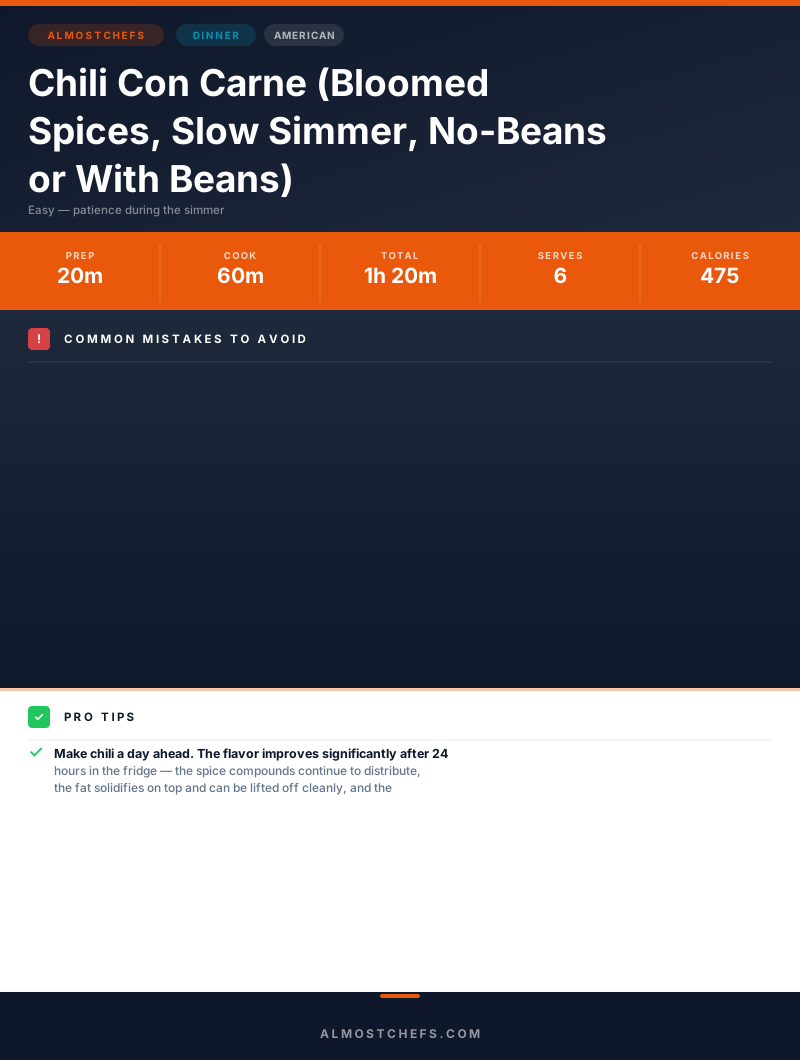
We turned everything on this page into a beautiful, flour-proof PDF cheat sheet. Print it out, stick it to your fridge, and never mess up your chili con carne (bloomed spices, slow simmer, no-beans or with beans) again.
*We'll email you the high-res PDF instantly. No spam, just perfectly cooked meals.
AlmostChefs Editorial Team
We translate the internet's most popular cooking videos into foolproof, beginner-friendly written recipes. We analyze multiple methods, test them in our kitchen, and engineer a single "Master Recipe" that gives you the best possible result with the least possible stress.