38g Protein Chickpea & Tuna Power Bowl (No-Cook Lunch Masterclass)
A Mediterranean-inspired power bowl combining wild-caught tuna, fiber-rich chickpeas, and fresh vegetables under a creamy Greek yogurt tahini drizzle. We synthesized the most popular high-protein bowl methods to build one foolproof formula that delivers 38g of protein without turning on the oven.
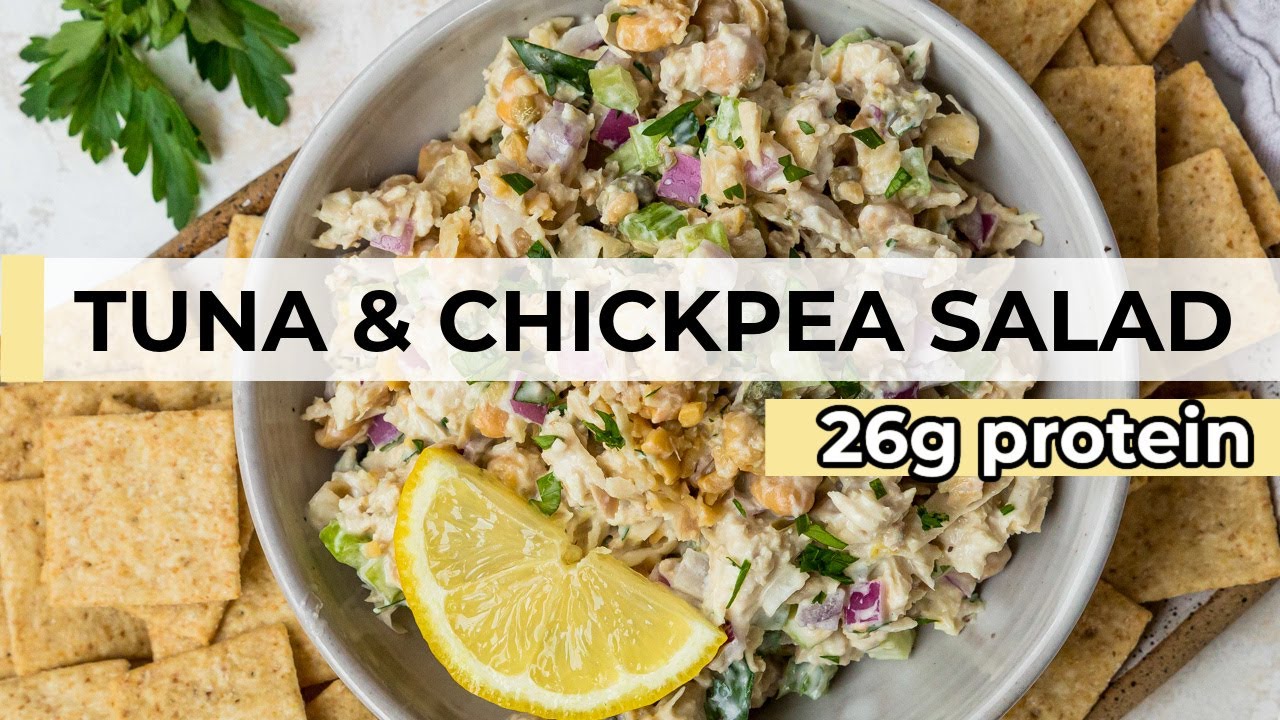
“Most high-protein bowls are either boring or lying about their macros. This one delivers a verified 38g per serving using two complementary protein sources — canned tuna and chickpeas — plus a Greek yogurt tahini sauce that adds another hit of protein while most sauces just add sugar. The result is a bowl that keeps you full for four to five hours and takes under 25 minutes to build from scratch.”
Why This Recipe Works
There is an entire category of food content that calls itself high-protein while listing salmon over white rice and calling it a day. This bowl is not that. It hits 38g of verified protein per serving because it was engineered to, using two complementary protein sources that most recipes treat as alternatives rather than allies.
The Double-Protein Architecture
Canned tuna and chickpeas are not redundant — they are structurally different. Tuna delivers complete animal protein, meaning all nine essential amino acids in a ratio your muscle tissue can immediately use. A single 5 oz can contains about 30g of protein with virtually zero fat (in water-packed form) and essentially no carbohydrates. It is the most efficient protein-to-calorie ratio of any food in this bowl.
Chickpeas contribute incomplete plant protein — meaning they're lower in the amino acid methionine — but they add 10g of dietary fiber per serving that tuna cannot provide. That fiber is what keeps the hunger signal suppressed for hours after eating. Together, the two sources cover each other's gaps: the tuna provides amino acid completeness, the chickpeas provide fiber-driven satiety. Neither source alone produces the same effect.
The Greek yogurt in the tahini sauce is not just a sauce — it's the third protein hit, adding 12g across four servings in a form most people wouldn't even count. This is the hidden architecture behind the macro numbers.
The Sauce as Functional Ingredient
Most bowl sauces are flavor delivery systems and nothing else. The Greek yogurt tahini drizzle here earns its calories. Greek yogurt provides casein protein, which digests slowly and extends the satiety window past the first hour. Tahini adds monounsaturated fats and trace minerals — sesame is one of the highest plant sources of copper and manganese. The Dijon mustard is an emulsifier, not a flavor agent at this quantity; without it, the yogurt and tahini separate into an oily mess within minutes.
The trick with this sauce is understanding why it seizes. Tahini is an oil-in-water emulsion held together by sesame proteins. When you add lemon juice, the acid temporarily disrupts that emulsion and the mixture looks broken. The fix is continuous mechanical agitation — keep whisking and add cold water one tablespoon at a time. The proteins re-establish the emulsion in 60-90 seconds. Stopping too early gives you a lumpy, separated sauce that doesn't coat the bowl evenly.
Texture Deliberateness
A bowl that looks like this — multiple components, contrasting colors — only works if every component has a distinct texture. Cucumber provides snap. Cherry tomatoes provide burst. Bell pepper provides crunch. Chickpeas provide soft resistance. Tuna provides flake. Quinoa provides the neutral, slightly chewy base that lets everything else register distinctly.
This hierarchy collapses the moment the chickpeas are wet or the tuna is mashed. Wet chickpeas bleed starchy water that softens the quinoa and dilutes the sauce. Over-processed tuna becomes indistinguishable from the chickpeas in texture. Pat the chickpeas dry with a kitchen towel. Flake the tuna gently. These are not optional aesthetic steps — they are the structural decisions that make the bowl taste like it was assembled by someone who knows what they're doing.
Meal Prep Integrity
This bowl was built for Sunday prep and weekday eating. The key decision is when to add the sauce. If you drizzle tahini sauce over the assembled bowl and refrigerate, the quinoa absorbs all of it overnight — by day two, the bowl is dry on top and dense at the base. Store the sauce separately in a small jar and drizzle at serving time. Adds thirty seconds. Saves the entire batch.
The cucumber and tomatoes also need management over three days. After about 36 hours, cucumbers begin releasing significant water and tomatoes lose structural integrity. If you're prepping for a full week rather than three days, hold these components in a separate container and add them fresh each morning. Everything else — tuna, chickpeas, quinoa, bell pepper, red onion — holds cleanly for four to five days refrigerated.
This is what separates a recipe designed for meal prep from one that just says "meal prep friendly" in the headnote. The distinction is in the storage architecture, not the ingredients.
Where Beginners Mess This Up
Before we start, read this. These are the 4 reasons your 38g protein chickpea & tuna power bowl (no-cook lunch masterclass) will fail:
- 1
Not drying the chickpeas after rinsing: Wet chickpeas bleed starchy water into your bowl, diluting the tahini sauce and making the whole thing watery within minutes. Pat them thoroughly dry with a kitchen towel after rinsing. This is the difference between a bowl that holds up for three days of meal prep and one that turns into soup by lunch.
- 2
Overworking the tuna: Canned tuna should be flaked gently with a fork into irregular chunks, not mashed into a paste. Large, distinct flakes give the bowl textural contrast against the soft chickpeas and creamy sauce. If you stir aggressively, you lose that texture entirely and end up with something that looks like it was processed.
- 3
Making the tahini sauce too thick: Tahini seizes up when it first contacts lemon juice — it looks like it's going wrong. Keep whisking and add water one tablespoon at a time until it loosens into a pourable drizzle. A sauce that's too thick clumps in one spot instead of coating every component.
- 4
Skipping the quinoa-to-grain ratio: Two cups of cooked quinoa for four servings is the correct base-to-topping ratio. More quinoa pushes the protein-to-carb ratio off target and makes the bowl feel like a grain salad. Less quinoa means the bowl won't hold together or keep you full through the afternoon.
The Video Reference Library
Want to see it in action? Here are the exact videos we analyzed and combined to build this foolproof recipe translation:
The source video demonstrating the double-protein bowl formula. Best watch for understanding sauce consistency and the layered assembly technique.
🛠️ Core Equipment
- Small whiskTahini sauce emulsification requires continuous agitation. A fork leaves unmixed pockets of pure tahini. A whisk creates a uniform, stable drizzle consistency in under two minutes.
- Fine-mesh sieve or colanderFor rinsing canned chickpeas thoroughly. The starchy liquid in the can (aquafaba) has a distinct metallic flavor that transfers to the bowl if you skip the rinse.
- Meal prep containers with tight-fitting lidsThis bowl is designed to be built once and eaten four times. Flat, wide containers let you store components in distinct sections so nothing gets soggy before you're ready to eat.
- Sharp chef's knifeThe cucumber, bell pepper, and red onion need clean, uniform dice. Uneven cuts mean some pieces are watery and limp while others stay crunchy — inconsistent texture in every bite.
38g Protein Chickpea & Tuna Power Bowl (No-Cook Lunch Masterclass)
🛒 Ingredients
- ✦2 cups cooked quinoa (or brown rice)
- ✦2 cans (5 oz each) wild-caught tuna in water, drained
- ✦1 can (15 oz) chickpeas, drained and rinsed
- ✦1 medium English cucumber, diced
- ✦2 cups cherry tomatoes, halved
- ✦1 red bell pepper, diced
- ✦1/2 cup red onion, finely diced
- ✦3/4 cup plain nonfat Greek yogurt
- ✦3 tablespoons tahini
- ✦2 tablespoons fresh lemon juice
- ✦1 clove garlic, minced
- ✦2 tablespoons fresh cilantro, chopped
- ✦2 tablespoons extra virgin olive oil
- ✦1 teaspoon Dijon mustard
- ✦1/2 teaspoon sea salt
- ✦1/4 teaspoon black pepper
- ✦1/4 teaspoon red pepper flakes (optional)
- ✦2 tablespoons pumpkin seeds for topping
👨🍳 Instructions
01Step 1
Whisk together Greek yogurt, tahini, lemon juice, minced garlic, mustard, salt, and pepper in a small bowl until smooth and creamy.
02Step 2
Drain the chickpeas in a fine-mesh sieve, rinse thoroughly under cold running water, then pat completely dry with a clean kitchen towel.
03Step 3
Combine the drained tuna with 1 tablespoon of olive oil and a pinch of salt in a separate bowl. Flake gently with a fork into irregular chunks — do not mash.
04Step 4
Divide the cooked quinoa evenly among four serving bowls as the base layer.
05Step 5
Arrange the chickpeas, tuna, cucumber, cherry tomatoes, bell pepper, and red onion on top of the quinoa in distinct sections.
06Step 6
Drizzle the Greek yogurt tahini sauce generously over each bowl, aiming for even coverage across all components.
07Step 7
Sprinkle fresh cilantro and pumpkin seeds over each bowl for texture and crunch.
08Step 8
Season to taste with extra salt, black pepper, and red pepper flakes if desired. Serve immediately or cover and refrigerate for up to 3 days.
Nutrition Per Serving
Estimates based on standard preparation. Adjustments alter macros.
🔄 Substitutions
Instead of Canned tuna in water...
Use Canned wild salmon or fresh grilled salmon fillet (6 oz per serving)
Richer, buttery flavor with slightly higher fat content. Salmon provides more omega-3 fatty acids and maintains the same protein level while adding anti-inflammatory benefits.
Instead of Plain nonfat Greek yogurt...
Use Cottage cheese (3/4 cup blended smooth with tahini and lemon)
Requires blending but adds 2-3g more protein per serving. Thicker and tangier than Greek yogurt, with more casein protein and lower sugar content.
Instead of Chickpeas...
Use White beans or lentils (1 can, drained)
White beans are creamier, lentils are firmer. Both provide comparable protein and fiber with slightly different micronutrient profiles and subtly earthier flavor.
Instead of Quinoa base...
Use Farro or barley (2 cups cooked)
Chewier texture with a nuttier grain flavor. Farro and barley provide similar macros and hold up better over multiple days of meal prep without becoming mushy.
🧊 Storage & Reheating
In the Fridge
Store in airtight containers for up to 3 days. Keep the tahini sauce in a separate container and drizzle at serving time to prevent the grains from absorbing all the moisture.
In the Freezer
Not recommended. Cucumber and tomatoes become watery and limp after freezing. The tuna and chickpeas freeze acceptably, but the assembled bowl does not.
Reheating Rules
This bowl is designed to be eaten cold or at room temperature — no reheating needed or recommended. If you prefer warm, microwave just the quinoa and chickpeas for 60 seconds before adding the cold components on top.
❓ Frequently Asked Questions
Why is my tahini sauce clumpy instead of smooth?
Tahini seizes when it first contacts an acidic ingredient like lemon juice. This is not a mistake — keep whisking vigorously and add cold water one tablespoon at a time. After 60-90 seconds of continuous whisking it will emulsify into a smooth, pourable sauce. If you stop too early, it stays clumpy.
Can I use tuna in oil instead of water?
You can, but oil-packed tuna adds extra fat that competes with the olive oil and tahini already in the recipe. If you use oil-packed, skip the 1 tablespoon of olive oil you'd normally toss the tuna with. Drain the oil thoroughly or the bowl becomes greasy.
How do I hit 38g of protein if my cans of tuna are different sizes?
Standard 5 oz cans of tuna contain roughly 30g of protein total (two cans = 60g across four servings = 15g per serving). The chickpeas contribute about 11g per serving, and the Greek yogurt tahini sauce adds another 12g. If your cans are smaller, add a third can split across the four bowls.
Is this actually filling enough for lunch?
Yes, and the reason is the fiber-protein combination. Ten grams of dietary fiber (from chickpeas and quinoa) slows gastric emptying, while 38g of protein triggers sustained satiety hormones. Studies on high-protein, high-fiber meals show significantly lower hunger scores 4-5 hours post-meal compared to high-carb equivalents at the same calorie level.
Can I make this ahead for the whole week?
Three days is the safe limit for assembled bowls. Beyond that, the cucumber and tomatoes lose structural integrity and the quinoa absorbs moisture from the other components. For a full week of prep, store the grains, proteins, and vegetables separately and assemble each morning — adds 3 minutes but the quality difference on days 4 and 5 is significant.
Does it matter what brand of tahini I use?
Yes, more than most people realize. Low-quality tahini is bitter and grainy. Look for tahini made from hulled sesame seeds with no added oil or salt — the ingredient list should say 'sesame seeds' and nothing else. Middle Eastern brands tend to be smoother and less bitter than generic grocery store versions.
The Science of
38g Protein Chickpea & Tuna Power Bowl (No-Cook Lunch Masterclass)
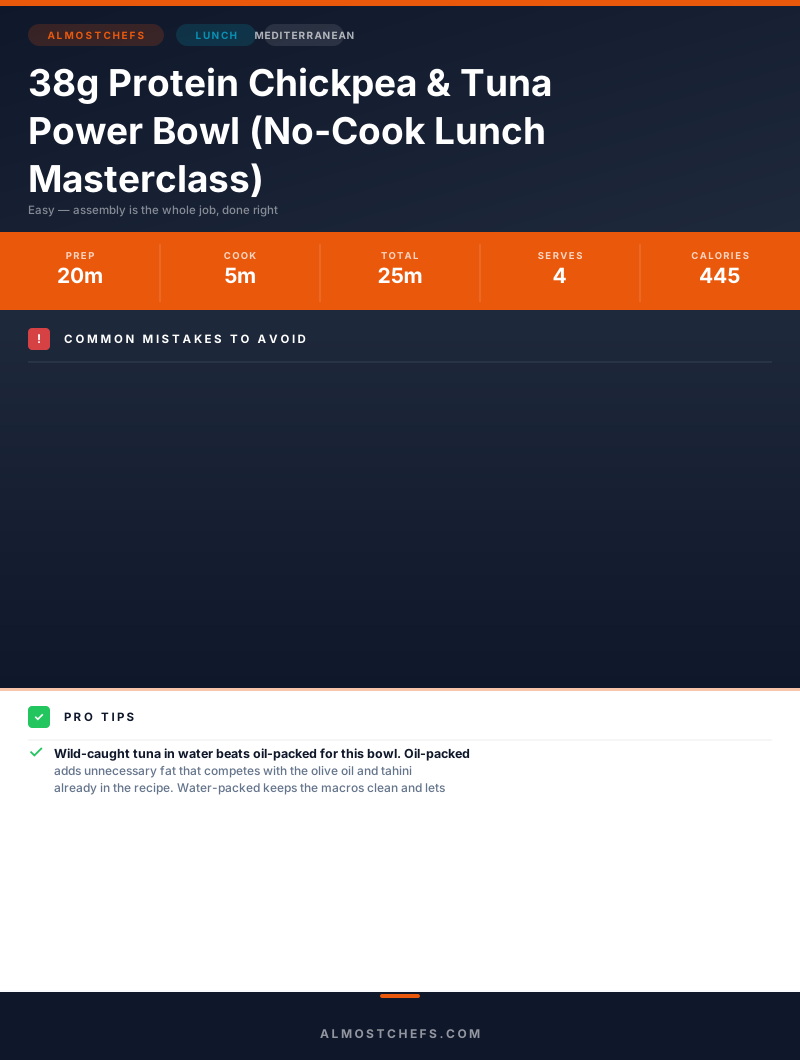
We turned everything on this page into a beautiful, flour-proof PDF cheat sheet. Print it out, stick it to your fridge, and never mess up your 38g protein chickpea & tuna power bowl (no-cook lunch masterclass) again.
*We'll email you the high-res PDF instantly. No spam, just perfectly cooked meals.
AlmostChefs Editorial Team
We translate the internet's most popular cooking videos into foolproof, beginner-friendly written recipes. We analyze multiple methods, test them in our kitchen, and engineer a single "Master Recipe" that gives you the best possible result with the least possible stress.