Chicken Tikka Masala (The Restaurant Secret Is Simpler Than You Think)
Tender marinated chicken seared until charred, then simmered in a velvety tomato-cream sauce layered with garam masala, ginger, and kasuri methi. We broke down the restaurant technique so you can replicate it at home in under an hour.
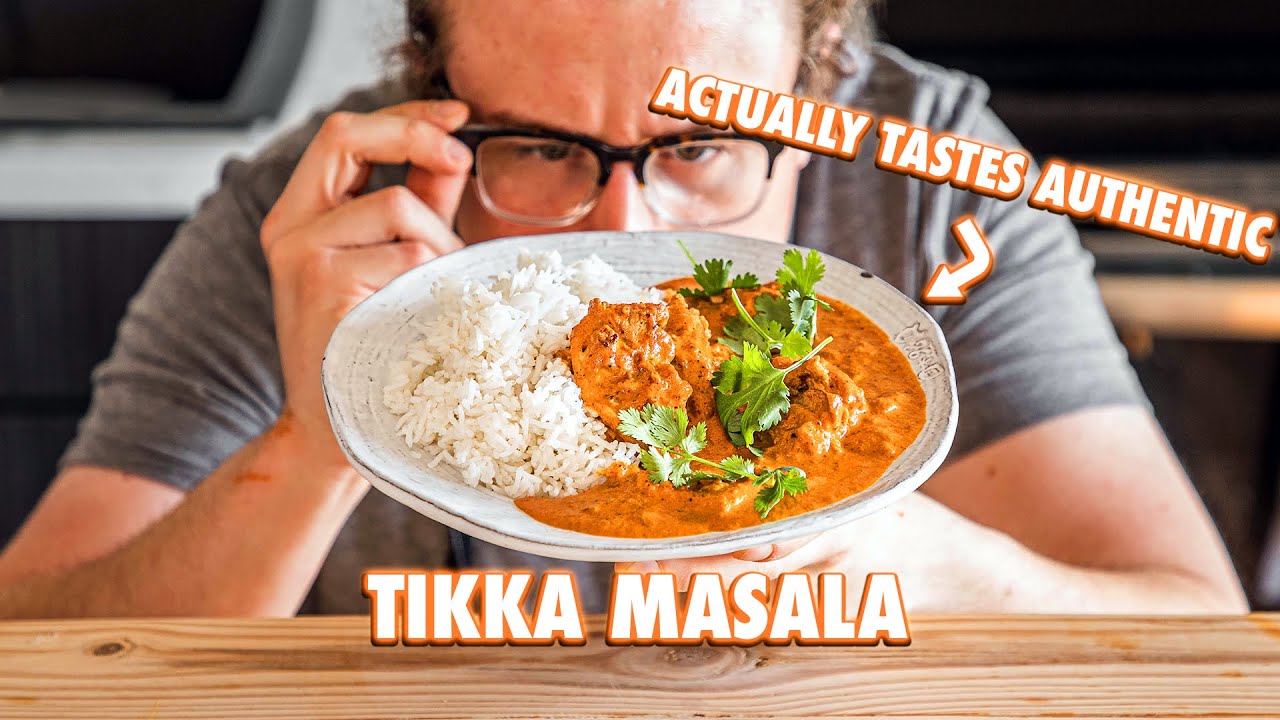
“Chicken tikka masala is on every Indian restaurant menu and in almost no home kitchen, which is strange because the technique is not complicated — it's just misunderstood. Most home versions skip the char and call it done. That's the mistake. The tikka in tikka masala refers to the grilled, charred chicken. Without it, you have butter chicken with extra steps. Get the sear right and the rest of the recipe practically finishes itself.”
Why This Recipe Works
Chicken tikka masala has been made so many times, by so many people, in so many mediocre versions, that the dish has a reputation problem. Home cooks assume the restaurant version is better because restaurants have secret spice blends or industrial equipment or some knowledge passed down through generations that can't be replicated in a home kitchen. The truth is more mundane: restaurants get the char, and home cooks don't.
The Char Is the Dish
Tikka literally means "small pieces" — but in practice, it refers to the grilling technique that gives the chicken its defining character. Authentic tikka is cooked in a tandoor, a clay oven that reaches temperatures above 900°F. At that temperature, the yogurt marinade caramelizes almost instantly, creating a slightly bitter, smoky crust that acts as a flavor counterweight to the sweet, creamy sauce.
Your home oven broiler tops out around 550°F. A cast-iron skillet over high heat gets you to similar territory through direct contact. Either way, the goal is the same: dark charred edges, not golden-brown uniformity. Pull the chicken when you see actual black spots. That is the tikka. Everything else is just chicken in tomato sauce.
The Marinade's Two Jobs
Yogurt in a marinade is often misunderstood as a tenderizer. It is, but that's not its primary function here. The fat in full-fat Greek yogurt carries the oil-soluble compounds in the spices — the volatile aromatics in garam masala, the cumin's warm earthiness — and distributes them evenly across the surface of the chicken. The lactic acid does gentle surface tenderizing. The fat does the flavor transport.
This is why low-fat yogurt fails. It's thin, it slides off the chicken, and it doesn't have enough fat to carry the spice load. The marinade should coat the chicken thickly enough that you can barely see the meat through it. That thickness is what creates the crust under the broiler.
Building the Sauce in Sequence
The sauce is not a one-step dump. It's three distinct layers built on top of each other. First: caramelized onions, which provide a sweet, savory foundation. Second: tomato paste, cooked directly in the fat until it darkens — this is called the "bhuno" technique, and the 1-2 minutes of caramelization converts the tomato's raw acidity into something complex and almost meaty. Third: crushed tomatoes, simmered down for 15 minutes until concentrated.
Only after the tomato base has fully reduced does the cream go in, off the heat. The kasuri methi — dried fenugreek leaves — gets added with the cream. This is the ingredient that turns home cooks into restaurant impersonators. Fenugreek has a distinct maple-adjacent, slightly bitter aroma that is immediately recognizable as the "something" people can't identify in good tikka masala. You can find it at any Indian grocery store for a few dollars and it lasts for months.
The finishing garam masala, if you choose to add it, goes in last. Aromatic spices lose their volatile compounds quickly under heat — adding them early means you're cooking off the very thing you're trying to taste.
The Temperature Rule
Once the cream is in, the dish is fragile. Cream in an acidic tomato sauce will break at a full boil, splitting into fat and whey and turning what should be silky into something grainy and separated. Reduce heat before the cream goes in and keep it there. Three to five minutes at a gentle simmer is all the sauce needs. The cream isn't there to cook — it's there to emulsify and enrich what's already been built.
Where Beginners Mess This Up
Before we start, read this. These are the 4 reasons your chicken tikka masala (the restaurant secret is simpler than you think) will fail:
- 1
Skipping the overnight marinade: One hour is the minimum. Overnight is the target. The yogurt's lactic acid needs time to work through the surface proteins of the chicken and carry the spice flavor into the meat. A 20-minute marinade produces chicken that tastes like it was dressed at the last minute, because it was.
- 2
Not getting real char on the chicken: Tikka means the chicken should have actual blackened edges, not just golden-brown color. A broiler or screaming-hot cast iron is non-negotiable. If you pull the chicken the moment it looks done, you've missed the entire point. You want those dark charred spots — that's the flavor.
- 3
Adding cream over high heat: The cream goes in last and the heat goes down before it does. Boiling cream in an acidic tomato sauce causes it to break and curdle, which turns your silky restaurant sauce into a greasy, split mess. Gentle heat after the cream is the only acceptable approach.
- 4
Under-simmering the tomatoes: Raw crushed tomatoes are acidic and flat. They need a full 15 minutes of uncovered simmering to concentrate, lose their tin-can edge, and develop the rich base that carries everything else. Pull it early and the whole sauce tastes thin.
The Video Reference Library
Want to see it in action? Here are the exact videos we analyzed and combined to build this foolproof recipe translation:
The source video for this recipe's technique. Watch the charring step specifically — it shows exactly what the chicken should look like before you pull it and what it should look like when you've gone too far.
🛠️ Core Equipment
- Large cast-iron or stainless skilletThe sear on the chicken requires high, sustained heat. Non-stick pans can't handle broiler temperatures and don't retain enough heat to char properly. Cast iron is the right tool for this job.
- Broiler or grillDirect high heat is what produces the charred tikka character. An oven set to bake cannot replicate this. If you don't have a broiler, use a [cast-iron skillet](/kitchen-gear/review/cast-iron-skillet) on the highest burner setting — press the chicken into the pan and don't move it.
- Wooden spoon or silicone spatulaYou'll be scraping up browned bits from the pan after adding the tomatoes. Those fond bits are concentrated flavor — you want all of them incorporated into the sauce.
- Airtight containerTikka masala is better the next day. Having a proper storage container means you're set up for the best version of this dish, which is reheated on day two.
Chicken Tikka Masala (The Restaurant Secret Is Simpler Than You Think)
🛒 Ingredients
- ✦1.75 pounds boneless, skinless chicken breasts, cut into 1.5-inch cubes
- ✦1 cup full-fat Greek yogurt
- ✦3 tablespoons vegetable oil or ghee, divided
- ✦1 large yellow onion, finely diced
- ✦5 cloves garlic, minced
- ✦1.5 tablespoons fresh ginger, minced
- ✦1 can (15 ounces) crushed tomatoes
- ✦3 tablespoons tomato paste
- ✦2.5 teaspoons garam masala
- ✦1.5 teaspoons ground cumin
- ✦1 teaspoon ground coriander
- ✦1.5 teaspoons sweet paprika
- ✦0.75 teaspoon ground turmeric
- ✦0.75 teaspoon cayenne pepper
- ✦0.75 cup heavy cream or unsweetened coconut milk
- ✦3 tablespoons fresh lemon juice
- ✦1 teaspoon dried kasuri methi (fenugreek leaves)
- ✦0.25 cup fresh cilantro, chopped
- ✦1 teaspoon salt, plus more to taste
- ✦0.5 teaspoon black pepper
👨🍳 Instructions
01Step 1
Combine Greek yogurt, 1 teaspoon garam masala, 0.5 teaspoon cumin, 0.5 teaspoon turmeric, half the minced ginger, 2 minced garlic cloves, and salt in a large bowl.
02Step 2
Add chicken cubes and stir until every piece is thoroughly coated. Cover and refrigerate for at least 4 hours, preferably overnight.
03Step 3
Heat 2 tablespoons of oil in a large cast-iron or stainless skillet over medium-high heat until shimmering. Working in batches to avoid crowding, sear marinated chicken for 3-4 minutes per side until golden with charred edges. Transfer to a plate.
04Step 4
Add remaining 1 tablespoon oil to the same skillet and reduce to medium. Add diced onion and sauté for 5-6 minutes until soft with light golden edges.
05Step 5
Stir in remaining garlic and ginger, cooking for 1 minute until fragrant.
06Step 6
Add remaining 1.5 teaspoons garam masala, 1 teaspoon cumin, 1 teaspoon coriander, paprika, cayenne, and turmeric. Toast for 1 minute, stirring constantly to bloom the spices.
07Step 7
Add tomato paste and stir constantly for 1-2 minutes until it caramelizes slightly and darkens.
08Step 8
Pour in crushed tomatoes, scraping up all browned bits from the pan. Return seared chicken to the skillet. Reduce heat to low and simmer uncovered for 15 minutes.
09Step 9
Reduce heat to its lowest setting. Slowly pour in the heavy cream or coconut milk while stirring gently. Add kasuri methi leaves.
10Step 10
Simmer for 3-5 minutes until the sauce reaches a coating consistency. Taste and adjust salt. Finish with fresh lemon juice.
11Step 11
Garnish with fresh cilantro and serve over basmati rice or with warm naan.
Nutrition Per Serving
Estimates based on standard preparation. Adjustments alter macros.
🔄 Substitutions
Instead of Heavy cream...
Use Full-fat coconut milk
Slightly lighter mouthfeel. Coconut milk adds a faint sweetness that works well with the spice profile. Do not use light coconut milk — it's too thin.
Instead of Greek yogurt...
Use Coconut yogurt
Works for a fully dairy-free version. Slightly thinner consistency means the marinade won't cling as well — compensate by marinating longer.
Instead of Vegetable oil...
Use Ghee or avocado oil
Ghee is the traditional choice and adds a nutty richness to the sauce base. Avocado oil has a neutral flavor and high smoke point — better for the high-heat sear step.
Instead of Canned crushed tomatoes...
Use Fresh tomatoes, blanched and crushed
Fresher taste profile with more natural sweetness. Extend the simmer time by 5 minutes since fresh tomatoes have more moisture to cook off.
🧊 Storage & Reheating
In the Fridge
Store in an airtight container for up to 4-5 days. The flavor deepens overnight — this is one of those dishes that's better the next day.
In the Freezer
Freeze for up to 3 months. Thaw in the fridge overnight. The cream sauce may separate slightly but stirs back together when reheated gently.
Reheating Rules
Reheat on the stovetop over low heat, adding a splash of cream or water if the sauce has thickened. Avoid the microwave — it makes the chicken rubbery.
❓ Frequently Asked Questions
What's the difference between chicken tikka and chicken tikka masala?
Chicken tikka is the marinated, grilled chicken by itself — no sauce. Chicken tikka masala takes that grilled chicken and simmers it in a creamy tomato sauce. The tikka is the protein. The masala is the sauce. This distinction matters because skipping the char step means you're making a different dish entirely.
Can I use chicken breast instead of thighs?
You can, which is what this recipe calls for — but thighs are strongly recommended. Breasts dry out under high heat and continue cooking in the hot sauce. If using breasts, cut them slightly larger and pull from the heat the moment they're cooked through.
How do I make it less spicy?
Reduce or omit the cayenne entirely. The garam masala, cumin, turmeric, and paprika provide all the flavor complexity without adding significant heat. You can also stir in an extra splash of cream at the end to mellow whatever heat is there.
Is chicken tikka masala actually Indian?
It's debated. Most food historians trace it to South Asian restaurants in Britain in the 1960s and 70s, combining Indian spicing and tikka technique with a British preference for mild, creamy sauces. It was declared Britain's national dish in 2001. The technique is Indian; the sauce profile is a British adaptation.
Can I make this without a broiler?
Yes. Heat a [cast-iron skillet](/kitchen-gear/review/cast-iron-skillet) to its highest possible temperature and press the marinated chicken directly into the pan. Don't move it for 3-4 minutes. The contact char won't be identical to a broiler but it gets you close. A screaming-hot grill pan also works.
What rice goes best with tikka masala?
Basmati is traditional. Cook it with a pinch of saffron, a bay leaf, and two or three cardamom pods for an aromatic pairing that complements the sauce without competing with it. Jasmine rice works but has a stickier texture that changes the eating experience.
The Science of
Chicken Tikka Masala (The Restaurant Secret Is Simpler Than You Think)
We turned everything on this page into a beautiful, flour-proof PDF cheat sheet. Print it out, stick it to your fridge, and never mess up your chicken tikka masala (the restaurant secret is simpler than you think) again.
*We'll email you the high-res PDF instantly. No spam, just perfectly cooked meals.
AlmostChefs Editorial Team
We translate the internet's most popular cooking videos into foolproof, beginner-friendly written recipes. We analyze multiple methods, test them in our kitchen, and engineer a single "Master Recipe" that gives you the best possible result with the least possible stress.