Easy Baked Chicken Taquitos (Crispy Without Deep Frying)
Shredded rotisserie chicken mixed with Monterey Jack, sharp cheddar, cream cheese, and jalapeño — rolled tightly in warm corn tortillas and baked at 425°F until the exterior is golden and crackling. Science of why warm tortillas are mandatory, why cream cheese is the binder, and how the seam-side-down rule works.
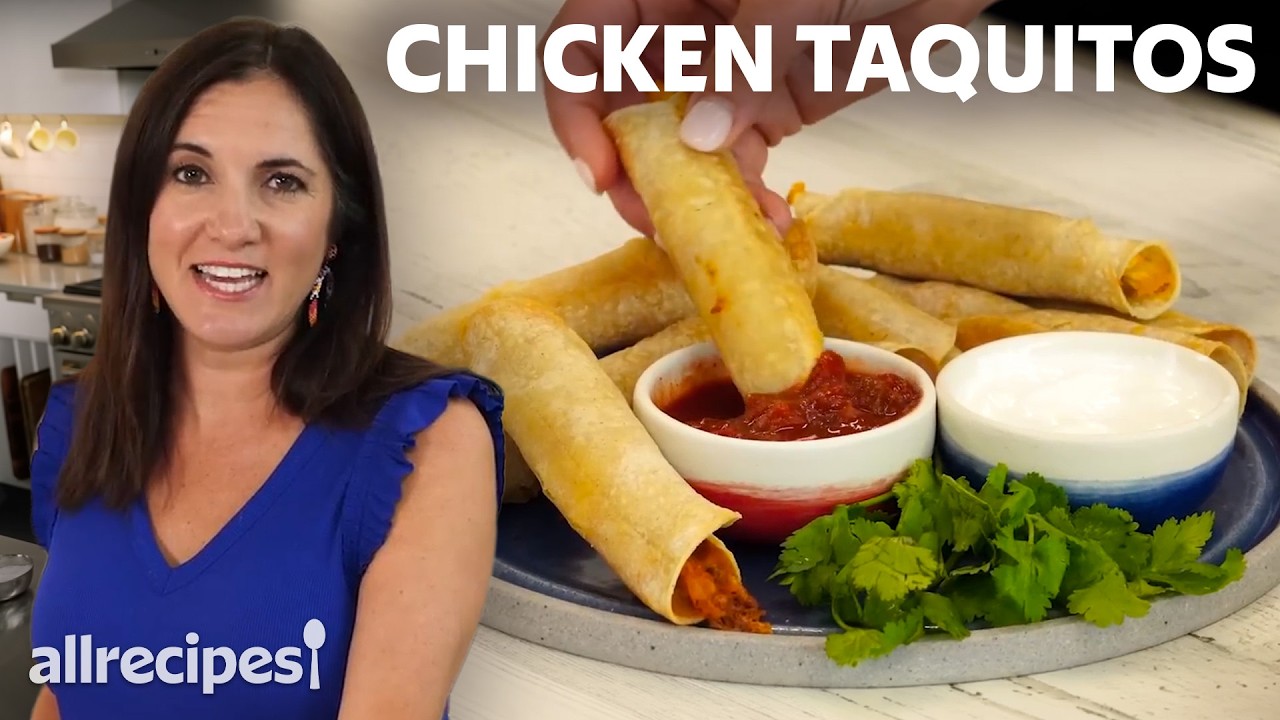
“Taquitos crack when you roll them, or the filling falls out when you eat them, or they come out of the oven pale and soft instead of golden and crackling. Each failure has a specific cause. The crack is cold tortilla. The falling-out is no binder. The pale soft result is not enough fat on the outside and not enough temperature in the oven. All three are fixable in the prep, not at the oven.”
Why This Recipe Works
Baked taquitos solve a specific home-cooking problem: how to produce the crackling, golden exterior of a fried taquito without maintaining a pot of oil at 350°F in your kitchen. The solution involves three technical decisions that work together — tortilla warming, cream cheese as binder, and high oven temperature with an oil coating. Remove any one of them and the result regresses to the pale, soft, filling-exploding taquito that gave home-baked versions a bad reputation.
The Corn Tortilla Starch Problem
Corn tortillas are built from masa harina — nixtamalized corn that has been dried and ground into flour. The starch structure in masa is fundamentally different from wheat flour starch: it has less gluten development, which means less elasticity, and it becomes brittle when cold. When you try to roll a cold corn tortilla, you're applying bending stress to a material that has approximately the flexibility of a cracker. It cracks at the first tight turn.
Warming the tortilla in a damp paper towel microwave-steams the starch and temporarily increases its plasticity. The moisture penetrates the outer layer and the heat gelatinizes the starch granules, making them temporarily flexible. This window lasts 2–3 minutes before the tortilla cools and re-stiffens. Rolling must happen immediately after the microwave — not after you've mixed the filling or set up your workstation. Warm the tortilla, roll the taquito, move to the next one.
The damp paper towel is the mechanism. Dry microwave heat desiccates the tortilla surface further instead of hydrating it — the opposite of what you need. A paper towel wrung out so it's damp rather than wet provides enough steam in the microwave environment to soften the tortilla without making it soggy.
Cream Cheese as Structural Binder
Shredded chicken, shredded cheese, diced onion, and jalapeño have no natural cohesion. At room temperature, they sit in a loose pile. When heated, the chicken dries, the shredded cheese melts and pools, and the aromatics release water. Without a binder, these forces drive the filling outward through any gap in the tortilla — specifically, out the open ends and through the seam.
Cream cheese softened to room temperature becomes a fat-and-protein matrix that coats every other component in the filling when mixed thoroughly. It acts as the same kind of binder that egg does in meatballs or mayonnaise does in tuna salad — it creates a cohesive structure from disparate ingredients by coating them with something sticky. The fat in cream cheese also slows the drying of the chicken during baking and lubricates the filling so it doesn't seize up into a dense, dry mass under the oven heat.
Cold cream cheese doesn't blend. It leaves white solid lumps in the filling that sit between the other components instead of coating them. Fifteen seconds in the microwave is enough to bring a refrigerator-cold piece to a spreadable consistency.
The 425°F Logic
Low oven temperatures don't crisp corn tortillas — they dry them. The result is a taquito that's brittle and leathery rather than crisp and crackling. The distinction is important: crispness implies a rapid removal of surface moisture through intense heat, leaving a structurally intact shell with a hollow crunch. Brittleness is what happens when the same moisture removal happens slowly, producing a dry, dense exterior with no structural integrity.
At 425°F with olive oil brushed on the exterior, the taquito surface reaches the Maillard browning threshold within the first 5–8 minutes of baking. The olive oil conducts oven heat directly into the corn tortilla surface and provides the fat necessary for the surface proteins and starches to undergo browning reactions. Without the oil, the surface dries out without browning — pale and papery, not golden and crackling.
A rimmed baking sheet with parchment is part of the heat equation. The parchment prevents the oiled taquito bottoms from sticking and allows the seam to seal cleanly. The rimmed edge keeps the taquitos in position — a flat sheet allows them to roll apart during the halfway turn.
The Seam-Side-Down Rule
The seam on a rolled taquito is a line of tension held closed only by the taquito's tendency to unroll. When placed seam-side up, that tension is relieved by gravity, which pulls the seam open. The cheese inside the taquito heats to melting point within the first 5 minutes, becomes liquid, and has nowhere to go except through the path of least resistance — the seam. The result is a burst taquito with melted cheese welded to the parchment.
Seam-side down means the taquito's own weight presses the seam closed against the parchment. Gravity works in your favor. As the filling heats, the pressure is distributed against the inside of the rolled tortilla uniformly rather than concentrated at the seam. The tortilla crisps and sets around the filling with the seam sealed beneath it. By the time you flip them at the halfway point, the seam is structurally locked by the crisped tortilla and stays closed regardless of orientation.
The flip at the halfway point is what produces even browning on all sides. Top-only heat produces golden tops and pale, soft undersides. The flip exposes both surfaces to direct baking heat, and the already-set seam holds through the second half of the bake without issue.
Why Rotisserie Chicken Is Correct Here
Rotisserie chicken is not a lazy shortcut in this recipe — it is the specified ingredient for technical reasons. The fat content of roasted chicken is higher than poached or baked chicken breast because the roasting process renders fat from the skin back into the outer layer of the meat. That fat slows moisture loss during the 425°F bake. Plain poached breast meat loses moisture aggressively under high heat, producing a filling that's dry and slightly grainy by the time the tortilla exterior has crisped. The rotisserie chicken stays moist while the shell does the work it's supposed to do.
Where Beginners Mess This Up
Before we start, read this. These are the 5 reasons your easy baked chicken taquitos (crispy without deep frying) will fail:
- 1
Rolling cold corn tortillas: Cold corn tortillas crack and split when bent. The starch matrix in a cold tortilla is rigid — applying bending force exceeds its elasticity and the tortilla fractures. Warming them in a damp paper towel in the microwave for 30 seconds makes them pliable enough to roll without cracking. This is mandatory, not optional. Even tortillas that look like they'll roll cleanly at room temperature will crack at the first tight turn.
- 2
Skipping the cream cheese in the filling: Cream cheese is the binder. The other filling components — shredded chicken, cheeses, diced aromatics — have no structural cohesion on their own. They fall out when the taquito is handled or bitten into. Cream cheese, softened and mixed thoroughly into the filling, coats every other component and holds them in a cohesive mass that stays together through baking and eating.
- 3
Not brushing the outside with olive oil: A dry corn tortilla surface in a 425°F oven produces pale, papery taquitos that are chewy rather than crispy. The olive oil coating on the outside conducts oven heat directly into the tortilla surface, promotes Maillard browning, and produces the crackling, golden exterior that makes baked taquitos worth making.
- 4
Placing taquitos seam-side up: The seam holds the taquito closed. Seam-side up means the seam is exposed to direct oven heat, which can force it to separate as the cheese inside expands. Seam-side down means the taquito's own weight presses the seam closed against the baking sheet, and the heat seals it from beneath. As the filling heats and expands, the sealed seam holds rather than splits.
- 5
Underfilling or overfilling: Two tablespoons of filling per taquito is the target. Under that, the taquito is structurally thin and can crack at the roll under oven heat. Over that, the filling expands and forces the seam open regardless of position, and the tortilla tears rather than crisping. Measure with a spoon until you've made enough to calibrate by eye.
The Video Reference Library
Want to see it in action? Here are the exact videos we analyzed and combined to build this foolproof recipe translation:
The primary reference for this recipe. Covers filling assembly, tortilla warming, rolling technique, seam positioning, and how to judge doneness by color.
🛠️ Core Equipment
- Rimmed baking sheet with parchmentThe olive oil brushed on the taquitos and any cheese that escapes during baking will burn directly onto a bare pan. Parchment prevents sticking and makes cleanup immediate. A [rimmed baking sheet](/kitchen-gear/review/baking-sheet) prevents rolling taquitos from sliding off the pan.
- Pastry brush or cooking sprayEven oil distribution on the outside of each taquito is what drives uniform browning. A brush gives you control over how much oil goes on each piece. Cooking spray works as a substitute but tends to pool at the ends and miss the middle.
- Microwave-safe plate and damp paper towelsThe fastest, most reliable method for warming corn tortillas to rollable pliability. 30 seconds in a damp paper towel prevents cracking and keeps the tortillas hot enough to remain pliable through the rolling process.
- Large mixing bowlThe cream cheese needs to be worked thoroughly into the filling at room temperature. A bowl large enough to fold and mix without spilling ensures even distribution of the binder through the entire filling.
Easy Baked Chicken Taquitos (Crispy Without Deep Frying)
🛒 Ingredients
- ✦2 cups shredded rotisserie chicken
- ✦1 cup shredded Monterey Jack cheese
- ✦1/2 cup shredded sharp cheddar
- ✦1 medium yellow onion, finely diced
- ✦2 cloves garlic, minced
- ✦1 jalapeño, seeded and minced
- ✦1/4 cup fresh cilantro, chopped
- ✦2 tablespoons cream cheese, softened to room temperature
- ✦1 teaspoon ground cumin
- ✦1/2 teaspoon chili powder
- ✦1/4 teaspoon cayenne pepper
- ✦1/2 teaspoon sea salt
- ✦1/4 teaspoon black pepper
- ✦12 small (6-inch) corn tortillas
- ✦2 tablespoons olive oil, for brushing
👨🍳 Instructions
01Step 1
Preheat oven to 425°F. Line a rimmed baking sheet with parchment paper.
02Step 2
In a large bowl, combine shredded chicken, Monterey Jack, cheddar, diced onion, garlic, jalapeño, cilantro, cumin, chili powder, cayenne, salt, and pepper.
03Step 3
Add the softened cream cheese and mix thoroughly until it is fully incorporated and coats all the other filling components evenly.
04Step 4
Stack 3–4 corn tortillas between damp paper towels and microwave for 30 seconds until warm and pliable. Work in one small batch at a time — tortillas cool and stiffen within 2–3 minutes.
05Step 5
Place 2 tablespoons of filling near one edge of a warm tortilla. Roll tightly around the filling, starting at the filling edge.
06Step 6
Place the taquito seam-side down on the prepared baking sheet. Repeat with remaining tortillas, working in batches as you warm them.
07Step 7
Brush the tops and sides of all taquitos with olive oil using a pastry brush.
08Step 8
Bake at 425°F for 15–18 minutes, turning the taquitos once at the halfway point, until the exterior is deeply golden and the tortilla is crisp to the tap.
09Step 9
Serve immediately with salsa, guacamole, sour cream, or additional jalapeño.
Nutrition Per Serving
Estimates based on standard preparation. Adjustments alter macros.
🔄 Substitutions
Instead of Rotisserie chicken...
Use Shredded braised chicken thighs or leftover grilled chicken
Thighs are the best substitute — more fat means a moister filling. Breast meat works but tends to dry out more during the bake. Whatever you use, shred it finely so it rolls without making the tortilla bulge and split.
Instead of Corn tortillas...
Use Small flour tortillas
Flour tortillas don't crack when cold, making the warming step less critical. They produce a softer, chewier exterior rather than the crackling crunch of corn. A different dish, not a worse one.
Instead of Jalapeño...
Use Canned green chiles (2 tablespoons, drained)
Canned chiles are milder and pre-cooked. They add bell pepper-adjacent flavor with minimal heat. Use if cooking for people who can't tolerate jalapeño heat.
Instead of Fresh cilantro...
Use Fresh flat-leaf parsley or omit
Parsley adds freshness without the divisive cilantro flavor. Omitting entirely is also acceptable — the filling has enough going on without it.
🧊 Storage & Reheating
In the Fridge
Store baked taquitos in an airtight container for up to 3 days. The exterior softens in storage.
In the Freezer
Freeze unbaked assembled taquitos on a baking sheet until solid, then transfer to a freezer bag for up to 2 months. Bake from frozen at 425°F for 20–22 minutes.
Reheating Rules
Reheat in a 375°F oven for 8–10 minutes until the exterior re-crisps. The microwave makes the tortilla soft and chewy rather than crispy — avoid it unless texture doesn't matter.
❓ Frequently Asked Questions
Why do my tortillas keep cracking when I roll them?
They're not warm enough. Cold corn tortillas have a rigid starch structure that fractures under bending force. Warm them in a damp paper towel in the microwave for 30 seconds immediately before rolling. Work quickly — they stiffen again within 2–3 minutes of coming out of the microwave.
Can I fry these instead of baking?
Yes. Heat 1 inch of neutral oil to 350°F and fry seam-side down first for 2–3 minutes, then turn for another minute. The fried version is crunchier and more dramatically golden. Work in batches of 4–6 to maintain oil temperature. Drain on a wire rack.
The filling falls out when I eat them — what went wrong?
The cream cheese wasn't fully incorporated, or you didn't use enough of it. At room temperature, it should blend completely into the filling and coat every component. If it was cold, it left clumps that didn't bind the filling. Next time, ensure the cream cheese is fully softened before mixing.
Can I use flour tortillas instead of corn?
Yes. Flour tortillas don't require warming to become pliable, and they produce a softer, chewier exterior rather than the crackling crunch of corn. The flavor profile of the finished taquito is different — more burrito-adjacent, less traditional taquito. Both are good; choose based on the texture you want.
How do I keep the seam from opening during baking?
Two things: place seam-side down, and roll tightly enough that the tortilla itself has tension against the filling. A loose roll creates an air gap that expands under heat and forces the seam open. A tight roll means the filling presses outward against the inside of the tortilla uniformly, keeping everything sealed.
The Science of
Easy Baked Chicken Taquitos (Crispy Without Deep Frying)
We turned everything on this page into a beautiful, flour-proof PDF cheat sheet. Print it out, stick it to your fridge, and never mess up your easy baked chicken taquitos (crispy without deep frying) again.
*We'll email you the high-res PDF instantly. No spam, just perfectly cooked meals.
AlmostChefs Editorial Team
We translate the internet's most popular cooking videos into foolproof, beginner-friendly written recipes. We analyze multiple methods, test them in our kitchen, and engineer a single "Master Recipe" that gives you the best possible result with the least possible stress.