Perfect Chicken Stir Fry (And Why Yours Keeps Failing)
A high-heat garlic ginger chicken stir fry with crisp vegetables and a savory-sweet sauce that comes together in 30 minutes. We broke down the most common home cook failures — waterlogged chicken, soggy vegetables, watery sauce — and built a technique that delivers restaurant-quality results every time.
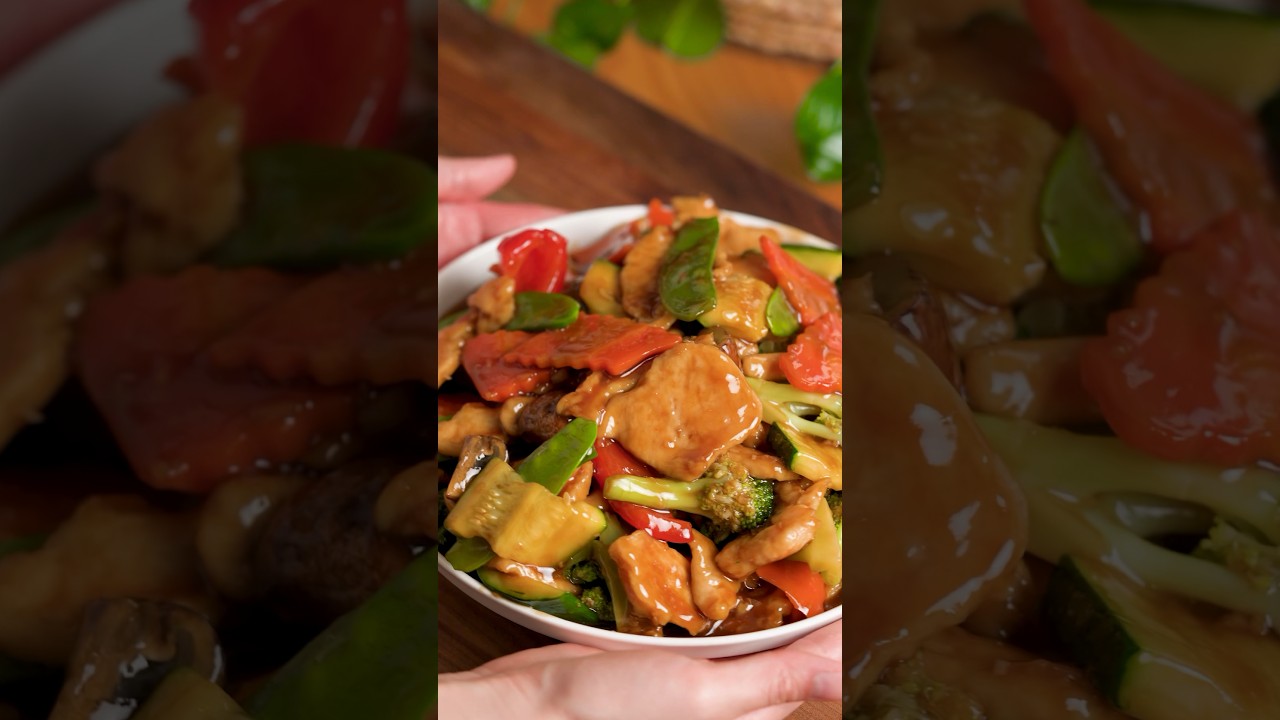
“Most home stir fries fail the same way: the chicken steams instead of sears, the vegetables turn limp, and the sauce runs thin across the plate. The difference between a pale, watery stir fry and the kind with that deep golden crust and glossy sauce coating every piece comes down to two things: how dry your chicken is before it hits the pan, and whether your heat is actually high enough. We solved both.”
Why This Recipe Works
Stir fry is the most misunderstood technique in the home cook's repertoire. It looks simple — hot pan, protein, vegetables, sauce, done. And that simplicity is exactly what fools people. Every element of a stir fry is a precision problem with a narrow tolerance for error, compressed into 12 minutes of continuous action. Get it right and you have one of the best weeknight meals in existence. Get it wrong and you have pale chicken floating in brown water with limp broccoli.
The Moisture Problem
The entire stir fry technique rests on one principle: high heat, dry surfaces, fast movement. Moisture is the enemy at every stage. Surface moisture on the chicken creates a layer of steam between the meat and the pan that prevents the Maillard reaction from occurring — no browning, no crust, no flavor development. Just gray, steamed chicken that releases more water as it cooks, dropping the pan temperature further in a self-defeating spiral.
Patting the chicken dry with paper towels takes 45 seconds and fixes this entirely. It is the single highest-return action in this recipe.
The vegetables present the same problem from a different angle. Overcrowding the pan with broccoli, peppers, and onion simultaneously dumps too much cold mass onto the cooking surface, crashing the temperature. The vegetables begin to sweat instead of char, and you lose the slight caramelization on the edges that distinguishes restaurant stir fry from home stir fry. Stage your vegetables by density. Broccoli and onion go in first and get a full 3-4 minutes. Bell peppers, which are thinner and more delicate, go in after and cook for 2 minutes. This sequencing is not optional — it's the architecture of the dish.
Heat Management at Home
Professional wok cooking uses burners that produce 100,000+ BTU. Your home stove produces 8,000-15,000 BTU. This is not a fair fight, and pretending otherwise is why so many home stir fries disappoint. The adaptation is straightforward: use a cast iron skillet instead of a wok. Cast iron retains heat with exceptional efficiency — when cold chicken hits the surface, the pan temperature barely drops. A thin wok on a low-BTU burner loses half its heat the moment you add ingredients.
Get the oil to shimmering before anything touches the pan. Not warm. Not hot. Shimmering — the point where the oil moves like water and thin wisps of smoke appear at the edges. This is your signal that the pan has enough thermal mass to absorb the temperature drop from the incoming ingredients and keep searing.
Sauce Architecture
The sauce has two phases: the liquid base and the thickener. The base — chicken broth, soy sauce, rice vinegar, sesame oil — goes in first and distributes flavor across every surface. The cornstarch slurry goes in second and transforms that thin liquid into the glossy, coating sauce that makes stir fry visually and texturally satisfying.
Cornstarch gelatinizes at around 203°F and requires constant agitation to thicken evenly. Pour it in while stirring, not before. Keep the heat high. The sauce should turn from thin to glossy in under two minutes. If it isn't thickening, your pan temperature has dropped — raise the heat and keep moving.
The sesame oil goes into the sauce base, not into the cooking oil. At stir-fry temperatures, sesame oil burns and turns acrid. In the sauce, it contributes its toasted, nutty aroma without degrading. This is the difference between sesame flavor and sesame bitterness, and it matters every time.
The Mise en Place Imperative
Twelve minutes of cook time means zero margin for stopping to measure, chop, or locate an ingredient. Every component needs to be prepped, measured, and positioned before the oil goes in the pan. The sauce base in one bowl, the slurry in another, the vegetables staged in order of cook time, the chicken patted dry on a cutting board.
This is mise en place — the French culinary term for "everything in its place" — and it is not a professional kitchen affectation. It is the practical requirement of a technique that does not pause. The moment you stop moving to search for the ginger or re-measure the broth, something burns. Set up completely before you start. Execute without interruption.
Where Beginners Mess This Up
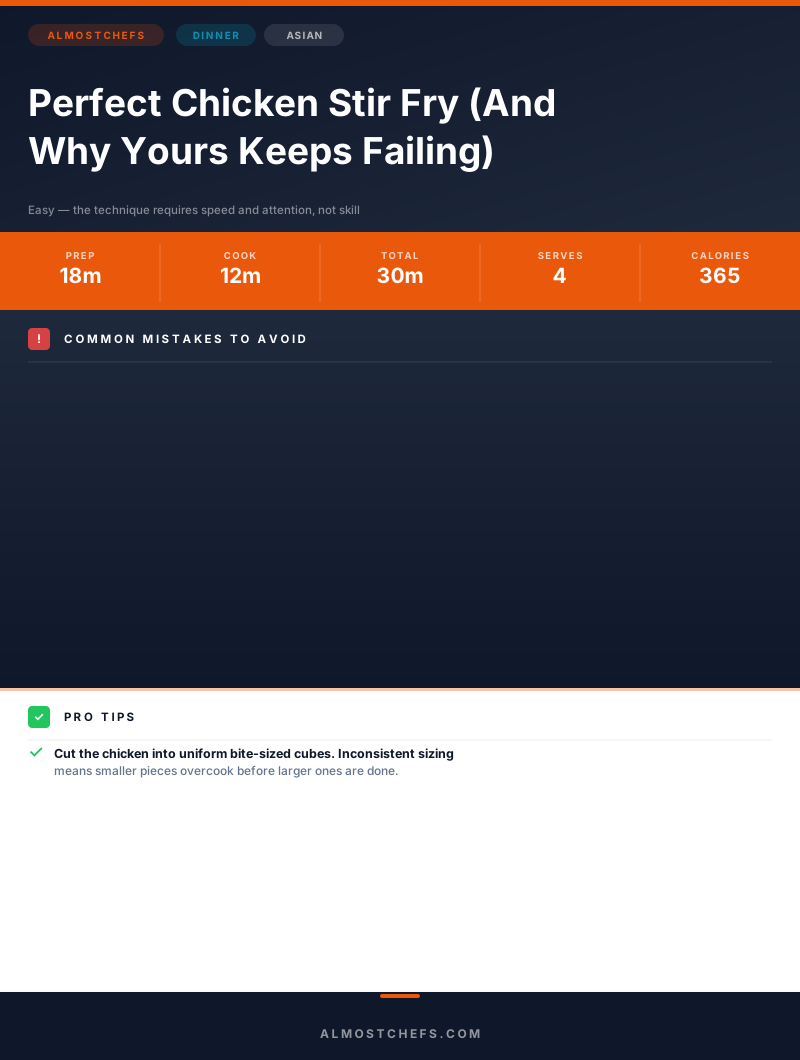
Before we start, read this. These are the 4 reasons your perfect chicken stir fry (and why yours keeps failing) will fail:
- 1
Wet chicken that steams instead of sears: Surface moisture on the chicken creates steam the moment it hits the pan, dropping the temperature and preventing any browning. Pat every piece completely dry with paper towels before cooking. This single step is the difference between pale gray cubes and golden, caramelized chicken with actual texture.
- 2
Overcrowding the pan: Stir fry is a high-heat, low-volume technique. Add too much chicken at once and the pan temperature crashes — instead of searing, the meat releases moisture and boils in its own liquid. Work in a single layer. If your pan can't fit everything without overlap, cook in two batches.
- 3
Adding vegetables too early or too late: Dense vegetables like broccoli need 3-4 minutes; thin bell peppers need 2. Add them in stages based on cook time, not all at once. Everything tossed in simultaneously guarantees some ingredients are raw and others are mush.
- 4
Skipping the cornstarch slurry: The sauce will not thicken on its own. Without a cornstarch slurry, you get a thin liquid pooling at the bottom of the bowl. Whisk the slurry smooth before cooking and re-whisk it right before adding to the pan — cornstarch settles fast.
The Video Reference Library
Want to see it in action? Here are the exact videos we analyzed and combined to build this foolproof recipe translation:
The source video for this recipe. Clear demonstration of the high-heat sear technique and sauce thickening method that makes this dish work.
🛠️ Core Equipment
- Large wok or 12-inch skilletSurface area is everything in stir fry. A wok's sloped sides let you push cooked ingredients up and away from direct heat while new ingredients sear below. A flat skillet works if it's large enough — crowding kills the technique.
- High-smoke-point oilAvocado oil or peanut oil handles the intense heat required. Olive oil smokes and burns before reaching stir-fry temperatures, leaving a bitter, acrid flavor on everything in the pan.
- Instant-read thermometerChicken is done at 165°F internal temperature. In a fast, high-heat cook, it's easy to pull the pan off heat 30 seconds too early. A quick check eliminates guesswork.
- Small prep bowls for mise en placeStir fry moves in real time. The moment you stop to measure or chop, something burns. Every sauce component, every vegetable, every aromatics cluster needs to be measured and ready before the oil hits the pan.
Perfect Chicken Stir Fry (And Why Yours Keeps Failing)
🛒 Ingredients
- ✦1.25 pounds boneless, skinless chicken breast, cut into bite-sized cubes
- ✦3 tablespoons low-sodium soy sauce or tamari
- ✦2.5 tablespoons avocado oil or peanut oil, divided
- ✦4 garlic cloves, minced
- ✦1 tablespoon fresh ginger, minced
- ✦2 large bell peppers (red and yellow), sliced into thin strips
- ✦2.5 cups fresh broccoli florets
- ✦1 medium yellow onion, sliced into wedges
- ✦1.5 tablespoons cornstarch
- ✦0.75 cup low-sodium chicken broth
- ✦1.5 teaspoons sesame oil
- ✦1.5 tablespoons rice vinegar
- ✦3 scallions, chopped into 1-inch pieces
- ✦0.25 cup filtered water
- ✦1 teaspoon coconut sugar or raw honey
- ✦0.25 teaspoon red pepper flakes (optional)
👨🍳 Instructions
01Step 1
Pat the cubed chicken completely dry with paper towels to remove all surface moisture.
02Step 2
Whisk together cornstarch and filtered water in a small bowl until smooth. Set aside.
03Step 3
Combine the chicken broth, soy sauce, rice vinegar, sesame oil, coconut sugar, and red pepper flakes in a second bowl. Set aside.
04Step 4
Heat 1.5 tablespoons of oil in a large wok or skillet over high heat until it shimmers and just begins to smoke.
05Step 5
Add the dried chicken in a single layer. Let it sear undisturbed for 2-3 minutes until the bottoms are golden brown, then stir and cook another 3-4 minutes until fully cooked through.
06Step 6
Transfer the cooked chicken to a clean plate. Leave roughly 1 tablespoon of oil in the pan.
07Step 7
Add remaining 1 tablespoon of oil to the hot pan, then immediately add the minced garlic and ginger. Stir constantly for 30 seconds until fragrant.
08Step 8
Add the broccoli florets and onion wedges. Stir continuously over high heat for 3-4 minutes until they begin to soften but still have a slight crunch.
09Step 9
Add the sliced bell peppers and stir-fry for another 2 minutes, keeping heat high and movement constant.
10Step 10
Pour the prepared sauce into the wok and stir to combine.
11Step 11
Re-whisk the cornstarch slurry, then drizzle it into the pan while stirring constantly until the sauce thickens and turns glossy, about 1-2 minutes.
12Step 12
Return the cooked chicken to the wok and toss everything together for 30 seconds to coat and warm through.
13Step 13
Remove from heat immediately. Garnish with fresh scallions and serve over brown rice or cauliflower rice.
Nutrition Per Serving
Estimates based on standard preparation. Adjustments alter macros.
🔄 Substitutions
Instead of Chicken breast...
Use Chicken thighs, cubed
Thigh meat is more forgiving — higher fat content means it stays tender even if you overshoot the cook time by a minute. Slightly richer flavor.
Instead of Low-sodium soy sauce...
Use Coconut aminos or tamari
Coconut aminos are naturally gluten-free and slightly sweeter. Tamari is a 1:1 swap with a rounder, less sharp flavor profile.
Instead of Coconut sugar...
Use Monk fruit sweetener or omit entirely
Monk fruit provides sweetness with zero glycemic impact. Omitting the sweetener entirely shifts the sauce sharply savory — adjust with a splash more rice vinegar to balance.
Instead of White or brown rice...
Use Cauliflower rice or quinoa
Cauliflower rice drops the carbohydrate load significantly. Quinoa adds complete protein and holds up better under the sauce than cauliflower without turning mushy.
🧊 Storage & Reheating
In the Fridge
Store in an airtight container for up to 3 days. The vegetables will soften further as they sit — this is unavoidable.
In the Freezer
Freeze the chicken and sauce separately from any rice for up to 2 months. The vegetables do not freeze well — their texture degrades significantly.
Reheating Rules
Reheat in a hot skillet with a splash of chicken broth to loosen the sauce, 2-3 minutes over medium-high heat. The microwave works but sacrifices the texture you worked for.
❓ Frequently Asked Questions
Why is my stir fry watery instead of saucy?
Two likely causes: the cornstarch slurry wasn't fully incorporated before adding, or the pan wasn't hot enough to activate the thickening. Make sure your slurry is smooth (no lumps), re-whisk it right before adding, and keep the heat high while stirring. The sauce should turn glossy and coat a spoon within 90 seconds.
Can I use frozen vegetables?
You can, but expect a significantly wetter result. Frozen vegetables release ice water as they heat, which drops the pan temperature and creates steam. If using frozen, thaw and pat dry aggressively before adding, and cook them in a separate step to drive off excess moisture before combining.
My chicken turned rubbery. What happened?
Overcooked chicken breast. Breast meat dries out fast at high heat — the window between done and rubbery is about 90 seconds. Use an instant-read thermometer and pull the chicken the moment it hits 165°F internal temperature. Switching to chicken thighs gives you more margin for error.
Can I make the sauce ahead of time?
Yes — the sauce base (broth, soy, vinegar, sesame oil, sweetener) keeps refrigerated for up to a week. Do not premix the cornstarch into the sauce base; add the slurry separately at cook time or it will thicken in the fridge and not behave correctly in the pan.
What vegetables work best for stir fry?
Dense vegetables that hold their texture: broccoli, snap peas, baby corn, water chestnuts, bok choy stems. Avoid high-water vegetables like zucchini or spinach — they release liquid that dilutes the sauce and makes everything soggy. If you use them, add them last and keep the time very short.
Do I need a wok or will a regular pan work?
A large skillet works fine if it's at least 12 inches. The key is surface area and heat retention, not the pan shape. A [cast iron skillet](/kitchen-gear/review/cast-iron-skillet) actually outperforms a thin wok on most home stoves because it holds heat better when cold ingredients hit the pan.
The Science of
Perfect Chicken Stir Fry (And Why Yours Keeps Failing)
We turned everything on this page into a beautiful, flour-proof PDF cheat sheet. Print it out, stick it to your fridge, and never mess up your perfect chicken stir fry (and why yours keeps failing) again.
*We'll email you the high-res PDF instantly. No spam, just perfectly cooked meals.
AlmostChefs Editorial Team
We translate the internet's most popular cooking videos into foolproof, beginner-friendly written recipes. We analyze multiple methods, test them in our kitchen, and engineer a single "Master Recipe" that gives you the best possible result with the least possible stress.