Easy Chicken Souvlaki (Charred, Juicy, Built in the Marinade)
Chicken breast marinated in lemon, red wine vinegar, garlic, and Greek oregano — grilled over high heat until charred and served in warm pita with tzatziki. The marinade is the recipe. The grill is the finish. Every failure point explained.
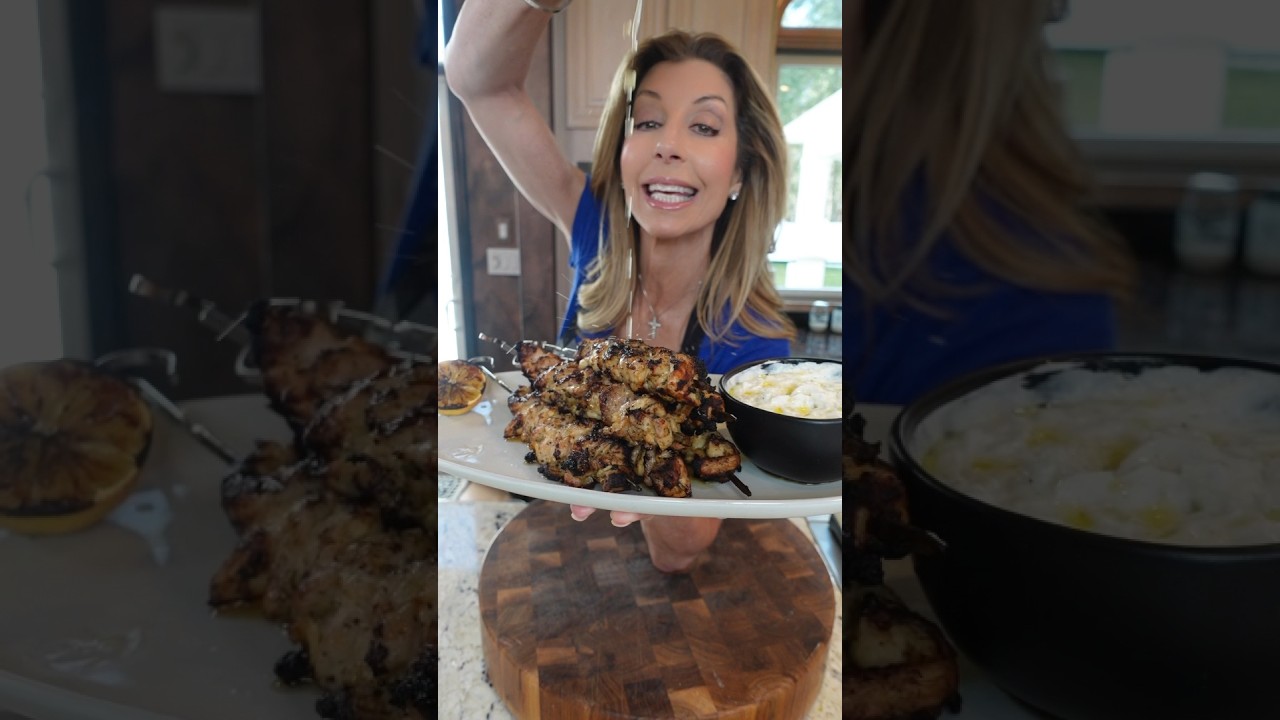
“Most homemade souvlaki tastes like grilled chicken with Greek seasoning. Real souvlaki tastes different — tender in a specific way, herb-forward without being herby, with char that's part of the flavor and not just color. The difference happens in the marinade, not at the grill. If you've been treating the marinade as an optional step, that's where you've been losing the dish.”
Why This Recipe Works
Souvlaki is a study in marinade chemistry and heat management. The dish has four core ingredients — oil, acid, garlic, oregano — and looks like something that should be impossible to get wrong. Which is exactly why most homemade versions fall flat. Simple recipes have nowhere to hide mistakes, and souvlaki's mistakes happen before the grill ever heats up.
The Marinade Is Not Flavoring — It Is Texture Work
The lemon juice and red wine vinegar in the marinade operate on protein structure in ways that superficial seasoning cannot. Citric acid and acetic acid partially denature the outer layer of chicken breast, unraveling surface protein bonds and creating a texture that's tender and slightly yielding — different from raw, unseasoned chicken in a way you can feel in every bite. This is the same mechanism at work in yogurt-marinated chicken, just expressed through citrus and fermented grape rather than lactic acid.
The critical variable is time. At 20 minutes, you have surface flavor only. At one hour, the acid has penetrated the outer layer of each cube and begun structural work. At four to six hours, the effect is complete and the texture is at its best. Beyond eight hours, the acid begins over-denaturing — the texture turns from tender to mealy, which is the wrong direction.
The fat in the marinade — extra-virgin olive oil — is doing different work. It's a carrier for aromatic compounds. The terpenes in dried oregano, the allicin derivatives in garlic, and the essential oils in lemon zest are all fat-soluble. They dissolve into oil far more effectively than into water or acid. The oil becomes a delivery system that coats every surface of every chicken cube with concentrated flavor rather than just surrounding it with flavored liquid.
Lemon zest belongs in this conversation separately from lemon juice. The zest contains the aromatic essential oils from the rind — the compounds responsible for bright, assertive citrus character. Juice provides acidity. Zest provides the flavor that people associate with citrus. Both are needed, and neither substitutes for the other.
High Heat Is a Flavor Mechanism
The char on souvlaki is not cosmetic. At surface temperatures above 285°F, the Maillard reaction begins converting amino acids and reducing sugars in the chicken's surface into hundreds of new aromatic compounds — the slightly bitter, deeply savory, smoke-adjacent flavors that define grilled meat. At medium heat, you get cooked, browned chicken. At high heat with direct surface contact, you get souvlaki.
A cast iron grill pan holds thermal mass that thin non-stick pans cannot match. When cold chicken hits the surface of a cast iron pan that has been preheating for four minutes, the temperature drops by perhaps 30 degrees and recovers within 90 seconds. On a thin pan, that same cold chicken drops the surface temperature out of Maillard range entirely and it takes minutes to recover — during which the chicken steams instead of sears. The heavy pan is not optional equipment for this recipe when cooking indoors.
The patience requirement at the grill is structural. Souvlaki crust forms over 4–5 minutes of undisturbed contact with a hot surface. When the crust is set, the chicken releases from the grates naturally. Forcing a flip before that release tears the surface and destroys the char that was forming. The chicken tells you when it's ready — all you have to do is wait for it.
The Vegetable Timing Problem
Bell peppers and red onion soften more slowly than chicken breast cooks through. Thread them on the same skewer without accounting for this and you face a binary choice: pull when the chicken is done and eat raw vegetables, or wait for the vegetables and overcook the chicken. Neither outcome is acceptable.
The fix is either separate skewers for meat and vegetables — which lets each hit its ideal temperature independently — or a 2-minute head start for the vegetables before the chicken goes on. Both approaches are used in professional kitchens that serve souvlaki at volume. The separate-skewer method is more controllable at home.
Why Tzatziki Is Structural, Not Decorative
Tzatziki is not a sauce in the condiment sense. It is the thermal and flavor counterpoint that makes souvlaki a complete dish. The cool, fat-rich yogurt base provides contrast to the hot, charred meat. The cucumber adds freshness and water that the protein has lost during cooking. The garlic in the tzatziki echoes the garlic in the marinade, creating flavor continuity across the plate.
Make it at least an hour ahead. Freshly made tzatziki is sharp, slightly astringent, and not fully integrated. After an hour in the refrigerator, the garlic mellows, the cucumber releases its water and reabsorbs the seasoned yogurt, and the whole preparation becomes more cohesive. Good tzatziki made the day before is noticeably better than tzatziki made thirty minutes before serving.
Warm the pita. Cold pita is a stiff disc. Thirty seconds over a gas flame or a minute in a dry skillet transforms it into something pliable and slightly smoky that wraps around the chicken without cracking. This step takes ninety seconds and improves the eating experience disproportionately.
Where Beginners Mess This Up
Before we start, read this. These are the 5 reasons your easy chicken souvlaki (charred, juicy, built in the marinade) will fail:
- 1
Marinating for less than one hour: The lactic acid and citric acid in the marinade need time to work on the surface proteins of the chicken. Under one hour, you're adding surface flavor with no structural change. At one hour minimum, the outer layer of the chicken has been partially denatured — tender and slightly yielding in a way that raw acid-free chicken simply is not. Overnight is better. More than eight hours starts to turn the texture mealy.
- 2
Grilling over medium instead of high heat: The char on souvlaki is not cosmetic. It's flavor. The Maillard reaction at high surface temperatures produces hundreds of aromatic compounds that don't form at medium heat. Medium heat produces grey, cooked-through chicken. High heat produces charred exterior, juicy interior, and the flavor character that makes souvlaki worth making at home.
- 3
Moving the skewers before they release: Properly seared chicken releases from the grill grates naturally when the crust has formed. Forcing a flip before the crust sets tears the meat surface and destroys the char you're building. Wait for clean release — it takes 4–5 minutes of undisturbed contact on high heat.
- 4
Not soaking wooden skewers: Dry wood ignites on a hot grill. Wooden skewers require at least 30 minutes of submersion in cold water before they go onto heat. Metal skewers eliminate this variable entirely and conduct heat into the center of the chicken for more even cooking.
- 5
Skipping the rest before serving: Chicken breast has almost no fat as a moisture reservoir. Five minutes of rest after the grill allows the muscle fibers to relax and reabsorb the juices that have been pushed toward the surface by heat. Cut in immediately and those juices run onto the plate.
The Video Reference Library
Want to see it in action? Here are the exact videos we analyzed and combined to build this foolproof recipe translation:
The source video for this recipe. Clear demonstration of marinade ratios, skewer threading technique, and how to read char marks for doneness.
🛠️ Core Equipment
- Cast iron grill pan or outdoor grillSouvlaki requires genuine high heat and direct surface contact. A [cast iron grill pan](/kitchen-gear/review/cast-iron-grill-pan) reaches and holds the surface temperatures needed for char marks; thin non-stick pans cannot. Preheat it for a full 3–4 minutes before the skewers go on.
- Instant-read thermometerChicken breast is done at 165°F and starts drying out the moment it passes that threshold. A thermometer removes the guesswork from a protein with zero margin for overcooking.
- Metal or soaked wooden skewersMetal skewers conduct heat into the center of the meat for more even cooking. If using wood, soak in cold water for a full 30 minutes — dry wood burns before the chicken is done.
- Large mixing bowlThe marinade needs to fully coat every surface of every chicken cube. A bowl that's too small means uneven coverage and pockets of chicken that haven't been reached by the acid and herbs.
Easy Chicken Souvlaki (Charred, Juicy, Built in the Marinade)
🛒 Ingredients
- ✦1.5 pounds boneless skinless chicken breast, cut into 1.5-inch cubes
- ✦1/4 cup extra-virgin olive oil
- ✦3 tablespoons fresh lemon juice
- ✦2 tablespoons red wine vinegar
- ✦4 cloves garlic, minced
- ✦2 tablespoons dried oregano
- ✦1 teaspoon dried thyme
- ✦1/2 teaspoon red pepper flakes
- ✦1 teaspoon sea salt
- ✦1/2 teaspoon black pepper
- ✦Zest of 1 lemon
- ✦1 medium red onion, cut into 1-inch chunks
- ✦2 medium bell peppers (red or yellow), cut into 1-inch chunks
- ✦8 wooden or metal skewers
- ✦4 pita breads, for serving
- ✦Fresh dill and scallions, for garnish
- ✦Tzatziki, for serving
👨🍳 Instructions
01Step 1
If using wooden skewers, submerge them in cold water for at least 30 minutes before cooking. Weight them down — they float.
02Step 2
Whisk together olive oil, lemon juice, red wine vinegar, garlic, oregano, thyme, red pepper flakes, lemon zest, salt, and pepper in a large bowl until cohesive.
03Step 3
Pat chicken cubes dry with paper towels. Add to the marinade and toss until every piece is fully coated. Cover and refrigerate for at least 1 hour, ideally overnight.
04Step 4
Remove chicken from the refrigerator 20 minutes before grilling to take the chill off. Cold chicken on a hot grill drops surface temperature and slows char formation.
05Step 5
Thread chicken onto skewers, alternating with red onion and bell pepper chunks. Leave a small gap between pieces — tight packing traps steam and prevents the char you need.
06Step 6
Heat a grill or cast iron grill pan over high heat for 3–4 minutes until fully preheated. A drop of water should evaporate on contact immediately.
07Step 7
Place skewers in a single layer on the hot surface. Do not move for 4–5 minutes until defined char marks form and the meat releases cleanly from the surface.
08Step 8
Flip and cook the opposite side for 4–5 minutes until the chicken registers 165°F on an instant-read thermometer.
09Step 9
Transfer to a clean plate and rest uncovered for 5 minutes. Covering with foil traps steam and softens the char.
10Step 10
Warm pita breads directly over a gas flame or in a dry skillet for about 1 minute per side until soft and pliable.
11Step 11
Serve skewers over warm pita with tzatziki, fresh dill, sliced scallions, and lemon wedges.
Nutrition Per Serving
Estimates based on standard preparation. Adjustments alter macros.
🔄 Substitutions
Instead of Chicken breast...
Use Boneless skinless chicken thighs
Thighs have more fat and more forgiveness. Breast goes dry the moment it passes 165°F. Thighs stay juicy even at 175°F — better choice if you're not confident with thermometer timing.
Instead of Dried oregano...
Use Fresh oregano (3 tablespoons, chopped)
Use dried for the marinade only — fresh herb volatile oils dissipate quickly under heat. Fresh oregano works as a finish and garnish added after cooking.
Instead of Red wine vinegar...
Use Apple cider vinegar or white balsamic
Apple cider is lighter and slightly sweeter. White balsamic adds complexity without coloring the chicken. Regular balsamic is too sweet and thick — avoid it.
Instead of Outdoor grill...
Use Broiler on high, rack 4–5 inches from element
5–6 minutes per side under the broiler produces comparable surface caramelization without the smoke character of an open grill. Watch closely — broilers run variably hot.
🧊 Storage & Reheating
In the Fridge
Store cooked chicken in an airtight container for up to 4 days. Keep pita and tzatziki separate to prevent sogginess.
In the Freezer
Freeze cooked chicken for up to 2 months. The texture softens slightly on thawing but holds up well reheated in a hot pan.
Reheating Rules
Reheat in a dry cast iron or stainless pan over medium-high heat for 2–3 minutes, turning once. This revives the char. Microwave reheating is acceptable but sacrifices the crust entirely.
❓ Frequently Asked Questions
Why is my chicken dry even though I marinated it?
You overcooked it. Chicken breast has almost no fat, so it goes from 165°F to dry in under two minutes. Use an instant-read thermometer and pull the skewers the moment you hit 165°F. Timing and color alone are not reliable.
How long can the chicken marinate?
One hour minimum, eight hours maximum. Beyond eight hours, the acid begins over-denaturing the proteins and the texture turns mealy — the opposite of what you want. The four-to-six hour range is ideal.
Can I cook souvlaki in the oven?
Yes — broil on high with the rack 4–5 inches from the element for 5–6 minutes per side. You won't get the same smoke character as a grill, but the surface caramelization is comparable. Watch closely — the margin between charred and burnt under a broiler is narrow.
Do the vegetables go on the same skewer as the chicken?
They can, but they cook at different rates. Bell peppers and onions take longer to soften than chicken breast. For simultaneously done results, give the vegetables a 2-minute head start or use separate skewers entirely.
What is the difference between souvlaki and kebab?
Souvlaki is Greek, uses whole chunks of marinated meat, and is served with pita and tzatziki. Kebab is a broader Middle Eastern and Central Asian category that includes ground meat varieties, different spice profiles, and different serving traditions. Both use skewers. The similarity ends there.
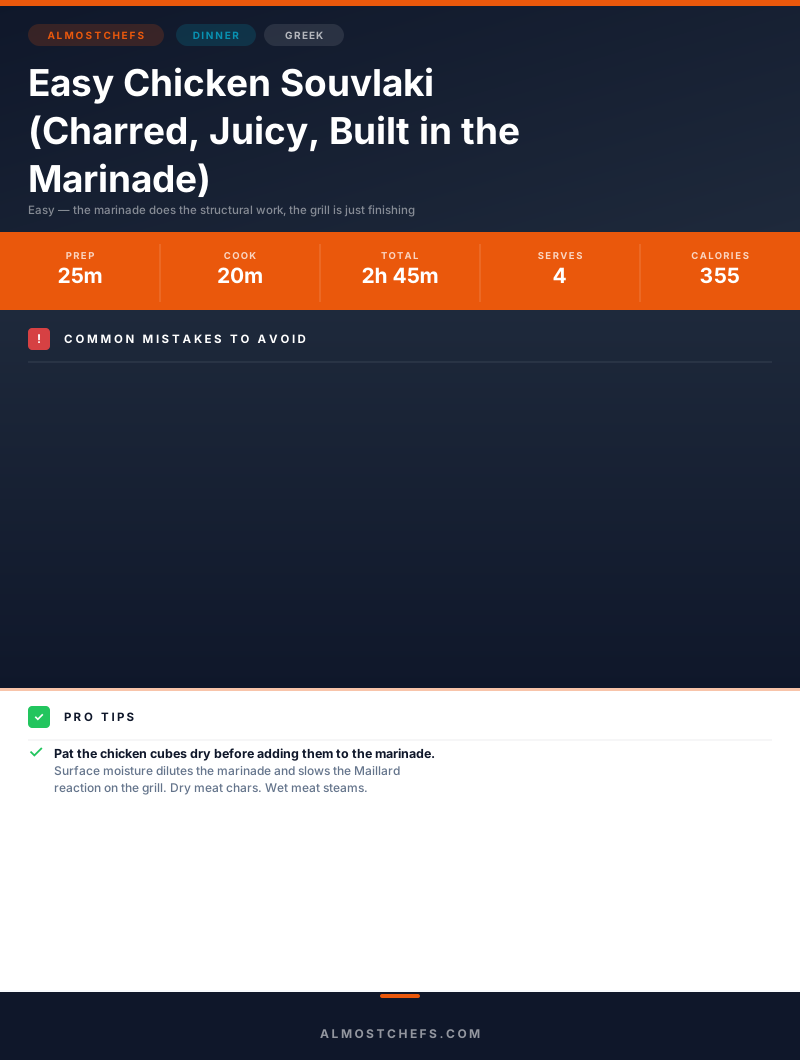
The Science of
Easy Chicken Souvlaki (Charred, Juicy, Built in the Marinade)
We turned everything on this page into a beautiful, flour-proof PDF cheat sheet. Print it out, stick it to your fridge, and never mess up your easy chicken souvlaki (charred, juicy, built in the marinade) again.
*We'll email you the high-res PDF instantly. No spam, just perfectly cooked meals.
AlmostChefs Editorial Team
We translate the internet's most popular cooking videos into foolproof, beginner-friendly written recipes. We analyze multiple methods, test them in our kitchen, and engineer a single "Master Recipe" that gives you the best possible result with the least possible stress.