The Immunity-Boosting Chicken Soup (Your Sick-Day Secret Weapon)
A deeply aromatic Indian comfort soup built on bone-in chicken, ginger, turmeric, and whole spices slow-simmered into a broth that actually does what your grandmother claimed. We broke down the traditional method to give you a foolproof technique that extracts maximum flavor and healing compounds every time.

“There is no shortage of chicken soup recipes. What's missing from most of them is an understanding of why it works — and that gap is exactly why so many versions taste like warm water with chicken floating in it. The difference between a broth that soothes and one that heals comes down to three decisions: bone-in versus boneless, whole spices toasted in fat before liquid, and adding acid only at the end. Get those three things right and everything else follows.”
Why This Recipe Works
Chicken soup is the oldest trick in every grandmother's arsenal, dismissed by skeptics as comfort psychology and defended by everyone who has ever actually made a proper version. The truth lives somewhere more interesting: there is documented biochemistry behind why a well-made broth built on bone-in chicken, whole spices, and fresh aromatics does what it does. The problem is that most recipes shortcut the three decisions that make the chemistry work.
Bones Are Non-Negotiable
The collagen in connective tissue and cartilage converts to gelatin when simmered low and slow. Gelatin is what gives a proper broth its silky mouthfeel — the quality that makes it feel nourishing rather than thin. A boneless breast simmered for 35 minutes produces a watery liquid with good chicken flavor. Bone-in thighs and drumsticks simmered the same time produce a broth that coats the back of a spoon and clings to the throat in a way that feels genuinely restorative.
There is also the cysteine argument. Chicken muscle tissue releases this amino acid during cooking, and cysteine has demonstrated properties similar to acetylcysteine, a medication used to thin mucus in respiratory conditions. The clinical evidence is modest but real. The bones have nothing to do with cysteine — that comes from the meat — but they have everything to do with why the broth feels like medicine rather than warm water.
Fat First, Then Liquid
The turmeric and black pepper combination is the anti-inflammatory core of this soup, but its effectiveness depends entirely on how you introduce it. Curcumin — the active compound in turmeric — is fat-soluble, not water-soluble. Added directly to the broth, it disperses but isn't absorbed efficiently by the body. Bloomed in ghee before liquid enters the pot, the curcumin binds to fat molecules that the gut absorbs much more readily.
The piperine in black pepper compounds this effect, increasing curcumin's bioavailability by blocking the enzyme that breaks it down before absorption. One without the other works. Both together works dramatically better. This is not alternative medicine speculation — it's basic pharmacokinetics applied to a soup.
Toasting the whole spices in hot ghee first also achieves something no amount of simmering in water can replicate: the Maillard reaction on the cumin seeds produces toasted aromatic compounds that dissolve into the fat and distribute evenly through the broth from the first minute. Add cumin seeds directly to water and you get a flat, medicinal flavor. Toast them in ghee for 40 seconds and the entire soup smells like something worth eating.
The Acid Rule
This is the step that separates home cooks from people who understand what they're doing. Vitamin C in lemon juice degrades rapidly at cooking temperatures — its half-life at a gentle simmer is under ten minutes. A recipe that tells you to add lemon at the start of a 35-minute cook is offering you the ghost of vitamin C with none of the actual molecule.
Add lemon juice in the final 30 seconds before ladling. The heat carries the aroma but hasn't had time to destroy the ascorbic acid. You also get the brightest, sharpest citrus flavor at the moment of serving, which is exactly when it matters for both taste and function.
The Simmer, Not the Boil
A heavy-bottomed pot holds heat so evenly that you can set it to medium-low and walk away without paranoia. That even, gentle heat is the entire mechanism. A rolling boil agitates proteins, creates foam you can't skim, and drives the internal temperature of the broth high enough to break the fat emulsion — producing a greasy, cloudy result that technically contains the same ingredients but tastes fundamentally different.
Slow and low is not patience for patience's sake. It's the thermodynamic condition under which collagen converts to gelatin, spice oils extract cleanly, and the broth stays clear enough to see through. Set the heat lower than feels sensible, put the lid slightly ajar, and let physics do the work you're trying to rush.
Where Beginners Mess This Up
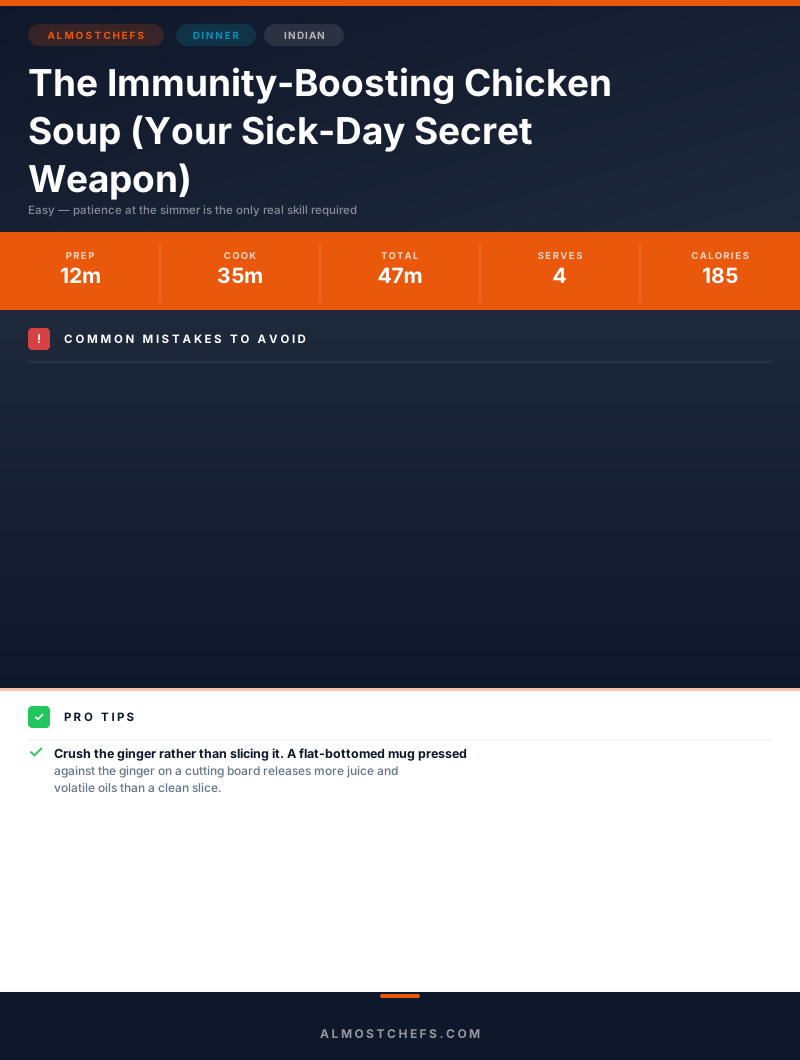
Before we start, read this. These are the 4 reasons your the immunity-boosting chicken soup (your sick-day secret weapon) will fail:
- 1
Using boneless chicken breast: Boneless breast produces a thin, flavorless broth because you lose the collagen and gelatin that only release from bones during long simmering. Thighs and drumsticks with the bone in are not optional here — they are the mechanism by which the broth becomes silky, rich, and nourishing. Breast can supplement, but bone-in pieces must anchor the pot.
- 2
Skipping the foam-skimming step: During the first 2-3 minutes after the chicken hits the boiling liquid, white foam rises to the surface. This is coagulated protein and blood — it's not harmful but it clouds the broth and adds a faintly bitter, muddy flavor. Skim it aggressively with a slotted spoon during that window. Once the simmer settles, the foam stops forming.
- 3
Adding lemon juice too early: Vitamin C is heat-sensitive and breaks down rapidly at sustained temperatures. If you add lemon juice at the start of a 35-minute simmer, you get none of its brightness or nutritional benefit by the time the soup reaches the bowl. Add it in the last 30 seconds before ladling. This is also when the citrus flavor is sharpest and most aromatic.
- 4
Simmering at a rolling boil: Aggressive boiling agitates the proteins in the broth and produces a cloudy, greasy result. A gentle simmer — just enough to see the surface trembling with small, lazy bubbles — extracts collagen slowly and keeps the broth clear. Reduce the heat further than feels necessary and leave it alone.
The Video Reference Library
Want to see it in action? Here are the exact videos we analyzed and combined to build this foolproof recipe translation:
The source video that inspired this recipe. Clear demonstration of the whole-spice blooming technique and how to judge the correct simmer temperature by eye.
🛠️ Core Equipment
- Heavy-bottomed pot or Dutch ovenEven heat distribution prevents scorching the bottom and maintains a consistent gentle simmer without constant adjustment. A thin pot runs hot and cold simultaneously, which produces uneven extraction and occasional burning.
- Fine-mesh sieveFor straining the finished broth cleanly. You want to remove every fragment of bone, spent spice, and softened onion to get a clear, professional-quality broth in the bowl.
- Slotted spoonEssential for skimming foam during the first minutes of cooking. Wide and flat is better than deep — you want to skim the surface, not scoop up broth.
- LadleFor serving without disturbing the clarity of the broth. Pouring directly from the pot stirs up sediment that settles at the bottom.
The Immunity-Boosting Chicken Soup (Your Sick-Day Secret Weapon)
🛒 Ingredients
- ✦500-750g bone-in chicken pieces (thighs and drumsticks preferred)
- ✦8 cups water or unsalted chicken stock
- ✦1 medium yellow onion, halved
- ✦2-inch piece fresh ginger root, crushed
- ✦6 cloves fresh garlic, minced
- ✦1/2 teaspoon cumin seeds
- ✦1 small cinnamon stick
- ✦1/2 to 1 teaspoon ground turmeric powder
- ✦1/2 to 1 teaspoon freshly cracked black pepper
- ✦1 to 2 green chili peppers, slit lengthwise
- ✦2 tablespoons ghee or cold-pressed coconut oil
- ✦2 tablespoons fresh lemon juice
- ✦Sea salt to taste
- ✦1/4 cup fresh cilantro leaves, chopped
- ✦3 to 4 curry leaves (optional, for authentic flavor)
👨🍳 Instructions
01Step 1
Rinse the bone-in chicken pieces under cold water and pat dry with paper towels.
02Step 2
Heat 2 tablespoons of ghee in a large heavy-bottomed pot over medium-high heat until it shimmers, about 1 minute.
03Step 3
Add the cumin seeds and cinnamon stick to the hot ghee. Toast for 30-40 seconds until fragrant and the seeds darken slightly.
04Step 4
Pour in 8 cups of water or chicken stock and bring to a rolling boil, about 3-4 minutes.
05Step 5
Carefully add the cleaned chicken pieces, halved onion, crushed ginger, and slit green chilies to the boiling liquid.
06Step 6
Skim off any white foam or impurities that rise to the surface during the first 2-3 minutes using a slotted spoon. Be aggressive about this.
07Step 7
Reduce heat to medium-low. Add the turmeric powder and minced garlic, stirring gently to distribute evenly through the broth.
08Step 8
Simmer uncovered for 30-35 minutes until the chicken is fully cooked and the meat separates easily from the bones. Maintain a gentle, lazy bubble — not a boil.
09Step 9
Remove the pot from heat. Carefully strain the broth through a fine-mesh sieve into a clean bowl. Reserve the chicken pieces if desired — shred the meat off the bones and return it to the strained broth.
10Step 10
Return the strained broth to the pot. Season with freshly cracked black pepper and sea salt, tasting as you go.
11Step 11
Add fresh lemon juice in the final 30 seconds before serving. Stir once and ladle immediately.
12Step 12
Ladle into serving bowls. Garnish generously with chopped fresh cilantro and curry leaves if using.
13Step 13
Serve immediately while steaming hot.
Nutrition Per Serving
Estimates based on standard preparation. Adjustments alter macros.
🔄 Substitutions
Instead of Ghee...
Use Cold-pressed coconut oil or sesame oil
Coconut oil blooms spices comparably to ghee and adds subtle sweetness. Sesame oil has a lower smoke point — watch the heat when toasting the cumin to avoid bitterness.
Instead of Water or chicken stock...
Use Homemade bone broth (simmered 12-24 hours)
If you have it, use it. The depth difference is significant — silkier texture, more gelatin, deeper umami. But good-quality unsalted chicken stock is a fully acceptable everyday choice.
Instead of Ground turmeric powder...
Use Fresh turmeric root (1-inch piece, grated)
More vibrant color, slightly more bitter, and higher curcumin concentration. Grate it directly into the ghee with the other aromatics. Wear gloves — it stains everything it touches.
Instead of Lemon juice...
Use Fresh lime juice or raw apple cider vinegar (1 tablespoon)
Lime is sharper and slightly more floral. Apple cider vinegar adds subtle tang and digestive benefits from natural enzymes. Both work; adjust quantity to taste since they're more acidic than lemon.
🧊 Storage & Reheating
In the Fridge
Store in an airtight container for up to 4 days. The broth develops more depth by day two as the spices continue to steep.
In the Freezer
Freeze in individual portions for up to 3 months. Leave out the cilantro and lemon juice — add fresh garnish when reheating.
Reheating Rules
Reheat gently in a saucepan over medium-low heat. Add a fresh squeeze of lemon juice and a pinch of cilantro after reheating to revive brightness. Microwave works but flattens the aroma — stovetop is strongly preferred.
❓ Frequently Asked Questions
Does chicken soup actually help when you're sick?
More than folklore suggests. Cysteine — an amino acid released from chicken during cooking — has documented mucolytic properties similar to the drug acetylcysteine, meaning it literally thins mucus. The ginger and garlic contain gingerols and allicin respectively, both of which have demonstrated anti-inflammatory and antimicrobial properties in clinical literature. It's not a cure. But it's not nothing either.
Can I use boneless chicken to save time?
You can, but the broth will be noticeably thinner and less silky. Bones release collagen during simmering, which converts to gelatin and gives the broth its body. If you must use boneless, add a splash of store-bought bone broth to compensate, or simmer a few chicken feet alongside the boneless pieces if you can find them.
Why is my broth cloudy?
Either the simmer ran too hot (a boil rather than a gentle tremor) or you didn't skim the foam during the first few minutes. Both allow emulsified proteins to disperse through the broth permanently. Cloudy broth tastes fine but lacks the clean, restorative quality of a clear one. Next time, skim early and keep the heat lower than feels right.
Do I have to strain the broth?
No, but you should. Spent aromatics — especially the halved onion and the ginger after 35 minutes — have given everything they have to give. Leaving them in produces a slightly bitter, murky result compared to the clean clarity of strained broth. Takes 30 seconds. Worth it.
How much turmeric is too much?
Beyond 1 teaspoon in this volume of broth, turmeric becomes bitter and medicinal rather than warming. Start at 1/2 teaspoon and taste after the first 15 minutes of simmering. Add more if you want a more pronounced golden color and earthy depth — but go slowly. You can add; you cannot subtract.
Can I make this in a pressure cooker or Instant Pot?
Yes — 15 minutes on high pressure with natural release produces fully cooked chicken and reasonable broth. But you lose the ability to skim foam and control the simmer intensity, which affects both clarity and collagen extraction. For therapeutic intent, the stovetop slow method produces a meaningfully better result. Use the pressure cooker when speed is the priority.
The Science of
The Immunity-Boosting Chicken Soup (Your Sick-Day Secret Weapon)
We turned everything on this page into a beautiful, flour-proof PDF cheat sheet. Print it out, stick it to your fridge, and never mess up your the immunity-boosting chicken soup (your sick-day secret weapon) again.
*We'll email you the high-res PDF instantly. No spam, just perfectly cooked meals.
AlmostChefs Editorial Team
We translate the internet's most popular cooking videos into foolproof, beginner-friendly written recipes. We analyze multiple methods, test them in our kitchen, and engineer a single "Master Recipe" that gives you the best possible result with the least possible stress.