Chicken Satay That Actually Chars (The Broiler Method Nobody Talks About)
Tender marinated chicken skewers with a rich peanut dipping sauce — no grill required. We analyzed the most popular Southeast Asian satay techniques to build one broiler-friendly method that delivers authentic char and flavor without the equipment.
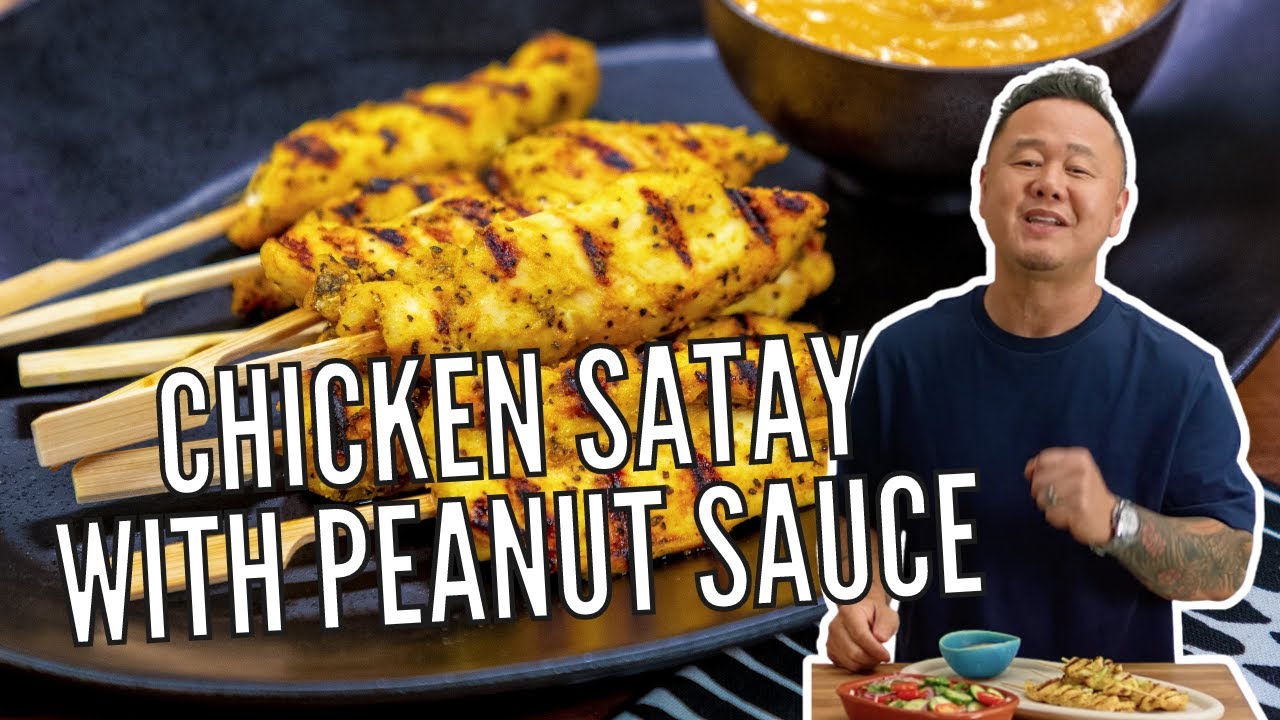
“Most chicken satay fails at home because people treat it like a simple kebab. It isn't. The char matters. The marinade-to-sauce ratio matters. The skewer soak matters. We built this method around a broiler — not a grill — because that's what 95% of home kitchens actually have, and done right, the broiler produces more consistent edge charring than a backyard grill on a mediocre day.”
Why This Recipe Works
Satay is one of those dishes that looks deceptively simple — it's chicken on a stick — and gets systematically ruined because of that assumption. The reason most home versions come out pale, bland, and vaguely sad is that people treat the marinade as an afterthought and the cooking method as interchangeable. Neither is true.
The Marinade Is the Dish
This is not a sauce recipe with chicken attached. The marinade — peanut butter, soy sauce, honey, lime, red curry paste, cumin, coriander, cayenne — is doing the majority of the flavor work, and then it does double duty as the base for the dipping sauce. The division is intentional: 2/3 goes onto the raw chicken, 1/3 gets whisked with Greek yogurt and water and served cold on the side. The same flavor compound hits your palate twice — once baked into the char, once as a fresh, bright sauce. That's the architecture.
The 15-minute minimum marinade is not a suggestion. The soy sauce and lime juice are both acidic, and acid needs time to penetrate past the surface proteins. Under 15 minutes and you're basically seasoning the outside of the chicken. The cumin and coriander need fat to bloom — the peanut butter provides it, but only after the mixture has had time to homogenize.
The Broiler Argument
Every traditional satay recipe tells you to use a grill. This recipe uses a broiler, and the case is straightforward: a home broiler at high heat produces surface temperatures in the 500-550°F range with directional radiant heat — nearly identical to grilling over direct flame, minus the smoke and the need to babysit open fire. The key is rack placement. At 4 inches from the element, the surface of the chicken chars before the interior overcooks. At 6-8 inches, you get roasted chicken with no crust. That single measurement is what separates this method from "I tried cooking satay in the oven and it was fine, I guess."
The rimmed baking sheet is non-negotiable. The coconut oil baste and marinade runoff will smoke and potentially ignite on a flat sheet directly over the broiler element. The rim keeps the drippings contained. Line it with foil for cleanup that takes 10 seconds.
The Peanut Sauce Balance
Good peanut dipping sauce is an emulsion — fat (peanut butter), acid (lime), and water (yogurt, soy sauce) held together by the protein structure of the peanut butter itself. The Greek yogurt serves as both a thinning agent and a tangy counterweight to the rich peanut fat. Without it, the sauce tastes heavy and one-dimensional.
The consistency target is pourable but coating — it should fall off a spoon in a slow ribbon, not drip like water and not sit like paste. The water addition at the end is how you dial this in. Start conservative and add by the tablespoon. You can always thin a thick sauce; you cannot thicken a watery one without adding more peanut butter and recalibrating the entire flavor balance.
Why the Vegetables Are Not Optional
The onion and bell pepper chunks on the skewer are load-bearing components, not garnish. They keep the chicken pieces evenly spaced so hot air circulates between each cube. They also add moisture during cooking — as the vegetables release steam, the surrounding chicken stays tender. Strip them off before eating if you want, but do not skip them during cooking.
This is a 47-minute recipe from cold start to plated. Twelve of those minutes are active broiler time. The rest is soaking, marinating, and threading — none of which requires your attention. The ratio of output to effort is genuinely unreasonable, which is why satay is on every catering menu everywhere.
Where Beginners Mess This Up
Before we start, read this. These are the 4 reasons your chicken satay that actually chars (the broiler method nobody talks about) will fail:
- 1
Skipping the skewer soak: Dry bamboo skewers ignite under a broiler in minutes. Soak them in warm water for at least 30 minutes before threading. The moisture doesn't affect the chicken — it just prevents your dinner from becoming a fire hazard.
- 2
Marinating for less than 15 minutes: The marinade is doing two jobs: flavoring and tenderizing. Fifteen minutes is the hard minimum for the soy sauce and lime acid to penetrate the surface. Less than that and you get seasoned-on-the-outside, bland-on-the-inside chicken that tastes like it was dressed at the last second.
- 3
Using the wrong oven rack position: The rack must sit 4 inches from the broiler element — not 6, not 8. Too far and you get roasted chicken with no char. Too close and the outside burns before the interior reaches temperature. Four inches is the sweet spot where char and doneness finish together.
- 4
Forgetting to rotate the pan: Broiler heat is directional and uneven. Without a halfway rotation, the skewers closest to the heating element overcook while the far edge stays pale. Rotate at the 6-minute mark without exception.
The Video Reference Library
Want to see it in action? Here are the exact videos we analyzed and combined to build this foolproof recipe translation:
The source video for this recipe's core technique. Demonstrates the marinade build, skewer threading pattern, and broiler positioning that produces consistent char across all 12 skewers.
🛠️ Core Equipment
- Rimmed baking sheetCatches drips from the coconut oil baste and marinade runoff. A flat sheet allows drips to fall directly onto the broiler element and smoke. The rim keeps everything contained.
- Bamboo skewers12 skewers, soaked for 30 minutes minimum. Pre-soaking is non-negotiable under a broiler. Metal skewers conduct heat and can overcook the chicken from the inside out — bamboo insulates better for short, high-heat cooking.
- Medium mixing bowlYou need room to whisk the marinade and divide it properly — 1/3 for dipping sauce, 2/3 for the chicken. Doing this in a small bowl leads to uneven division and sauce that's either too thick or too thin.
- Wire rack (optional)Set inside the baking sheet to elevate the skewers and allow hot air to circulate underneath. This promotes even browning on the underside without flipping each skewer individually.
Chicken Satay That Actually Chars (The Broiler Method Nobody Talks About)
🛒 Ingredients
- ✦1.5 pounds boneless, skinless chicken breasts, cut into 1-inch cubes
- ✦3 tablespoons natural peanut butter
- ✦2 tablespoons low-sodium soy sauce
- ✦1 tablespoon honey
- ✦1 tablespoon fresh lime juice
- ✦2 cloves garlic, minced
- ✦1 teaspoon ground cumin
- ✦1 teaspoon ground coriander
- ✦1 teaspoon red curry paste
- ✦1/2 teaspoon cayenne pepper
- ✦1/4 cup plain Greek yogurt
- ✦1/4 cup water
- ✦2 tablespoons coconut oil, melted
- ✦1 medium yellow onion, cut into chunks
- ✦1 medium red bell pepper, cut into chunks
- ✦12 bamboo skewers, soaked in water for 30 minutes
- ✦2 green onions, sliced thin for garnish
- ✦Kosher salt and black pepper to taste
👨🍳 Instructions
01Step 1
Soak the bamboo skewers in warm water for at least 30 minutes to prevent charring during cooking.
02Step 2
Combine the natural peanut butter, soy sauce, honey, lime juice, minced garlic, cumin, coriander, red curry paste, and cayenne pepper in a medium bowl. Whisk until smooth.
03Step 3
Reserve 1/3 cup of the spice mixture for the dipping sauce and set aside in a separate container.
04Step 4
Toss the chicken cubes with the remaining 2/3 of the spice mixture until evenly coated, then refrigerate for at least 15 minutes.
05Step 5
Thread the marinated chicken pieces onto the soaked skewers, alternating with onion and bell pepper chunks, leaving a 1-inch space at each end.
06Step 6
Position your oven rack 4 inches from the broiler element and preheat the broiler to high heat.
07Step 7
Arrange the filled skewers on a rimmed baking sheet lined with aluminum foil, then brush lightly with melted coconut oil.
08Step 8
Broil the skewers for 10 to 12 minutes, rotating the pan halfway through, until the chicken is cooked through and the edges show light charring.
09Step 9
While the skewers cook, whisk together the reserved spice mixture with the Greek yogurt and water until smooth and pourable.
10Step 10
Taste the dipping sauce and adjust with salt and pepper if needed.
11Step 11
Transfer the cooked skewers to a serving platter and let rest for 2 minutes.
12Step 12
Drizzle the peanut sauce over the skewers or serve in a small bowl alongside, then garnish with sliced green onions.
Nutrition Per Serving
Estimates based on standard preparation. Adjustments alter macros.
🔄 Substitutions
Instead of Natural peanut butter...
Use Sunflower seed butter or almond butter
Sunflower butter is the closest in texture and fat content. Almond butter adds subtle sweetness. Neither replicates peanut flavor exactly, but both produce a usable sauce.
Instead of Low-sodium soy sauce...
Use Tamari or coconut aminos
Tamari is gluten-free with deeper umami. Coconut aminos are lower sodium with a slightly sweeter profile. Either works — just taste and adjust salt before serving.
Instead of Plain Greek yogurt...
Use Full-fat coconut cream
More authentic Southeast Asian flavor. The sauce becomes richer and slightly sweeter. Shake the can well before measuring — separated coconut cream won't whisk smoothly.
Instead of Boneless chicken breasts...
Use Boneless, skinless chicken thighs
Thighs are more forgiving under high broiler heat and stay juicier if you go a minute over. Slightly higher fat, noticeably more flavor. Cut to the same 1-inch cube size.
🧊 Storage & Reheating
In the Fridge
Store cooked skewers and sauce separately in airtight containers for up to 3 days. Storing together makes the chicken soggy.
In the Freezer
Freeze the marinated raw chicken (off the skewers) for up to 2 months. Thaw overnight in the fridge, re-thread, and broil from cold — add 2 minutes to cook time.
Reheating Rules
Reheat in a 375°F oven on a wire rack for 8-10 minutes. Microwaving makes the chicken rubbery and the vegetables limp. The oven preserves texture.
❓ Frequently Asked Questions
Can I use a grill instead of the broiler?
Yes. Grill over direct high heat for 8-10 minutes, turning every 2-3 minutes. The char will be more pronounced and slightly smokier. Watch for flare-ups from the coconut oil baste — keep a spray bottle of water nearby.
Why does my peanut sauce come out too thick?
The ratio of peanut butter to liquid is off, or the peanut butter was too cold when you mixed it. Add water a tablespoon at a time and whisk vigorously. If it's still grainy, a 15-second microwave blast followed by another whisk usually fixes it.
Can I make this ahead for a party?
Yes. Marinate and thread the skewers up to 4 hours ahead and refrigerate on the baking sheet covered with plastic wrap. Make the dipping sauce up to 24 hours ahead. Broil the skewers to order — they take 12 minutes and the active work is minimal.
Is this recipe actually gluten-free?
With standard low-sodium soy sauce, no — soy sauce contains wheat. To make it gluten-free, swap to tamari or coconut aminos. Everything else in the recipe is naturally gluten-free.
How do I know when the chicken is cooked through without cutting into every piece?
Use an instant-read thermometer inserted into the thickest cube on the skewer. 165°F is safe. Alternatively, the chicken should feel firm (not squishy) when pressed with tongs and the juices should run clear at the cut surface.
Can I use wooden chopsticks instead of bamboo skewers?
Technically yes, but bamboo skewers are designed for the purpose — they're thinner, which means less displacement of the chicken and cleaner presentation. Chopsticks work in a pinch but they're unwieldy to thread and harder to turn in the pan.
The Science of
Chicken Satay That Actually Chars (The Broiler Method Nobody Talks About)
We turned everything on this page into a beautiful, flour-proof PDF cheat sheet. Print it out, stick it to your fridge, and never mess up your chicken satay that actually chars (the broiler method nobody talks about) again.
*We'll email you the high-res PDF instantly. No spam, just perfectly cooked meals.
AlmostChefs Editorial Team
We translate the internet's most popular cooking videos into foolproof, beginner-friendly written recipes. We analyze multiple methods, test them in our kitchen, and engineer a single "Master Recipe" that gives you the best possible result with the least possible stress.