Chicken Pesto Pasta Done Right (The 45-Minute Italian Weeknight)
Tender seared chicken over whole wheat penne tossed in fresh basil pesto with burst cherry tomatoes and a balsamic finish. We broke down the most-watched YouTube pesto pasta methods to give you one technique that nails silky sauce consistency and juicy chicken every single time.
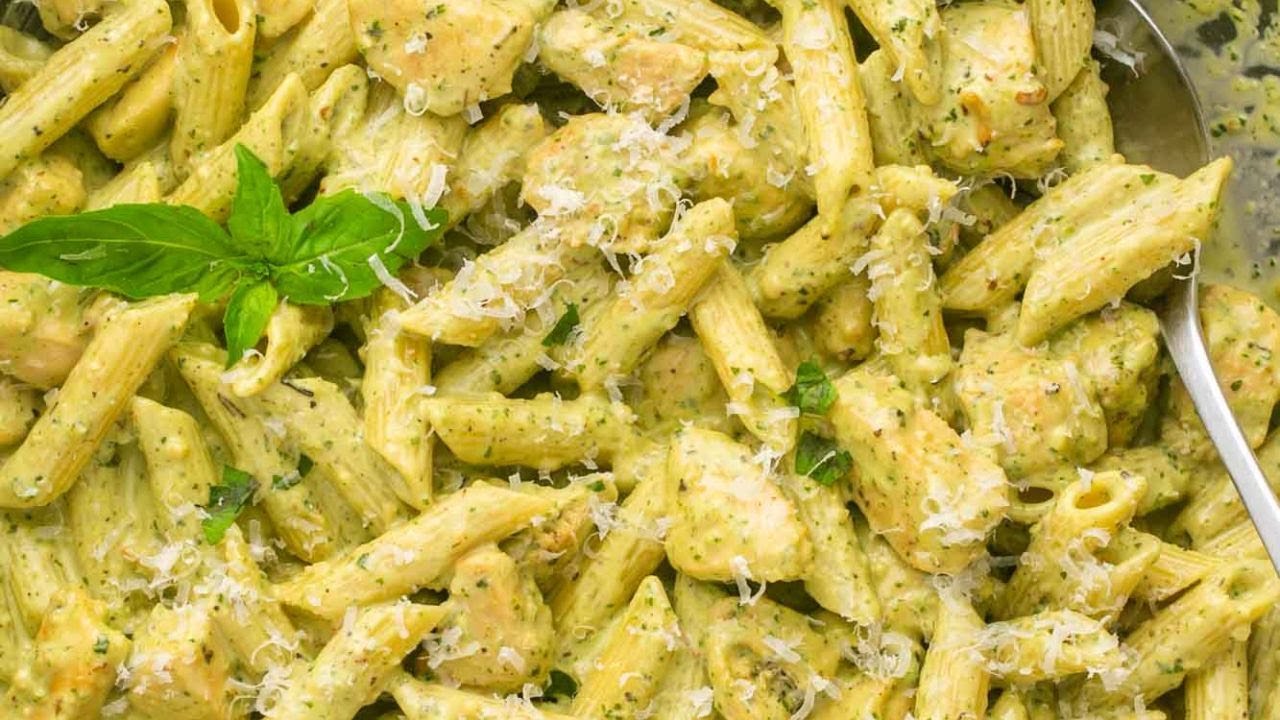
“Chicken pesto pasta should be one of the fastest, most satisfying meals in rotation. Instead, most people produce dry chicken, gummy pasta, and a greasy pesto that breaks the second it hits the heat. The fixes are small and specific: sear the chicken without touching it, pull the pasta water before you drain, and never let the pesto boil. Forty-five minutes, one skillet, actual restaurant flavor.”
Why This Recipe Works
Chicken pesto pasta is three components: seared chicken, fresh pesto, and cooked pasta. None of them are complicated in isolation. The problem is that most people treat this as an assembly dish — cook each part, dump them together, call it dinner. What they get is oil-slicked noodles, dry chicken sitting on top, and pesto that tastes like it was heated in a microwave. The version that actually works requires understanding what each component needs and in what order.
Searing Is Not Optional
Chicken breast is lean, which means it has almost no internal fat to carry flavor. Everything it tastes like comes from the exterior — specifically from the Maillard reaction that happens when the surface protein makes sustained contact with a hot pan. That golden crust is not cosmetic. It is hundreds of new flavor compounds that cannot be created any other way.
The failure mode is impatience. A large heavy-bottomed skillet over medium-high heat needs a full minute to reach working temperature. Cold oil in a cold pan produces pale, steamed chicken. Once the chicken goes in, leave it alone. The crust releases naturally when it's ready — trying to flip early tears it. When you can slide a spatula cleanly underneath without resistance, the crust is done.
Pull at 165°F and rest under foil for five minutes. This is not optional either. Resting allows the muscle fibers to reabsorb the juices that migrated to the center during cooking. Cut immediately and those juices end up on the cutting board. Rest first, slice second, always.
Pesto Is a Raw Sauce
This is the most important thing to understand about pesto: it is not meant to cook. Basil contains volatile aromatic compounds — primarily linalool and eucalyptol — that evaporate rapidly above 180°F. A pesto that boils loses its brightness in under a minute and turns bitter and flat. This is why restaurant pasta tastes alive and the version made by someone who "just heated everything up together" tastes like cooked greens.
The technique is: get the skillet to medium-low, add the pesto, toss fast, get the pasta in, toss again, and get it off the heat. The whole pesto phase should take about two minutes. The pasta water is what makes this work. The starch from cooking pasta turns water into a natural emulsifier — it binds the olive oil and pesto into a cohesive, silky sauce instead of a puddle of separated fat. Always reserve the pasta water before draining. Always.
A food processor gives you pesto in 45 seconds with good texture. The critical mistake is over-processing — you want a chunky paste with visible texture, not a smooth liquid. Pulse, don't blend. Stop when you can still see flecks of nut and leaf.
The Pasta Water Emulsion
The reason pasta water works is chemistry, not magic. Starch granules released during cooking swell in hot water and coat everything they touch. When you add starchy pasta water to a fat-based sauce, the starch molecules bridge the gap between the water-soluble pesto and the oil-soluble fat, pulling them into a single emulsified mixture that clings to every noodle.
Add the pasta water gradually — a few tablespoons at a time — while tossing the pasta in the sauce over low heat. The agitation helps the emulsification happen faster. You're looking for a consistency that coats the back of a spoon without pooling at the bottom of the bowl. If the sauce is too thick, add more water. If it's too loose, keep tossing — the starch will tighten it as it cools slightly.
The balsamic at the end cuts through the richness of the olive oil and cheese with acidity and a subtle sweetness. It is a small amount — one tablespoon for four servings — but it changes the finish of the dish in a way that makes people reach for another bite before they can explain why.
Where Beginners Mess This Up
Before we start, read this. These are the 4 reasons your chicken pesto pasta done right (the 45-minute italian weeknight) will fail:
- 1
Moving the chicken while it sears: The golden crust that makes seared chicken worth eating only forms when the meat has uninterrupted contact with the hot pan. Every time you nudge or flip early, you tear the developing crust and push moisture out of the muscle fibers. Place the chicken, set a timer for 6-7 minutes, and do not touch it until the crust releases naturally from the pan.
- 2
Forgetting to reserve pasta water: Pasta water is the structural glue of every Italian sauce. The starch it carries emulsifies the olive oil and pesto into a silky coating rather than a greasy puddle. Once you drain the pot without reserving, there is no substitute. Set a measuring cup in the sink before you go near the colander.
- 3
Cooking the pesto over high heat: Basil is volatile. The delicate aromatic compounds that make fresh pesto taste alive oxidize and turn bitter above 180°F. Toss the pesto into the skillet off high heat — medium or lower — and work fast. A pesto sauce that boils is a pesto sauce that tastes like cooked spinach.
- 4
Using jarred pesto and calling it done: Jarred pesto relies on cheese and salt as preservatives, which means it's aggressively salty and has none of the bright, grassy freshness of basil made within the last hour. The homemade version takes four minutes in a food processor. The difference is not subtle.
🛠️ Core Equipment
- Large heavy-bottomed skilletEven heat across the pan surface is what creates a uniform golden crust on the chicken. A thin skillet creates hot spots that burn one section while leaving another pale and steamed.
- Food processorPesto made in a food processor comes together in 45 seconds with consistent texture. A blender over-processes the basil into a liquid. A mortar and pestle is authentic but adds 10 minutes. The food processor is the practical answer.
- Instant-read meat thermometerChicken breast has a narrow window between undercooked and dry. Pulling at 165°F is the law, not a suggestion. Guessing by color gets you either food safety risk or cardboard texture.
- Large potPasta needs room to move while it cooks. A crowded pot lowers the water temperature and produces uneven, gummy pasta. Use the biggest pot you own.
Chicken Pesto Pasta Done Right (The 45-Minute Italian Weeknight)
🛒 Ingredients
- ✦1 pound whole wheat penne pasta
- ✦1.5 pounds boneless, skinless chicken breasts
- ✦3 cups fresh basil leaves, loosely packed
- ✦1/2 cup extra virgin olive oil
- ✦1/3 cup grated Parmigiano-Reggiano cheese
- ✦1/4 cup raw pine nuts
- ✦4 cloves garlic, minced
- ✦2 tablespoons fresh lemon juice
- ✦1 teaspoon sea salt, divided
- ✦1/2 teaspoon freshly ground black pepper, divided
- ✦2 tablespoons unsalted butter
- ✦1 cup cherry tomatoes, halved
- ✦1/2 cup reserved pasta water
- ✦2 green onions, thinly sliced
- ✦1 tablespoon balsamic vinegar
👨🍳 Instructions
01Step 1
Bring a large pot of heavily salted water to a rolling boil over high heat.
02Step 2
Pat the chicken breasts dry with paper towels and season both sides with 1/2 teaspoon sea salt and 1/4 teaspoon black pepper.
03Step 3
Heat 1 tablespoon olive oil in a large skillet over medium-high heat until shimmering, about 1 minute.
04Step 4
Place the seasoned chicken breasts in the hot skillet and sear for 6-7 minutes without moving them, until the bottom develops a deep golden crust.
05Step 5
Flip the chicken and cook the other side for 5-6 minutes until an instant-read thermometer inserted in the thickest part reads 165°F. Transfer to a cutting board and tent loosely with foil.
06Step 6
Add the penne to the boiling water and cook according to package directions, stirring occasionally. Before draining, reserve 1/2 cup pasta water.
07Step 7
While the pasta cooks, pulse the basil, pine nuts, minced garlic, remaining olive oil, Parmigiano-Reggiano, remaining salt, and black pepper in a food processor for about 45 seconds until a chunky paste forms.
08Step 8
Stir the lemon juice into the pesto and taste, adjusting salt as needed.
09Step 9
Melt the butter in the skillet over medium heat. Add the cherry tomatoes and sauté for 2-3 minutes until they just begin to soften.
10Step 10
Reduce heat to low. Add the pesto to the skillet and stir to combine with the tomatoes. Add the drained pasta and reserved pasta water. Toss for 1-2 minutes until the sauce coats every piece of pasta.
11Step 11
Slice the rested chicken into 3/4-inch strips and arrange over the pasta.
12Step 12
Drizzle with the balsamic vinegar and top with green onions. Serve immediately.
Nutrition Per Serving
Estimates based on standard preparation. Adjustments alter macros.
🔄 Substitutions
Instead of Whole wheat penne pasta...
Use Chickpea or lentil pasta
Slightly earthier flavor with significantly more protein and fiber. Holds its texture well and doesn't turn gummy if you follow the package timing. Good choice for blood sugar management.
Instead of Parmigiano-Reggiano...
Use Nutritional yeast (2 tablespoons) or reduced cheese quantity
Loses the sharp, salty funk of aged Parmesan but keeps umami depth. Nutritional yeast also adds B vitamins. Adjust salt in the pesto accordingly — Parmesan contributes a lot of sodium.
Instead of Pine nuts...
Use Raw walnuts or sunflower seeds
Walnuts add omega-3s and a slightly more assertive, earthy flavor. Sunflower seeds are the budget option — mild, creamy, and effective. Toast either one before using.
Instead of Chicken breasts...
Use Boneless, skinless chicken thighs
Thighs are more forgiving on heat and time — they stay juicy even if you cook them a minute or two past 165°F. Slightly richer flavor. Increase sear time to 8-10 minutes per side.
🧊 Storage & Reheating
In the Fridge
Store in an airtight container for up to 3 days. The pesto will darken slightly — that's oxidation, not spoilage.
In the Freezer
Not recommended. Fresh basil pesto and pasta both suffer significant texture loss after freezing. Make what you'll eat.
Reheating Rules
Add a splash of water or chicken broth to the container, cover, and reheat gently on the stovetop over low heat. Microwaving works in a pinch but can make the pesto greasy — stir frequently and don't overheat.
❓ Frequently Asked Questions
Why does my pesto turn brown after sitting?
Basil oxidizes when its cell walls are broken and exposed to air — the same reason a cut apple turns brown. Blanching the basil in boiling water for 15 seconds and then shocking it in ice water before blending preserves the vivid green color. A squeeze of lemon juice also slows oxidation. Otherwise, make pesto right before serving.
Can I use store-bought rotisserie chicken to skip the sear?
Yes, and it's a legitimate shortcut for weeknights. Pull the meat, skip straight to the pesto toss, and fold the chicken in at the end just long enough to warm through. You lose the golden crust and the fond in the pan, but you gain 15 minutes.
My sauce is greasy and won't coat the pasta. What happened?
The emulsification broke. This happens when the pesto gets too hot too fast, or when there isn't enough starchy pasta water to bind the oil. Fix it by adding 2-3 tablespoons of pasta water and tossing vigorously over low heat. The agitation and starch help bring the sauce back together.
Can I make the pesto ahead of time?
Yes — up to 24 hours. Press plastic wrap directly onto the surface of the pesto (not just over the container) to minimize air contact and slow oxidation. It will still darken slightly but the flavor stays intact.
How do I keep the chicken from drying out?
Three things: dry the chicken before searing, don't move it during the sear, and pull it at exactly 165°F. Chicken breast has almost no fat to protect it from overcooking — every degree above the target matters. If you consistently get dry chicken, switch to thighs.
Is whole wheat pasta worth it here or does it overwhelm the pesto?
Whole wheat penne has a mild, slightly nutty flavor that complements basil pesto without competing with it. The texture is chewier than refined pasta, which holds up better to the thick sauce. The main reason to use it is fiber — 8g per serving versus about 2g for white pasta. Worth it.
The Science of
Chicken Pesto Pasta Done Right (The 45-Minute Italian Weeknight)
We turned everything on this page into a beautiful, flour-proof PDF cheat sheet. Print it out, stick it to your fridge, and never mess up your chicken pesto pasta done right (the 45-minute italian weeknight) again.
*We'll email you the high-res PDF instantly. No spam, just perfectly cooked meals.
AlmostChefs Editorial Team
We translate the internet's most popular cooking videos into foolproof, beginner-friendly written recipes. We analyze multiple methods, test them in our kitchen, and engineer a single "Master Recipe" that gives you the best possible result with the least possible stress.