Chicken Parmesan Sandwich (Crispy, Gooey, Done in 30 Minutes)
Crispy panko-breaded chicken cutlets, fresh mozzarella, and a garlic-spiked marinara on a toasted ciabatta roll. We broke down the technique so every bite delivers the crunch-to-melt ratio that makes this Italian-American classic worth making at home instead of ordering out.
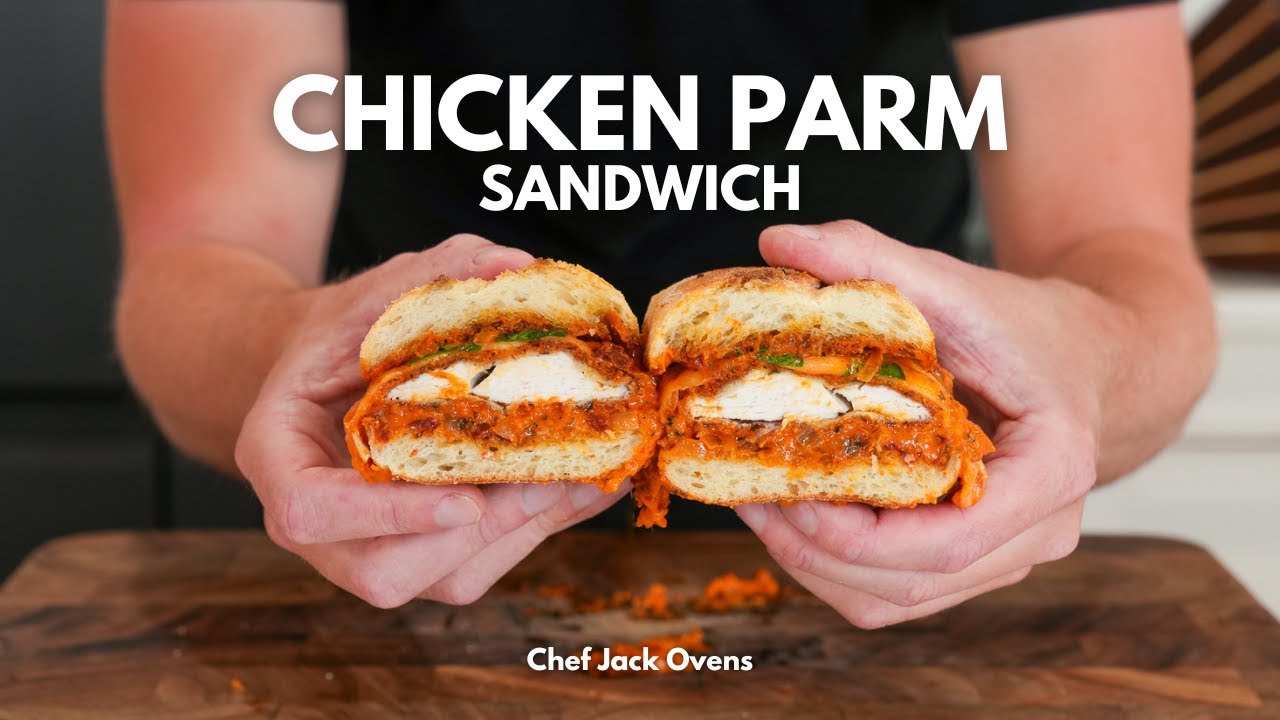
“The chicken parm sandwich fails in exactly two places: a coating that turns soggy before it hits the plate, and cheese that slides off in a single cold slab. Fix those two things and everything else takes care of itself. This method solves both — through pounding technique, panko geometry, and knowing when to pull the chicken off the heat.”
Why This Recipe Works
The chicken parm sandwich is one of those dishes that looks simple right up until you make a bad one. Then you understand exactly how many things can go wrong between a chicken breast and a toasted roll. The coating falls off. The bread disintegrates. The cheese sits there like a cold tile. The chicken is cooked through in some places and dangerously optimistic in others.
All of these failures trace back to decisions made before the pan even gets hot.
The Physics of a Good Cutlet
Chicken breasts are not uniform objects. They taper dramatically from the thick center lobe to the thin tenderloin end — a difference of sometimes three-quarters of an inch. That's the problem. When you fry an uneven cutlet, the thin end reaches 165°F in four minutes while the thick end needs eight. By the time the thick end is safe to eat, the thin end is dry, the coating is dark, and you've spent nine dollars on a sandwich that tastes like a cafeteria.
The pound solves this entirely. Half an inch, flat and even, means every part of the breast finishes at the same time. It also means your crust-to-meat ratio improves dramatically — more surface area, more contact with the hot oil, better texture in every bite.
Why Panko and Not Regular Breadcrumbs
Regular Italian breadcrumbs are fine. Panko is better. The difference is geometry — panko is made from crustless bread processed into large, irregular flakes that create an open, airy structure when fried. That structure traps hot air during cooking, which is what produces the audible crunch when you bite in. Regular breadcrumbs are finer and denser. They fry into a thicker, heavier shell that reads as coating rather than crust.
Adding grated Parmigiano-Reggiano directly into the panko is not optional. The cheese's protein and fat content accelerates Maillard browning, which means a deeper color and richer flavor before the oil has time to saturate the crust. It also acts as a structural binder, holding the flakes together so the coating moves as one piece instead of shattering.
The Marinara Problem
Most people treat marinara as a passive ingredient. They dump it cold from a jar directly onto the hot chicken and wonder why the sandwich is simultaneously wet and bland. Warming the sauce in a pan with minced garlic for even three to four minutes completely changes its character — the garlic blooms in the residual oil, the sauce tightens slightly, and the flavors cohere instead of tasting like separate components stacked on bread.
The garlic in the sauce and the garlic powder in the breading are not redundant. They operate differently. The powdered garlic in the crust browns during frying and becomes savory and slightly sweet. The fresh garlic in the warm sauce stays bright and pungent. Together they create depth that neither produces alone.
The Roll Is Structural Engineering
A heavy-bottomed skillet for the toast is not overkill. The ciabatta roll needs to be properly crisped on its cut face — not just warm, but structurally reinforced against the incoming sauce. Butter on the cut side accelerates browning and adds richness, but the real goal is waterproofing. A well-toasted roll can hold marinara for the full length of the sandwich without losing integrity. An under-toasted roll begins dissolving approximately forty-five seconds after assembly.
This is why you serve immediately. The crust window on panko-breaded chicken is roughly three to five minutes from pan to plate. After that, moisture migration from the sauce begins softening the coating from the inside out, and the structural contract of the sandwich quietly breaks down.
Build it fast. Eat it faster.
Where Beginners Mess This Up
Before we start, read this. These are the 4 reasons your chicken parmesan sandwich (crispy, gooey, done in 30 minutes) will fail:
- 1
Skipping the pound: Uneven chicken breast thickness is the number one reason the coating burns before the interior hits 165°F. The thicker end is still raw when the thin end is overcooked and the crust is scorched. Pound to a uniform half-inch and the whole cutlet cooks in the same window.
- 2
Crowding the pan: Two chicken breasts per batch is the maximum for a standard 12-inch skillet. Three or four at once drops the oil temperature immediately and turns your sear into a steam. The result is pale, soft coating that absorbs oil instead of crisping in it.
- 3
Moving the chicken too early: The crust needs uninterrupted contact with the hot pan to set. If you poke, press, or shift the cutlet in the first three minutes, you break the crust before it has bonded to the meat. Lay it down and leave it alone until it releases cleanly on its own.
- 4
Using cold mozzarella straight from the fridge: Cold fresh mozzarella doesn't melt — it just sits on top and sweats. Pull it out 15 minutes before cooking. Room-temperature mozzarella becomes properly molten under heat, which is the entire textural point of this sandwich.
The Video Reference Library
Want to see it in action? Here are the exact videos we analyzed and combined to build this foolproof recipe translation:
The source video for this recipe. Covers the breading station setup and pan temperature management in detail. Watch the section on coating adhesion — it's the clearest explanation of why the flour layer matters.
🛠️ Core Equipment
- Meat mallet or heavy skilletFor pounding the chicken to even thickness. Even half-inch cutlets are the foundation of a fast, evenly cooked sandwich. No mallet? The bottom of a cast iron pan works fine.
- Large skillet (12-inch, heavy-bottomed)Thin pans create hot spots that burn the panko in one corner before the rest catches up. A heavy stainless or cast iron skillet maintains even oil temperature across the full surface.
- Instant-read thermometerChicken parm sandwiches are thick enough that color alone is a bad doneness indicator. Pull at exactly 165°F — not 170°F, not 175°F. Every extra degree costs you juiciness you can't get back.
- Three shallow bowls for dredgingFlour, egg, and panko must each have their own wide, flat vessel. Deep bowls make it impossible to press the coating firmly onto both sides. Shallow bowls let you work fast and coat evenly.
Chicken Parmesan Sandwich (Crispy, Gooey, Done in 30 Minutes)
🛒 Ingredients
- ✦4 boneless, skinless chicken breasts, about 6 ounces each
- ✦1 cup all-purpose flour
- ✦2 large eggs
- ✦1.5 cups panko breadcrumbs
- ✦0.75 cup grated Parmigiano-Reggiano cheese
- ✦1.5 teaspoons kosher salt
- ✦0.75 teaspoon freshly ground black pepper
- ✦0.5 teaspoon garlic powder
- ✦0.5 teaspoon dried oregano
- ✦4 tablespoons extra-virgin olive oil
- ✦2 cups marinara sauce
- ✦8 ounces fresh mozzarella, sliced into 4 portions, room temperature
- ✦4 ciabatta or hoagie rolls, split lengthwise
- ✦0.25 cup fresh basil leaves, roughly torn
- ✦2 tablespoons butter, for toasting rolls
- ✦1 clove garlic, minced
- ✦Pinch of red pepper flakes, optional
👨🍳 Instructions
01Step 1
Pat the chicken breasts completely dry with paper towels.
02Step 2
Place each breast between two sheets of plastic wrap and pound to an even half-inch thickness using a meat mallet or heavy skillet, working from the center outward.
03Step 3
Set up your dredging station: flour with 0.5 teaspoon salt and 0.25 teaspoon pepper in the first bowl, eggs whisked with 1 tablespoon water in the second, and panko mixed with Parmigiano-Reggiano, remaining salt and pepper, garlic powder, and dried oregano in the third.
04Step 4
Coat each breast in flour, shaking off the excess, then in egg, then press firmly into the panko mixture on both sides. Set breaded cutlets on a wire rack for 5 minutes before cooking.
05Step 5
Heat 2 tablespoons of olive oil in a large heavy skillet over medium-high heat until shimmering, about 1 minute.
06Step 6
Add two breaded cutlets to the pan. Cook undisturbed for 5 to 6 minutes until the coating is deep golden brown and releases cleanly from the pan.
07Step 7
Flip and cook the second side for 4 to 5 minutes until golden and the internal temperature reads 165°F.
08Step 8
Transfer to a clean plate and repeat with the remaining 2 tablespoons of oil and the remaining cutlets.
09Step 9
Combine marinara sauce with minced garlic and red pepper flakes in a small saucepan. Warm over low heat for 3 to 4 minutes, stirring occasionally.
10Step 10
Brush the cut sides of the ciabatta rolls with butter and toast cut-side down in a skillet over medium heat for 2 to 3 minutes until golden.
11Step 11
Spread marinara on the bottom half of each roll. Place a cutlet on top, add one portion of mozzarella, then spoon more marinara over the cheese.
12Step 12
Scatter torn basil over the top, close the sandwich, and serve immediately.
Nutrition Per Serving
Estimates based on standard preparation. Adjustments alter macros.
🔄 Substitutions
Instead of All-purpose flour...
Use Chickpea flour or almond flour blend
Slightly nuttier flavor with a comparable crust. May need 10% less liquid in the egg wash since chickpea flour absorbs moisture differently.
Instead of Fresh mozzarella...
Use Part-skim mozzarella or burrata
Part-skim melts just as well with less fat. Burrata is a richer choice — the creamy center spills out when you bite in, which is either perfect or chaotic depending on how you feel about it.
Instead of Ciabatta rolls...
Use Whole wheat sourdough or sprouted grain rolls
Earthier flavor and more fiber. Toast slightly longer than you would ciabatta — the denser crumb needs more heat to develop a proper crust.
Instead of Panko breadcrumbs...
Use Panko mixed with ground flaxseed or crushed walnuts
Nuttier, denser crust with more textural variation. Adds omega-3s and holds up slightly longer before going soft under the sauce.
🧊 Storage & Reheating
In the Fridge
Store cooked chicken cutlets and sauce separately in airtight containers for up to 3 days. Do not store assembled sandwiches — the bread goes to mush within an hour.
In the Freezer
Breaded, cooked cutlets freeze well for up to 2 months. Lay flat on a sheet pan to freeze solid before transferring to a zip-lock bag. Reheat from frozen.
Reheating Rules
Reheat cutlets in a 400°F oven on a wire rack for 8 to 10 minutes. This restores the crust. The microwave softens the coating permanently — use it only if you have accepted a soft sandwich as your fate.
❓ Frequently Asked Questions
Why does my breading fall off when I flip the chicken?
Two reasons: you moved it too early, or you skipped the flour stage. The flour layer is a dry adhesive that lets the egg wash bond to the meat. Without it, the egg slides off and takes the panko with it. The flip timing issue is simpler — the crust releases naturally when it's ready. If it's sticking to the pan, give it another minute.
Can I bake the chicken instead of pan-frying it?
You can. Bake at 425°F on a wire rack set over a sheet pan for 18 to 20 minutes, flipping once at the halfway mark. The crust won't be as deeply golden or as crispy as the pan-fried version, but it's a legitimate alternative if you want less oil involvement.
What's the right oil temperature for frying the cutlets?
The oil should be shimmering but not smoking — around 375°F. A reliable test: drop a pinch of panko into the oil. It should sizzle immediately and turn golden within 30 seconds. If it just sits there, the oil isn't hot enough and you'll get soggy, oil-logged coating.
Can I prep the breaded cutlets in advance?
Yes. Bread them and refrigerate on a wire rack, uncovered, for up to 4 hours. The exposed surface dries out slightly, which actually improves crust adhesion when they hit the hot oil. Don't cover them — trapped moisture softens the coating before it ever reaches the pan.
My marinara makes the bread soggy. How do I prevent that?
Two things. First, toast the rolls aggressively — not lightly golden, but properly crisped on the cut face. Second, spread the sauce on the roll first, then place the chicken on top. The chicken acts as a barrier that slows moisture transfer from the sauce to the bread. Sauce directly on soft bread is a fast path to structural failure.
Is fresh mozzarella better than shredded?
For this sandwich, yes. Fresh mozzarella has a higher moisture content that creates that molten, slightly stretchy pull when you bite in. Pre-shredded mozzarella contains anti-caking agents that interfere with melting and produce a greasier, less cohesive result. The difference is noticeable.
The Science of
Chicken Parmesan Sandwich (Crispy, Gooey, Done in 30 Minutes)
We turned everything on this page into a beautiful, flour-proof PDF cheat sheet. Print it out, stick it to your fridge, and never mess up your chicken parmesan sandwich (crispy, gooey, done in 30 minutes) again.
*We'll email you the high-res PDF instantly. No spam, just perfectly cooked meals.
AlmostChefs Editorial Team
We translate the internet's most popular cooking videos into foolproof, beginner-friendly written recipes. We analyze multiple methods, test them in our kitchen, and engineer a single "Master Recipe" that gives you the best possible result with the least possible stress.