Chicken Mulligatawny (The Anglo-Indian Soup Worth Knowing)
A warming Anglo-Indian soup built on bloomed curry spices, coconut milk, tender shredded chicken, and red lentils that dissolve into a silky, complex broth. We simplified the technique without sacrificing a gram of depth — ready in under an hour.
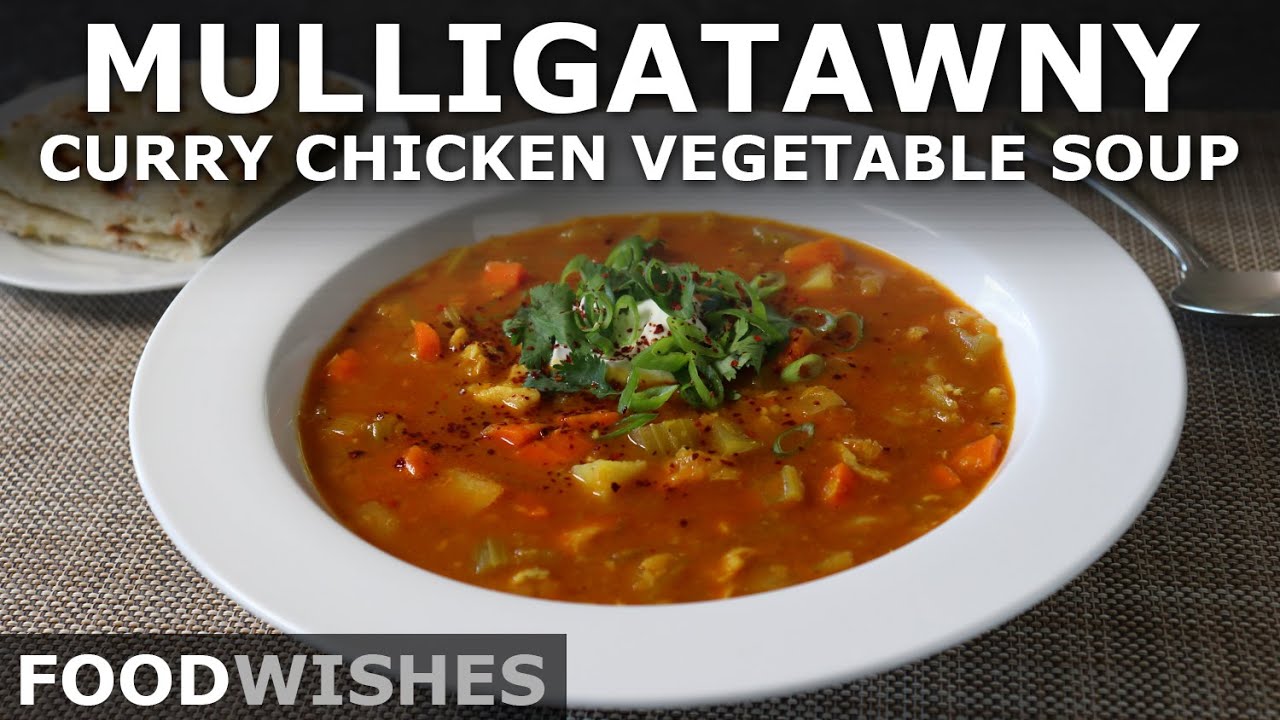
“Mulligatawny is the soup that British colonists encountered in South India, couldn't pronounce, couldn't leave alone, and eventually couldn't live without. The name comes from the Tamil 'milagu tannir' — pepper water. What arrived in Victorian cookbooks was something altogether richer: spiced, coconut-creamed, and thickened with lentils into a bowl that is simultaneously broth and stew and something entirely its own. Most modern versions overcomplicate it or water it down. This one does neither.”
Why This Recipe Works
Mulligatawny sits at one of the more interesting culinary crossroads in world food history: a South Indian pepper broth that passed through British colonial kitchens, picked up lentils, cream, and apple along the way, then arrived in the Western canon as something neither Indian nor British but entirely its own. Most recipes treat it as a generic curry soup. That's a mistake. Understanding what makes it distinct is what makes it worth cooking.
The Spice Sequence
Everything in mulligatawny depends on what happens in the first five minutes of cooking. The aromatics — onion, garlic, ginger — go in first and soften. Then the dry spices hit the pan. This sequence is not a suggestion. Curry powder, turmeric, and cumin are loaded with fat-soluble flavor compounds that oil can extract and water cannot. When you bloom them in the hot oil that coated the onions, you are pulling those compounds out of the spice powder and distributing them through the entire fat base. When liquid hits that base, it picks up flavors that would have remained locked inside the powder if you'd just stirred the spices in cold.
The visual cue: the spices should darken by a shade and the kitchen should smell aggressively fragrant. One minute of blooming produces a perceptibly better soup than zero minutes of blooming. This single step is responsible for most of the flavor depth in the finished bowl.
What the Lentils Are Actually Doing
Red lentils are not here for texture — they're here to build body. Unlike green or brown lentils, red lentils have had their outer hull removed, which means they cook fast and dissolve easily. After 20-25 minutes of simmering, they break down at the edges and release starch directly into the broth, thickening it from within without any blending, pureeing, or added cream. The result is a broth that coats a spoon and satisfies in a way that thin soups cannot.
The apple works on the same principle as acid-fat balance in cooking. Coconut milk is rich, slightly sweet, and completely uncomplicated. Curry spices are earthy and warm. The apple — finely diced, added in the last five minutes — provides a bright, tart contrast that keeps every spoonful from feeling heavy. Victorian recipe writers understood this. The apple is not a quirky addition. It's a structural component.
Using a Heavy-Bottomed Pot
The equipment recommendation here is not casual. A thin pot over medium-high heat will create hot spots that scorch your spice bloom and cause the lentils to stick and burn as they begin breaking down. A heavy-bottomed pot with thick walls — enameled cast iron, heavy stainless, or thick aluminum — distributes heat evenly across the entire base. You get a consistent simmer across the whole surface, which is what lets the lentils break down gradually and uniformly rather than scorching at the center while the edges undercook.
Bone Broth as a Base Ingredient
This recipe calls for chicken bone broth, not regular chicken stock, and the distinction matters. Bone broth is simmered for significantly longer than stock, long enough to extract the collagen and gelatin from the bones. That gelatin, when dissolved into your soup, gives the finished broth a silky, almost lip-coating mouthfeel that regular broth cannot replicate. Paired with coconut milk, it produces a soup that reads as richer and more complex than its ingredient list suggests.
If bone broth isn't available, low-sodium chicken stock works — but add an extra five minutes to the simmer and expect a slightly thinner final texture. The lentils will compensate partially, but the mouthfeel won't be the same.
Why This Soup Is Better the Next Day
Mulligatawny belongs to a category of dishes — along with biryani, bolognese, and most braised proteins — that improve dramatically with rest. The reason is straightforward: curry spices are fat-soluble, and as the soup sits, more fat-soluble compounds continue migrating from the spice particles into the liquid surrounding them. By hour 24, flavor compounds that were still trapped in the spice particles when you first served the soup have fully bloomed into the broth. The soup tastes more integrated, more complex, and more itself. Make it on Sunday and eat it on Monday. You'll understand.
Where Beginners Mess This Up
Before we start, read this. These are the 4 reasons your chicken mulligatawny (the anglo-indian soup worth knowing) will fail:
- 1
Not blooming the spices: Curry powder, turmeric, and cumin stirred into cold liquid taste flat and raw. You must toast them in hot oil with the aromatics for 1-2 minutes — the fat pulls out the fat-soluble flavor compounds that water cannot. Skip this step and you're making spiced chicken water, not mulligatawny.
- 2
Adding the apples too early: Apples need only 5 minutes in the hot soup. Added at the beginning they dissolve completely and turn the broth cloying and sweet. Added in the last 5 minutes they soften just enough to integrate while keeping their subtle tartness, which is the counterbalance to the coconut milk's richness.
- 3
Cooking the lentils too short or too long: Red lentils need 20-25 minutes to turn tender and begin breaking down into the broth. Undercooked and you have chalky pellets floating in curry soup. Overcooked past 30 minutes and the texture turns gummy. The window is specific — use a timer.
- 4
Under-seasoning at the end: Lentils and coconut milk both absorb salt aggressively during cooking. The soup always needs more seasoning than you think after simmering. Taste at the very end and season assertively — this is not a dish that benefits from restraint at the salt stage.
The Video Reference Library
Want to see it in action? Here are the exact videos we analyzed and combined to build this foolproof recipe translation:
The primary video reference for this recipe. Clear demonstration of the spice blooming step and how the lentils should look at each stage of cooking.
🛠️ Core Equipment
- Large heavy-bottomed potEven heat distribution across the wide base prevents the spices from scorching during blooming and the lentils from sticking as they break down. A thin pot causes hot spots that ruin both steps.
- Microplane or fine graterFresh ginger grated fine integrates invisibly into the base while releasing maximum aromatic oil. Minced ginger chunks cook unevenly and leave fibrous bits in the finished soup.
- LadleThis is a thick, chunky soup. A ladle controls the ratio of broth to solids in each bowl, which matters for presentation and eating experience.
Chicken Mulligatawny (The Anglo-Indian Soup Worth Knowing)
🛒 Ingredients
- ✦2 tablespoons extra virgin olive oil
- ✦2 medium yellow onions, finely diced
- ✦4 cloves garlic, minced
- ✦1 tablespoon fresh ginger, grated
- ✦2 tablespoons curry powder
- ✦1 teaspoon ground turmeric
- ✦1 teaspoon ground cumin
- ✦6 cups low-sodium chicken bone broth
- ✦1 can (14 ounces) light coconut milk
- ✦3 cups shredded rotisserie chicken
- ✦2 medium carrots, cut into thin matchsticks
- ✦1 cup diced celery
- ✦1 red bell pepper, diced
- ✦1 cup red lentils, rinsed
- ✦2 medium apples, peeled and finely diced
- ✦3 tablespoons fresh lemon juice
- ✦1 teaspoon sea salt
- ✦1/2 teaspoon black pepper
- ✦1/4 cup fresh cilantro, chopped
- ✦2 green onions, sliced thin
👨🍳 Instructions
01Step 1
Heat olive oil in a large heavy-bottomed pot over medium-high heat until shimmering, about 1 minute.
02Step 2
Add the diced onions and sauté, stirring frequently, until translucent and beginning to soften, approximately 5 minutes.
03Step 3
Stir in the minced garlic and grated ginger, cooking until fragrant, about 1 minute. Scrape the pot bottom to release any browned bits.
04Step 4
Sprinkle in the curry powder, turmeric, and cumin. Stir constantly to coat all the vegetables, blooming the spices in the oil for 1-2 minutes.
05Step 5
Pour in the chicken bone broth and coconut milk, bringing the mixture to a gentle simmer over medium heat.
06Step 6
Add the shredded rotisserie chicken, carrots, celery, red bell pepper, and red lentils. Stir well to combine.
07Step 7
Simmer uncovered for 20-25 minutes, until the lentils are tender and beginning to break down into the broth.
08Step 8
Stir in the diced apples and lemon juice. Continue simmering for 5 minutes until the apples just soften.
09Step 9
Season generously with sea salt and black pepper. Taste and adjust — this soup needs more salt than you expect.
10Step 10
Ladle into bowls and garnish each serving with fresh cilantro and sliced green onions. Serve immediately with warm naan or crusty bread.
Nutrition Per Serving
Estimates based on standard preparation. Adjustments alter macros.
🔄 Substitutions
Instead of Full-fat coconut milk...
Use Light coconut milk or Greek yogurt swirled in at the end
Slightly less rich mouthfeel but brighter, tangier finish. Greek yogurt adds probiotics — do not boil after adding or it will curdle.
Instead of Regular chicken broth...
Use Homemade bone broth or low-sodium vegetable broth
Bone broth adds collagen and a deeper umami backbone. Vegetable broth makes it fully plant-based if you also swap the chicken.
Instead of Red lentils...
Use Split peas or green lentils
Firmer texture, more earthy flavor. Increase simmer time by 10-15 minutes and expect less thickening of the broth.
Instead of Rotisserie chicken...
Use Poached chicken breasts or leftover grilled chicken
Cleaner flavor profile, lower sodium. Add 15-20 minutes if starting from raw chicken — dice it and simmer directly in the broth.
🧊 Storage & Reheating
In the Fridge
Store in an airtight container for up to 4 days. The flavor deepens significantly after 24 hours as the spices continue to bloom.
In the Freezer
Freeze in individual portions for up to 3 months. The lentils break down further after freezing, making the soup even thicker — add broth when reheating.
Reheating Rules
Reheat on the stovetop over medium-low heat with a splash of bone broth or water, stirring frequently. The soup will have thickened considerably in storage — thin to your desired consistency.
❓ Frequently Asked Questions
What does mulligatawny actually mean?
It comes from the Tamil words 'milagu tannir,' meaning pepper water. The original South Indian dish was a thin, spiced broth. British colonists in India encountered it, then transformed it into the heartier, cream-thickened version that eventually appeared in Victorian cookbooks and spread worldwide.
Why does my mulligatawny taste flat even though I used all the spices?
You likely skipped or rushed the spice blooming step. Curry powder, turmeric, and cumin must be toasted in hot fat with the aromatics for at least 1-2 minutes before any liquid is added. The fat releases compounds in the spices that water cannot dissolve — skipping this step leaves the flavor locked inside the powder.
Can I make this vegetarian?
Yes. Swap the chicken for a second cup of red lentils or add one can of drained chickpeas, and use vegetable broth in place of chicken bone broth. The soup loses some protein density but gains in fiber and is equally satisfying.
The soup got very thick after sitting. Did I do something wrong?
No — this is correct. Red lentils continue absorbing liquid as the soup rests. Simply add a splash of broth when reheating and stir over medium heat. Many people prefer the next-day texture, which is closer to a thick stew.
Is the apple weird? Can I leave it out?
The apple is one of the defining ingredients of mulligatawny and should not be omitted. It contributes a subtle sweet-tart note that balances the curry spices and coconut milk. Finely diced and added for only 5 minutes, it integrates completely — you won't find apple chunks, just a background brightness the soup needs.
How spicy is this recipe?
As written, this is mild to moderate — the curry powder and turmeric add warmth and depth without significant heat. For more heat, add 1/4 teaspoon cayenne with the spices, or stir in a teaspoon of sambal oelek at the end. The original Tamil pepper water was significantly spicier than most Western adaptations.
The Science of
Chicken Mulligatawny (The Anglo-Indian Soup Worth Knowing)
We turned everything on this page into a beautiful, flour-proof PDF cheat sheet. Print it out, stick it to your fridge, and never mess up your chicken mulligatawny (the anglo-indian soup worth knowing) again.
*We'll email you the high-res PDF instantly. No spam, just perfectly cooked meals.
AlmostChefs Editorial Team
We translate the internet's most popular cooking videos into foolproof, beginner-friendly written recipes. We analyze multiple methods, test them in our kitchen, and engineer a single "Master Recipe" that gives you the best possible result with the least possible stress.