Chicken Marsala (Proper Pan Sauce, Marsala Wine Reduction, No Shortcuts)
Chicken marsala built around a real pan sauce — chicken pounded thin and dredged, cremini mushrooms cooked until golden, and a Marsala wine reduction that deglazes the fond. The fond is the flavor.

“Chicken marsala at most restaurants is chicken in brown gravy with wine somewhere in the ingredient list. That's not what this is. Real chicken marsala is a pan sauce — it lives and dies on the fond, the concentrated caramelized protein stuck to the bottom of the pan after searing the chicken. That fond is free flavor. Deglazing it with Marsala wine lifts it in seconds and turns it into a sauce that tastes like it simmered for hours. Learn this once and it works for every pan sauce you'll ever make.”
Why This Recipe Works
Chicken marsala is a textbook pan sauce, and pan sauces are textbook chemistry. Every step in this recipe exists to manipulate either the Maillard reaction, protein coagulation, or emulsification. Once you see those three mechanisms operating, you'll understand why the steps are in this exact order — and why shortcuts break the dish.
The fond is non-negotiable. When chicken is seared in a hot skillet, proteins on the surface denature and bond to the metal surface of the pan. Simultaneously, the Maillard reaction between amino acids and reducing sugars on the chicken's surface generates hundreds of new flavor compounds — roasted, nutty, caramel-adjacent flavors that don't exist in the raw chicken. The crust that forms is only part of the story. The larger payoff is what gets left behind on the pan: the fond. When the chicken releases and is removed, that dark-brown layer of caramelized protein adheres to the surface. It's concentrated, intensely flavored, and essentially free — the result of a process that happened while you were cooking the chicken anyway. Deglazing with Marsala dissolves it in seconds. This is why a stainless steel or cast iron pan is required. Non-stick surfaces are coated with polytetrafluoroethylene (PTFE), which prevents protein adhesion — it's the same property that makes eggs slide off. That property also means no fond forms, and without fond, there is no real pan sauce. A non-stick pan produces chicken in reduced wine, not chicken marsala.
Mushroom browning requires heat and space, not time. Cremini mushrooms are approximately 92% water by weight. When a mushroom hits a hot pan, two competing processes begin: water evaporation from the surface, and the Maillard reaction at the surface. For browning to occur, the surface must be hot enough (above 280°F) and dry enough for the Maillard reaction to dominate. When mushrooms are crowded, the evaporating water from adjacent mushrooms saturates the immediate pan environment with steam. That steam condenses back onto the mushroom surfaces, keeping them cool and wet — preventing the surface from ever drying enough to brown. The mushrooms essentially braise themselves. The fix is mechanical: cook in batches with significant space between each slice, at high heat, and don't stir until one side is deeply golden. A 12-inch skillet can handle 8 oz of mushrooms in one batch if they're spread properly — in a smaller pan, cook in two batches.
Marsala wine is specifically suited to this dish. Marsala is a fortified wine from Sicily — base wine with added grape spirits, producing a product with 15-20% alcohol and a naturally oxidized, nutty character from extended barrel aging. The oxidation produces acetaldehyde, which contributes a slightly nutty, complex flavor note absent in standard wine. Dry Marsala has less than 1% residual sugar; sweet Marsala has 4-10%. The flavor is fundamentally different — dry Marsala is savory-forward with its oxidized character dominating, while sweet Marsala is noticeably syrupy and dessert-like. For chicken marsala, dry is correct. The Marsala reduction step drives off the alcohol (boiling point ~173°F) while concentrating the flavor compounds that aren't volatile. The fond dissolves into the wine as it reduces, and what remains after reducing by half is a deeply flavored, slightly viscous base for the sauce.
The cream-butter finish is an emulsification step. The final sauce is an emulsion — fat droplets suspended in an aqueous (water-based) liquid. The cream's fat globules and the butter's milk proteins act as both fat phase and emulsifiers. Butter contains naturally occurring lecithin (from the milk), which acts as an emulsifier at the fat-water interface, stabilizing the sauce against separation. Adding butter off-heat or over very low heat is called mounting with butter (beurre monté in French technique). The technique works because butter's emulsifiers function best between 160-180°F. Above that temperature, the heat breaks down the emulsion structure and the butter separates into a greasy pool. The visual cue is the sauce going from glossy and slightly thick to an oily sheen on the surface — at that point the emulsion has broken. Swirling the pan off heat after adding butter distributes the milk proteins and lecithin into the sauce before the temperature can climb.
Pounding chicken to uniform thickness is a physics solution. Heat transfers through meat via conduction — from the hot pan surface inward toward the center. The rate of heat transfer through meat tissue is approximately constant (meat is a poor thermal conductor). A chicken breast that varies from 3/4 inch at the center to 1/4 inch at the thin end means the thin end cooks three times faster than the center. Pounding to a uniform 1/4 inch means the entire cutlet reaches the same internal temperature simultaneously. The faster cooking time (3-4 minutes per side) is a bonus: less time in the pan means less moisture loss before the sauce goes in.
The cream in this recipe is restrained — just 2 tablespoons. Its function is textural: the fat adds richness and the proteins help stabilize the emulsion, but the dish should taste of wine and mushroom, not cream. If the cream flavor dominates, the reduction step was skipped or shortened. A properly reduced Marsala-broth base has enough concentration and body on its own; the cream is a refinement, not a rescue.
Where Beginners Mess This Up
Before we start, read this. These are the 4 reasons your chicken marsala (proper pan sauce, marsala wine reduction, no shortcuts) will fail:
- 1
Mushrooms steaming instead of browning: You added too many mushrooms to the pan at once or the pan wasn't hot enough. Mushrooms are about 92% water. When crowded, they lower the pan temperature below the Maillard browning threshold (around 280°F) and release that water as steam, which cooks them rather than browning them. Cook mushrooms in a single layer with space between them, in batches if necessary, on high heat.
- 2
Watery, thin sauce: The Marsala wasn't reduced enough, or the chicken broth was added before the wine had reduced by half. The reduction concentrates both the flavor compounds and the natural pectin and gelatin in the broth, which is what gives the sauce body. Let each liquid reduce before adding the next.
- 3
Chicken dry and overcooked: Pounding the chicken to 1/4 inch means it cooks in 3-4 minutes per side maximum — often less. Thin cutlets carry over-cook from residual heat. Pull them when they register 155°F internally, not 165°F. Carryover will bring them to safe temperature by the time they rest.
- 4
Fond burning instead of browning: The heat was too high during the chicken sear, or the oil began smoking. Properly browned fond looks dark brown and scraggles off the pan cleanly when liquid is added. Burnt fond tastes bitter and cannot be fixed by the sauce. If the pan smells acrid before you deglaze, discard the fat, wipe the pan, and start the mushrooms in a clean pan.
The Video Reference Library
Want to see it in action? Here are the exact videos we analyzed and combined to build this foolproof recipe translation:
Chlebowski's science-forward breakdown of pan sauce construction — covers fond development, wine reduction sequence, and the butter-cream emulsification finish. Best reference for understanding the why behind each step.
A general pan sauce tutorial that applies directly to marsala. Watch this for the underlying mechanics: fond, deglaze, reduce, mount with fat. The principles here apply to every pan sauce you'll ever make.
Full recipe walkthrough with a focus on mushroom technique and the Marsala reduction. Useful for seeing the visual browning cues for the mushrooms and the consistency target for the finished sauce.
🛠️ Core Equipment
- 12-inch stainless steel or cast iron skilletNon-stick pans don't build fond. A [stainless or cast iron skillet](/kitchen-gear/review/skillet) is required — the fond that sticks to the pan surface is the entire flavor base of the sauce. It only develops in a pan where proteins can adhere to the surface.
- Meat mallet or heavy skilletTo pound the chicken to even 1/4-inch thickness. Uneven chicken thickness means the thinner edge overcooks by the time the thick center reaches temperature. The mallet solves a physics problem.
- Instant-read thermometerThin chicken cutlets overcook in seconds. An instant-read thermometer removes the guesswork — pull at 155°F and let carryover finish the job.
- Wide, shallow pan or plate for dredgingA wide, flat surface makes even flour coating possible. Dredging in a deep bowl leaves thick, uneven clumps of flour on the chicken that fry unevenly.
Chicken Marsala (Proper Pan Sauce, Marsala Wine Reduction, No Shortcuts)
🛒 Ingredients
- ✦4 boneless skinless chicken breasts, pounded to 1/4-inch thickness
- ✦1/2 cup all-purpose flour
- ✦1 teaspoon salt
- ✦1/2 teaspoon black pepper
- ✦4 tablespoons olive oil, divided
- ✦2 tablespoons unsalted butter
- ✦8 oz cremini mushrooms, sliced 1/4-inch thick
- ✦4 cloves garlic, minced
- ✦3/4 cup dry Marsala wine
- ✦1/2 cup low-sodium chicken broth
- ✦2 tablespoons heavy cream
- ✦1 tablespoon fresh thyme leaves
- ✦Salt and pepper to taste
- ✦Fresh flat-leaf parsley, chopped, for garnish
👨🍳 Instructions
01Step 1
Pound chicken breasts between two sheets of plastic wrap to 1/4-inch thickness. Season both sides with salt and pepper. Dredge in flour, shaking off the excess.
02Step 2
Heat 2 tablespoons of olive oil in a 12-inch skillet over medium-high heat until the oil shimmers but is not smoking. Add the chicken in a single layer without crowding. Sear 3-4 minutes per side until golden brown and cooked through (155°F internal). Transfer to a plate and tent loosely with foil.
03Step 3
Reduce heat to medium. Add remaining 2 tablespoons olive oil to the same pan. Add mushrooms in a single layer — do not crowd. Cook undisturbed for 3-4 minutes until deeply browned on one side, then toss and cook another 2-3 minutes.
04Step 4
Add garlic and thyme to the mushrooms. Cook 60 seconds until fragrant, stirring constantly.
05Step 5
Pour in the Marsala wine. Scrape the bottom of the pan with a wooden spoon or spatula immediately — this lifts the fond. Bring to a boil and reduce by half, about 3-4 minutes.
06Step 6
Add the chicken broth. Simmer until the sauce is slightly thickened and has body, about 3-4 minutes. Add the heavy cream and stir to combine.
07Step 7
Add the butter and swirl the pan off the heat until it melts and emulsifies into the sauce, giving it a glossy finish.
08Step 8
Return the chicken to the pan. Simmer in the sauce for 1-2 minutes to warm through and let the chicken absorb the sauce flavor. Taste and adjust salt and pepper. Garnish with parsley.
Nutrition Per Serving
Estimates based on standard preparation. Adjustments alter macros.
🔄 Substitutions
Instead of Dry Marsala wine...
Use Dry Madeira or dry sherry
Both produce a similar oxidized, nutty wine character. Avoid cooking wine labeled 'Marsala' — it contains salt and produces a bitter sauce.
Instead of Cremini mushrooms...
Use Shiitake or baby bella mushrooms
Shiitake has a more pronounced umami character and holds its texture better at high heat. Avoid button mushrooms — they have less flavor and release more water.
Instead of Heavy cream...
Use Omit entirely, or use 2 tablespoons crème fraîche
Omitting the cream produces a cleaner, sharper sauce. Crème fraîche adds body and a slight tang without making the sauce sweet.
Instead of Chicken breasts...
Use Chicken thighs, boneless and pounded thin
Thigh meat has more fat and connective tissue — they stay juicier at higher temperatures and have more flavor. Same technique applies.
🧊 Storage & Reheating
In the Fridge
Store in an airtight container for up to 3 days. The sauce will separate slightly — reheat gently and stir to re-emulsify.
In the Freezer
Not recommended. The cream-butter emulsion in the sauce breaks when frozen and reheated, producing a greasy, separated sauce.
Reheating Rules
Reheat gently in a skillet over low heat with a splash of chicken broth to loosen the sauce. Do not boil — the emulsion will break. Stir frequently.
❓ Frequently Asked Questions
What is fond and why does it matter?
Fond is the dark brown layer of caramelized proteins and sugars that adheres to the pan after searing meat. It's created by the Maillard reaction — the same chemical process that browns bread and creates the crust on a steak. When liquid (wine, broth) is added and the pan is scraped, the fond dissolves into the liquid and becomes the flavor base of the sauce. A pan sauce made without fond is essentially just wine and broth reduced together — it's fine, but it's missing the complexity that makes the dish exceptional.
Can I use sweet Marsala instead of dry?
You can, but the result will be noticeably sweeter. Traditional chicken marsala uses dry Marsala, which has less residual sugar and a more savory, oxidized character. If you use sweet Marsala, reduce the amount slightly (1/2 cup instead of 3/4 cup) to avoid the sauce becoming cloying.
Why do my mushrooms release water instead of browning?
Two reasons: pan too cold, or mushrooms too crowded. Browning requires the pan surface to stay above 280°F (the Maillard threshold). When mushrooms hit the pan, they drop the temperature. If the pan is already borderline hot, the temperature drop pushes it below the browning threshold and the mushrooms steam in their own water. Preheat the pan thoroughly and cook in batches with space between each slice.
Why pound the chicken to 1/4 inch?
Even thickness ensures even cooking. An unpounded chicken breast is typically 3/4 inch at the thickest end and 1/4 inch at the thin end. By the time the thick end reaches 155°F, the thin end is already at 175°F and drying out. Pounding to uniform thickness means every part of the breast cooks simultaneously.
My sauce is too thin. What went wrong?
The Marsala wasn't reduced enough before the broth was added, or the broth wasn't reduced enough before adding cream. The reduction step concentrates the flavors and thickens the liquid. If the sauce is too thin at the end, remove the chicken, increase the heat, and simmer the sauce uncovered for 2-3 more minutes until it coats a spoon.
Can I make this ahead of time?
The chicken and sauce can be made up to 2 hours ahead and held in the pan off heat. Reheat very gently before serving. The sauce's emulsion is fragile — avoid reboiling. For best results, this dish is made and served immediately from the pan.
The Science of
Chicken Marsala (Proper Pan Sauce, Marsala Wine Reduction, No Shortcuts)
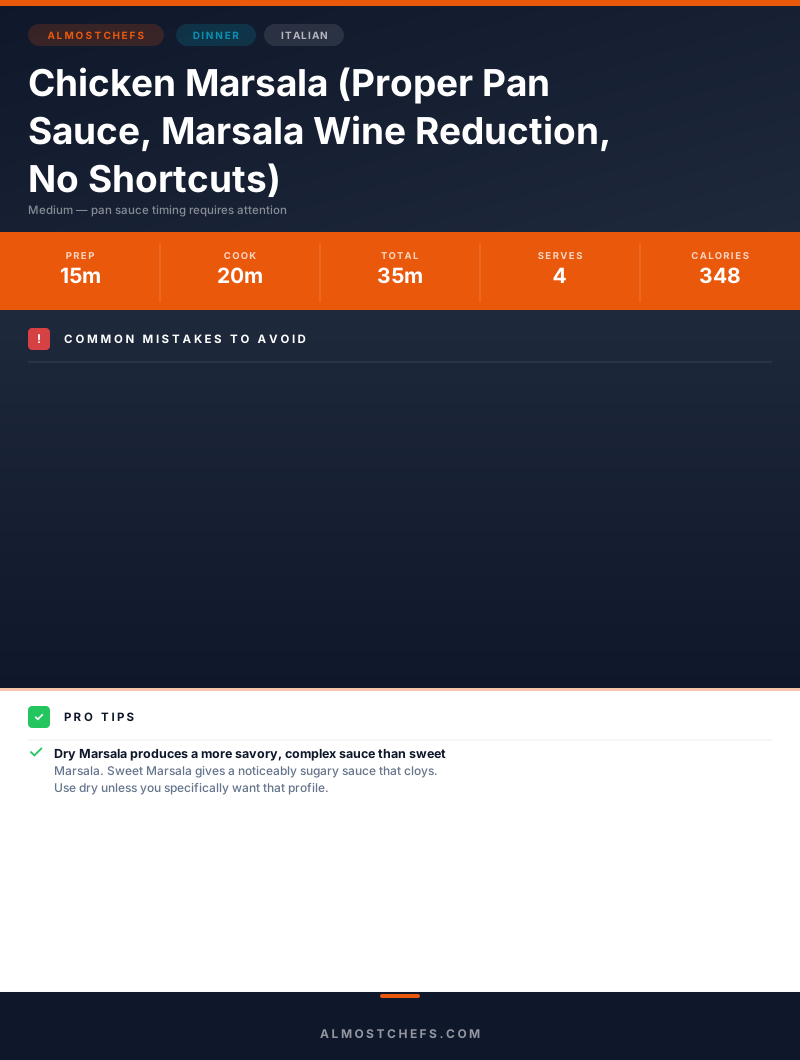
We turned everything on this page into a beautiful, flour-proof PDF cheat sheet. Print it out, stick it to your fridge, and never mess up your chicken marsala (proper pan sauce, marsala wine reduction, no shortcuts) again.
*We'll email you the high-res PDF instantly. No spam, just perfectly cooked meals.
AlmostChefs Editorial Team
We translate the internet's most popular cooking videos into foolproof, beginner-friendly written recipes. We analyze multiple methods, test them in our kitchen, and engineer a single "Master Recipe" that gives you the best possible result with the least possible stress.