The Only Chicken Hot and Sour Soup You Need (Restaurant Quality at Home)
A deeply savory Chinese-inspired soup that balances bold vinegar tang with white pepper heat, silky egg ribbons, and tender shredded chicken built from a real bone-in broth. We broke down the technique so the balance lands right every single time.
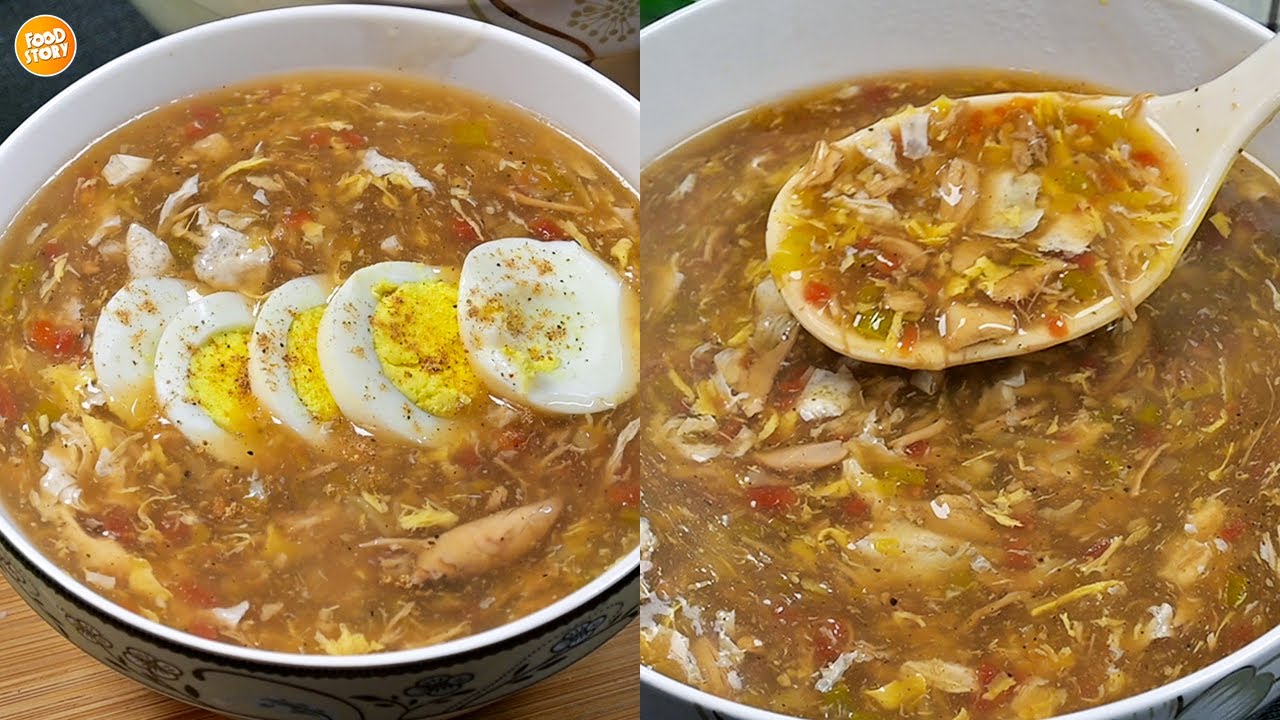
“Every Chinese restaurant has a hot and sour soup on the menu. Most of them taste the same because they come from the same industrial base. The homemade version beats them on every metric — deeper broth, actual vegetable texture, egg ribbons that are silky instead of rubbery — and the technique is simpler than it looks. The only thing you can genuinely mess up is the egg pour and the cornstarch timing. We'll tell you exactly how to nail both.”
Why This Recipe Works
Hot and sour soup is one of the most ordered dishes in Chinese-American restaurants and one of the least attempted at home. The perception is that it's complex. It isn't. It's sequential — and the sequence exists for specific reasons that most recipes never explain.
The Broth Is the Foundation
Every shortcut in this soup traces back to the broth, and every shortcut costs you something. Using pre-made stock straight from the carton produces a flat, thin base that no amount of vinegar or soy sauce can rescue. The move is to simmer bone-in chicken pieces directly in the stock for 20-25 minutes before straining. This extraction phase releases collagen from the bones and connective tissue, which gives the finished broth a natural body and sheen that a cornstarch slurry alone cannot replicate.
Skim the foam. This is not optional and not aesthetic. The grey-brown foam that rises during the first 10-15 minutes of simmering is coagulated blood proteins. Left in the pot, they produce a murky, slightly bitter broth with an off-note that lingers through every other flavor you add. Two minutes of skimming pays dividends that last the entire bowl.
The Balance Equation
Hot and sour soup is a ratio problem. The "hot" comes from white pepper — not chili, not ginger, not Sichuan peppercorn. White pepper has a distinctive nasal heat that registers differently from capsaicin, and it's what makes this soup immediately identifiable. The "sour" comes from rice vinegar, which is bright and clean without the fruitiness of apple cider or the harshness of white vinegar.
The critical rule: do not season until both elements are in the pot. Soy sauce adds substantial salt. Vinegar amplifies existing saltiness. If you salt the broth before adding either, you will overseason — and there is no fixing an oversalted soup. Add vinegar and soy sauce together, stir well, taste, then adjust.
The Thickening Science
Cornstarch thickens by gelatinization — starch granules absorbing water and swelling when heated. The slurry must hit actively simmering broth or it won't activate properly. Add it too fast and you get lumps where the starch gels before dispersing. The correct motion is a slow drizzle with one hand while the other stirs in continuous circles, distributing the starch evenly before it sets.
A fine-mesh strainer matters at the broth-straining stage for a different reason: a clean broth thickens more evenly. Particulate solids interfere with the cornstarch gelatinization, creating inconsistent pockets of texture.
The Egg Technique
This is where the soup either impresses or disappoints. Egg ribbons require two things: broth at the right temperature and a controlled pour. The broth should be at a gentle simmer — visible movement, occasional bubbles, but not a rolling boil. Boiling broth hits the egg proteins too fast and scrambles them before they can stretch.
Pour slowly, stir slowly. Use a fork to break the egg stream into a thin trickle. Your stirring hand moves in slow, wide circles — not vigorous whisking. The goal is to drag the setting egg protein into long strands rather than chopping it into clumps. It takes about 20-30 seconds and produces ribbons that are genuinely silky rather than rubbery chunks.
The sesame oil goes in last, off heat. Sesame oil's aromatic compounds are volatile — they evaporate quickly under sustained heat. Adding it at the end preserves the nutty, toasty finish that completes every bowl.
Where Beginners Mess This Up
Before we start, read this. These are the 4 reasons your the only chicken hot and sour soup you need (restaurant quality at home) will fail:
- 1
Pouring eggs into boiling broth: The broth must be at a gentle simmer — not a rolling boil — when you add the eggs. Boiling broth scrambles the egg instantly into chunky clumps. A simmer lets the proteins set slowly, pulling into long, silky ribbons. Pull the pot off heat for 30 seconds before you pour if you're unsure.
- 2
Adding cornstarch slurry to cold broth: Cornstarch only activates and thickens at temperature. If the broth isn't simmering when you drizzle in the slurry, nothing happens — then the heat spikes and the whole thing goes lumpy at once. Always ensure the broth is actively simmering, and stir continuously in circular motions as you pour.
- 3
Skipping the broth-building step: Using store-bought broth alone produces flat, thin results. Simmering the bone-in chicken directly in the broth for 20-25 minutes before straining extracts collagen and fat that give the final soup body and depth. This single step is what separates homemade from restaurant-grade at home.
- 4
Over-seasoning before the vinegar is added: Soy sauce and vinegar both carry intense saltiness and acidity. Taste and adjust only after both are incorporated — not before. Pre-salting at the broth stage leads to an over-seasoned final bowl because you haven't accounted for what's coming.
The Video Reference Library
Want to see it in action? Here are the exact videos we analyzed and combined to build this foolproof recipe translation:
The primary reference video. Shows the full bone-in chicken broth method, the cornstarch thickening technique, and the egg ribbon pour with close-ups of the texture you're aiming for.
🛠️ Core Equipment
- Large heavy-bottomed potYou need volume for 8 cups of broth plus vegetables and chicken without splashing. A [Dutch oven](/kitchen-gear/review/dutch-oven) distributes heat evenly, which matters when you're coaxing a gentle simmer rather than a boil.
- Fine-mesh strainerEssential for producing a clean, restaurant-quality broth. Pouring the cooked broth through the strainer removes all solids — bone fragments, skin bits, bay leaf — leaving a clear, rich base.
- Small bowl for cornstarch slurryCornstarch settles fast. Mix it in a dedicated bowl right before use and stir it again immediately before pouring. A fork works better than a spoon for breaking up any settled clumps.
- Fork or chopsticks for egg pourYou need fine control over the stream. Pouring directly from the bowl risks dumping the eggs too fast. Use a fork to break the flow into a thin, slow trickle while your other hand stirs the broth in slow circles.
The Only Chicken Hot and Sour Soup You Need (Restaurant Quality at Home)
🛒 Ingredients
- ✦1.25 pounds bone-in, skin-on chicken thighs or breasts
- ✦8 cups low-sodium chicken broth
- ✦3 tablespoons rice vinegar
- ✦2.5 tablespoons reduced-sodium soy sauce
- ✦1.5 teaspoons white pepper
- ✦1 cup sliced shiitake mushrooms
- ✦1 cup sliced bamboo shoots
- ✦8 ounces silken tofu, cut into small cubes
- ✦2 tablespoons cornstarch mixed with 3 tablespoons cold water
- ✦2 large eggs, lightly beaten
- ✦1 tablespoon fresh ginger, minced
- ✦3 cloves garlic, minced
- ✦2 medium carrots, thinly sliced
- ✦3 scallions, cut into 1-inch pieces
- ✦1.5 teaspoons sesame oil
- ✦1 bay leaf
- ✦Salt and white pepper to taste
👨🍳 Instructions
01Step 1
Place the chicken pieces, broth, and bay leaf in a large pot over medium-high heat and bring to a gentle simmer.
02Step 2
Skim away any foam or impurities that rise to the surface during the first 10-15 minutes of cooking.
03Step 3
Reduce heat to medium and continue simmering until the chicken is fully cooked through, approximately 20-25 minutes.
04Step 4
Remove the cooked chicken pieces from the broth using a slotted spoon and set aside on a cutting board to cool slightly.
05Step 5
Strain the cooking broth through a fine-mesh strainer into a clean pot, discarding all solids and reserving the liquid.
06Step 6
Shred the cooled chicken meat into bite-sized pieces, discarding skin and bones.
07Step 7
Return the strained broth to the pot over medium-high heat and bring back to a simmer.
08Step 8
Stir in the minced ginger and garlic and cook for 1-2 minutes until fragrant.
09Step 9
Add the sliced carrots, mushrooms, bamboo shoots, and tofu. Cook for 5-7 minutes until carrots are just tender.
10Step 10
Pour in the rice vinegar and soy sauce, stirring well to incorporate throughout the broth.
11Step 11
Season with white pepper. Taste and adjust salt and vinegar levels to your preferred balance of heat and tang.
12Step 12
Stir the cornstarch slurry to recombine, then slowly drizzle it into the simmering broth while stirring constantly in circular motions.
13Step 13
Return the shredded chicken to the pot and bring the broth back to a gentle simmer.
14Step 14
Remove the pot from heat momentarily. Slowly pour the beaten eggs into the hot broth in a thin stream while stirring gently in slow circles with a fork to create silky egg ribbons.
15Step 15
Stir in the sesame oil, scatter the scallions over the top, and serve immediately in warm bowls.
Nutrition Per Serving
Estimates based on standard preparation. Adjustments alter macros.
🔄 Substitutions
Instead of Shiitake mushrooms...
Use Cremini or baby bella mushrooms
Slightly milder earthy flavor but maintains the soup's overall character. More budget-friendly and consistently available.
Instead of Rice vinegar...
Use Apple cider vinegar
Slightly sweeter and more complex sour note. Start with 2 tablespoons and adjust up — it's marginally more acidic than rice vinegar.
Instead of Reduced-sodium soy sauce...
Use Coconut aminos or tamari
Coconut aminos reduce sodium by roughly 40% and add subtle sweetness. Tamari is gluten-free and closest in flavor profile.
Instead of Cornstarch slurry...
Use Arrowroot powder or tapioca starch mixed with water
Arrowroot produces a slightly clearer broth. Tapioca gives a slightly heavier consistency. Both are gluten-free alternatives that achieve the same silky texture.
🧊 Storage & Reheating
In the Fridge
Store in an airtight container for up to 3 days. The flavor improves significantly overnight. Store the egg ribbons in the soup — they hold up well.
In the Freezer
Freeze the broth and chicken base without the eggs and tofu for up to 2 months. Thaw overnight in the fridge, reheat to a simmer, and complete the thickening and egg steps fresh.
Reheating Rules
Reheat gently on the stovetop over medium-low heat. Add a splash of broth or water if it has thickened too much in the fridge. Do not microwave at high power — the egg ribbons turn rubbery.
❓ Frequently Asked Questions
Why are my egg ribbons clumpy instead of silky?
Two causes: broth too hot, or pour too fast. The broth should be at a gentle simmer — not boiling — when you add the eggs. Pull the pot off heat for 30 seconds if needed. Then pour the eggs in a thin stream over at least 20-30 seconds while stirring slowly. Speed in either direction produces scrambled eggs.
Can I use rotisserie chicken instead of raw bone-in chicken?
Yes, with a trade-off. Skip the initial simmering step and build your broth with store-bought stock plus ginger, garlic, and bay leaf simmered for 10 minutes. Add shredded rotisserie chicken at the same stage as the recipe indicates. You lose some depth, but the convenience trade is legitimate on weeknights.
How do I make the soup spicier?
Increase the white pepper first — it's the authentic heat vehicle in this dish. For additional heat, add a teaspoon of chili garlic sauce or a drizzle of chili oil at the end. Red pepper flakes work but produce a different, less authentic heat character.
Why is my broth cloudy?
You either boiled too aggressively during the chicken-cooking phase (rapid boiling emulsifies fat into the broth) or skipped skimming the foam. For a clearer result, maintain a steady gentle simmer and skim diligently during the first 15 minutes. Straining through a fine-mesh strainer helps significantly.
Is this soup gluten-free?
Not by default — soy sauce contains wheat. Substitute tamari or coconut aminos and verify your broth is gluten-free, and the entire recipe is naturally gluten-free. The cornstarch slurry is already gluten-free.
Can I make this vegetarian?
Yes. Replace the chicken with a second cup of mushrooms (a mix of shiitake and wood ear works well), use vegetable broth, and skip the initial protein-building step. Add a tablespoon of dark soy sauce for depth. The egg ribbons keep the soup rich; for vegan, omit eggs and increase the cornstarch slurry slightly for body.
The Science of
The Only Chicken Hot and Sour Soup You Need (Restaurant Quality at Home)
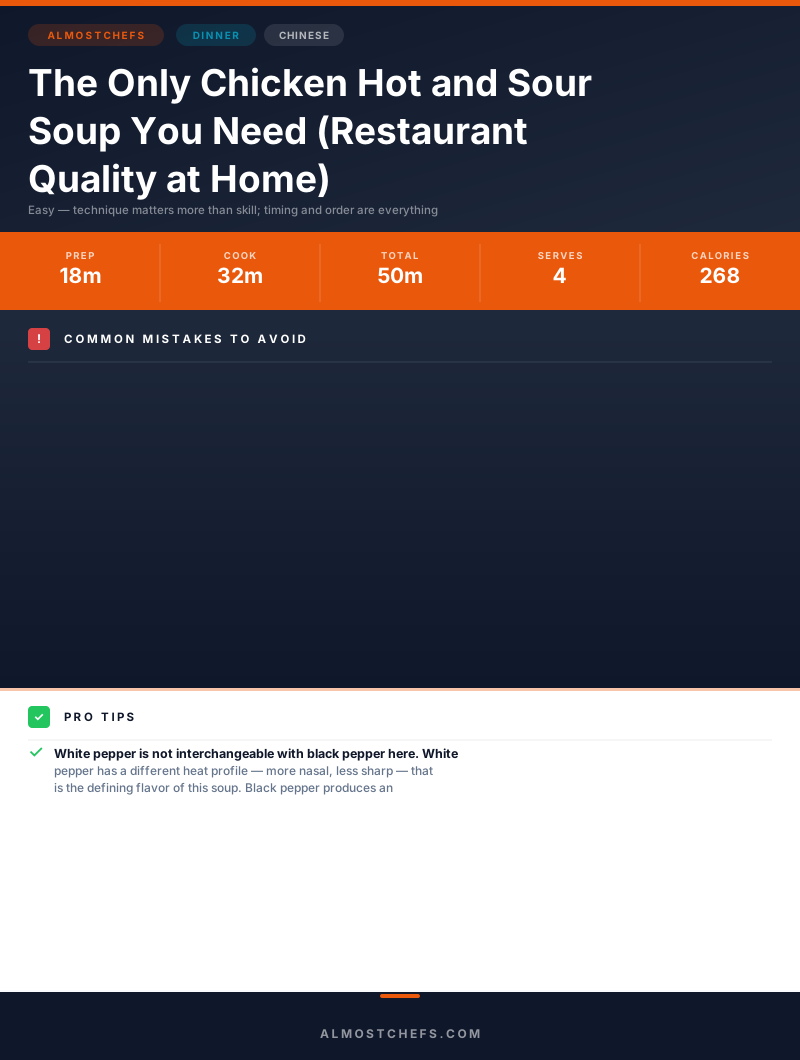
We turned everything on this page into a beautiful, flour-proof PDF cheat sheet. Print it out, stick it to your fridge, and never mess up your the only chicken hot and sour soup you need (restaurant quality at home) again.
*We'll email you the high-res PDF instantly. No spam, just perfectly cooked meals.
AlmostChefs Editorial Team
We translate the internet's most popular cooking videos into foolproof, beginner-friendly written recipes. We analyze multiple methods, test them in our kitchen, and engineer a single "Master Recipe" that gives you the best possible result with the least possible stress.