High-Protein Chicken Gyro Bowl (38g Per Serving, No Compromise)
A Mediterranean power bowl that delivers authentic gyro flavor — marinated chicken breast, creamy tzatziki built on Greek yogurt and cottage cheese, kalamata olives, fresh vegetables, and warm pita strips. We rebuilt the classic to hit 38g of protein per serving without losing a single thing that makes a gyro worth eating.

“Most gyro bowls are a salad with a protein topping and a drizzle of watery tzatziki. This one is built differently. The tzatziki is the protein source, not just the sauce — a Greek yogurt and cottage cheese blend that adds 20g of protein to the bowl before the chicken even hits the plate. The chicken is marinated properly. The pita is toasted. The result is 38g of protein per serving and something that actually tastes like it came from a Mediterranean restaurant, not a meal-prep YouTube channel.”
Why This Recipe Works
A gyro bowl is either a Mediterranean lunch worth eating every week or a sad desk salad with an identity crisis. The difference is almost entirely in how the chicken is treated and whether the tzatziki has any structural integrity. Most versions fail both tests.
The Marinade Is Not Decoration
Chicken breast has a texture problem. It's lean, which means no intramuscular fat to keep it moist during high heat, and it's thick, which means the outside finishes cooking long before the center catches up. The olive oil, lemon, and oregano marinade solves both. The fat coats the surface and slows moisture loss during searing. The acid begins denaturing the surface proteins, so they don't contract as violently when they hit the pan — the mechanism behind why marinated chicken feels more tender than unseasoned.
The cumin and smoked paprika aren't flavoring the chicken for its own sake. They're building the aromatic scaffold that makes this bowl read as Mediterranean rather than generic grilled protein. Smoked paprika specifically introduces a low-level char note that signals the rotisserie-cooked meat in a traditional gyro without requiring specialized equipment. It's a clever deception and it works completely.
Tzatziki as a Protein Vehicle
Traditional tzatziki is a condiment. This version is a protein delivery mechanism. By blending full-fat Greek yogurt with cottage cheese, you're creating a sauce that contributes meaningfully to the 38g protein total rather than just adding creaminess. Greek yogurt runs about 20g of protein per cup. Cottage cheese adds another 14g per half cup. Combined with 1.5 lbs of chicken breast divided over four servings, the math becomes impressive.
The cottage cheese also changes the texture. Pure Greek yogurt tzatziki can feel one-dimensional — tangy and thick. The cottage cheese adds a subtle curd texture that makes the sauce feel richer and more substantial. Blend it smooth if texture is a concern, or leave it slightly rustic if you want that homemade quality. Either is defensible.
The Bowl Architecture
Assembly order in a bowl matters more than it should. Greens go down first as insulation — they keep the warm chicken from immediately wilting everything below it and provide a structural base that holds the other toppings in position. The chicken goes on next while still warm, which gently wilts the top layer of greens just enough to make them more pliable. The cold elements — tomatoes, onion, olives, cucumber — go on last to maintain their texture contrast against the warm chicken.
The pita strips stay on the side until eating. This is not precious — it's practical. Pita strips sitting under tzatziki for ten minutes become pita paste. They're there for scooping and textural contrast, which they can only provide if they're still crisp when the fork hits them.
Why This Works for Meal Prep
This bowl survives refrigeration better than most because the flavor improves over 24 hours. The chicken absorbs residual marinade as it cools. The tzatziki deepens as the dill and garlic infuse further. The vegetables maintain their texture when stored separately from the sauce.
The protocol: store chicken, greens, and vegetables together if you must, but keep tzatziki in a separate container and add pita strips fresh. Three-day meal prep with this bowl is legitimate, not aspirational. Day three tastes better than day one.
Where Beginners Mess This Up
Before we start, read this. These are the 4 reasons your high-protein chicken gyro bowl (38g per serving, no compromise) will fail:
- 1
Skipping the marinade time: Chicken breast is lean, which means it has no fat to bail it out when you cook it dry. The olive oil, lemon juice, and oregano marinade isn't optional flavor — it's the moisture mechanism. Thirty minutes is the floor. Four hours is the ceiling. Less than thirty minutes and the exterior chars before the interior is seasoned.
- 2
Using watery Greek yogurt in the tzatziki: Full-fat Greek yogurt is thick. Low-fat or regular yogurt is watery. A watery tzatziki turns your bowl into a soup. If your yogurt runs off a spoon instead of sitting on it, strain it through a cheesecloth for 30 minutes before using. The cottage cheese in this recipe thickens it further — but it can't fix structurally weak yogurt.
- 3
Cutting the chicken before it rests: Five minutes of rest after cooking is not a suggestion. Slicing hot chicken immediately releases all its accumulated juices onto the cutting board instead of redistributing them through the meat. Rest it, then slice. The difference in moisture between a rested and an unrested chicken breast is significant enough to change how the bowl tastes.
- 4
Serving on cold lettuce with a cold bowl: The contrast between warm chicken and fresh vegetables is intentional, but the bowl base should not be refrigerator-cold when you assemble. Pull your greens out ten minutes before serving. The slight temperature rise makes the vegetables taste less harsh and allows the tzatziki to spread rather than seize.
The Video Reference Library
Want to see it in action? Here are the exact videos we analyzed and combined to build this foolproof recipe translation:
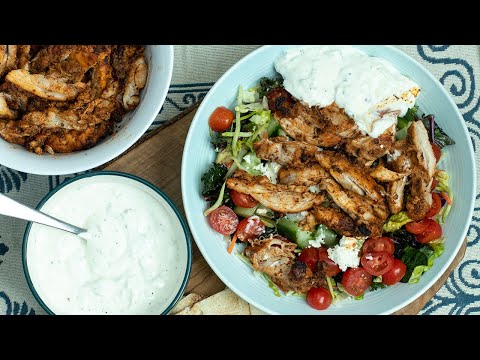
The primary video reference for this recipe. Covers the marinade ratios, skillet technique for chicken breast, and tzatziki assembly.
2. How to Make Perfect Tzatziki
Deep dive into tzatziki structure — yogurt selection, cucumber preparation, and why the garlic quantity matters more than people think.
3. Mediterranean Meal Prep for the WeekPractical guide to scaling this bowl for four to five days of meal prep, including which components to store separately and which hold up assembled.
🛠️ Core Equipment
- Large cast iron or stainless steel skillet ↗You need consistent high heat to build a golden-brown crust on chicken breast. Non-stick pans can't sustain the temperature required. A [cast iron skillet](/kitchen-gear/review/cast-iron-skillet) retains heat through each breast without dropping temperature between batches.
- Instant-read thermometer ↗Chicken breast has an eight-degree margin for error — 157°F to 165°F is the window between juicy and dry. A [meat thermometer](/kitchen-gear/review/instant-read-thermometer) removes all guesswork and prevents the single most common chicken failure.
- Large zip-top bag or shallow baking dish ↗For the marinade. The bag ensures every surface of the chicken is in contact with liquid. A dish requires turning. Either works — but the bag is more efficient for a quick weeknight prep.
- Fine-mesh strainer or cheesecloth ↗For the cucumber in the tzatziki. Diced cucumber releases water over time, which dilutes the sauce within an hour of assembly. Squeeze the cucumber dry before mixing it in. This is why meal-prepped tzatziki stays thick on day three.
High-Protein Chicken Gyro Bowl (38g Per Serving, No Compromise)
🛒 Ingredients
- ✦1.5 lbs boneless, skinless chicken breasts
- ✦3 tablespoons olive oil
- ✦2 tablespoons fresh lemon juice
- ✦4 cloves garlic, minced
- ✦1 tablespoon dried oregano
- ✦1 teaspoon ground cumin
- ✦1 teaspoon smoked paprika
- ✦1/2 teaspoon red pepper flakes
- ✦Salt and black pepper to taste
- ✦1 cup full-fat Greek yogurt
- ✦1/2 cup cottage cheese
- ✦1/4 cup fresh dill, chopped
- ✦1 medium English cucumber, diced (divided)
- ✦2 cups mixed green lettuce or arugula
- ✦1 cup cherry tomatoes, halved
- ✦1/2 red onion, thinly sliced
- ✦1/2 cup kalamata olives, pitted
- ✦2 whole wheat pita breads, warmed and cut into strips
👨🍳 Instructions
01Step 1
Combine olive oil, lemon juice, minced garlic, oregano, cumin, smoked paprika, red pepper flakes, salt, and black pepper in a bowl to create the marinade.
02Step 2
Pat the chicken breasts dry with paper towels, then place them in a large zip-top bag or shallow dish. Pour the marinade over the chicken, ensuring all surfaces are well coated. Refrigerate for at least 30 minutes or up to 4 hours.
03Step 3
Heat a large skillet over medium-high heat until shimmering, about 2 minutes. Add a thin film of olive oil if the skillet is not well-seasoned.
04Step 4
Remove chicken from marinade and place in the hot skillet. Cook for 6-7 minutes per side until the internal temperature reaches 165°F and the exterior is deep golden brown.
05Step 5
Transfer cooked chicken to a cutting board and let rest for 5 minutes. Do not cut early.
06Step 6
While chicken rests, whisk together Greek yogurt, cottage cheese, fresh dill, half of the diced cucumber, salt, and pepper in a bowl to create the tzatziki.
07Step 7
Slice the rested chicken into bite-sized strips against the grain.
08Step 8
Divide the mixed greens or arugula evenly among four bowls as the base layer.
09Step 9
Top each bowl with sliced chicken, cherry tomatoes, remaining cucumber, red onion slices, and kalamata olives.
10Step 10
Drizzle each bowl generously with the tzatziki sauce.
11Step 11
Arrange warm pita strips on the side of each bowl. Serve immediately, or cover and refrigerate for up to 3 days.
Nutrition Per Serving
Estimates based on standard preparation. Adjustments alter macros.
🔄 Substitutions
Instead of Full-fat Greek yogurt...
Use Dairy-free coconut yogurt
Loses the tang that defines tzatziki. Add an extra teaspoon of lemon juice to compensate. Works for dairy-free diets but is nutritionally inferior — coconut yogurt has almost no protein.
Instead of Cottage cheese...
Use Ricotta cheese
Similar texture, slightly milder flavor. Protein count drops slightly. Blend it smooth before mixing to avoid curds in the tzatziki.
Instead of Chicken breasts...
Use Boneless chicken thighs
More forgiving on heat — harder to dry out. Reduce cook time to 5-6 minutes per side. Flavor is richer and slightly fattier. Protein per serving drops to approximately 33g.
Instead of Whole wheat pita...
Use Lettuce cups or cucumber rounds
Full grain-free and low-carb option. Loses the textural contrast of toasted pita but works structurally for scooping. Romaine leaves hold up best.
🧊 Storage & Reheating
In the Fridge
Store components separately in airtight containers for up to 3 days. Tzatziki holds well. Chicken reheats cleanly. Keep pita strips separate to prevent sogging.
In the Freezer
Freeze cooked, sliced chicken only — up to 2 months. Tzatziki and fresh vegetables do not freeze well. Thaw chicken overnight in the fridge.
Reheating Rules
Reheat chicken in a dry skillet over medium heat for 3-4 minutes, or microwave with a damp paper towel on top for 90 seconds. Reassemble the bowl cold except for the chicken.
❓ Frequently Asked Questions
Why is my tzatziki watery by lunch?
Two culprits: yogurt that wasn't thick enough to start, and cucumber that wasn't dried before mixing. Use full-fat Greek yogurt only, and after dicing the cucumber, wrap it in a kitchen towel and squeeze firmly before adding. Both steps are required, not either/or.
Can I cook the chicken in the oven instead of a skillet?
Yes. Roast marinated breasts at 425°F for 20-22 minutes until internal temp hits 165°F. You lose the crust from the skillet sear but gain more even doneness throughout the breast. For meal prep with four or more portions, the oven is actually the more efficient method.
Is this actually filling enough as a lunch?
38g of protein and 7g of fiber at 485 calories is a satiety-optimized combination. Protein and fiber are the two primary signals for fullness. Most people report being genuinely full for 4-5 hours. If you have high caloric needs, add half an avocado and a second pita — you'll hit 600 calories and 42g of protein.
Can I make the tzatziki the night before?
Yes, and it actually improves. The dill and garlic infuse more fully overnight. Give it a stir before serving — some liquid separation is normal. The texture after an overnight rest is slightly thicker and more complex than freshly made.
What's the difference between this and a regular gyro?
A traditional gyro uses slow-roasted cone meat (usually a lamb-pork blend), served in pita with tzatziki and onions. This bowl swaps in marinated grilled chicken breast, deconstructs the pita into strips, and doubles the vegetable volume. The flavor profile overlaps significantly — the marinade is doing that work — but the format and protein source are different.
How do I stop the red onion from overpowering everything?
Soak the sliced red onion in cold water with a teaspoon of salt for 10 minutes before using. This pulls out the sharp sulfur compounds that make raw red onion aggressive. Drain and pat dry. The result is milder, slightly sweet, and still crunchy — the version you want in a bowl.
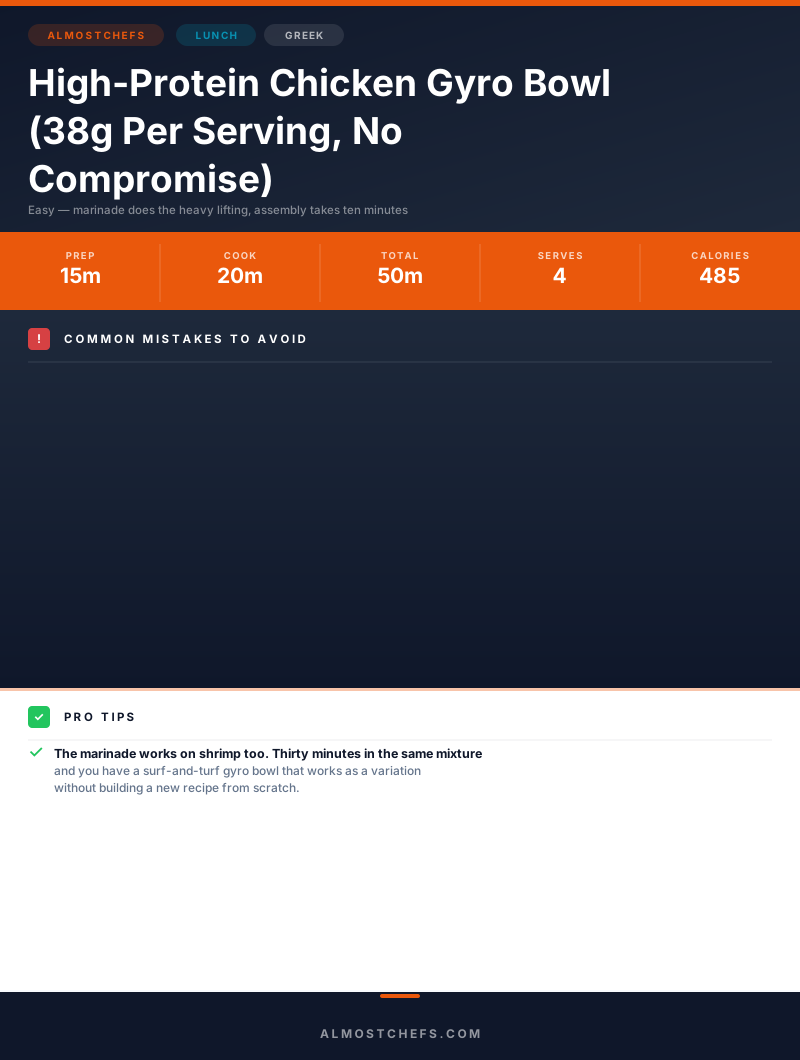
The Science of
High-Protein Chicken Gyro Bowl (38g Per Serving, No Compromise)
We turned everything on this page into a beautiful, flour-proof PDF cheat sheet. Print it out, stick it to your fridge, and never mess up your high-protein chicken gyro bowl (38g per serving, no compromise) again.
*We'll email you the high-res PDF instantly. No spam, just perfectly cooked meals.
AlmostChefs Editorial Team
We translate the internet's most popular cooking videos into foolproof, beginner-friendly written recipes. We analyze multiple methods, test them in our kitchen, and engineer a single "Master Recipe" that gives you the best possible result with the least possible stress.