Golden Chicken Francese (The Lemon Sauce Is Everything)
Thin-pounded chicken breasts dredged in a Parmesan-egg batter, pan-fried until golden, then finished in a bright lemon-white wine pan sauce. We broke down the Italian-American technique to give you perfectly crisp cutlets and a silky sauce that doesn't break — every time.
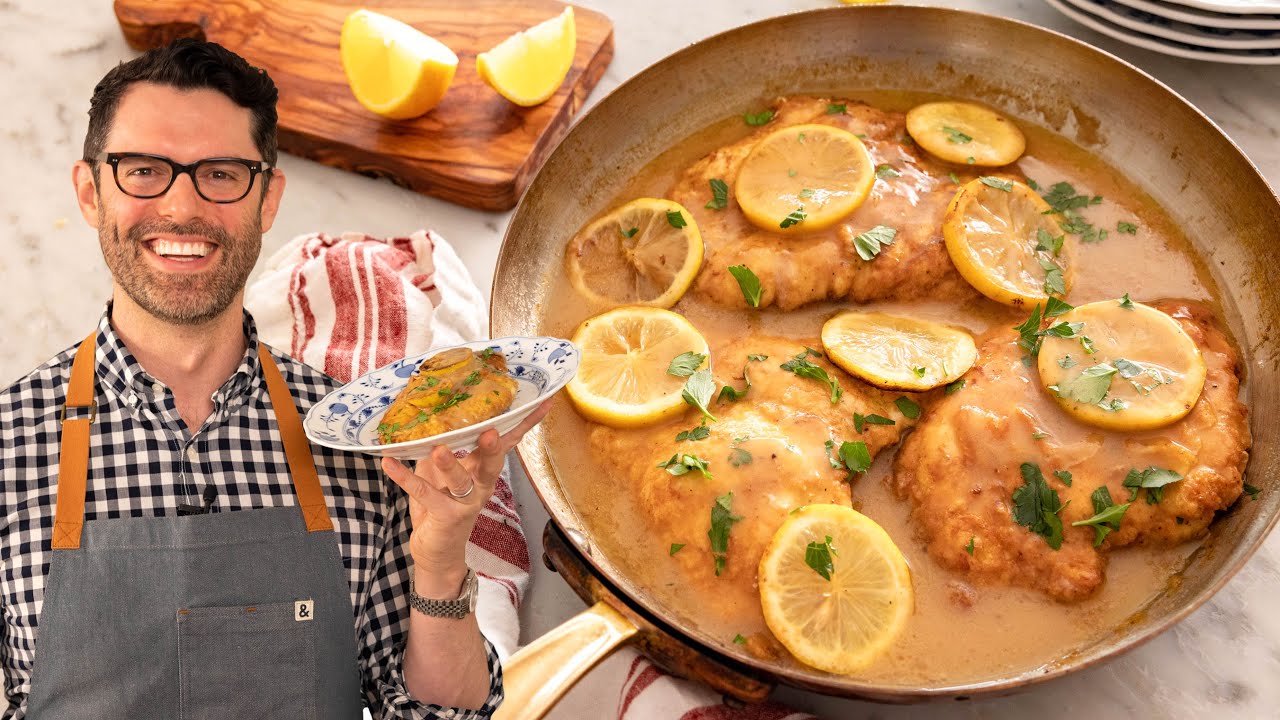
“Chicken Francese sits at the intersection of simple and elegant, which is exactly why it goes wrong so often. The batter tears. The sauce breaks. The chicken turns rubbery. None of these are accidents — they're the predictable result of skipping three specific steps that take thirty seconds each. Get those right and you have a restaurant-quality weeknight dinner that takes less time than it takes to decide where to order from.”
Why This Recipe Works
Chicken Francese is deceptively simple — which is the same thing as saying it's deceptively easy to ruin. The entire dish hangs on three mechanics working in sequence: the cutlet must be uniform, the coating must adhere, and the sauce must be built correctly from the pan drippings. Fumble any one of them and you're eating something beige and vaguely lemony that tastes nothing like what you ordered at the red-sauce joint in 1987.
The Cutlet Geometry Problem
A factory-packed chicken breast has no interest in cooking evenly. The thick lobe on one end can be an inch and a half. The thin tapered end is sometimes barely a quarter inch. Put that in a pan unmodified and by the time the thick part hits temperature, the thin end has been overcooked for three minutes. You're eating jerky on one side and raw chicken on the other, simultaneously.
Pounding solves this with blunt force. A meat mallet — flat side down, firm controlled strikes working from the center outward — compresses the entire breast to a uniform 1/4 inch. Every square centimeter of that cutlet now finishes cooking at exactly the same moment. It also tenderizes the meat physically, breaking down connective tissue before any heat is applied. The result is a cutlet that's genuinely tender across its entire surface, not just in the thin spots.
The Coating Architecture
Most egg-battered dishes fail at the dredging station. The culprit is almost always surface moisture. Water is hydrophobic to egg proteins — a wet chicken surface causes the egg mixture to sheet off rather than adhere, and you end up with patchy coverage that tears the moment it hits the pan.
The solution is thoroughness, not technique. Pat the chicken genuinely dry — not a quick swipe, but a deliberate press on both sides with fresh paper towels until the surface is matte and slightly tacky. That tacky surface is the mechanical anchor the egg needs to grip.
The Parmesan in the flour dredge is not garnish. It creates a second layer of protein structure in the coating that crisps differently than flour alone — slightly nuttier, more complex, with better color. Grate it fresh from a block. Pre-grated fine-powder Parmesan behaves like flavored cornstarch and produces a pasty, dense crust instead of a crisp one.
The Pan Chemistry
A stainless skillet or cast iron holds and distributes heat in ways nonstick pans cannot. You need that retained heat when the cold chicken hits the pan — a nonstick surface drops temperature immediately and the cutlet steams rather than sears. More critically, nonstick pans don't build fond, and without fond there is no sauce.
Fond — the dark caramelized proteins stuck to the pan after searing — is concentrated flavor. When white wine hits the hot pan, it flash-deglazes those deposits, dissolving them into the liquid and carrying that intensity into the sauce. Skip the deglazing step or use a pan that doesn't build fond and you've lost half the sauce's character before it's even started.
The garlic goes in after the chicken is removed, not before. Thirty seconds in hot fat is enough to mellow the raw edge and bloom the aromatics without burning. Burned garlic is bitter and cannot be fixed — it ruins the entire sauce. Thirty seconds, constant stirring, light gold. That's the window.
The Sauce Finish
Lemon-white wine pan sauces look simple and taste complex because the reduction step concentrates everything simultaneously: the wine's acidity, the broth's body, the lemon's brightness, the fond's depth. Let it reduce by half before adding the broth. Let it come together before the chicken goes back in. Rushing the reduction produces a thin, watery sauce that slides off the chicken instead of coating it.
Capers are the ingredient most people pick around and most chefs refuse to remove. Their briny, caper-berry sharpness is the counterweight to the lemon's sweetness and the butter's richness. Without them the sauce reads as one-note. With them it has three distinct flavor moments in a single bite. Keep them.
Where Beginners Mess This Up
Before we start, read this. These are the 4 reasons your golden chicken francese (the lemon sauce is everything) will fail:
- 1
Skipping the pound: Chicken breasts are not uniform in thickness. The fat end is often twice as thick as the thin end, which means by the time the thick end hits 165°F, the thin end is already dry and overcooked. Pounding to an even 1/4 inch is not optional — it's what makes the whole thing work. Every bite finishes at the same moment.
- 2
Wet chicken before dredging: If the chicken surface is wet, the egg batter slides off rather than adhering. Pat each breast completely dry before it touches the egg. This two-second step is the difference between a coating that stays and one that ends up as a soggy mess at the bottom of the pan.
- 3
Overcrowding the pan: When you crowd the skillet, the pan temperature drops and the chicken steams instead of sears. You lose the golden crust entirely and end up with pale, flabby coating. Work in batches. The first batch stays warm under foil. The crust is worth the extra four minutes.
- 4
Neglecting the fond when building the sauce: Those dark bits stuck to the bottom of the pan after searing are concentrated flavor — caramelized proteins and fat called fond. When you deglaze with white wine, you must scrape them up with a wooden spoon. If you skip this, you lose half the sauce's depth and you're left with a one-dimensional lemon broth.
🛠️ Core Equipment
- Meat malletThe only tool that produces a genuinely even cutlet. A rolling pin works in a pinch but gives you less control over thickness. Even pounding is the foundation of everything in this recipe.
- Large stainless-steel or cast-iron skilletYou need a pan that holds heat when the chicken goes in. Nonstick pans lose temperature too quickly and don't build fond — which means no sauce. A [cast-iron skillet](/kitchen-gear/review/cast-iron-skillet) or heavy stainless pan is the right tool here.
- Instant-read thermometerThe egg-Parmesan crust browns quickly and can trick you into thinking the chicken is done. Pull the thermometer out when it reads 165°F and not a degree higher. Visual cues lie. Temperature doesn't.
- Shallow bowls for dredgingYou need enough surface area to coat the entire cutlet in one pass. A deep bowl forces you to fold the chicken in at an angle, which tears the coating. Wide, shallow vessels make the process clean and fast.
Golden Chicken Francese (The Lemon Sauce Is Everything)
🛒 Ingredients
- ✦4 boneless, skinless chicken breasts, about 6 ounces each
- ✦3 large eggs
- ✦2 egg whites
- ✦3/4 cup all-purpose flour
- ✦1/2 cup grated Parmigiano-Reggiano cheese
- ✦1 teaspoon garlic powder
- ✦1 teaspoon kosher salt
- ✦1/2 teaspoon freshly ground black pepper
- ✦3 tablespoons extra-virgin olive oil
- ✦2 tablespoons unsalted butter
- ✦1 cup low-sodium chicken broth
- ✦1/2 cup dry white wine
- ✦3 tablespoons fresh lemon juice
- ✦2 cloves garlic, minced
- ✦1/4 cup fresh Italian parsley, chopped
- ✦2 tablespoons capers, drained
- ✦1 lemon, thinly sliced for garnish
👨🍳 Instructions
01Step 1
Pat the chicken breasts completely dry with paper towels. Place between two sheets of plastic wrap and pound to an even 1/4-inch thickness, working from the center outward.
02Step 2
Whisk together the eggs and egg whites in a shallow bowl until fully combined and uniform in color.
03Step 3
In a second shallow bowl, combine the flour, Parmigiano-Reggiano, garlic powder, salt, and black pepper. Stir until evenly mixed.
04Step 4
Dip each chicken breast into the egg mixture, letting the excess drip off, then dredge through the flour mixture to coat both sides and edges completely.
05Step 5
Heat olive oil and butter together in a large skillet over medium-high heat until the butter melts and the mixture shimmers, about 2 minutes.
06Step 6
Add the chicken in a single layer — work in batches if needed. Sear for 3-4 minutes on the first side without moving it, until the coating is deep golden brown.
07Step 7
Flip each breast and cook another 3-4 minutes until golden on the second side and internal temperature reads 165°F.
08Step 8
Transfer chicken to a warm plate and tent loosely with foil. Do not clean the pan.
09Step 9
Add minced garlic to the same skillet and stir constantly for 30 seconds until fragrant and just turning light gold.
10Step 10
Pour in the white wine and scrape up all the browned bits from the bottom of the pan with a wooden spoon. Reduce by half, about 2 minutes.
11Step 11
Add chicken broth and lemon juice. Stir to combine and let the sauce come together.
12Step 12
Return the chicken to the skillet and simmer gently for 2-3 minutes until warmed through and coated in sauce.
13Step 13
Scatter fresh parsley and capers over the top. Taste and adjust seasoning.
14Step 14
Plate the chicken, spoon the lemon sauce generously over each piece, and garnish with thin lemon slices.
Nutrition Per Serving
Estimates based on standard preparation. Adjustments alter macros.
🔄 Substitutions
Instead of All-purpose flour...
Use Whole wheat pastry flour or chickpea flour
Whole wheat pastry flour adds a slightly nutty flavor and more fiber without sacrificing crust texture. Chickpea flour creates a more delicate, protein-rich coating. Avoid regular whole wheat flour — it's too heavy and will make the crust dense.
Instead of Unsalted butter...
Use Extra-virgin olive oil or ghee
All olive oil gives a lighter mouthfeel with less saturated fat. Ghee provides clarified butter depth without the milk solids that burn — actually more forgiving at high heat.
Instead of Dry white wine...
Use Low-sodium vegetable broth with a splash of apple cider vinegar
The vinegar approximates the acidity that wine provides. Use about 1 teaspoon vinegar per 1/2 cup broth. The flavor profile shifts slightly but the sauce still works.
Instead of Parmigiano-Reggiano...
Use Nutritional yeast or half Parmigiano-Reggiano with half Pecorino Romano
Nutritional yeast keeps it dairy-free and adds B vitamins and umami. The Pecorino blend sharpens the flavor profile — slightly more piquant and assertive.
🧊 Storage & Reheating
In the Fridge
Store chicken and sauce together in an airtight container for up to 3 days. The crust will soften but the flavor improves as the chicken absorbs the sauce.
In the Freezer
Freeze for up to 2 months. The crust texture changes significantly upon thawing, but the dish remains flavorful. Best used as a leftover pasta sauce after freezing — shred the chicken and toss with linguine.
Reheating Rules
Reheat gently in a covered skillet over low heat with a splash of chicken broth to loosen the sauce. Microwave steams the crust soft — use it only if you have no alternative.
❓ Frequently Asked Questions
Why does my egg coating keep falling off during cooking?
Two reasons. First, the chicken is wet — always pat completely dry before dredging. Second, you're moving the chicken too soon. It will release from the pan naturally when the crust has formed and set. Sliding a spatula under it before that point tears the coating every time.
Can I use chicken thighs instead of breasts?
Yes, and many argue the dish is better that way. Boneless skinless thighs have more fat, which keeps them juicy even if you slightly overshoot the cooking time. Pound them to even thickness just like breasts and use the same cook time. The crust behaves identically.
My sauce is too thin — how do I fix it?
Simmer it longer uncovered. The sauce thickens by reduction, not by adding starch. If you're in a hurry, remove the chicken and increase the heat to medium-high for 2-3 minutes until the sauce coats the back of a spoon, then return the chicken.
What's the difference between Chicken Francese and Chicken Piccata?
Both use lemon and white wine sauce, but the key difference is the batter. Piccata dredges chicken only in flour. Francese dips it in egg first, then flour — creating a richer, softer coating rather than a crisp dredge. Francese is silkier; Piccata is crisper.
Do I have to use both whole eggs and egg whites?
No — you can use 4 whole eggs and skip the separate whites. The original recipe uses egg whites to lighten the batter slightly for a less heavy coating. The difference is subtle. If you're not trying to reduce cholesterol, all whole eggs work fine.
What should I serve with Chicken Francese?
Linguine or angel hair pasta tossed in olive oil and garlic soaks up the lemon sauce brilliantly. Steamed broccolini, roasted asparagus, or a simple arugula salad with shaved Parmesan all work well. Avoid heavy starches — the dish is delicate and a dense side competes with it.
The Science of
Golden Chicken Francese (The Lemon Sauce Is Everything)
We turned everything on this page into a beautiful, flour-proof PDF cheat sheet. Print it out, stick it to your fridge, and never mess up your golden chicken francese (the lemon sauce is everything) again.
*We'll email you the high-res PDF instantly. No spam, just perfectly cooked meals.
AlmostChefs Editorial Team
We translate the internet's most popular cooking videos into foolproof, beginner-friendly written recipes. We analyze multiple methods, test them in our kitchen, and engineer a single "Master Recipe" that gives you the best possible result with the least possible stress.