Rustic Chicken Cacciatore (The Italian Braise You've Been Sleeping On)
A hunter's stew of tender chicken braised low and slow in a rich San Marzano tomato sauce with bell peppers, mushrooms, and olives. We stripped out the shortcuts and built the technique from the ground up — one pot, forty minutes, and a sauce that actually tastes like something.
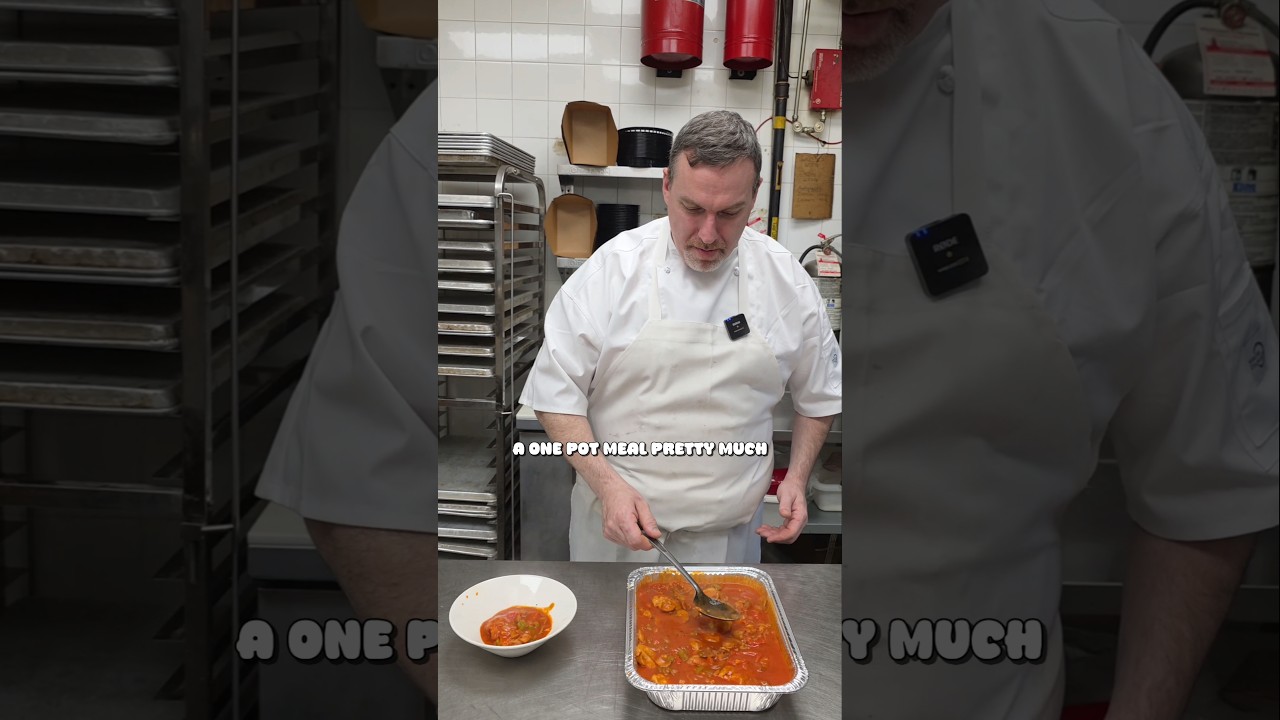
“Chicken Cacciatore has been watered down into a throw-everything-in-a-can-of-tomatoes situation. That's not what this is. The real version is a braise — and braising has rules. Get the sear right, build the sauce in the right order, and you'll have a dish that tastes like it came out of a trattoria kitchen. Skip any of those steps and you'll taste exactly where you cut corners.”
Why This Recipe Works
Cacciatore means "hunter's style" in Italian — and hunters, historically, cooked what they had over open fire with whatever grew nearby. The dish was never supposed to be fancy. It was supposed to be honest: good protein, acidic tomatoes, aromatics from the field, low heat and time doing the work. Somewhere in the translation to American home kitchens, it became a shortcut dish — chicken dumped into jarred sauce and called done. That version is not this.
The Sear Is Non-Negotiable
Everything in this recipe flows from a properly seared exterior. When chicken hits a hot, oil-slicked Dutch oven at medium-high heat, the Maillard reaction converts surface proteins and sugars into hundreds of new flavor compounds in the span of four minutes. The result is a golden crust and, more importantly, a layer of fond — caramelized residue — on the pot bottom that will dissolve into the sauce and provide depth that no amount of dried herbs can replicate.
The variables that kill the sear: wet chicken (steams instead of browns), insufficient heat (stews instead of crusts), or moving the chicken too early (tears the developing crust). Dry the chicken. Get the oil shimmering. Leave it alone for four minutes. The chicken will tell you when it's ready to flip by releasing cleanly from the pan.
Building the Sauce in Layers
Italian cooking doesn't build sauces by addition — it builds them by sequence. Each ingredient goes in at the precise moment it needs to go in, and the order is not interchangeable.
Onions first: they need time to soften and turn translucent, releasing their natural sugars without burning. Garlic second: it burns in about ninety seconds, so it goes in after the onions have created a buffer. Mushrooms next: they contain nearly 90% water and need heat to expel it before they'll brown — crowd them and they steam into mush. Peppers last among the aromatics, because they need far less time and will turn to mush if overcooked.
Then the tomato paste — and this is where most home cooks fail. Tomato paste goes into hot oil and gets cooked, not just warmed. Two minutes of direct heat converts raw, sharp paste into something sweet and almost nutty. You will smell the difference clearly. Then and only then do the tomatoes and broth go in, pulling all that caramelized depth up from the bottom of the pot.
The Partial Cover Logic
Braising requires a controlled moisture environment. Too much steam and the sauce never reduces — you end up with thin, watery liquid. Too little and the chicken dries out before it cooks through. The partial cover is the solution: two-thirds of the pot covered, one-third open. Steam circulates through the chicken while excess moisture escapes as vapor, slowly concentrating the sauce over 25-30 minutes.
The chicken is done at 165°F. An instant-read thermometer makes this precise — there is no visual cue that reliably distinguishes 160°F from 175°F in a braising liquid, and the ten-degree difference is the line between juicy and dry.
The Olive Timing
Olives are a finishing ingredient. Their value is their brine — that sharp, salty, slightly bitter counterpoint that cuts through the richness of the tomato sauce and makes the whole dish feel alive. Cook them for 30 minutes and the brine leaches out, the flesh softens into mush, and the bitter compounds that develop with heat overwhelm the flavor. Stir them in at the end. Let them warm for two minutes. Serve immediately.
This is hunter's cooking. It rewards attention to sequence and patience with heat. Do those two things, and the dish practically finishes itself.
Where Beginners Mess This Up
Before we start, read this. These are the 4 reasons your rustic chicken cacciatore (the italian braise you've been sleeping on) will fail:
- 1
Not drying the chicken before searing: Surface moisture is the enemy of a proper sear. Wet chicken steams instead of browning — and if you don't get the Maillard reaction on the exterior, you lose the fond (the brown bits stuck to the pot) that forms the flavor base of the entire sauce. Pat the chicken bone dry with paper towels. Every time.
- 2
Rushing the tomato paste: Tomato paste needs two full minutes in hot oil to caramelize. Raw paste tastes acidic and one-dimensional. Cooked paste tastes sweet, complex, and deeply savory. It's a thirty-second difference in effort and a massive difference in flavor. Do not skip this step.
- 3
Simmering at a full boil: A hard boil turns chicken breast to rubber in about ten minutes. Cacciatore needs a gentle, barely-bubbling simmer — you should see lazy bubbles breaking the surface, not a rolling boil. Medium-low heat, partially covered, for 25-30 minutes. The chicken will finish at 165°F and still be moist.
- 4
Adding the olives too early: Olives cooked for 30 minutes turn bitter and lose their brine. They go in at the end — just before serving — so they warm through without disintegrating. Their salty, briny punch is a finishing note, not a background element.
The Video Reference Library
Want to see it in action? Here are the exact videos we analyzed and combined to build this foolproof recipe translation:
The reference video for this recipe. Demonstrates the correct sear color, fond development, and the lazy-simmer pace that keeps the chicken moist through the full braise.
🛠️ Core Equipment
- Dutch oven or deep heavy-bottomed skilletThe sear, the sauté, the braise — it all happens in one vessel. A [Dutch oven](/kitchen-gear/review/dutch-oven) distributes heat evenly so you get consistent browning without hot spots that scorch the fond.
- Instant-read thermometerChicken breast has a narrow window between undercooked and dry. Pull it at exactly 165°F internal temperature. A [thermometer](/kitchen-gear/review/instant-read-thermometer) removes all guesswork from the most important step.
- Wooden spoon or flat-edged spatulaFor deglazing and scraping up the fond after the sear. That brown layer on the pot bottom is concentrated flavor. Don't leave it behind.
- TongsFor turning the chicken during the sear without piercing the flesh. Piercing lets the juices escape before the braise can reabsorb them.
Rustic Chicken Cacciatore (The Italian Braise You've Been Sleeping On)
🛒 Ingredients
- ✦4 boneless, skinless chicken breasts (about 6 oz each)
- ✦3 tablespoons extra virgin olive oil
- ✦2 medium yellow onions, finely diced
- ✦4 cloves garlic, minced
- ✦1 large red bell pepper, cut into thick strips
- ✦1 large green bell pepper, cut into thick strips
- ✦8 oz mushrooms, sliced
- ✦1 can (28 oz) crushed San Marzano tomatoes
- ✦1 cup low-sodium chicken broth
- ✦1/2 cup pitted green olives, halved
- ✦2 tablespoons tomato paste
- ✦2 teaspoons dried oregano
- ✦1 teaspoon dried basil
- ✦1/2 teaspoon red pepper flakes
- ✦1 bay leaf
- ✦1/2 teaspoon sea salt
- ✦1/4 teaspoon black pepper
- ✦2 tablespoons fresh parsley, chopped
👨🍳 Instructions
01Step 1
Pat the chicken breasts completely dry with paper towels and season generously on both sides with salt and black pepper.
02Step 2
Heat the olive oil in a large Dutch oven or deep skillet over medium-high heat until shimmering, about 2 minutes.
03Step 3
Place the chicken in the hot oil and sear for 4-5 minutes per side until deep golden brown. Transfer to a clean plate — do not clean the pot.
04Step 4
Reduce heat to medium. Add the diced onions to the same pot and sauté, stirring frequently, until translucent and softened, about 5 minutes.
05Step 5
Stir in the minced garlic and cook for 1 minute until fragrant.
06Step 6
Add the sliced mushrooms and sauté for 3-4 minutes until they release their moisture and begin to brown at the edges.
07Step 7
Add the bell pepper strips and cook for 2 more minutes, stirring occasionally.
08Step 8
Push the vegetables to the edges of the pot and add the tomato paste to the center. Cook the paste, stirring constantly, for 2 full minutes until it darkens slightly and smells sweet.
09Step 9
Pour in the crushed tomatoes and chicken broth. Stir well, scraping up all the fond from the bottom of the pot.
10Step 10
Add the dried oregano, basil, red pepper flakes, and bay leaf. Nestle the seared chicken breasts back into the sauce.
11Step 11
Bring to a gentle simmer, then reduce heat to medium-low. Partially cover with a lid and cook for 25-30 minutes until the chicken reaches an internal temperature of 165°F and the sauce has thickened.
12Step 12
Stir in the halved green olives. Taste the sauce and adjust seasoning with salt and pepper as needed.
13Step 13
Remove the bay leaf. Divide the chicken and sauce among serving plates, garnish with fresh chopped parsley, and serve immediately with whole grain pasta or crusty bread.
Nutrition Per Serving
Estimates based on standard preparation. Adjustments alter macros.
🔄 Substitutions
Instead of Boneless, skinless chicken breasts...
Use Bone-in, skin-on chicken thighs
The superior option for flavor and moisture. Thighs are far more forgiving — they won't dry out if you overshoot by five minutes. Add 10-15 minutes to the simmer time.
Instead of Crushed San Marzano tomatoes...
Use Fresh tomatoes (3 lbs), blanched, peeled, and crushed
Worth the effort in peak tomato season (August–September). Brighter, more acidic flavor. Outside of season, canned San Marzanos are genuinely better than out-of-season fresh.
Instead of Low-sodium chicken broth...
Use Homemade vegetable stock or water with 1/2 cup dry white wine
White wine adds acidity and aromatic complexity that chicken broth can't replicate. Use a wine you'd actually drink — cooking wine is a myth.
Instead of Pitted green olives...
Use Kalamata olives or sun-dried tomatoes
Kalamatas bring earthier, more assertive flavor. Sun-dried tomatoes add concentrated umami without the brine — a different dish entirely, but a good one.
🧊 Storage & Reheating
In the Fridge
Store in an airtight container for up to 4 days. The sauce improves significantly overnight as the flavors meld.
In the Freezer
Freeze in portions for up to 3 months. Thaw overnight in the fridge. The sauce freezes better than the chicken — if reheating from frozen, add a splash of broth to restore consistency.
Reheating Rules
Reheat covered on medium-low heat with 2-3 tablespoons of water or broth until warmed through, about 10 minutes. Avoid high heat — it will tighten the chicken and break the sauce.
❓ Frequently Asked Questions
Can I use chicken thighs instead of breasts?
Yes — and honestly, you should. Bone-in, skin-on chicken thighs produce a richer, more flavorful braise because the fat and collagen render into the sauce over the simmer time. They're also nearly impossible to overcook. Add 10-15 minutes to the simmer time and check for 165°F.
Why does my sauce taste flat and acidic?
Two likely causes: the tomato paste wasn't caramelized long enough, or you used a generic crushed tomato instead of San Marzano. Tomato paste needs two full minutes of high heat to convert its raw acidity into sweetness. If the sauce is still sharp after cooking, a pinch of sugar or a splash of cream will balance it.
Do I have to sear the chicken first?
Technically no. Practically yes. The sear creates fond — caramelized protein and fat residue on the pot bottom — that becomes the flavor backbone of the entire sauce. A cacciatore made without searing the chicken first is a completely different dish, and a notably less interesting one.
What pasta should I serve this with?
Pappardelle or rigatoni. Wide, flat noodles or ridged tubes catch the chunky sauce instead of letting it slide off. Thin spaghetti technically works but is the wrong tool for a braise this robust.
Can I make this in a slow cooker?
Yes, but sear the chicken and sauté the aromatics first in a skillet — don't skip those steps and just dump everything in raw. Transfer everything to the slow cooker and cook on low for 6-7 hours or high for 3-4 hours. Add the olives in the last 30 minutes.
How do I know when the sauce is the right consistency?
Drag a spoon through the sauce — it should leave a visible trail that holds for 2-3 seconds before the sauce flows back in. If it closes immediately, it's too thin. If the spoon stands upright on its own, it's too thick. That trail test works for virtually every braise.
The Science of
Rustic Chicken Cacciatore (The Italian Braise You've Been Sleeping On)
We turned everything on this page into a beautiful, flour-proof PDF cheat sheet. Print it out, stick it to your fridge, and never mess up your rustic chicken cacciatore (the italian braise you've been sleeping on) again.
*We'll email you the high-res PDF instantly. No spam, just perfectly cooked meals.
AlmostChefs Editorial Team
We translate the internet's most popular cooking videos into foolproof, beginner-friendly written recipes. We analyze multiple methods, test them in our kitchen, and engineer a single "Master Recipe" that gives you the best possible result with the least possible stress.