High-Protein Chicken & Sweet Potato Meal Prep Boxes (42g Protein, 5-Day Fridge Life)
Roasted chicken breast, caramelized sweet potatoes, and broccoli with a Greek yogurt-Dijon sauce — built for the work week. We broke down the most common meal prep failures to give you boxes that actually reheat well, stay moist, and hit 42g of protein per serving without tasting like cardboard.
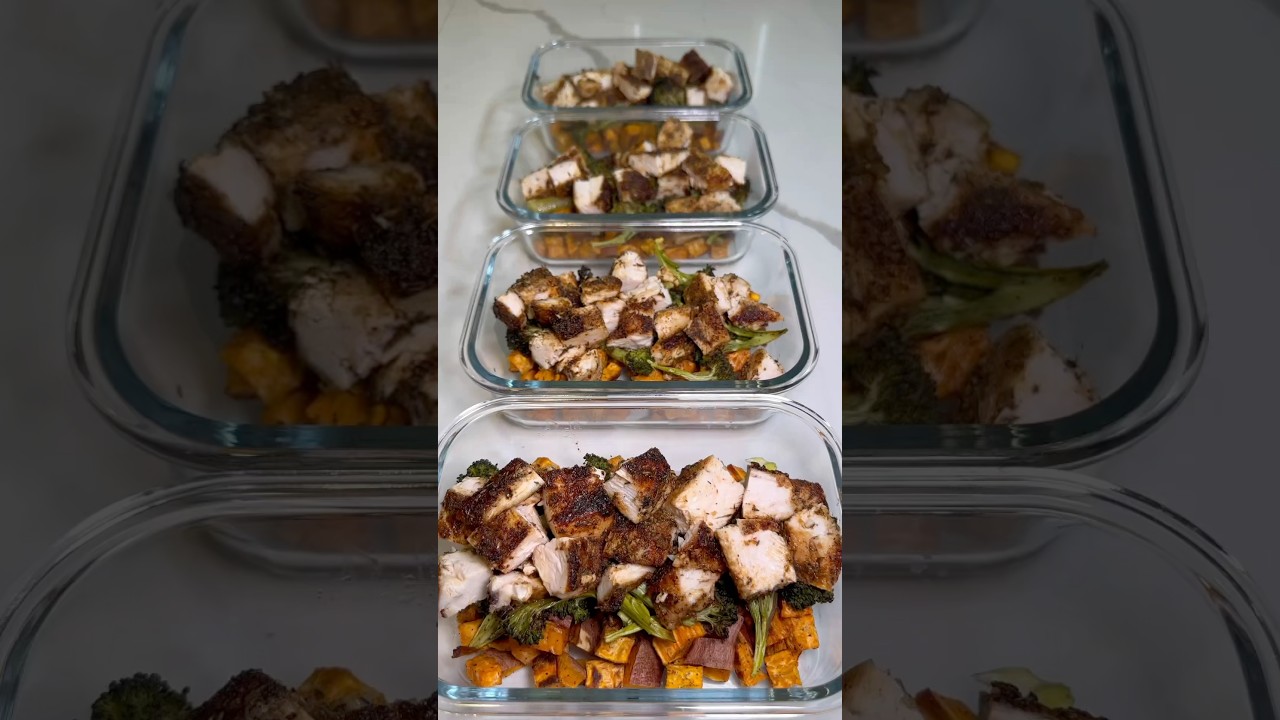
“Most meal prep chicken tastes like punishment by Wednesday. It's dry, it's bland, and you eat it anyway because you made four of them. The fix isn't a better recipe — it's understanding two things: why chicken breast dries out in the fridge, and how a proper yogurt-based sauce acts as a moisture buffer that keeps every box tasting like day one. We built this recipe around that principle.”
Why This Recipe Works
Meal prep is not cooking. It is logistics with a stove. The question is never "what tastes good right now" — it is "what will still taste like food on Thursday afternoon when you're eating it cold over a sink." Most meal prep chicken fails that test catastrophically. This one doesn't, and it's not because of a secret ingredient. It's because of three decisions made before anything goes in the oven.
Decision One: The Pan Split
Two pounds of chicken and four cups of broccoli on one sheet pan is a biology experiment, not a recipe. Both items release significant moisture during cooking — the chicken through protein contraction, the broccoli through cell wall breakdown. In an enclosed, crowded pan, that moisture has nowhere to go. It pools under the food and creates a steaming environment at exactly the temperature where nothing caramelizes and everything turns gray.
Split the pans. Chicken gets its own real estate. Vegetables get theirs. The result is actual roasting — Maillard browning on the chicken exterior, caramelized edges on the sweet potato cubes, slightly charred broccoli tips that taste like something rather than nothing. This is the difference between meal prep you eat out of obligation and meal prep you look forward to.
Decision Two: The 165°F Hard Stop
Chicken breast has a functional cooking range of about 10 degrees. Below 165°F, it's unsafe. Above 175°F, the protein fibers have fully contracted and expelled nearly all available moisture. You cannot recover dry chicken breast in a meal prep context — no sauce is thick enough, no reheating method gentle enough. The yogurt sauce helps, but it can't rescue a bird that was overcooked before it ever hit the container.
A meat thermometer is not optional equipment for this recipe. It is the recipe. Pull at 165°F, rest five minutes (critical — the five-minute rest allows internal redistribution of juices that would otherwise pour onto the cutting board), then slice. That sequence produces chicken that stays genuinely moist through day five of refrigerator storage.
Decision Three: The Sauce Architecture
Greek yogurt mixed with Dijon mustard, lemon, and garlic serves multiple functions here that no other sauce replicates. First, its high protein content (10-17g per cup depending on brand) contributes meaningfully to the per-box total. Second, its thick, cling-resistant consistency acts as a moisture barrier when spooned on top of the chicken — it slows the rate at which refrigerator air wicks moisture out of the meat surface. Third, the lactic acid continues very gently tenderizing the chicken's surface through the storage period, which is why day-three boxes often feel slightly more tender than day-one boxes.
The critical technique: spoon the sauce on top, don't mix it through. The moment you toss the sauce with the broccoli, the florets begin absorbing liquid and go limp within 24 hours. The sauce should sit as a layer, not a marinade.
The Sweet Potato
Sweet potatoes are almost impossible to over-roast at 425°F. They're forgiving, they caramelize beautifully, and they reheat without texture collapse — unlike white potato, which turns grainy and mealy after refrigeration. Cut them into true 1-inch cubes (not rough approximations), space them on the pan so they're not touching, and stir halfway through. The stir exposes new surface area to direct heat. Without it, only the pan-contact side caramelizes and the rest steams. With it, you get color on three sides of each cube, which translates to flavor distribution throughout the whole bite.
The smoked paprika in the spice rub bridges the chicken and sweet potato flavors intentionally. It has enough sweetness to complement the potato and enough depth to stand up to the chicken's savory profile. It's doing connective tissue work across the whole box.
This recipe doesn't ask you to care about cooking. It asks you to care about Sunday, so you don't have to care about the rest of the week.
Where Beginners Mess This Up
Before we start, read this. These are the 4 reasons your high-protein chicken & sweet potato meal prep boxes (42g protein, 5-day fridge life) will fail:
- 1
Not patting the chicken dry before seasoning: Surface moisture on the chicken creates steam in the oven instead of browning. Steam-cooked chicken breast turns rubbery and gray. Patting dry with paper towels before oiling and seasoning ensures the Maillard reaction kicks in, giving you chicken with actual color and flavor on the exterior — which also holds up better in the fridge.
- 2
Skipping the rest before slicing: Cut chicken breast immediately off the pan and you lose 15-20% of its moisture to the cutting board. The five-minute rest lets the muscle fibers relax and reabsorb the juices that migrated to the surface during cooking. Slice too soon and every box is already starting at a moisture deficit before it even hits the fridge.
- 3
Overcrowding the vegetable pan: Sweet potatoes and broccoli need airflow to roast, not steam. If the cubes are touching, they generate humidity that prevents caramelization. Use two sheet pans — or roast in batches — and keep everything in a single layer with space between pieces. Caramelized edges are what make leftover sweet potato worth eating.
- 4
Adding the sauce before storing: The yogurt sauce belongs in the container, but it should never soak into the chicken or vegetables before you're ready to eat. Spoon it on top — not tossed through — so it acts as a protective layer rather than making the broccoli soggy. If prepping for the full week, store sauce separately in a small container and add at serving time.
The Video Reference Library
Want to see it in action? Here are the exact videos we analyzed and combined to build this foolproof recipe translation:
The source video that inspired this build. Clear breakdown of the two-pan method and why timing the vegetables with the chicken matters.
🛠️ Core Equipment
- Two large rimmed baking sheetsCritical for separating the chicken from the vegetables so each component gets the right temperature and timing. A single crowded pan forces you to compromise — either the chicken is done and the sweet potatoes aren't, or vice versa.
- Instant-read meat thermometerChicken breast has a 10-degree window between perfectly cooked and dry. At 165°F it's done; at 175°F it's sawdust. You cannot eyeball this. A [thermometer](/kitchen-gear/review/instant-read-thermometer) is the single most important tool in this recipe.
- Airtight glass meal prep containersGlass holds heat better than plastic when microwaving, which means more even reheating without cold spots. Airtight seals prevent the refrigerator from drying out the chicken surface over five days. Four 3-cup containers work perfectly for this recipe.
- Parchment paperPrevents caramelized sweet potato from welding itself to the pan. Also makes cleanup a non-event, which matters when you're doing this every Sunday.
High-Protein Chicken & Sweet Potato Meal Prep Boxes (42g Protein, 5-Day Fridge Life)
🛒 Ingredients
- ✦2 pounds boneless, skinless chicken breasts
- ✦3 medium sweet potatoes, cut into 1-inch cubes
- ✦4 cups fresh broccoli florets
- ✦3 tablespoons olive oil, divided
- ✦2 teaspoons garlic powder
- ✦1.5 teaspoons smoked paprika
- ✦1 teaspoon dried thyme
- ✦1 teaspoon black pepper
- ✦1 teaspoon sea salt
- ✦1 cup plain nonfat Greek yogurt
- ✦2 tablespoons fresh lemon juice
- ✦2 cloves garlic, minced
- ✦1 tablespoon Dijon mustard
- ✦2 tablespoons fresh parsley, finely chopped
- ✦1/4 teaspoon red pepper flakes
👨🍳 Instructions
01Step 1
Preheat your oven to 425°F and line two large baking sheets with parchment paper.
02Step 2
Pat the chicken breasts completely dry with paper towels, then brush both sides with 1 tablespoon of olive oil.
03Step 3
Mix garlic powder, smoked paprika, dried thyme, black pepper, and sea salt in a small bowl. Rub the spice mixture evenly over all sides of the chicken.
04Step 4
Arrange the seasoned chicken on one prepared baking sheet. Roast for 18-22 minutes until an internal temperature of 165°F is reached.
05Step 5
While the chicken cooks, toss the sweet potato cubes with 1 tablespoon olive oil, 1/2 teaspoon salt, and 1/4 teaspoon black pepper. Spread in a single layer on the second baking sheet with space between each cube.
06Step 6
Place the sweet potatoes in the oven alongside the chicken. Roast for 20-25 minutes, stirring once at the halfway point, until golden brown and fork-tender.
07Step 7
In the final 8 minutes of cooking, toss the broccoli florets with the remaining 1 tablespoon olive oil and a pinch of salt. Add them to the sweet potato pan, spreading them out without overlapping.
08Step 8
Remove all components from the oven. Let the chicken rest on the pan for 5 minutes before touching it.
09Step 9
Slice the rested chicken into bite-sized pieces, approximately 1.5 inches thick.
10Step 10
Whisk together the Greek yogurt, fresh lemon juice, minced garlic, Dijon mustard, fresh parsley, and red pepper flakes in a medium bowl until smooth.
11Step 11
Divide the sliced chicken, sweet potatoes, and broccoli evenly among four airtight meal prep containers.
12Step 12
Spoon the Greek yogurt sauce on top of each box without stirring it in. Seal and refrigerate for up to 5 days.
Nutrition Per Serving
Estimates based on standard preparation. Adjustments alter macros.
🔄 Substitutions
Instead of Greek yogurt sauce...
Use Tahini-lemon dressing (2 tbsp tahini + 3 tbsp lemon juice + water to thin + garlic + salt)
Earthier, more Mediterranean character. Dairy-free. Thinner consistency coats the vegetables more evenly but doesn't function as a moisture barrier the same way.
Instead of Chicken breast...
Use Turkey breast or lean ground turkey (93/7)
Nearly identical protein content (35g per 3.5 oz). Turkey pairs well with the smoked paprika. Ground turkey should be formed into patties before roasting to keep it in manageable pieces for the containers.
Instead of Broccoli florets...
Use Edamame (frozen, thawed) or a 50/50 broccoli-edamame mix
Edamame adds 11g of plant-based protein per cup, pushing total protein per box close to 48g. No roasting needed — thaw and add directly to containers.
Instead of Sweet potatoes...
Use Sweet potatoes and chickpeas roasted together (50/50 split by volume)
Chickpeas add 6g plant-based protein per half-cup and develop a firmer, chewier texture that holds up better through day 4 and 5 compared to sweet potato alone.
🧊 Storage & Reheating
In the Fridge
Store assembled boxes in airtight containers for up to 5 days. If you want maximum texture integrity on day 4-5, store the sauce separately and add at serving time.
In the Freezer
Freeze without the sauce for up to 2 months. Thaw overnight in the fridge. Make fresh sauce the day you plan to eat.
Reheating Rules
Microwave with lid slightly ajar at 70% power for 2-3 minutes, stirring halfway. Full power makes the broccoli rubbery and dries out the chicken edges.
❓ Frequently Asked Questions
Why is my chicken breast dry after a few days in the fridge?
Two reasons: it was overcooked to begin with (anything above 165°F compounds in texture loss over storage), and the container isn't fully airtight. The refrigerator is a dehumidifier — it pulls moisture out of everything. Glass containers with locking lids dramatically outperform plastic wrap or loosely sealed containers.
Can I prep this on Sunday for the full work week?
Yes, and this recipe is specifically built for it. The sweet potato and broccoli hold texture through day 5 if stored properly. The chicken stays moist because of the yogurt sauce barrier on top. Day 5 will be slightly less vibrant than day 1, but it's still a genuinely good lunch.
How do I keep the broccoli from getting soggy?
Don't overcook it — eight minutes at 425°F max. Don't let the sauce soak into it during storage — spoon the sauce on top rather than mixing it through. And don't microwave it on full power — 70% power with a stirring break gives you even heat without boiling the water out of the florets.
Can I use chicken thighs instead of breast?
Yes, and thighs are actually more forgiving — the higher fat content keeps them moist even if you slightly overcook them. Cooking time increases by 3-5 minutes for boneless thighs, and the calorie count goes up by about 40-50 calories per box. The flavor is richer, which some people prefer.
Is the Greek yogurt sauce good as a dressing on salads?
It's excellent. Thin it with a tablespoon of water or extra lemon juice to get a pourable consistency. It works on grain bowls, as a crudité dip, and as a spread on wraps. Make a double batch and it justifies itself across the whole week.
How do I hit higher protein targets with this recipe?
Swap broccoli for edamame (adds 11g protein per serving), swap the yogurt sauce for a blended cottage cheese sauce (adds 5g), and increase the chicken portion to 9 oz per box instead of 8 oz. That combination can push individual boxes past 55g of protein with minimal calorie increase.
The Science of
High-Protein Chicken & Sweet Potato Meal Prep Boxes (42g Protein, 5-Day Fridge Life)
We turned everything on this page into a beautiful, flour-proof PDF cheat sheet. Print it out, stick it to your fridge, and never mess up your high-protein chicken & sweet potato meal prep boxes (42g protein, 5-day fridge life) again.
*We'll email you the high-res PDF instantly. No spam, just perfectly cooked meals.
AlmostChefs Editorial Team
We translate the internet's most popular cooking videos into foolproof, beginner-friendly written recipes. We analyze multiple methods, test them in our kitchen, and engineer a single "Master Recipe" that gives you the best possible result with the least possible stress.