Chicken and Dumplings (Drop Dumplings, Rich Broth, One-Pot Method)
Chicken and dumplings built on a proper broth from scratch with chicken thighs, drop dumplings that cook in the steam of the broth, and a creamy finish. The drop dumpling technique eliminates rolling.

“Chicken and dumplings is deceptively hard to get right. The dumplings turn out dense and gummy, or the broth is thin and tastes like canned soup, or the chicken is dry shreds of breast meat floating in pale liquid. The solution to all three of those problems is the same: bone-in thighs, a real broth built in the same pot, and drop dumplings cooked with the lid on.”
Why This Recipe Works
Chicken and dumplings is a dish with a deceptively simple concept and a long list of ways to execute it badly. You can produce something watery and underseasoned with rubbery dumplings and dry chicken, or you can produce something that tastes like every version of this dish that ever existed was aiming at this one. The difference is not technique complexity — it's understanding why each step exists and not substituting around it.
Bone-In Thighs Are Doing More Than You Think
The choice between bone-in thighs and boneless breast is not a matter of preference. It is a matter of chemistry.
Chicken bones contain collagen — the same structural protein found in connective tissue throughout the animal. When collagen is exposed to sustained heat in liquid, it hydrolyzes. The long triple-helix protein chain breaks down into smaller gelatin molecules. Those gelatin molecules disperse into the broth and give it body, viscosity, and a richness that coats your tongue differently than thin, watery liquid.
Boneless breast meat has none of this. It is lean muscle fiber with minimal intramuscular fat and no collagen contribution. When you simmer it, you get cooked chicken and diluted broth. When you simmer bone-in thighs for 30 minutes, you get cooked chicken and a broth that has started to thicken on its own — not dramatically, but perceptibly. That difference in body becomes obvious when the milk goes in and you're comparing two versions side by side.
The thighs also have a higher intramuscular fat content than breast, which acts as a buffer against overcooking. Breast meat becomes dry and stringy above 160°F because the muscle fibers squeeze their moisture out. Thighs remain juicy at 175°F and above because the surrounding fat provides lubrication even as the fibers tighten. In a dish where the chicken simmers for 30 minutes and then sits in hot broth while you make the batter, resilience to overcooking is not a minor advantage.
The Sear Creates the Foundation
You're not cooking the thighs through in the initial sear. You're creating fond — the dark, caramelized protein and sugar compounds that stick to the bottom of the pot after the skin renders. Those compounds are the result of the Maillard reaction, which requires surface temperatures above 280°F and a dry contact surface.
Fond is concentrated, complex flavor that does not exist in raw chicken. When the vegetables go in after the chicken is removed, they begin releasing moisture, which deglazes the fond partially. When the broth goes in, that process completes. Every molecule of fond dissolves into the broth and raises the flavor ceiling of the entire dish. A Dutch oven with its heavy base and excellent heat retention is the right vessel for this — you need sustained, even high heat to get proper sear on the thighs without scorching.
Skipping the sear and simply adding the thighs to the broth raw produces a dish that tastes assembled rather than cooked. The broth flavor is flat. You will taste the difference.
Drop Dumplings: The Chemistry of Steam Leavening
Drop dumplings work on a mechanism that is simple once you understand it and counterintuitive until you do.
Baking powder is a chemical leavening agent. It contains sodium bicarbonate (baking soda) and a dry acid, typically cream of tartar or sodium aluminum sulfate. When baking powder contacts liquid, the acid and base react immediately and produce carbon dioxide gas. When it's then exposed to heat, a second reaction produces more CO2. The bubbles get trapped in the gluten network of the flour, causing the dumpling to rise and set in that expanded state.
Buttermilk adds a third variable: lactic acid. Buttermilk is cultured dairy — bacteria have converted some of the milk sugars to lactic acid as part of the fermentation process. That lactic acid reacts with the baking powder immediately when they combine, producing an initial burst of CO2 before the heat reaction kicks in. The result is more lift than you get with plain milk.
Overmixing destroys this on two fronts. First, it collapses the CO2 bubbles before they can be trapped in the structure. Second, it develops the gluten network in the flour from a loose, open structure into a tight, elastic one. Tight gluten = dense texture. You want to mix until the batter just comes together. Lumps are fine. Streaks of flour are fine. Stop before it looks perfectly smooth.
Once the dumplings are dropped onto the simmering broth, the lid goes on and stays on. The broth surface maintains temperatures around 212°F. The trapped steam fills the headspace above the liquid and heats the tops and sides of the dumplings from above, while the broth heats them from below. The result is dumplings cooked simultaneously from all directions by moist heat, which sets the structure without drying the exterior.
Opening the lid drops the steam temperature immediately and disrupts this even cooking environment. The tops of the dumplings cool down and the steam escapes. Fifteen minutes, lid on. This is not a guideline — it is the cooking mechanism.
The Toothpick Test Is the Only Reliable Check
The interior of a drop dumpling is not visible. The exterior will look set and cooked well before the center is done. The only way to confirm doneness is to insert a toothpick into the center of the largest dumpling and check whether it comes out clean and dry. Wet batter means more time. Clean means done.
Most dumpling failures — the dense, gluey center surrounded by cooked exterior — come from removing them too early based on appearance alone. Fifteen minutes is the minimum. If your dumplings are large, budget 18 minutes and test at 15.
Why This Dish Doesn't Hold
Once the dumplings go into the broth, a clock starts. The dumplings are porous, airy structures. The broth is hot liquid under pressure. Over time, the broth wicks into the dumplings and they absorb it, becoming first dense, then waterlogged, then indistinguishable from the broth itself.
This is not a flaw you can cook around — it is physics. Hot liquid under atmospheric pressure will always find equilibrium with an adjacent porous solid. The only solution is to eat the dish within 30 minutes of the dumplings finishing. Make the broth ahead by hours or even a day, but drop the dumplings right before you serve. That is when they are at peak texture. Everything after that is entropy.
Where Beginners Mess This Up
Before we start, read this. These are the 4 reasons your chicken and dumplings (drop dumplings, rich broth, one-pot method) will fail:
- 1
Opening the lid while the dumplings cook: Drop dumplings cook by steam trapped under the lid. The moment you open the pot, the steam escapes and the temperature inside drops. The dumplings stop cooking from the top and the texture turns dense and doughy in the center. Lid stays on for the full 15 minutes. No peeking. Set a timer and leave it.
- 2
Using boneless, skinless chicken breast: Breast meat is lean, dries out at internal temperatures above 160°F, and contributes almost nothing to broth flavor because it has minimal collagen or intramuscular fat. Bone-in thighs contain collagen in the bones and connective tissue that converts to gelatin during the simmer, giving the broth body and richness. The meat itself stays juicy. This is not a preference — it is a structural difference in the ingredients.
- 3
Overmixing the dumpling batter: Dumpling batter contains flour and baking powder. Overmixing develops gluten networks and deflates the CO2 bubbles released by the baking powder reacting with the buttermilk's lactic acid. The result is dense, chewy, flat dumplings instead of light and fluffy ones. Mix until the batter just comes together — streaks of flour are fine. Stop there.
- 4
Making the dumplings too large: Oversized drop dumplings have a cooked exterior and a raw, gluey center. Drop tablespoon-sized portions — not serving-spoon-sized. They expand as they cook. Smaller dumplings cook through completely in 15 minutes. Large ones need more time and still don't cook evenly because the exterior overcooks before the center sets.
The Video Reference Library
Want to see it in action? Here are the exact videos we analyzed and combined to build this foolproof recipe translation:
The primary reference for this recipe. Covers broth building, thigh technique, and drop dumpling execution. The section on dumpling batter consistency is particularly useful — watch before your first attempt.
A closer look at the steam mechanism behind drop dumplings and why keeping the lid sealed is the central technique. Useful for understanding why this method beats rolled dumplings for weeknight cooking.
Broader context on one-pot chicken cooking, with useful notes on how broth concentration changes over a long simmer and when to add dairy without breaking the sauce.
🛠️ Core Equipment
- Large Dutch oven or heavy-bottomed pot with tight-fitting lidThe heavy base distributes heat evenly to prevent scorching the vegetables during the sauté phase. The tight lid is not optional — it traps the steam that cooks the dumplings from above. A loose lid lets steam escape and the dumplings will be underdone. See the [Dutch oven](/kitchen-gear/review/dutch-oven) review for what to look for.
- Large spoon or cookie scoopDrop dumplings need consistent sizing so they all cook at the same rate. A #40 cookie scoop (about 1.5 tablespoons) is ideal. Inconsistent sizes mean some are done while others are still raw in the center.
- Two forks or tongsFor shredding the chicken after it's cooked. The thighs are removed from the pot, stripped from the bone, and shredded before being returned. Forks give you more control over shred size than tongs alone.
Chicken and Dumplings (Drop Dumplings, Rich Broth, One-Pot Method)
🛒 Ingredients
- ✦2 lbs bone-in, skin-on chicken thighs
- ✦2 tablespoons unsalted butter
- ✦1 medium yellow onion, diced
- ✦3 medium carrots, diced
- ✦3 stalks celery, diced
- ✦4 cloves garlic, minced
- ✦6 cups low-sodium chicken broth
- ✦1 cup whole milk
- ✦1 teaspoon dried thyme
- ✦Salt and black pepper to taste
- ✦2 cups all-purpose flour
- ✦1 tablespoon baking powder
- ✦1 teaspoon salt
- ✦3/4 cup buttermilk
- ✦3 tablespoons unsalted butter, melted
👨🍳 Instructions
01Step 1
Season the chicken thighs generously on both sides with salt and black pepper.
02Step 2
Melt 2 tablespoons of butter in a large Dutch oven over medium-high heat. Add the chicken thighs skin-side down and sear for 4-5 minutes without moving them, until the skin is golden brown. Flip and sear the other side for 3 minutes. Remove and set aside.
03Step 3
Reduce heat to medium. Add the diced onion, carrots, and celery to the pot with the rendered fat. Cook for 5-6 minutes, stirring occasionally, until softened.
04Step 4
Add the minced garlic and thyme. Cook for 1-2 minutes until fragrant.
05Step 5
Return the chicken thighs to the pot, skin-side up. Pour in the chicken broth. The liquid should nearly submerge the thighs. Bring to a boil, then reduce heat to maintain a steady simmer.
06Step 6
Simmer, partially covered, for 25-30 minutes until the chicken is cooked through and pulling away from the bone.
07Step 7
Remove the chicken thighs from the pot. Shred the meat with two forks, discarding the skin and bones. Return the shredded meat to the pot.
08Step 8
Stir in the whole milk. Taste and adjust salt and pepper.
09Step 9
Make the dumpling batter: in a medium bowl, whisk together the flour, baking powder, and 1 teaspoon salt. Add the buttermilk and melted butter. Stir with a fork until just combined. The batter will be thick and slightly lumpy. Do not overmix.
10Step 10
Bring the broth to a steady simmer over medium heat. Drop the batter by rounded tablespoons directly onto the surface of the simmering liquid, spacing them slightly apart. They will expand.
11Step 11
Immediately cover the pot with a tight-fitting lid and cook for 15 minutes without lifting the lid.
12Step 12
Test doneness by inserting a toothpick into the center of the largest dumpling. If it comes out clean, they are done. If it comes out with wet batter, cover and cook for another 3 minutes.
13Step 13
Serve immediately in bowls, making sure each serving gets both broth and dumplings.
Nutrition Per Serving
Estimates based on standard preparation. Adjustments alter macros.
🔄 Substitutions
Instead of Bone-in chicken thighs...
Use Boneless chicken thighs
You lose some broth depth since the bones contribute gelatin, but the dish is still significantly better than using breast. Reduce simmer time to 20 minutes and shred directly. Still add a bay leaf and a splash of apple cider vinegar to compensate for the missing bone flavor.
Instead of Buttermilk...
Use 3/4 cup whole milk plus 2 teaspoons white vinegar or lemon juice
Combine and let sit for 5 minutes before using. The acid curdles slightly and creates enough lactic acid to activate the baking powder. Not identical to buttermilk but functional.
Instead of Whole milk...
Use Unsweetened oat milk or cashew milk
For dairy-free. The fat content is lower, so the broth will be slightly less rich. Use oat milk rather than almond — it has more body and doesn't break as readily when heated.
🧊 Storage & Reheating
In the Fridge
Store the broth and chicken separately from the dumplings if possible, up to 3 days. Dumplings stored in the broth continue absorbing liquid and become waterlogged. If already combined, eat within 24 hours — the texture degrades quickly.
In the Freezer
Freeze the broth and chicken without dumplings for up to 3 months. Make fresh dumplings when you reheat. Frozen dumplings turn gummy and lose all texture.
Reheating Rules
Reheat the broth and chicken in a pot over medium heat until simmering. Make fresh dumpling batter and drop directly into the reheated broth. This takes 15 minutes but produces a dramatically better result than reheating day-old dumplings.
❓ Frequently Asked Questions
Why are my dumplings dense and gummy?
Two most likely causes: overmixing the batter (which develops gluten and collapses the CO2 bubbles from the baking powder reaction), or lifting the lid during cooking (which lets steam escape and stops the top of the dumpling from cooking). Mix until just combined and do not open the lid for the full 15 minutes.
Can I make this in a slow cooker?
The broth and chicken can cook in a slow cooker on low for 6-8 hours. Shred the chicken, stir in the milk, then transfer to the stovetop for the dumpling step — drop dumplings require steam from a covered, simmering pot, which a slow cooker cannot reliably produce.
Why do my dumplings fall apart in the broth?
The batter is too thin — likely from too much buttermilk or not enough flour. The batter should be thick enough to hold a shape when dropped from a spoon. It should not pour. If it pours, add flour a tablespoon at a time until you have a thick, scoopable consistency.
Can I use rotisserie chicken instead of cooking thighs?
Yes, with trade-offs. Skip the searing step and build the broth with vegetables and store-bought broth. The broth will be thinner and less gelatinous since you have no bones simmering. Add a teaspoon of unflavored gelatin to compensate. Stir in the shredded rotisserie chicken after the broth is built, just before the dumplings go in.
What's the difference between drop dumplings and rolled dumplings?
Rolled dumplings are made from a stiffer dough that gets rolled out and cut into pieces — more like a noodle or biscuit. Drop dumplings use a wetter batter dropped directly into the broth. Drop dumplings are faster, require no rolling pin or floured surface, and cook by steam rather than direct liquid submersion. They have a lighter, fluffier texture when done correctly.
How do I know when the chicken is done simmering?
The chicken should reach an internal temperature of 165°F, but a better field test is visual: the meat should be pulling away from the bone and shredding easily when you press on it with a fork. If it's resisting shredding, it needs more time. Bone-in thighs are very forgiving of overcooking — another 10 minutes only makes the shredding easier.
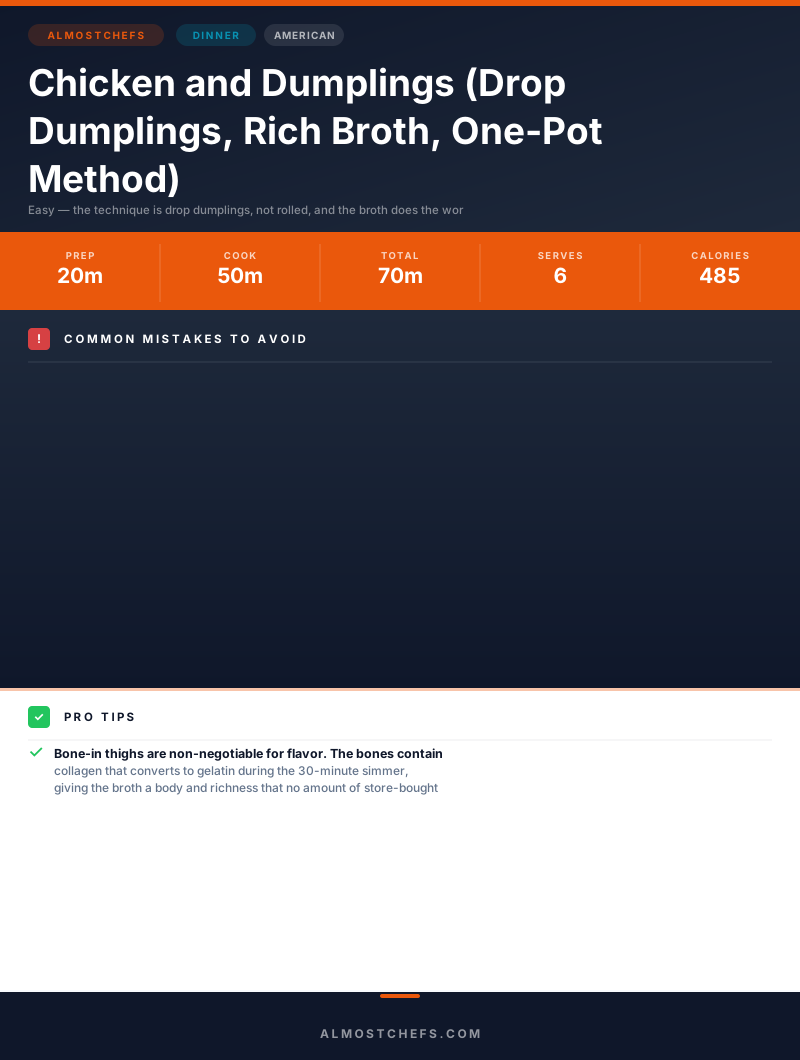
The Science of
Chicken and Dumplings (Drop Dumplings, Rich Broth, One-Pot Method)
We turned everything on this page into a beautiful, flour-proof PDF cheat sheet. Print it out, stick it to your fridge, and never mess up your chicken and dumplings (drop dumplings, rich broth, one-pot method) again.
*We'll email you the high-res PDF instantly. No spam, just perfectly cooked meals.
AlmostChefs Editorial Team
We translate the internet's most popular cooking videos into foolproof, beginner-friendly written recipes. We analyze multiple methods, test them in our kitchen, and engineer a single "Master Recipe" that gives you the best possible result with the least possible stress.