Easy Lighter Chicken Alfredo With Whole Wheat Pasta (With 3 Core Failure Points)
A creamy, restaurant-quality Chicken Alfredo built on whole wheat fettuccine with a Parmesan sauce that actually holds together. We reverse-engineered the most common sauce failures — splitting, graininess, wallpaper-paste texture — and fixed them with technique, not shortcuts.
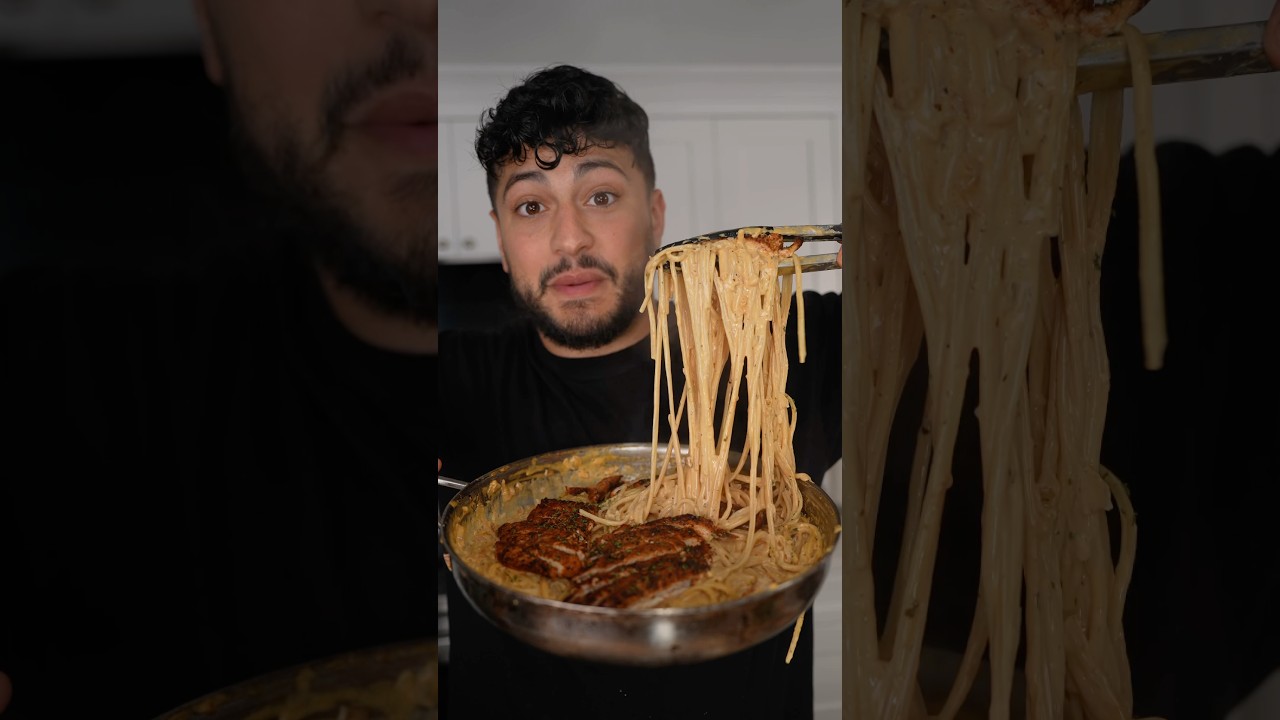
“Chicken Alfredo fails the same way every time: the sauce breaks, the chicken dries out, or the pasta soaks up the cream and turns into a brick. None of these are ingredient problems. They're technique problems. This recipe fixes all three — by pounding the chicken to even thickness, tempering the cream before it hits the pan, and using pasta water as the failsafe emulsifier that restaurants don't tell you about.”
Why This Recipe Works
Chicken Alfredo has a reputation problem. Not because it's difficult — it isn't — but because the failure modes are invisible until the moment you plate it, and by then there's nothing left to do but eat a bowl of greasy noodles and wonder what went wrong. The cream broke. The cheese clumped. The chicken dried out. Every one of these is a temperature problem, and every one of them is preventable.
The Chicken Problem
A chicken breast is not a uniform object. It's a wedge — thick at one end, thin at the other, with a difference of sometimes half an inch between the two extremes. Cook it whole and you're asking physics to do something it won't: deliver two different thicknesses to the same internal temperature at the same time. The thin end overcooks by the time the thick end is done, and no amount of technique downstream fixes dry white meat.
Two minutes with a meat mallet or the bottom of a heavy pan solves this completely. Pound to three-quarters of an inch throughout. Now the whole breast hits 165°F simultaneously, and you have a three-minute window between done and overdone instead of thirty seconds.
The sear itself matters more than most people acknowledge. The fond — those browned bits stuck to the pan after the chicken comes out — is the flavor base for the entire sauce. This is why this recipe cooks the chicken first, in the same pan the sauce will be built in. A non-stick pan doesn't develop fond. Use stainless steel or cast iron and don't wipe the pan between steps.
The Sauce Architecture
Alfredo sauce is an emulsion: fat suspended in liquid, held together by protein and starch. It's stable when the temperature is controlled. It falls apart when you're impatient.
The most common failure is adding cold cream to a hot pan. Cold fat hits screaming-hot metal and the emulsion breaks before the sauce has even started. Take the cream out of the fridge when you start prepping. Room temperature cream poured slowly into a low-heat pan with butter builds a stable, cohesive sauce from the first second.
The second failure is adding cheese to a hot pan. Parmigiano-Reggiano is a hard, aged cheese with proteins that behave like scrambled eggs above 180°F — they seize, clump, and turn the sauce gritty. The fix is absolute: the pan comes off the heat before the cheese goes in. Completely off. The residual warmth melts the cheese gently and uniformly. This is not optional.
Pasta water is the professional's secret that home cooks skip because they don't understand why it works. The starchy water — and it must be properly starchy, from a pot of pasta that's been boiling for ten minutes — acts as an emulsifier that binds the fat, cream, and cheese into a sauce that clings to every strand rather than pooling at the bottom of the bowl. Reserve half a cup before you drain. You cannot recreate it afterward.
The Whole Wheat Upgrade
Whole wheat fettuccine behaves differently than white pasta in this dish, and differently in a good way. Its nuttier, more assertive flavor holds its own against the richness of the cream sauce rather than disappearing into it. Its firmer texture — lower glycemic index, higher fiber, slower to go soft — means the pasta stays distinct under the sauce instead of becoming one uniform mass.
It also has eleven grams of fiber per serving compared to three in white pasta. That's not a minor nutritional footnote; it's the difference between a dish that leaves you sluggish an hour later and one that doesn't. The flavor trade-off is real but it works in this application. Alfredo is rich enough to carry the whole wheat's earthiness. In a light olive oil pasta, the substitution would be more conspicuous.
Why Lemon Matters
Every cream sauce needs an acid counterweight. Without it, richness becomes heaviness, and the flavors flatten into a single undifferentiated note. Two tablespoons of lemon juice does what salt alone cannot: it cuts the fat perception on the palate, separates the flavors so you can taste garlic, Parmesan, and cream as distinct things rather than a single rich blur, and gives the dish a finish that makes you want another bite. It's not there to taste like lemon. It's there so the dish doesn't taste like nothing.
Where Beginners Mess This Up
Before we start, read this. These are the 4 reasons your easy lighter chicken alfredo with whole wheat pasta (with 3 core failure points) will fail:
- 1
Adding cold cream to a hot pan: Cold cream hits a hot skillet and immediately splits — the fat separates from the liquid and you get a greasy, broken sauce before the Parmesan even enters the picture. The cream must be at room temperature before it goes in. Take it out when you start prepping everything else.
- 2
Overheating the sauce after adding cheese: Parmesan is a hard, low-moisture cheese with proteins that seize and clump above 180°F. Once you add the cheese, the pan comes off the heat. The residual warmth melts the cheese gently. Return it to a burner and you'll have gritty, grainy sauce that no amount of stirring will fix.
- 3
Skipping the pasta water: Starchy pasta cooking water is the emulsifier that binds the fat, cream, and cheese into a cohesive sauce. Without it, the sauce slides off the pasta instead of clinging. Reserve at least half a cup before you drain — and don't forget, because you cannot recreate it after the fact.
- 4
Not pounding the chicken to even thickness: Chicken breasts taper from thick to thin. Cook them whole and by the time the thick end reaches 165°F, the thin end has been at 185°F for three minutes and is dry. Two minutes with a mallet solves this entirely.
The Video Reference Library
Want to see it in action? Here are the exact videos we analyzed and combined to build this foolproof recipe translation:
The source video for this recipe. Clear technique walkthrough covering the sear, sauce build, and pasta integration in sequence.
🛠️ Core Equipment
- Meat mallet or heavy skilletFlattening the chicken to even thickness is the single most impactful prep step. Uneven chicken means some parts overcook before others finish. No mallet? The bottom of a [cast iron skillet](/kitchen-gear/review/cast-iron-skillet) works identically.
- Large stainless steel or cast iron skilletThe sauce builds in the same pan the chicken cooked in — the fond (browned bits) left behind is flavor infrastructure. Non-stick pans don't develop fond. Stainless or cast iron only.
- Instant-read thermometerChicken breast has a 10°F window between done and dry. A thermometer costs less than the chicken you'll ruin eyeballing it. Pull at 165°F, not a degree more.
- Box grater or MicroplanePre-grated Parmesan from a plastic tub is coated in cellulose to prevent clumping, which also prevents melting. You need freshly grated Parmigiano-Reggiano. The difference in sauce texture is not subtle.
Easy Lighter Chicken Alfredo With Whole Wheat Pasta (With 3 Core Failure Points)
🛒 Ingredients
- ✦1.25 lbs boneless, skinless chicken breasts
- ✦1 lb whole wheat fettuccine pasta
- ✦5 tablespoons unsalted butter, divided
- ✦3 tablespoons extra virgin olive oil
- ✦4 garlic cloves, minced
- ✦1.5 cups heavy cream, room temperature
- ✦1.25 cups freshly grated Parmigiano-Reggiano cheese
- ✦0.5 cup dry white wine
- ✦2 tablespoons fresh lemon juice
- ✦0.25 teaspoon freshly grated nutmeg
- ✦Salt and freshly cracked black pepper to taste
- ✦0.5 cup reserved pasta cooking water
- ✦Fresh Italian parsley, chopped, for garnish
👨🍳 Instructions
01Step 1
Place chicken breasts on a cutting board and pound to an even thickness of about three-quarters of an inch using a meat mallet or the bottom of a heavy skillet.
02Step 2
Season both sides of the flattened chicken generously with salt and freshly cracked black pepper.
03Step 3
Heat 2 tablespoons of olive oil in a large stainless or cast iron skillet over medium-high heat until the surface shimmers.
04Step 4
Lay the seasoned chicken in the hot skillet and sear without moving for 6-7 minutes until the bottom is deep golden brown.
05Step 5
Flip and cook the other side for another 6-7 minutes until the internal temperature reaches 165°F on an instant-read thermometer.
06Step 6
Transfer cooked chicken to a plate and tent loosely with foil. Let it rest while you build the sauce.
07Step 7
Reduce heat to medium. Add 3 tablespoons butter and remaining 1 tablespoon olive oil to the same skillet.
08Step 8
Once butter is melted and foaming, add minced garlic and cook, stirring constantly, for about 1 minute until fragrant but not browned.
09Step 9
Pour in the white wine and simmer for 3-4 minutes, scraping up any fond from the bottom of the pan, until the mixture reduces slightly.
10Step 10
Reduce heat to low. Slowly pour the room-temperature cream into the skillet while whisking gently to combine.
11Step 11
Heat gently over low heat for 2-3 minutes, stirring occasionally, until the sauce reaches a bare simmer with small bubbles around the edges only.
12Step 12
Remove the skillet from heat entirely. Add the grated Parmesan in two or three handfuls, stirring gently after each addition until fully melted and smooth.
13Step 13
Stir in the nutmeg and lemon juice. Taste and adjust seasoning.
14Step 14
While the sauce cooks, bring a large pot of heavily salted water to a rolling boil. Cook whole wheat fettuccine according to package directions until al dente.
15Step 15
Reserve 0.5 cup of pasta cooking water before draining. This step cannot be undone after the fact.
16Step 16
Add the drained hot pasta directly to the sauce and toss to coat every strand. Add splashes of reserved pasta water as needed to reach a glossy, clinging consistency.
17Step 17
Slice rested chicken into pieces. Divide pasta among bowls, top with chicken, garnish with parsley and additional Parmesan. Serve immediately.
Nutrition Per Serving
Estimates based on standard preparation. Adjustments alter macros.
🔄 Substitutions
Instead of Heavy cream...
Use Half-and-half or 2% Greek yogurt mixed with milk
Lighter mouthfeel with a subtle tang. Greek yogurt adds natural emulsifiers that help the sauce stay together. Reduce heat even further to prevent curdling.
Instead of Fettuccine pasta...
Use Whole wheat, chickpea, or lentil-based pasta
Chickpea and lentil pastas add substantial protein and fiber. Their firmer texture holds the sauce well. Expect a denser, more filling bowl.
Instead of Butter...
Use Extra virgin olive oil or ghee in equal amounts
Olive oil lightens the dish and adds fruity notes. Ghee maintains richness with a slightly nuttier finish and handles higher heat more stably.
Instead of White wine...
Use Low-sodium chicken broth with 1 tablespoon white wine vinegar
Achieves similar acidity and deglazing power without alcohol. Slightly earthier result — the difference is subtle once the Parmesan is in.
🧊 Storage & Reheating
In the Fridge
Store in an airtight container for up to 3 days. The sauce will thicken considerably as it cools — this is normal.
In the Freezer
Not recommended. Cream-based sauces break when frozen and thawed, producing a greasy, separated result that cannot be fixed.
Reheating Rules
Reheat gently in a skillet over low heat with a splash of milk or broth, stirring constantly. Add liquid in small increments until the sauce loosens back to its original consistency. Microwave reheating works but requires a damp paper towel over the bowl and 30-second intervals with stirring between each.
❓ Frequently Asked Questions
Why does my Alfredo sauce always turn grainy?
You added the Parmesan while the pan was still on the heat. At temperatures above 180°F, the proteins in hard cheese seize and clump rather than melting smoothly. Remove the pan from the burner completely before adding the cheese, and add it in batches. The residual heat melts it perfectly.
Can I use pre-grated Parmesan from a container?
Technically yes, practically no. Pre-grated Parmesan is coated in cellulose powder to prevent clumping in the container. That same coating prevents it from melting properly into a sauce. You'll get a sauce that looks grainy and tastes flat. Buy a wedge and grate it yourself — it takes two minutes.
My sauce is too thick. How do I fix it?
This is what the reserved pasta water is for. Add it a tablespoon at a time while tossing the pasta. The starch in the water re-emulsifies the sauce and brings it back to a glossy, clinging consistency. Plain water works in a pinch but doesn't have the same binding effect.
Can I make this gluten-free?
Yes. Chickpea or lentil-based pasta holds up well in this dish and is widely available. Rice-based pasta works but goes soft quickly — eat immediately after tossing. The sauce itself is already gluten-free.
Why does my chicken turn out dry every time?
Two likely causes: you didn't pound it to even thickness, or you cooked it past 165°F. Chicken breast dries out fast above that temperature. Use a thermometer, pull it at exactly 165°F, and let it rest for at least three minutes before slicing.
Do I have to use white wine?
No — see substitutions above. But the wine does two things worth preserving: it deglazes the fond left by the chicken (concentrated flavor) and adds acidity that brightens the finished sauce. If you skip it entirely, deglaze with broth and increase the lemon juice slightly to compensate.
The Science of
Easy Lighter Chicken Alfredo With Whole Wheat Pasta (With 3 Core Failure Points)
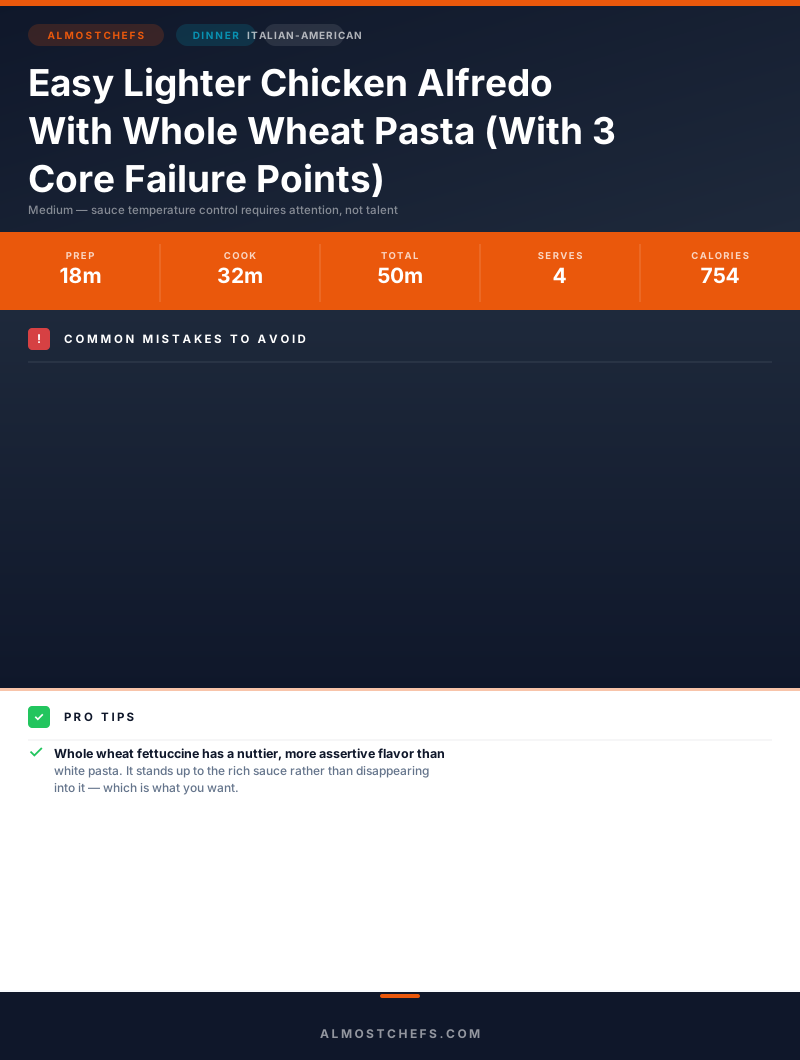
We turned everything on this page into a beautiful, flour-proof PDF cheat sheet. Print it out, stick it to your fridge, and never mess up your easy lighter chicken alfredo with whole wheat pasta (with 3 core failure points) again.
*We'll email you the high-res PDF instantly. No spam, just perfectly cooked meals.
AlmostChefs Editorial Team
We translate the internet's most popular cooking videos into foolproof, beginner-friendly written recipes. We analyze multiple methods, test them in our kitchen, and engineer a single "Master Recipe" that gives you the best possible result with the least possible stress.