Copycat Chick-fil-A Waffle Fries (Crispier Than the Drive-Thru)
Homemade waffle fries that nail Chick-fil-A's signature crispy exterior and fluffy interior — air-fried or double-fried, seasoned with a copycat spice blend, and ready in under an hour. We broke down every variable so you stop getting soggy fries at home.

“Every fast-food side dish has a cult following, but Chick-fil-A's waffle fries are something else entirely. The geometry is not decorative — that grid of holes and ridges is an engineered surface area machine designed to maximize crunch while keeping the center fluffy. Most copycat attempts miss this because they get the cut right and everything else wrong. The starch removal, the dry time, the oil temperature sequencing — skip any of it and you get limp potato wafers. Do all of it and you get something better than the original.”
Why This Recipe Works
Waffle fries are a geometry problem before they are a cooking problem. That grid of holes and ridges is not aesthetic — it is a surface area delivery system. A flat french fry has two sides that can crisp. A waffle fry has dozens of exposed surfaces, each one capable of developing crust independently. More crust means more crunch per bite, which is why a properly made waffle fry is categorically more satisfying than a standard shoestring at the same thickness.
The problem is that most people treat the waffle cut as the whole technique. It isn't. The cut is just the shape. What happens to that shape between the mandoline and the oil is where the result is actually decided.
Starch Is the Enemy
Raw potatoes contain two types of starch: amylose and amylopectin. When they hit hot oil without treatment, these starches gelatinize unevenly on the surface and form a gummy layer that blocks oil penetration and prevents crisping. The ice water soak dissolves this surface starch into the water and carries it away, leaving bare cell walls that the oil can actually interact with.
The vinegar in the soak does something slightly different. Acetic acid reinforces the pectin structure in the potato's cell walls, giving each fry a fractionally firmer exterior before cooking begins. This is the same principle behind adding vinegar to pasta water to improve texture — it is a small intervention with a measurable result.
After the soak, drying is the mission-critical step. Water and 375°F oil produce violent steam that puffs the surface outward and prevents crust formation. Every paper towel pass matters. If the potato surface looks damp, you are not done drying.
The Double-Fry Is Non-Negotiable
One temperature cannot cook the interior through and build a proper crust simultaneously. At 325°F, the oil is hot enough to cook the potato's interior gently without triggering rapid surface browning. At 375°F, the surface dries and crisps while the interior is already cooked and can simply hold. Compress these into one temperature and you either burn the outside before the inside is done or undercook the exterior while the center turns to mush.
A heavy-bottomed pot or Dutch oven is essential for maintaining these temperatures accurately. Thin pots lose heat when cold potatoes enter the oil and take too long to recover. That temperature drop extends fry time and changes the texture. A heavy pot with thermal mass holds the oil temperature steady across batches.
The Seasoning Window
There is exactly one moment when seasoning adheres to a fried potato: the thirty seconds immediately after it leaves the oil. The residual surface oil is still fluid and acts as a binding agent. Once the crust cools and the oil solidifies, seasoning sits on top rather than bonding to the surface.
The copycat spice blend for this recipe leans on paprika for color and body, garlic and onion powder for savory depth, and cayenne for the faint heat that distinguishes Chick-fil-A's version from generic seasoned fries. The cornstarch in the blend absorbs any remaining surface moisture and creates an ultra-thin crispy coating around the spices — the same technique in Korean fried chicken. The optional MSG closes the gap between "pretty good" and "why does this taste like the original."
Season fast, season while hot, and do not cover the fries afterward or the steam will undo everything.
The Air Fryer Translation
The air fryer version cuts calories by roughly 40% and fat by 80%, and it still produces excellent results — not identical, but genuinely crispy. The key difference is airflow. An air fryer works by circulating extremely hot air at high velocity around the food's surface. That only works if the air can actually reach every surface. One layer, no overlapping, basket shake at the halfway mark. Stack fries and you have a steamer, not a fryer.
Waffle fries are, in the end, an argument that shape is technique. The geometry does the work — if you do the prep.
Where Beginners Mess This Up
Before we start, read this. These are the 4 reasons your copycat chick-fil-a waffle fries (crispier than the drive-thru) will fail:
- 1
Skipping the ice water soak: Raw potatoes are loaded with surface starch that turns into a gummy paste the moment it hits hot oil. That paste prevents crisping, creates uneven browning, and makes fries stick together in the fryer basket. The 30-minute ice water soak draws excess starch out of the cut surfaces so the oil can work directly on the potato cell walls. Skipping this step is the single biggest reason homemade fries disappoint.
- 2
Not drying the potatoes completely: Water and hot oil are a violent combination. Moisture on the surface of the potato creates steam that puffs the fry outward instead of letting the crust set. The result is a soft exterior that goes soggy within two minutes of leaving the oil. Pat every surface dry — multiple paper towel passes, no shortcuts. Any visible moisture means more drying time.
- 3
Frying everything in one batch at one temperature: The double-fry method exists because one temperature cannot do two jobs simultaneously. The first fry at 325°F cooks the interior through gentle heat without browning the outside. The second fry at 375°F creates the crust. Combine them into one stage and you get a brown exterior with a raw or mealy center. The temperature staging is the technique.
- 4
Seasoning too early or too late: Season the fries the moment they come out of the oil, while the surface is still tacky with residual heat. This is the only window where the seasoning blend adheres without sliding off. Season before frying and you burn the spices. Season after the fries have cooled and you're eating seasoning next to fries, not on them.
The Video Reference Library
Want to see it in action? Here are the exact videos we analyzed and combined to build this foolproof recipe translation:
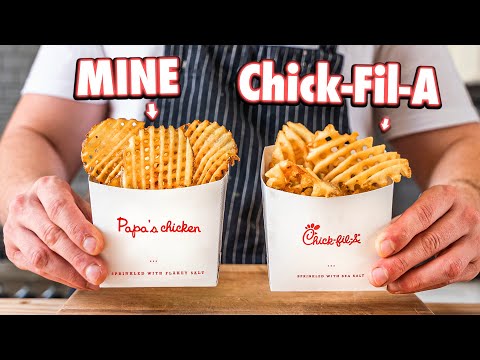
The source video for this recipe. Clear demonstration of the waffle-cut technique, double-fry method, and the seasoning timing that makes the spice blend stick.
2. How to Make Crispy Fries Every Time
Deep dive into the starch science behind fry crispiness — covers soaking, drying, and oil temperature in detail. Essential watching if you want to understand why each step exists.
3. Air Fryer French Fry MasterclassComprehensive guide to getting deep-fry results from an air fryer, including basket arrangement, shake timing, and why single-layer cooking is mandatory for crunch.
🛠️ Core Equipment
- Mandoline with waffle-cut blade ↗The waffle cut is not achievable with a knife. You need a mandoline that produces a crinkle-cut blade pattern, rotating the potato 90 degrees between each pass to create the grid. Consistent thickness — around 3/8 inch — is what ensures all fries finish cooking at the same time.
- Candy or deep-fry thermometer ↗Oil temperature is everything in this recipe. A 50°F drop between the first and second fry is the entire difference between cooked-through and crispy. Without a thermometer you are guessing, and the fries will show it.
- Air fryer or heavy-bottomed deep pot ↗For air frying, a [wide-basket air fryer](/kitchen-gear/review/air-fryer) that fits fries in a single layer is non-negotiable — stacked fries steam instead of crisp. For deep frying, a heavy pot with high sides prevents oil temperature crashes when cold potatoes hit the oil.
- Wire rack over a sheet pan ↗Paper towels absorb initial oil but trap steam underneath the fries as they cool. A wire rack lets air circulate on all sides, keeping the bottom crust as crispy as the top. This is the difference between fries that hold for 10 minutes and fries that go soft in 2.
Copycat Chick-fil-A Waffle Fries (Crispier Than the Drive-Thru)
🛒 Ingredients
- ✦4 large russet potatoes
- ✦2 tablespoons cornstarch
- ✦1 tablespoon all-purpose flour
- ✦1 teaspoon paprika
- ✦1 teaspoon garlic powder
- ✦1 teaspoon onion powder
- ✦1/2 teaspoon cayenne pepper
- ✦1 teaspoon kosher salt
- ✦1/4 teaspoon black pepper
- ✦1/4 teaspoon MSG or umami seasoning (optional but recommended)
- ✦2 cups vegetable oil for deep frying, or cooking spray for air frying
- ✦1 tablespoon white vinegar
- ✦Ice water for soaking
👨🍳 Instructions
01Step 1
Wash the russet potatoes thoroughly under cold running water and pat them completely dry.
02Step 2
Using a mandoline with a waffle-cut blade set to about 3/8-inch thickness, slice each potato into waffle-shaped pieces by rotating the potato 90 degrees between each pass.
03Step 3
Place the sliced potatoes in a large bowl filled with ice water and 1 tablespoon of white vinegar. Refrigerate for at least 30 minutes.
04Step 4
Drain the potatoes in a colander, then spread them on multiple layers of paper towels and press firmly. Repeat with fresh towels until there is no visible surface moisture.
05Step 5
In a small bowl, whisk together the cornstarch, flour, paprika, garlic powder, onion powder, cayenne, salt, black pepper, and MSG until fully combined. Set aside.
06Step 6
For deep frying: Heat vegetable oil in a heavy pot to 325°F. Fry the potatoes in small batches for 4-5 minutes until cooked through but not yet golden. Transfer to a wire rack. Do not crowd the pot — fry in batches no larger than a single layer.
07Step 7
Increase the oil temperature to 375°F. Return the first-fried potatoes in batches and fry for 2-3 minutes until deep golden brown. Transfer immediately to a wire rack.
08Step 8
For air frying: Lightly coat the dried potato slices with cooking spray. Arrange in a single layer in the air fryer basket — no overlapping. Cook at 400°F for 15-18 minutes, shaking the basket once at the 10-minute mark.
09Step 9
While the fries are still hot and coming off the heat, immediately sprinkle the seasoning blend over them and toss gently to coat. Do not wait.
10Step 10
Serve within 5 minutes for optimal crunch. If holding briefly, keep on the wire rack in a 200°F oven — never cover them or the steam will destroy the crust.
Nutrition Per Serving
Estimates based on standard preparation. Adjustments alter macros.
🔄 Substitutions
Instead of Vegetable oil for deep frying...
Use Air fryer with cooking spray, or avocado oil
Air frying drops calories from 320 to 185 per serving and eliminates 70-80% of fat. The texture is slightly less shatteringly crispy but still excellent. Avocado oil has a higher smoke point than vegetable oil, making it better for the 375°F second fry.
Instead of Kosher salt (1 teaspoon)...
Use Potassium-enriched salt substitute or reduce to 1/2 teaspoon
Cuts sodium from 580mg to approximately 290mg per serving. The other seasoning components carry enough flavor that the reduction is barely perceptible.
Instead of Russet potatoes...
Use Sweet potatoes or a 50/50 russet-sweet potato blend
Sweet potatoes add beta-carotene, increase fiber by about 2g per serving, and have a lower glycemic index. The texture is slightly denser and they brown faster — watch the temperature on the second fry.
Instead of All-purpose flour coating...
Use Cornstarch and chickpea flour blend (1 tablespoon cornstarch + 1/2 tablespoon chickpea flour)
Adds modest protein and fiber. Chickpea flour has a slightly nutty flavor that works well with the paprika-heavy spice blend. Crispness is maintained.
🧊 Storage & Reheating
In the Fridge
Cool completely on a wire rack before storing in an airtight container for up to 2 days. Do not seal hot fries — the trapped steam turns everything to mush.
In the Freezer
Freeze after the first fry only, spread in a single layer on a sheet pan until solid, then transfer to a freezer bag. Cook from frozen at 375°F for the second fry — no thawing needed. Holds for up to 1 month.
Reheating Rules
Spread cold fries on a wire rack over a sheet pan and reheat in a 375°F oven for 5-7 minutes. The oven restores crunch. The microwave destroys it — never microwave waffle fries.
❓ Frequently Asked Questions
Why are my waffle fries soggy instead of crispy?
Almost certainly one of three things: the potatoes were not dried thoroughly enough before frying, the oil temperature was too low (below 325°F on the first fry), or you crowded the fryer basket and the fries steamed instead of fried. The waffle cut creates a lot of surface area, which is great for crispiness — but only if the conditions are right.
Do I need a mandoline? Can I use a knife?
You need a mandoline with a waffle-cut or crinkle-cut blade. The waffle pattern requires rotating the potato 90 degrees between each pass, which is a machine-precision move that a knife simply cannot replicate. Without the grid pattern, you have crinkle-cut fries, not waffle fries, and the surface-area-to-volume ratio changes completely.
Can I skip the double-fry method?
You can, but you will get a worse result. A single fry cannot simultaneously cook the interior through and create a proper crust. The first low-temperature fry sets the interior; the second high-temperature fry builds the exterior. The two-stage process is the technique, not a suggestion.
What's the role of MSG in the seasoning?
MSG amplifies savory (umami) flavor by stimulating glutamate receptors on your tongue. It's the same compound found naturally in parmesan, tomatoes, and mushrooms. In the seasoning blend, it rounds out the sharpness of the paprika and cayenne and adds the 'more' quality that makes copycat recipes taste like the original. If you prefer to skip it, substitute a pinch of nutritional yeast.
Why does the recipe use vinegar in the soaking water?
Vinegar — specifically its acetic acid — slightly strengthens the pectin in the potato cell walls. This makes the exterior of each fry fractionally firmer, which helps it hold its structure during the first fry and contributes to a better crust formation during the second. The effect is subtle but measurable, and it prevents any enzymatic browning during the soak.
How do I keep the fries crispy if I'm cooking for a crowd?
Do the first fry in advance, cool the fries on a wire rack, and hold them uncovered at room temperature for up to 2 hours. Run the second fry in batches as people are ready to eat — the second fry takes only 2-3 minutes. Keep finished batches on a wire rack in a 200°F oven, uncovered. Never pile or cover them while holding.
The Science of
Copycat Chick-fil-A Waffle Fries (Crispier Than the Drive-Thru)
We turned everything on this page into a beautiful, flour-proof PDF cheat sheet. Print it out, stick it to your fridge, and never mess up your copycat chick-fil-a waffle fries (crispier than the drive-thru) again.
*We'll email you the high-res PDF instantly. No spam, just perfectly cooked meals.
AlmostChefs Editorial Team
We translate the internet's most popular cooking videos into foolproof, beginner-friendly written recipes. We analyze multiple methods, test them in our kitchen, and engineer a single "Master Recipe" that gives you the best possible result with the least possible stress.