Copycat Chick-fil-A Sandwich (The Brine Is Everything)
A hand-breaded, double-dredged chicken breast brined in milk and salt, pan-fried to a golden crisp, and served on a buttered toasted bun with two dill pickle chips. We reverse-engineered the most iconic fast-food sandwich in America so you can make it at home — better, leaner, and without the drive-through.
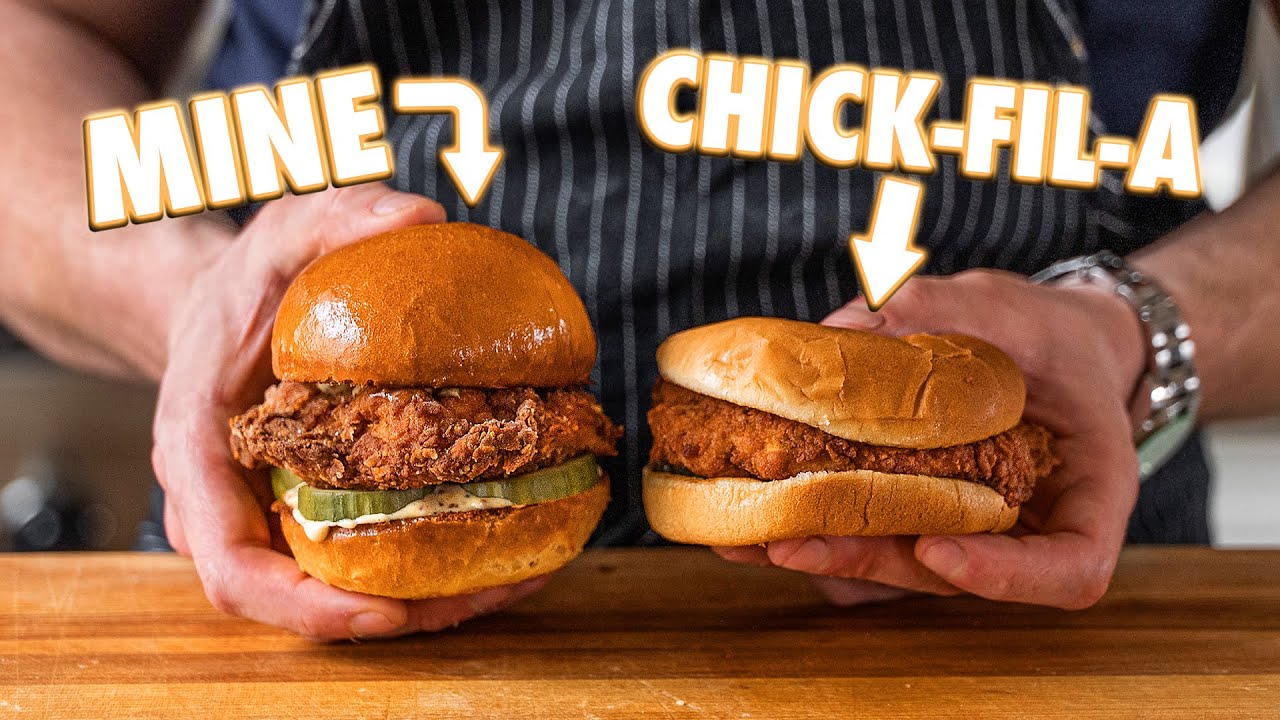
“Chick-fil-A has sold essentially the same sandwich since 1964. One chicken breast, one toasted bun, two pickle chips. That's it. The reason it's impossible to replicate at home isn't the recipe — it's the brine. Most copycat recipes skip it or rush it. This one doesn't. Four hours minimum, overnight preferred, and the chicken comes out with that unmistakable juicy interior and crispy exterior that makes people drive out of their way to get one.”
Why This Recipe Works
Chick-fil-A has sold essentially the same sandwich since 1964. Chicken, bun, pickles. No sauce. No lettuce. No engineering misdirection. The sandwich succeeds because every element is doing exactly one job, and each job is done precisely. Copying it at home fails not because the recipe is complicated — it's not — but because most people skip the step that makes the original what it is.
The Brine Is the Recipe
Strip everything else away and the Chick-fil-A sandwich is a milk-brined chicken breast. That's the technology. Everything else — the seasoned flour, the toasted bun, the pickles — is support structure around that foundational technique.
The science: salt dissolved in milk creates a two-pronged brining solution. The sodium ions penetrate the muscle fibers through osmosis and restructure the proteins, allowing them to hold more moisture during the high heat of frying. The milk proteins, meanwhile, coat the exterior of the chicken and interact with the flour during dredging to create a coating that bonds tightly instead of shattering off. Four hours is the minimum for meaningful osmotic penetration. Overnight — 8 to 12 hours — is where the texture becomes unmistakably silky, not just acceptable.
This is why 30-minute copycat recipes fail. The salt hasn't moved. The proteins haven't restructured. You've made slightly salty chicken that dries out under frying heat like every other dry chicken breast you've ever eaten.
The Double Dredge Architecture
The original Chick-fil-A breading is not thick. It's not batter-style. It's a precise, tight crust that coats without suffocating — crispy enough to audibly crunch on the first bite, thin enough that you still taste the chicken underneath. Replicating that requires the double dredge: flour, egg wash, flour again, with each pass pressing firmly into the surface.
The first flour coat creates a dry base for the egg wash to grip. The egg wash acts as mortar. The second flour coat builds the final crust, and because the egg has already started hydrating the first flour layer, you get a slightly thicker, more cohesive exterior than one pass alone provides. The craggy irregularities in the coating — those small bumps and rough patches — are what become the crispy high points that contrast with the tender interior.
The seasoning in the flour matters more than it seems. The dredge is the only place external flavor gets added to the exterior — once the crust sets in the oil, nothing penetrates. Under-season the flour and you get a crust that tastes like nothing, regardless of how crispy it is.
Oil Temperature Is Non-Negotiable
A heavy-bottomed skillet is not optional for this recipe. When cold brined chicken hits a thin pan, the pan temperature drops dramatically and the oil can't recover quickly enough. The result: the breading sits in warm fat instead of hot fat, absorbing oil for the first two minutes of cooking instead of repelling it. The crust never achieves the hard, dry shell structure that defines the original.
Shimmer is your target temperature indicator. Oil that shimmers across the surface without smoking is between 375°F and 400°F — the ideal range for shallow frying chicken breast. Below that, you're braising in fat. Above it, the exterior burns before the interior reaches temperature.
Once the chicken is in the pan, leave it alone. The first three minutes are when the crust bonds to the protein surface. Moving it prematurely tears the coating off in sheets and leaves you with a naked, pale chicken breast in a pan full of floating bread crumbs.
The Pickle Chip Problem
Two pickles. Not three, not one, not a handful. Two chips placed precisely in the center. This isn't aesthetic preference — it's flavor engineering. The pickles function as acid punctuation marks: one sharp, briny hit per bite that cuts through the richness of the fried coating and the butter-toasted bun. Too many pickles and the acid overwhelms. Too few and the sandwich becomes monotone rich. The ratio is specific and correct.
Use an instant-read thermometer to pull the chicken at exactly 165°F. Chicken breast begins losing moisture rapidly at 170°F, and by 175°F the texture difference is unmistakable. The brine helps, but it can't save a chicken breast that's been cooked to 180°F. Pull it early, rest it on a wire rack, and trust the carryover heat to finish the job.
The sandwich has survived 60 years of competition because the fundamentals are airtight. Brine the chicken. Double dredge it. Fry it in hot fat. Add two pickles. That's the whole formula.
Where Beginners Mess This Up
Before we start, read this. These are the 4 reasons your copycat chick-fil-a sandwich (the brine is everything) will fail:
- 1
Skipping or shortcutting the brine: The milk-salt brine is not optional. The salt draws moisture into the muscle fibers through osmosis while the milk proteins coat the exterior, helping the breading adhere and the interior stay tender during frying. A 30-minute brine does almost nothing. Four hours is the floor. Less than that and you get dry, dense chicken that no amount of breading can save.
- 2
Not drying the chicken before dredging: Wet chicken going into flour creates a paste, not a crust. After brining, pat every surface completely dry with paper towels. The flour needs to grip dry protein — that's what creates the craggy, irregular coating that crisps up on contact with hot oil.
- 3
Skipping the double dredge: One pass through flour produces a thin, fragile crust that chips off the moment you bite into it. Two passes — flour, egg wash, flour again — builds the thick, layered coating that stays intact and crunches audibly. This is non-negotiable for replicating the original texture.
- 4
Oil temperature too low: If the oil doesn't shimmer before the chicken goes in, the breading absorbs fat instead of repelling it. The result is greasy, soft coating instead of a crispy shell. Medium-high heat, wait until the oil shimmers, then add the chicken. Do not move it for the first 3 minutes — let the crust set.
The Video Reference Library
Want to see it in action? Here are the exact videos we analyzed and combined to build this foolproof recipe translation:
The primary reference video for this recipe. Clear walkthrough of the brine, double dredge, and pan-fry technique with close-ups of the coating texture you're aiming for.
🛠️ Core Equipment
- Heavy-bottomed skillet or cast iron panEven heat distribution is critical for consistent browning. A thin pan creates hot spots that burn the breading on one side while the other stays pale. Cast iron retains heat when the cold chicken hits the pan, preventing the temperature drop that leads to greasy coating.
- Instant-read thermometerChicken breast is unforgiving. At 155°F it's perfect; at 170°F it's dry cardboard. The breading makes it impossible to judge doneness visually. Pull the chicken at 165°F and it will carry-over cook to the ideal temperature while resting.
- Zip-top bagFor the overnight brine. A bag removes air and keeps the chicken fully submerged in the brine without requiring a large container. Full surface contact means even penetration of the salt and milk.
- Wire rackRest the fried chicken on a wire rack, not paper towels. Paper towels trap steam underneath and soften the crust from below. A rack lets air circulate on all sides, keeping the bottom as crispy as the top.
Copycat Chick-fil-A Sandwich (The Brine Is Everything)
🛒 Ingredients
- ✦2 boneless, skinless chicken breasts (about 8 oz each)
- ✦1 cup whole milk
- ✦2 tablespoons kosher salt
- ✦1 tablespoon granulated sugar
- ✦1 cup all-purpose flour
- ✦1 teaspoon garlic powder
- ✦1 teaspoon onion powder
- ✦1 teaspoon paprika
- ✦1 teaspoon ground black pepper
- ✦1 teaspoon salt
- ✦2 large eggs
- ✦3 tablespoons buttermilk
- ✦2 tablespoons avocado oil or light olive oil
- ✦2 whole wheat sandwich buns
- ✦2 tablespoons unsalted butter, softened
- ✦4 dill pickle chips
- ✦1 teaspoon honey
👨🍳 Instructions
01Step 1
Whisk together 1 cup whole milk, 2 tablespoons kosher salt, and 1 tablespoon sugar in a medium bowl until completely dissolved.
02Step 2
Place the chicken breasts in a zip-top bag, pour the brine over them, press out the air, and seal. Refrigerate for at least 4 hours, preferably overnight.
03Step 3
Remove the chicken from the brine and pat every surface completely dry with paper towels. Set aside on a clean plate.
04Step 4
In a shallow bowl, combine the flour, garlic powder, onion powder, paprika, black pepper, and 1 teaspoon salt. Mix thoroughly.
05Step 5
In a second shallow bowl, whisk together the eggs and buttermilk until fully combined.
06Step 6
Dredge each chicken breast in the flour mixture, pressing firmly to coat all surfaces. Shake off any excess.
07Step 7
Dip the floured chicken into the egg-buttermilk mixture, letting the excess drip back into the bowl.
08Step 8
Dredge again in the flour mixture for a double coat, pressing firmly. The crust should look thick and irregular.
09Step 9
Heat the avocado oil in a heavy-bottomed skillet over medium-high heat until it shimmers, about 2 minutes.
10Step 10
Carefully lay the breaded chicken in the hot oil and cook undisturbed for 6-7 minutes until deeply golden brown on the first side.
11Step 11
Flip and cook for another 6-7 minutes until the internal temperature reads 165°F on an instant-read thermometer.
12Step 12
Transfer the chicken to a wire rack and rest for 3 minutes.
13Step 13
In the same skillet, toast the buns cut-side down for 1-2 minutes until lightly golden, then spread butter on each toasted half.
14Step 14
Assemble: chicken breast on the bottom bun, two dill pickle chips on top, close with the top bun. Serve immediately.
Nutrition Per Serving
Estimates based on standard preparation. Adjustments alter macros.
🔄 Substitutions
Instead of All-purpose flour...
Use 1/2 cup all-purpose flour + 1/2 cup whole wheat pastry flour
Adds fiber and a slightly nuttier flavor without significantly changing the texture. Whole wheat pastry flour is finely milled enough to avoid a dense, heavy crust.
Instead of Buttermilk...
Use Plain Greek yogurt mixed with 1 tablespoon lemon juice
Provides the same acidity for the egg wash and adds probiotic benefit. Thin the yogurt slightly with water if it's too thick to coat evenly.
Instead of Regular white sandwich bun...
Use Sprouted grain or 100% whole wheat bun
Heartier texture and better nutritional profile. Toast it slightly longer than a white bun — it takes a bit more heat to get that same buttery crunch.
Instead of Avocado oil...
Use Extra virgin olive oil or coconut oil
Olive oil adds subtle flavor and has strong anti-inflammatory polyphenols. Coconut oil adds a faint sweetness. Both handle medium-high heat adequately for pan frying.
🧊 Storage & Reheating
In the Fridge
Store fried chicken (without the bun) in an airtight container for up to 3 days. The bun and chicken stored together will make the crust soggy within an hour.
In the Freezer
Freeze breaded, uncooked chicken on a sheet pan until solid, then transfer to a freezer bag for up to 2 months. Fry from frozen at slightly lower heat, adding 3-4 minutes per side.
Reheating Rules
Reheat on a wire rack in a 375°F oven for 10-12 minutes. Never microwave — it turns the crust to wet cardboard.
❓ Frequently Asked Questions
Why does my homemade version not taste like Chick-fil-A?
The most likely culprit is the brine time. Chick-fil-A marinates their chicken for hours before cooking. If you brined for less than 4 hours, the salt hasn't had time to fully penetrate the meat. The second most common issue is oil temperature — if the oil wasn't shimmering hot before the chicken went in, the crust absorbed fat instead of crisping.
Can I use chicken thighs instead of breasts?
Yes, and many people prefer them — thighs have more fat, which means more flavor and a lower margin of error for overcooking. Boneless, skinless thighs work well. They'll cook slightly faster, so check temperature at the 5-minute mark per side.
Do I have to double dredge?
If you want a crust that stays intact through the first bite, yes. A single-dredge crust is thin and fragile. The double dredge creates the thick, layered coating that crunches audibly and holds together. It takes 90 extra seconds and makes a significant difference.
Why milk brine instead of buttermilk brine?
Buttermilk has more acid, which starts breaking down the chicken's surface proteins quickly — great for a short brine, but over 4+ hours it can make the exterior mushy. Whole milk is gentler, which is why it works for the longer brines this recipe relies on. The egg-buttermilk egg wash gets you the tang and acidity in the dredge, where it belongs.
Can I make this ahead of time for a crowd?
Brine the chicken up to 24 hours ahead. You can also dredge the chicken and refrigerate uncovered on a wire rack for up to 2 hours before frying — the flour coating dries out slightly, which actually produces a crispier crust. Don't pre-fry and try to reheat a batch; fried chicken is best served within 10 minutes of coming out of the pan.
What's the right internal temperature to pull the chicken?
165°F measured at the thickest point. Pull it at exactly 165°F — carryover cooking will bring it up another 3-5 degrees while resting. If you wait until the thermometer reads 170°F in the pan, the center will hit 175°F+ by the time you eat, which is the threshold where breast meat turns dry and stringy.
The Science of
Copycat Chick-fil-A Sandwich (The Brine Is Everything)
We turned everything on this page into a beautiful, flour-proof PDF cheat sheet. Print it out, stick it to your fridge, and never mess up your copycat chick-fil-a sandwich (the brine is everything) again.
*We'll email you the high-res PDF instantly. No spam, just perfectly cooked meals.
AlmostChefs Editorial Team
We translate the internet's most popular cooking videos into foolproof, beginner-friendly written recipes. We analyze multiple methods, test them in our kitchen, and engineer a single "Master Recipe" that gives you the best possible result with the least possible stress.