Cheonggukjang Jjigae (Fermented Soybean Stew)
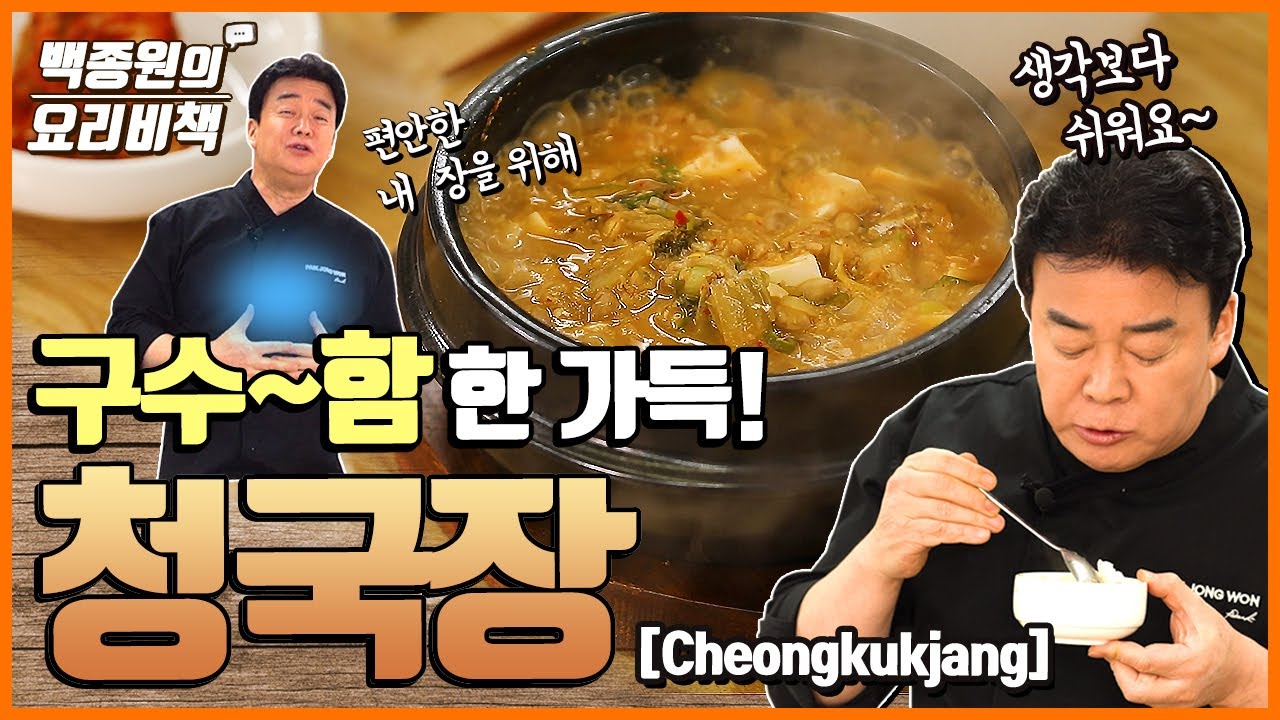
Korea's most polarizing stew — pungent, funky fermented soybean paste with tofu, pork, and vegetables. If you can handle the smell, the flavor is extraordinary.
Why This Recipe Works
Let's be direct: most people who encounter cheonggukjang for the first time recoil. That is not a flaw. That is the ingredient doing exactly what two thousand years of Korean fermentation science designed it to do — announcing, loudly and without apology, that something deeply alive is present. If your kitchen smells like a barn crossed with a cheese cave and someone's grandmother's storage room, you are on the right track. The recipe works precisely because it does not attempt to hide what cheonggukjang is. It leans into the funk, structures the dish around it, and trusts that flavor, not fragrance, is what you actually eat.
The Fermentation Biochemistry You Were Never Told
Cheonggukjang is produced via a radically accelerated fermentation process — 2 to 3 days at roughly 40°C using Bacillus subtilis (and related Bacillus strains), the same bacterial family responsible for Japanese natto. Compare that to doenjang, which ferments for months to years. The short fermentation window means the proteolytic enzymes don't have time to fully break down the soybean proteins, leaving you with sticky, stringy, almost mucilaginous soybean chunks suspended in a paste of extraordinary glutamate density. Glutamic acid is the backbone of umami. Cheonggukjang has it in quantities that dwarf soy sauce. This is not a mild background note — it is the entire harmonic structure of the stew.
The signature aroma comes primarily from pyrazines and sulfur-containing volatile compounds generated during bacterial metabolism. These are the same compound families that give aged cheese, roasted coffee, and miso their characteristic depth. Your nose interprets them as pungent because they evolved as food spoilage signals — but context is everything. Inside a hot cooking pot with simmering anchovy-dashima stock, these volatiles partially dissipate and bind to fat molecules from the pork belly, transforming from an assault into complexity. By the time the stew reaches the table, the harshest aromatic compounds have cooked off. What remains is savory, mineral, and irreplaceable.
Why Pork Belly Specifically
Pork belly is not a casual choice here. Its high intramuscular and subcutaneous fat content provides the lipid matrix that captures and moderates cheonggukjang's volatile compounds during cooking. Leaner cuts — pork loin, chicken breast, anything low-fat — do not perform this function adequately. The fermented paste needs animal fat to bind to. Without it, the stew reads as sharp and aggressive rather than round and deeply savory. Four ounces of pork belly carries enough fat to coat the broth, emulsify the paste, and round out the acidity. This is not a health compromise. This is structural engineering.
The Stock Layer
Anchovy-dashima stock is doing more work than it gets credit for. The glutamates in the cheonggukjang are dramatically amplified by the inosinate compounds in dried anchovy (Engraulis japonicus) and the free glutamates in dashima (kelp). This is the synergistic umami effect — MSG and IMP together produce a perceived umami intensity three to eight times stronger than either compound alone. This is established food science, not culinary mysticism. Using plain water instead of anchovy-dashima stock is not a neutral substitution. You are removing the compound that multiplies everything the cheonggukjang is trying to accomplish. If you cannot source dried anchovies and dashima, dried shiitake mushroom water is the least-bad alternative — shiitakes carry guanylate, another umami synergist — but it will not match the mineral edge of the traditional stock.
Vegetable Restraint as a Design Decision
Zucchini and onion. That is it. This is intentional and correct. Both vegetables are high in water content, which they release during the simmer phase, diluting the broth slightly and moderating the paste's intensity without introducing competing flavors. Zucchini in particular has an almost neutral flavor profile in the context of this stew — it functions as texture and water source, not as a flavor agent. Adding strongly flavored vegetables — mushrooms, kimchi, fermented anything — would create interference patterns in the flavor profile. The recipe's vegetable restraint is a studied decision to keep the fermented soybean paste in absolute control of the dish.
Tofu Timing Is Not Optional
Firm tofu goes in during the final three minutes. Not earlier. Tofu is primarily water held in a protein matrix, and that matrix begins to degrade under sustained heat and agitation. Add it too early, stir it too vigorously, and you are eating crumbled tofu suspended in broth. Cubed tofu added at the end retains its structure, absorbs funky, fat-rich broth from the surface inward, and provides textural contrast against the soft pork. The cooking pot should maintain a gentle simmer — not a rolling boil — once the tofu is added. Micro-managing your heat source at this stage is not overcaution. It is the difference between a stew with silken tofu cubes and a stew with protein rubble.
Nattokinase and the Actual Health Case
Koreans have considered cheonggukjang medicinal for centuries. Contemporary nutritional science has caught up. Bacillus subtilis fermentation produces nattokinase, a fibrinolytic enzyme with documented anticoagulant properties. It also produces vitamin K2 in the menaquinone-7 (MK-7) form — the bioavailable form associated with cardiovascular and bone health. The probiotic bacteria themselves survive partial cooking, since the stew is served immediately after a brief simmer rather than extended boiling. At 280 calories with 22 grams of protein, 3 grams of fiber, and a micronutrient profile that includes calcium, iron, and B vitamins, this is not comfort food that happens to be tolerable. This is one of the most nutritionally dense stews in the Korean repertoire, wearing a disguise designed to frighten people with delicate sensibilities.
Open a window. Make the stock. Dissolve the paste. Don't apologize for the smell.
Cheonggukjang Jjigae (Fermented Soybean Stew)
🛒 Ingredients
- ✦3 tablespoons cheonggukjang (fast-fermented soybean paste)
- ✦4 oz pork belly or ground pork
- ✦1/2 block (4 oz) firm tofu, cubed
- ✦1/2 zucchini, diced
- ✦1/2 onion, diced
- ✦1 Korean green chili, sliced
- ✦1 red chili, sliced
- ✦2 cloves garlic, minced
- ✦1 green onion, sliced
- ✦1 tablespoon gochugaru (optional, for heat)
- ✦2 cups anchovy-dashima stock (or water)
- ✦1/2 teaspoon salt
👨🍳 Instructions
01Step 1
In a pot, bring anchovy-dashima stock to a boil over medium-high heat.
02Step 2
Add pork belly slices or ground pork. Cook for 3 minutes until the pork is no longer pink.
03Step 3
Add cheonggukjang paste. Stir to dissolve it into the broth — it will be thick and chunky. That's correct.
04Step 4
Add onion, zucchini, garlic, and gochugaru if using. Simmer for 5 minutes.
05Step 5
Add tofu cubes and both chilies. Simmer for 3 more minutes.
06Step 6
Garnish with green onion. Serve bubbling with steamed rice.
Nutrition Per Serving
Estimates based on standard preparation. Adjustments alter macros.
🔄 Substitutions
Instead of Cheonggukjang paste...
Use Doenjang (Korean soybean paste)
Much milder — loses the signature funk but still makes a good soybean stew
Instead of Pork belly...
Use Kimchi (1/2 cup, aged)
Vegetarian-friendly swap — kimchi adds acidity and umami
Instead of Anchovy-dashima stock...
Use Dried shiitake mushroom water
Vegetarian option — soak 3-4 dried shiitakes in 2 cups hot water for 30 minutes
🧊 Storage & Reheating
In the Fridge
Store for 2-3 days. The smell intensifies in a closed container — normal.
In the Freezer
Not recommended — tofu texture changes.
Reheating Rules
Reheat in a pot until bubbling. The smell returns on reheating.
❓ Frequently Asked Questions
What does cheonggukjang taste like?
Imagine doenjang (Korean soybean paste) turned up to 11. It's intensely savory and umami with a funky, almost cheese-like depth. The smell is stronger than the taste — once you get past the aroma, the stew itself is deeply satisfying and complex. Koreans who love it say there's nothing else like it.
Where can I buy cheonggukjang?
Korean grocery stores (H Mart, Zion Market) sell cheonggukjang in the refrigerated section near doenjang and gochujang. It comes in plastic tubs or pouches. Look for 청국장 on the label. Some stores also sell it frozen.

The Science of
Cheonggukjang Jjigae (Fermented Soybean Stew)
We turned everything on this page into a beautiful, flour-proof PDF cheat sheet. Print it out, stick it to your fridge, and never mess up your cheonggukjang jjigae (fermented soybean stew) again.
*We'll email you the high-res PDF instantly. No spam, just perfectly cooked meals.
AlmostChefs Editorial Team
We translate the internet's most popular cooking videos into foolproof, beginner-friendly written recipes. We analyze multiple methods, test them in our kitchen, and engineer a single "Master Recipe" that gives you the best possible result with the least possible stress.