Funky, Fermented Cheonggukjang (The Probiotic Stew Worth the Smell)
A thick, boldly pungent Korean stew built on rapidly fermented soybean paste, silken tofu, kimchi, and an anchovy broth that turns everything savory and alive. We broke down the traditional fermentation and the modern shortcut so you can make the real thing — and understand why it smells the way it does.

“Cheonggukjang is the stew that Koreans eat without apologizing. It smells aggressive, it ferments fast, and it contains more live probiotics per serving than most supplements. It's also one of the most deeply satisfying bowls of food you'll eat this winter. The barrier isn't the technique — this cooks in under 20 minutes. The barrier is understanding what you're working with and why every pungent note is working in your favor.”
Why This Recipe Works
Cheonggukjang is the stew that casual Korean food tourism misses entirely. You'll find it on menus in Korea at lunch spots where regulars don't need to order — they just sit down and a stone pot arrives, bubbling aggressively, smelling like something alive because it is. It's not a beginner's dish in the sense that it requires any skill. It requires a willingness to work with something that ferments in under three days and doesn't hide what it is.
What You're Actually Cooking
The paste is the dish. Everything else — the broth, the tofu, the kimchi, the zucchini — exists to carry it. Cheonggukjang paste is made from soybeans fermented rapidly with Bacillus subtilis, the same bacteria used to make Japanese natto. Unlike doenjang, which ferments for months in clay pots, cheonggukjang is done in 48-72 hours at about 40°C. The speed is what produces its notorious intensity. There's no time for the sharper compounds to mellow. You get the raw, unfiltered version of what soybean fermentation tastes like, and it is extraordinarily good.
The live culture content is significant. Per 100g, cheonggukjang contains more viable probiotics than most commercial supplements. This is also why the cooking temperature matters more in this recipe than in almost any other Korean stew.
The Broth Foundation
Anchovy-kelp broth is non-negotiable. This isn't about tradition for tradition's sake — it's about glutamate-inosinate synergy. Kelp is exceptionally high in glutamic acid. Dried anchovies are exceptionally high in inosinic acid. Combined, these two compounds produce an umami effect that's roughly eight times more powerful than either ingredient alone. The paste contributes its own complex amino acids on top of this base, which is why cheonggukjang jjigae tastes so deep and resonant compared to stews built on plain water.
Make the broth cold-start. Adding the anchovies and kelp to cold water and bringing them up together extracts flavor more gently and completely than adding them to boiling water. The kelp comes out after ten minutes — beyond that it releases alginic acid and the broth turns bitter and slightly viscous.
The Paste Timing
This is the only technique that requires real attention. You are cooking with a living ingredient, and heat kills it. The paste goes in during the last three to four minutes of cooking, over reduced heat, dissolved gradually into the broth from the edges inward. Never return the pot to a rolling boil after the paste is in. The stew should be at a lazy, gentle simmer — barely moving.
Most online recipes ignore this entirely and instruct you to add the paste at the start and boil everything together for fifteen minutes. The resulting stew is fine. It tastes like a soybean stew. But you've converted a probiotic powerhouse into a flavor paste and cooked away the biological complexity that makes cheonggukjang worth seeking out. Low heat, late addition, and restraint.
The Tofu
Use silken tofu. The goal is not cubes that hold their shape — it's pillowy, yielding, almost-dissolving pieces of tofu that absorb the broth and become indistinguishable from the paste in certain bites. A wooden spoon and a light touch are the only tools you need. Add the tofu in large intact spoonfuls and leave it alone. It will soften and gently break along natural fault lines without any help.
The Smell
You will need to manage expectations if you're cooking this for anyone who hasn't encountered it. The smell during cooking is legitimately confrontational. Open a window. It dissipates quickly and the flavor in the bowl bears almost no resemblance to the aggressive aroma that escapes the pot. This is the same phenomenon as a ripe cheese: the smell signals something alive and complex, and the taste delivers exactly that — just in a completely different register. Trust the stew. It knows what it's doing.
Where Beginners Mess This Up
Before we start, read this. These are the 4 reasons your funky, fermented cheonggukjang (the probiotic stew worth the smell) will fail:
- 1
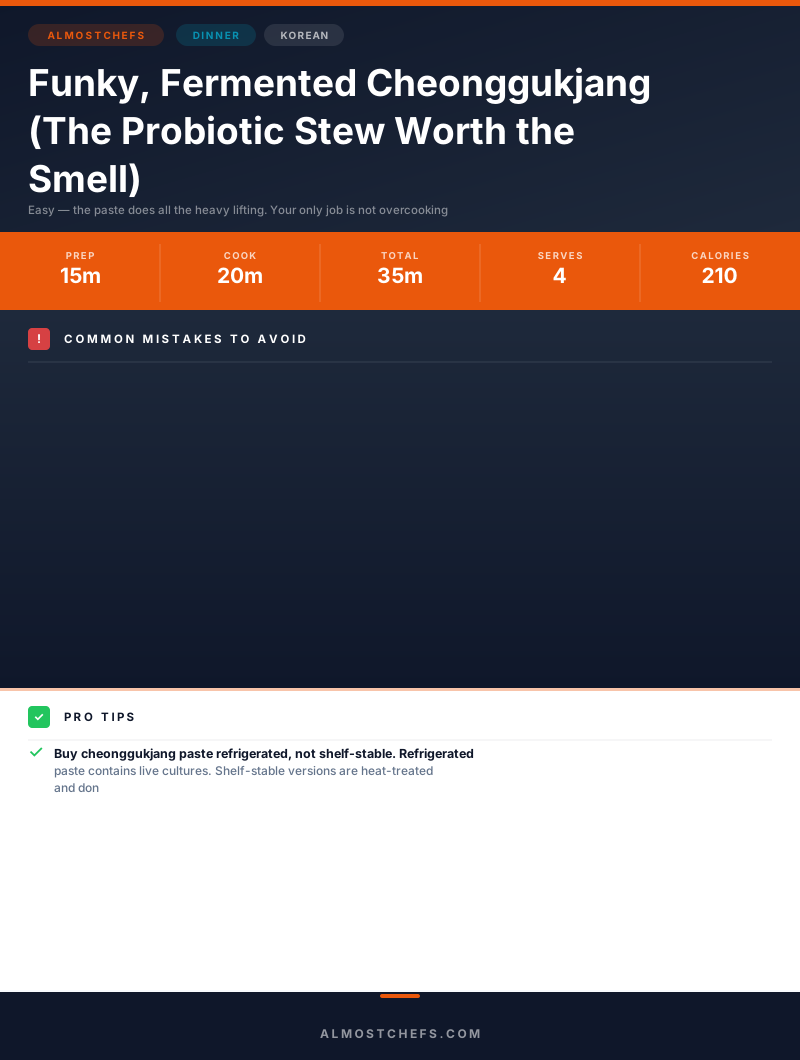
Boiling the paste too long: Cheonggukjang is a living food. The beneficial Bacillus subtilis bacteria that make it what it is die above 60°C. Most cooks add the paste at the start and boil it hard — destroying everything that makes cheonggukjang worth eating. Add the paste in the final 3-4 minutes of cooking, lower the heat, and never let it return to a full boil.
- 2
Using the wrong broth base: Water produces a flat, one-dimensional stew. Anchovy-kelp broth (myeolchi yuksu) provides a savory, mineral depth that bridges the fermented paste and the tofu. Without this foundation, the pungency of the cheonggukjang has nothing to anchor it — it just tastes sour and sharp.
- 3
Overcrowding the pot with vegetables: Cheonggukjang is a stew of restraint. Zucchini, kimchi, and tofu are the traditional trio. Loading the pot with additional vegetables dilutes the fermented paste flavor and turns the stew muddy. More is not more here.
- 4
Crumbling the tofu before adding: Silken tofu needs to be added in large, intact spoonfuls and disturbed as little as possible. Stirring aggressively breaks it into irretrievable shards that disappear into the broth. Use a wide spoon to gently press pieces in. They will naturally soften and partially dissolve on their own.
🛠️ Core Equipment
- Earthenware ttukbaegi potThe traditional Korean clay pot retains heat exceptionally well, keeping the stew at a gentle simmer that won't destroy the probiotics. It also comes to the table still bubbling, which is half the experience. A [heavy-bottomed saucepan](/kitchen-gear/review/saucepan) works, but the earthenware is worth finding.
- Fine-mesh sieve or muslin clothFor straining the anchovy-kelp broth. Anchovy bits left in the broth turn bitter and gritty. A clean, clear broth is the foundation everything else rests on.
- Wooden spoon or silicone spatulaMetal utensils scratch earthenware and can introduce off-flavors when working with fermented foods. A wooden spoon also gives you a more tactile sense of the tofu's resistance, so you know when to stop stirring.
Funky, Fermented Cheonggukjang (The Probiotic Stew Worth the Smell)
🛒 Ingredients
- ✦5 cups anchovy-kelp broth (myeolchi yuksu)
- ✦8 to 10 large dried anchovies, heads and guts removed
- ✦1 piece dried kelp (dashima), about 4 inches square
- ✦5 tablespoons cheonggukjang paste
- ✦14 ounces silken tofu, cut into 1-inch cubes
- ✦1 cup well-fermented kimchi, roughly chopped
- ✦1 small zucchini, halved lengthwise and sliced into half-moons
- ✦4 green onions, cut into 1-inch pieces
- ✦3 garlic cloves, minced
- ✦1 tablespoon gochugaru (Korean red pepper flakes)
- ✦1 tablespoon soup soy sauce (guk ganjang)
- ✦1 teaspoon sesame oil
- ✦Salt to taste
- ✦Steamed short-grain rice for serving
👨🍳 Instructions
01Step 1
Combine the dried anchovies and kelp in a medium pot with 6 cups of cold water. Bring to a gentle boil, then reduce heat and simmer for 10 minutes. Remove the kelp, continue simmering for 5 more minutes, then strain through a fine-mesh sieve. You need 5 cups of finished broth.
02Step 2
Bring the strained anchovy broth to a medium simmer in your ttukbaegi or heavy-bottomed pot over medium heat. Add the minced garlic and gochugaru and simmer for 2 minutes.
03Step 3
Add the kimchi and zucchini. Cook for 4-5 minutes until the zucchini softens slightly but still holds its shape.
04Step 4
Gently add the silken tofu in large spoonfuls. Do not stir. Let it settle into the broth undisturbed for 2 minutes.
05Step 5
Reduce heat to medium-low. Add the cheonggukjang paste by dissolving small amounts into the hot broth using the back of a spoon, working gradually from the edges inward. Never let the stew return to a rolling boil after adding the paste.
06Step 6
Add the soup soy sauce and taste. Adjust saltiness. The stew should taste deeply savory, funky, slightly sour from the kimchi, and gently spiced.
07Step 7
Add the green onions and drizzle with sesame oil. Turn off the heat.
08Step 8
Serve immediately in the cooking pot, bubbling gently, over steamed short-grain rice.
Nutrition Per Serving
Estimates based on standard preparation. Adjustments alter macros.
🔄 Substitutions
Instead of Cheonggukjang paste...
Use Doenjang (Korean fermented soybean paste)
Doenjang is milder, less pungent, and won't have the same probiotic profile since it ferments longer. The stew will be pleasant but it will be a different dish. Use 4 tablespoons doenjang per 5 tablespoons cheonggukjang.
Instead of Silken tofu...
Use Soft or medium-firm tofu
Holds its shape better and is less likely to break apart during cooking. The texture is chewier and less custardy, but it's a forgiving substitute for those uncomfortable with silken tofu's fragility.
Instead of Anchovy-kelp broth...
Use Vegetable broth with a strip of kombu
Removes the fish base for a vegetarian version. The stew will be lighter and less savory — compensate by adding an extra tablespoon of soy sauce and a teaspoon of miso dissolved into the broth.
Instead of Zucchini...
Use Korean radish (mu), cubed
Radish holds up better to longer cooking and adds a clean, slightly sweet crunch that contrasts the fermented paste. Cut into 1/2-inch cubes and add 2 minutes before the zucchini would go in.
🧊 Storage & Reheating
In the Fridge
Store in an airtight container for up to 2 days. The flavor deepens overnight but the tofu softens considerably.
In the Freezer
Not recommended. The tofu texture degrades completely after freezing, and the probiotic cultures do not survive freezer temperatures.
Reheating Rules
Reheat gently over very low heat until just warmed through — not simmering. Do not microwave at high power. The goal is to warm the stew without cooking it further or destroying the remaining live cultures.
❓ Frequently Asked Questions
Why does cheonggukjang smell so strong?
The Bacillus subtilis bacteria responsible for cheonggukjang's rapid 2-3 day fermentation produce ammonia and pyrazine compounds as byproducts. These are the same compounds responsible for the strong smell of aged cheese and natto. The smell intensifies with heat during cooking and mellows once the stew cools slightly in the bowl. It is a feature, not a defect.
What is the difference between cheonggukjang and doenjang?
Both are fermented soybean pastes, but they ferment on completely different timelines. Doenjang ferments for months to years using a mold-based process, producing a milder, complex flavor. Cheonggukjang ferments in 2-3 days using Bacillus subtilis bacteria, producing a sharper, more pungent flavor and a much higher concentration of live probiotics. They are not interchangeable in flavor, though doenjang can substitute in a pinch.
Is it safe to eat the probiotics if I heat the paste?
Most Bacillus subtilis bacteria die above 60°C. By adding the paste at the end of cooking over low heat and never returning to a boil, you preserve a significant portion of the live cultures. The stew is still nutritionally valuable even if some bacteria are lost — the fermentation byproducts, vitamins, and enzymes remain heat-stable.
Can I make cheonggukjang paste at home?
Yes. Boil soybeans until completely soft, then wrap them in a warm cloth and ferment at 40-45°C for 48-72 hours. A turned-off oven with just the light on, or a yogurt maker, works well. The beans are done when they're stringy, slightly sticky, and smell unmistakably pungent. Mash into a paste with salt. The process is simple but the temperature control is critical.
Why does my stew taste flat even with the right ingredients?
Almost always a broth problem. Water produces flat results. The anchovy-kelp broth provides glutamates and inosinates that amplify the fermented paste flavor through a process called umami synergy. The two compounds together produce a savory depth that neither creates alone. Don't skip the proper broth.
Is cheonggukjang the same as natto?
They share the same bacteria — Bacillus subtilis — but different strains and different fermentation methods. Japanese natto ferments whole soybeans wrapped in rice straw, producing a slimy, stringy texture eaten cold over rice. Korean cheonggukjang ferments cooked soybeans in cloth at a controlled temperature, then gets mashed into a paste and cooked into stew. Same microbiology, completely different dish.
The Science of
Funky, Fermented Cheonggukjang (The Probiotic Stew Worth the Smell)
We turned everything on this page into a beautiful, flour-proof PDF cheat sheet. Print it out, stick it to your fridge, and never mess up your funky, fermented cheonggukjang (the probiotic stew worth the smell) again.
*We'll email you the high-res PDF instantly. No spam, just perfectly cooked meals.
AlmostChefs Editorial Team
We translate the internet's most popular cooking videos into foolproof, beginner-friendly written recipes. We analyze multiple methods, test them in our kitchen, and engineer a single "Master Recipe" that gives you the best possible result with the least possible stress.