Cheesecake Factory Pasta Carbonara (Made Better at Home)
A rich, restaurant-style fettuccine carbonara with crispy bacon, egg yolks, and a Parmigiano-Pecorino blend — built on the Cheesecake Factory formula but tweaked for your kitchen. Creamy, indulgent, and ready in 35 minutes without the $22 price tag.

“The Cheesecake Factory charges $22 for a bowl of carbonara that's mostly cream and nostalgia. This version keeps the indulgence — the crispy bacon, the velvet sauce, the ridiculous amount of cheese — while adding Greek yogurt for a subtle tang and slightly more structural integrity. The sauce won't break if you know two things: low heat and constant motion.”
Why This Recipe Works
Carbonara is one of the most misunderstood dishes in the Italian-American canon. In Rome, it's four ingredients: guanciale, egg yolks, Pecorino Romano, black pepper. In American chain restaurants, it becomes a cream-forward pasta that happens to contain bacon. The Cheesecake Factory version is unapologetically the second thing — and there's no shame in that. It's what most people actually want when they order carbonara at 8pm on a Friday.
This recipe doesn't pretend otherwise. It builds toward that same creamy, indulgent texture, but with a sauce that's structurally more stable and slightly more interesting to eat.
The Egg Yolk Architecture
Six yolks for four servings sounds like a lot until you understand what they're doing. Egg yolks contain lecithin — a natural emulsifier that keeps fat and water molecules from separating. In carbonara, the yolks bind the cream, the cheese, and the rendered bacon fat into a single cohesive sauce instead of a greasy pool of separated components. More yolks mean a more stable, more deeply flavored sauce.
The Greek yogurt addition is not a health compromise — it's an engineering choice. Yogurt contains both lactic acid and its own emulsifying proteins, which reinforce the lecithin network from the egg yolks. The result is a sauce that holds together longer on the plate and has slightly more resistance to breaking when the heat gets uneven. The flavor contribution is subtle — a background tang that's almost imperceptible under the bacon and Pecorino.
The Two-Cheese Rule
Parmigiano-Reggiano alone produces a clean, mild, slightly nutty sauce. Pecorino Romano alone produces a sharper, saltier, more aggressive one. Together, in a 3:1 ratio, you get the depth of Pecorino without it dominating everything else on the plate. This is standard in traditional Roman carbonara and there's a reason — it works.
Grate both cheeses fresh. This is one of three steps that separates good carbonara from mediocre carbonara, and it's the easiest to skip. A Microplane or box grater takes 90 seconds and produces fine, airy shreds that melt directly into the egg mixture. Pre-shredded cheese from a bag is coated in anti-caking powder — it clumps in cold mixtures and refuses to dissolve evenly when heated, leaving grainy pockets throughout the sauce.
The Heat Problem
Every carbonara failure comes from the same mistake: too much heat, applied too fast, at the wrong moment. Egg yolks set at 160°F. Boiling pasta water is 212°F. The sauce lives in the 20-degree window between those two numbers — and it has to cross from one side to the other without going over.
The technique: low heat, constant motion, hot pasta as your primary heat source. The skillet should be warm enough that the sauce coats the pasta immediately, but not so hot that you see any steam rising from the surface. If you see steam, the pan is too hot. Residual heat from the freshly drained fettuccine does most of the actual work — the skillet just keeps things from cooling down too fast.
This is why you cannot drain the pasta ahead of time and let it sit. A large heavy-bottomed skillet gives you the best shot at consistent low-heat cooking without spikes — thin pans surge in temperature and give you no reaction time.
The Bacon Question
Thick-cut is not a preference, it's a structural requirement. Thin bacon crisps into brittle shards that shatter when you toss the pasta — you lose the textural contrast that makes carbonara satisfying. Thick-cut bacon holds its form through the rendering and the final toss, so you get distinct, chewy-crisp pieces distributed throughout the bowl instead of flakes dissolved into the sauce.
Leave the rendered fat in the pan. That bacon fat is a flavor carrier — it coats the garlic before the egg mixture goes in, and it adds richness that the cream alone can't replicate. Two tablespoons is the right amount. More than that and the sauce becomes greasy; less and the garlic scorches before it can mellow.
The Dijon Factor
One teaspoon of Dijon mustard in an egg sauce sounds like a mistake. It isn't. Mustard contains mucilage compounds — the same class of emulsifiers found in egg yolks. Adding Dijon reinforces the emulsion network and makes the sauce more resistant to breaking when temperature fluctuates. The flavor contribution is invisible under the bacon, cheese, and black pepper. Remove it and the sauce still tastes the same. Remove it and also introduce heat variation, though, and you'll see the difference — the sauce with Dijon holds together a few critical seconds longer.
That window is everything in carbonara.
Where Beginners Mess This Up
Before we start, read this. These are the 4 reasons your cheesecake factory pasta carbonara (made better at home) will fail:
- 1
Scrambling the egg sauce: Carbonara sauce is eggs, dairy, and cheese emulsified by residual heat — not by a burner set to medium. The moment the pan is too hot, you get streaky, curdled egg instead of a glossy sauce. Pull the pan completely off heat before adding the egg mixture, or keep it on the lowest possible flame. If you see any curds forming, add pasta water immediately and stir fast.
- 2
Not reserving pasta water: Starchy pasta water is the only tool you have to rescue a sauce that's too thick or starting to seize. Plain water thins the sauce but kills the emulsion. Pasta water thins it while reinforcing the starch network that keeps everything together. Reserve at least a half cup — you won't regret the extra 30 seconds.
- 3
Burning the garlic in bacon fat: Bacon fat runs hot, and minced garlic goes from fragrant to acrid in under 90 seconds at medium-high heat. After removing the bacon, let the pan cool slightly before adding garlic, and keep the heat at medium — not medium-high. Burned garlic ruins the entire base of the sauce and cannot be fixed.
- 4
Letting the pasta sit before saucing: Pasta sticks to itself within two minutes of draining. Carbonara sauce requires hot, freshly drained noodles — the heat from the pasta finishes cooking the eggs gently and keeps the sauce fluid. Drain directly into the pan, not into a colander you set aside while you finish the sauce.
The Video Reference Library
Want to see it in action? Here are the exact videos we analyzed and combined to build this foolproof recipe translation:
The source video for this recipe's technique — covers the sauce construction and the exact moment to pull the pan off heat to avoid scrambling.
2. Classic Carbonara Technique Breakdown
A foundational look at how egg yolks and cheese emulsify into a glossy sauce — useful context for understanding why heat control matters so much in carbonara.
3. Why Restaurant Carbonara Is DifferentBreaks down the textural differences between traditional Roman carbonara and the cream-forward American restaurant version — good for understanding what this recipe is optimizing for.
🛠️ Core Equipment
- Large heavy-bottomed skillet ↗Even heat distribution is critical when you're cooking an egg-based sauce on low heat. A thin pan spikes in temperature too quickly and scrambles the eggs before you can react.
- Large pasta pot ↗Fettuccine needs room to move in boiling water. Overcrowded pasta cooks unevenly — the outer noodles get mushy while the inner ones are still stiff.
- Fine-mesh sieve or colander ↗You need to drain quickly once the pasta hits al dente. Every extra second in hot water pushes it past the texture window.
- Microplane or box grater ↗Pre-grated cheese doesn't melt smoothly into sauce — it clumps. Freshly grated Parmigiano and Pecorino dissolve into the egg mixture without leaving grainy pockets.
Cheesecake Factory Pasta Carbonara (Made Better at Home)
🛒 Ingredients
- ✦1 pound fettuccine pasta
- ✦8 ounces thick-cut bacon, diced
- ✦6 large egg yolks
- ✦1 cup whole milk
- ✦1/2 cup heavy cream
- ✦1/2 cup full-fat Greek yogurt
- ✦1.5 cups freshly grated Parmigiano-Reggiano cheese
- ✦1/2 cup freshly grated Pecorino Romano cheese
- ✦4 cloves garlic, minced
- ✦2 tablespoons unsalted butter
- ✦1 teaspoon fresh cracked black pepper
- ✦1/2 teaspoon sea salt
- ✦1/4 teaspoon red pepper flakes
- ✦2 tablespoons fresh Italian parsley, chopped
- ✦1 teaspoon Dijon mustard
- ✦1/4 cup pasta water, reserved
👨🍳 Instructions
01Step 1
Bring a large pot of heavily salted water to a rolling boil and cook the fettuccine according to package directions until al dente.
02Step 2
Before draining, reserve 1/4 cup of pasta water. Drain the fettuccine and set aside.
03Step 3
While the pasta cooks, cook the diced bacon in a large heavy-bottomed skillet over medium-high heat for 8-10 minutes until crispy, stirring occasionally.
04Step 4
Remove the bacon with a slotted spoon to a paper towel-lined plate. Leave about 2 tablespoons of bacon fat in the skillet.
05Step 5
Reduce heat to medium and let the pan cool for 30 seconds. Add the minced garlic and cook for about 1 minute, stirring constantly, until fragrant but not browned.
06Step 6
In a medium bowl, whisk together the egg yolks, whole milk, heavy cream, Greek yogurt, Dijon mustard, and black pepper until completely smooth.
07Step 7
Add the grated Parmigiano-Reggiano and Pecorino Romano to the egg mixture and whisk until fully incorporated.
08Step 8
Reduce heat under the skillet to low. Add the butter and let it melt completely.
09Step 9
Pour the egg and cheese mixture into the skillet, stirring constantly to prevent the eggs from scrambling. Keep the heat on the lowest possible setting.
10Step 10
Add the cooked bacon back to the skillet and stir to combine.
11Step 11
Immediately add the hot drained fettuccine and toss continuously for 2-3 minutes until the pasta is evenly coated and the sauce clings to every strand.
12Step 12
Season with additional salt and black pepper to taste, keeping in mind the cheese and bacon are already salty.
13Step 13
Divide among four bowls and garnish generously with fresh parsley and additional cracked black pepper. Serve immediately.
Nutrition Per Serving
Estimates based on standard preparation. Adjustments alter macros.
🔄 Substitutions
Instead of Heavy cream...
Use All Greek yogurt (1 cup total)
Significantly tangier and lighter. Works well but produces a noticeably different flavor profile — more acidic, less rich. Not a neutral swap.
Instead of Fettuccine...
Use Whole wheat or chickpea fettuccine
Whole wheat adds a nutty, slightly earthy flavor that pairs well with bacon and cheese. Chickpea pasta is higher in protein and holds up well — cook it exactly to package directions as it goes mushy quickly if overdone.
Instead of Bacon...
Use Pancetta or guanciale
Guanciale is what traditional Roman carbonara uses and produces a noticeably cleaner, more delicate pork flavor. Pancetta is easier to find and gives excellent results. Both render less aggressively than American bacon — watch the heat.
Instead of Butter...
Use Extra virgin olive oil
Shifts the sauce toward a more Mediterranean flavor and reduces saturated fat. The sauce will be slightly less rich and glossy but still very good.
🧊 Storage & Reheating
In the Fridge
Store in an airtight container for up to 2 days. The sauce will seize and solidify — this is normal.
In the Freezer
Not recommended. The egg-based sauce separates completely when frozen and thawed.
Reheating Rules
Place in a skillet over low heat with 2 tablespoons of water or milk. Stir constantly until the sauce loosens and comes together. Do not microwave — it will scramble the eggs and break the emulsion.
❓ Frequently Asked Questions
Why does my carbonara sauce keep scrambling?
The heat is too high. Egg yolks begin to scramble around 160°F — which is very close to the temperature you want for the sauce. The difference between silky and scrambled is 10-15 degrees and about 30 seconds. Keep the burner on its absolute lowest setting, add the egg mixture to a pan that's warm but not hot, and stir constantly. If you see curds forming, immediately add cold pasta water and stir aggressively off heat.
Is this the actual Cheesecake Factory recipe?
No — the Cheesecake Factory doesn't publish its recipes. This is a reverse-engineered copycat built to approximate the flavor profile: creamy, rich, bacon-forward, with a generous amount of cheese. The addition of Greek yogurt and Dijon mustard are modifications that improve emulsification and add a subtle complexity the original doesn't have.
Can I make this without bacon?
Yes, but you'll need to replace both the flavor and the rendered fat. Sauté diced mushrooms in 2 tablespoons of olive oil until deeply browned for an umami substitute. Add a teaspoon of smoked paprika to approximate the smoky depth. It won't taste like carbonara, but it will taste good.
Why add Greek yogurt to a carbonara?
Two reasons. First, the lactic acid in yogurt acts as a mild emulsifier, helping to stabilize the sauce. Second, it cuts some of the heaviness of the cream without reducing the volume of the sauce — you get the same coating consistency with slightly less richness. The flavor difference is subtle when the cheese and bacon are present.
My sauce is too thick. What do I do?
Add reserved pasta water one tablespoon at a time while tossing the pasta over low heat. The starch in the pasta water re-emulsifies the sauce and brings it back to a glossy, fluid consistency. Plain water works in a pinch but dilutes the flavor.
Can I use pre-grated cheese from a bag?
Technically yes, but the sauce will be noticeably grainier. Bagged pre-shredded cheese is coated with anti-caking agents (usually cellulose or potato starch) that prevent it from melting cleanly. Freshly grated cheese dissolves into the warm egg mixture smoothly. For a sauce this simple, the cheese quality is one of the few places where the difference is obvious.
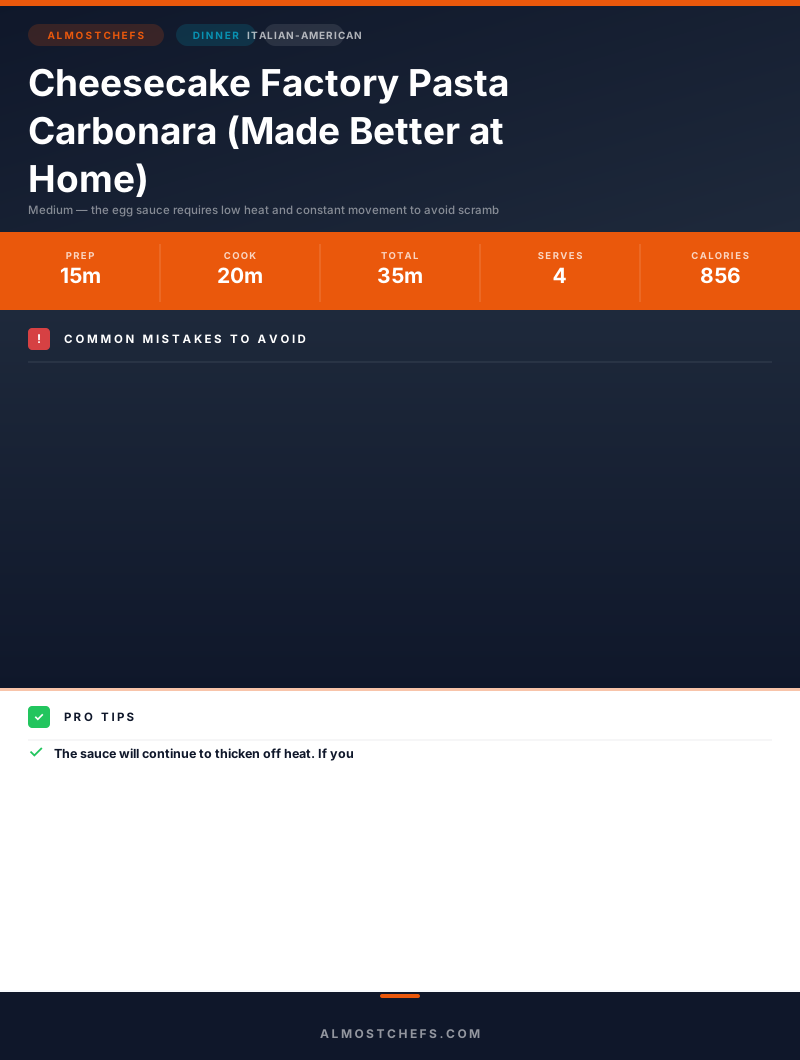
The Science of
Cheesecake Factory Pasta Carbonara (Made Better at Home)
We turned everything on this page into a beautiful, flour-proof PDF cheat sheet. Print it out, stick it to your fridge, and never mess up your cheesecake factory pasta carbonara (made better at home) again.
*We'll email you the high-res PDF instantly. No spam, just perfectly cooked meals.
AlmostChefs Editorial Team
We translate the internet's most popular cooking videos into foolproof, beginner-friendly written recipes. We analyze multiple methods, test them in our kitchen, and engineer a single "Master Recipe" that gives you the best possible result with the least possible stress.