Copycat Cheesecake Factory Fried Mac and Cheese (Crispy, Gooey, Done Right)
Creamy sharp cheddar and gruyere mac and cheese chilled, cut into squares, breaded in panko, and fried golden. We broke down the technique behind the Cheesecake Factory's most addictive appetizer and rebuilt it at home — with an air fryer option that still delivers the crunch.

“The Cheesecake Factory charges restaurant prices for a dish that is, at its core, chilled mac and cheese in a breadcrumb jacket. The technique is not secret. It's not complex. But there are two failure modes that ruin it for almost everyone at home: not chilling the mac long enough and not respecting oil temperature. Nail those two things and you have a restaurant appetizer that costs a fraction of the menu price.”
Why This Recipe Works
The Cheesecake Factory built an empire on volume and portion size. Their fried mac and cheese is not technically complex — it's mac and cheese that gets cold, gets breaded, and gets dropped in oil. The gap between the restaurant version and the average home attempt has nothing to do with secret ingredients. It has everything to do with respecting the physics of fried molten cheese.
The Chill Is the Recipe
Most people think the chill phase is just prep. It isn't. It is the recipe. Mac and cheese that hasn't been fully chilled to a rigid, cold-throughout block will fail at every subsequent step. It falls apart when you cut it. The breading slides off. The squares leak before the crust sets. The entire technique depends on the mac being cold enough to hold its shape long enough for the panko shell to crisp and lock it in.
Four hours is the minimum. Overnight is the correct answer. The difference between a 4-hour chill and a 12-hour chill is visible the moment the knife hits the block — one gives you clean squares with defined edges, the other gives you soft, crumbling chunks that fall apart in the breading station.
Cheese Selection Is Structural, Not Decorative
Sharp cheddar and gruyere aren't in this recipe for variety's sake. They're doing specific work. Sharp cheddar provides the aggressive, recognizable cheese flavor — the one that reads immediately as "mac and cheese" to anyone who takes a bite. Gruyere provides melt quality and a nutty, slightly complex undertone that prevents the sauce from tasting flat.
Both cheeses need to be shredded fresh. Pre-shredded cheese contains cellulose and potato starch as anti-caking agents, which interfere with the proteins responsible for smooth melting. You end up with a sauce that looks emulsified but has a gritty, slightly broken texture. A box grater takes 90 seconds. Use it.
The Breading Station Logic
Three bowls in this order — flour, egg, panko — is not a suggestion. Each layer serves a function. The flour dries the surface of the mac square and gives the egg something to grip. The egg acts as structural adhesive between the flour layer and the panko. The panko-parmesan mixture forms the actual crust. Remove any layer and the next one fails.
The parmesan in the breadcrumb mix isn't flavor-forward — it browns faster than plain panko and creates micro-pockets of concentrated crispiness across the surface. The combination of large-flake panko and finely grated parmesan gives you a crust with textural variation: big shattery pieces and smaller, crunchier fragments, all in the same bite.
Frying Temperature Is Binary
At 350°F, fried food works. Below 350°F, it doesn't. The physics are straightforward: high heat causes the moisture on the surface of the food to flash into steam immediately, creating outward pressure that prevents oil from penetrating inward. The panko sets in seconds. The crust forms a seal around the cheese.
Drop the temperature below threshold and that outward steam pressure never develops. Oil moves in before the crust can form. The result is a breading that has absorbed cooking oil throughout its entire structure — greasy, heavy, and soft in a way that no amount of paper towel drainage can fix.
A heavy-bottomed pot maintains temperature better than a thin saucepan because thermal mass resists temperature drop when cold food hits the oil. Fry in small batches, let the oil recover between rounds, and use a thermometer every time. The difference between 340°F and 350°F is the difference between a ruined batch and a perfect one.
The Air Fryer Is a Legitimate Option
Air frying at 375°F produces a genuinely crispy result — not a consolation prize. The high circulating heat mimics the dry-heat crust formation of deep frying without the oil immersion. You lose a small amount of shattery texture in the crust, but the structure holds, the cheese stays inside, and the coating browns evenly if the pieces aren't crowded.
The key is cooking spray on both sides and shaking the basket halfway through. Without spray, the panko toasts unevenly and produces pale patches. Without shaking, the bottom side sits in contact with the basket and steams rather than crisps. Both steps take ten seconds. Neither is optional.
Where Beginners Mess This Up
Before we start, read this. These are the 4 reasons your copycat cheesecake factory fried mac and cheese (crispy, gooey, done right) will fail:
- 1
Not chilling the mac and cheese long enough: The mac and cheese must be completely cold and firm — not just set, but rigid — before you cut and bread it. Four hours is the minimum; overnight is better. Warm or soft mac and cheese disintegrates in the breading station before it ever reaches the oil. The chill phase is not optional prep. It is the entire structural foundation of the dish.
- 2
Oil temperature that's too low: Frying below 350°F means the breadcrumb coating absorbs oil before it crisps, producing greasy squares with a soggy shell. At 350°F, the panko crust sets in seconds and locks the cheese inside. Use a thermometer. Every degree matters here.
- 3
Skipping the second chill after breading: After breading each piece, a 15-minute refrigeration rest helps the coating adhere. Without it, the panko shell separates from the mac during frying and you end up with a naked cheese square swimming in hot oil. One extra step, enormous consequence.
- 4
Overcrowding the fryer: Adding too many pieces at once drops the oil temperature dramatically. Fry in batches of 4-5 maximum. Every piece needs room and consistent heat. Crowding produces pale, greasy, underdone coating on every single piece.
The Video Reference Library
Want to see it in action? Here are the exact videos we analyzed and combined to build this foolproof recipe translation:
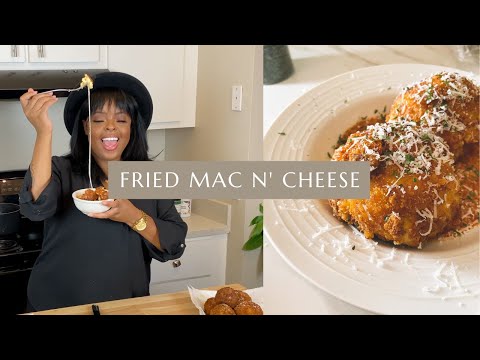
The primary method walkthrough covering the mac and cheese base, chilling, breading station setup, and frying technique. Clear demonstration of what properly chilled and properly fried pieces look like.
2. How to Deep Fry at Home Without a Deep Fryer
Essential technique reference for maintaining oil temperature in a standard heavy-bottomed pot. Covers thermometer placement, batch sizing, and oil recovery time between rounds.
3. Air Fryer Breaded Appetizers — Temperature and Timing GuideCovers the air fryer method in detail — optimal basket loading, spray coverage, and shaking timing for even browning without hot spots.
🛠️ Core Equipment
- 9x13 inch baking dish ↗The standard size creates a layer depth that chills evenly and cuts into uniform squares without crumbling. Smaller pans produce a thicker block that chills unevenly at the center.
- Heavy-bottomed pot or deep fryer ↗Maintains consistent oil temperature during frying. Thin pots spike and drop temperature with every batch, producing inconsistent results. A [Dutch oven](/kitchen-gear/review/dutch-oven) is ideal.
- Instant-read thermometer ↗Oil temperature is binary — either it works or it doesn't. Guessing produces greasy coating. Knowing produces golden crust. Non-negotiable for deep frying.
- Wire rack over a sheet pan ↗Draining on paper towels traps steam under the fried pieces, softening the bottom crust almost immediately. A wire rack lets air circulate on all sides and keeps the crust crispy for longer.
Copycat Cheesecake Factory Fried Mac and Cheese (Crispy, Gooey, Done Right)
🛒 Ingredients
- ✦1 pound elbow pasta
- ✦4 tablespoons unsalted butter
- ✦3 tablespoons all-purpose flour
- ✦2 cups whole milk
- ✦1 cup sharp cheddar cheese, shredded
- ✦3/4 cup gruyere cheese, shredded
- ✦1/2 teaspoon salt
- ✦1/4 teaspoon black pepper
- ✦1/4 teaspoon garlic powder
- ✦1/4 teaspoon smoked paprika
- ✦1 cup all-purpose flour for breading
- ✦2 large eggs
- ✦1.5 cups panko breadcrumbs
- ✦1/2 cup grated parmesan cheese
- ✦2 tablespoons fresh parsley, chopped
- ✦3 cups vegetable oil for frying, or cooking spray for air-frying
- ✦1 cup marinara sauce for serving
- ✦Fresh basil for garnish
👨🍳 Instructions
01Step 1
Cook the elbow pasta according to package directions until al dente, drain, and set aside. Reserve 1/2 cup of pasta water before draining.
02Step 2
Melt the butter in a large saucepan over medium heat and whisk in the flour. Cook for 1 minute, stirring constantly, until the roux smells faintly nutty but has not browned.
03Step 3
Slowly pour in the whole milk while whisking constantly. Continue cooking and stirring for 3-4 minutes until the béchamel thickens enough to coat the back of a spoon.
04Step 4
Remove from heat. Add the shredded cheddar and gruyere in two additions, stirring until completely melted and smooth after each. Season with salt, pepper, garlic powder, and smoked paprika.
05Step 5
Add the cooked pasta to the cheese sauce and stir until every piece is evenly coated. Add reserved pasta water one tablespoon at a time only if the mixture seems too stiff — it should be thick, not soupy.
06Step 6
Pour the mac and cheese into a greased 9x13 inch baking dish and spread into an even layer. Refrigerate uncovered for at least 4 hours or overnight until completely firm and cold throughout.
07Step 7
Once fully chilled and rigid, cut the mac and cheese into 2-inch squares using a sharp knife. Work quickly — the pieces warm up fast.
08Step 8
Set up three shallow bowls: all-purpose flour in the first, whisked eggs in the second, and panko breadcrumbs mixed with grated parmesan and chopped parsley in the third.
09Step 9
Working one piece at a time, dredge in flour (shake off excess), dip in egg (let the drip fall), then press firmly into the panko-parmesan mixture, coating all six sides. Place on a parchment-lined plate.
10Step 10
Refrigerate the breaded pieces for 15 minutes to set the coating before cooking.
11Step 11
For deep-frying: Heat vegetable oil to 350°F in a heavy-bottomed pot. Fry 4-5 pieces at a time for 2-3 minutes until deep golden brown, turning once. Remove with a slotted spoon and transfer to a wire rack.
12Step 12
For air-frying: Spray the basket with cooking spray, arrange pieces in a single layer with space between each, spray the tops lightly, and air fry at 375°F for 8-10 minutes, shaking the basket halfway through.
13Step 13
Season immediately with a light pinch of sea salt while still hot. Transfer to a serving platter, garnish with fresh basil, and serve with marinara sauce.
Nutrition Per Serving
Estimates based on standard preparation. Adjustments alter macros.
🔄 Substitutions
Instead of Whole milk...
Use Half whole milk, half cashew cream
Maintains sauce smoothness with less saturated fat. Cashew cream adds a subtle nuttiness that works well with the gruyere. Avoid skim milk — the sauce will be thin and grainy.
Instead of All-purpose flour breading...
Use Almond flour or whole grain panko
Almond flour provides a slightly nuttier, more delicate crust. Combine with regular panko at a 1:1 ratio for structure. Works well; not identical to the original.
Instead of Deep-frying in vegetable oil...
Use Air frying with cooking spray
Reduces oil absorption by roughly 40% and cuts approximately 200-300 calories per serving. The crust is slightly less shattery but still genuinely crispy. A legitimate alternative, not a compromise.
Instead of Panko breadcrumbs...
Use 3/4 cup panko plus 3/4 cup crushed walnuts or almonds
Adds protein, healthy fat, and a more complex texture. Slightly denser coating. Press the nut-panko mixture firmly — it needs more pressure to adhere than plain panko.
🧊 Storage & Reheating
In the Fridge
Store unfried breaded pieces on a parchment-lined tray covered loosely with plastic wrap for up to 24 hours. Already fried pieces keep for 2 days in an airtight container but will lose crispiness.
In the Freezer
Freeze breaded (unfried) pieces in a single layer on a sheet pan until solid, then transfer to a zip-top bag for up to 1 month. Fry directly from frozen, adding 1-2 minutes to the cook time.
Reheating Rules
Reheat fried pieces in an air fryer at 375°F for 3-4 minutes or in a 400°F oven on a wire rack for 5-6 minutes. The microwave reheats the cheese but destroys the crust — avoid it entirely.
❓ Frequently Asked Questions
Why did my mac and cheese fall apart when I cut it?
It wasn't cold enough. The block needs to be rigid all the way through — if the center is still soft, cutting produces crumbling edges that won't hold the breading. Return it to the fridge for another hour, or move it to the freezer for 30 minutes if you're short on time.
Can I make the mac and cheese base ahead of time?
Yes — and you should. The base needs at least 4 hours to chill anyway. Make it the night before, refrigerate overnight, and cut and bread the next day. The overnight chill produces a firmer, cleaner-cutting block.
Why is my coating falling off in the oil?
Two possible causes: you skipped the second chill after breading, or the oil wasn't hot enough when the pieces went in. The 15-minute post-breading chill allows the egg to set slightly and bond the panko to the surface. Cold oil dissolves that bond before the crust can set.
Can I bake these instead of frying?
Baking at 425°F on a wire rack with oil spray produces an acceptable result but the crust is fundamentally different — drier and less shattery. If you want the restaurant texture, air frying is the better oven-based compromise. True baking is a different dish.
What's the best dipping sauce if I don't have marinara?
Roasted tomato sauce or arrabiata work well. The common thread is acidity — you need something bright to cut through the richness. Avoid cream-based dips, which compound the heaviness rather than balancing it.
Can I use a different pasta shape?
You can, but elbow macaroni is the best shape for this application. The curves hold sauce in the pockets, and the small size creates a dense, uniform block that cuts cleanly. Shells trap air gaps. Penne creates weak structural seams. Stick with elbows.
The Science of
Copycat Cheesecake Factory Fried Mac and Cheese (Crispy, Gooey, Done Right)
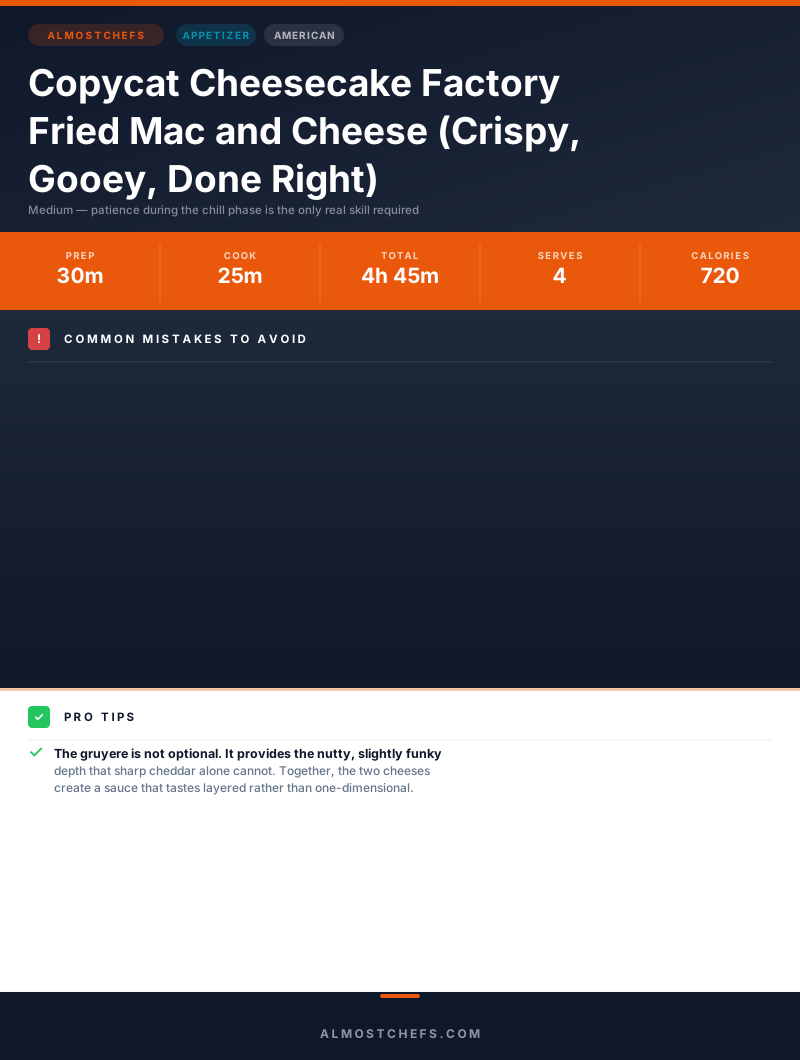
We turned everything on this page into a beautiful, flour-proof PDF cheat sheet. Print it out, stick it to your fridge, and never mess up your copycat cheesecake factory fried mac and cheese (crispy, gooey, done right) again.
*We'll email you the high-res PDF instantly. No spam, just perfectly cooked meals.
AlmostChefs Editorial Team
We translate the internet's most popular cooking videos into foolproof, beginner-friendly written recipes. We analyze multiple methods, test them in our kitchen, and engineer a single "Master Recipe" that gives you the best possible result with the least possible stress.