Copycat Cheesecake Factory Cheesecake (The Water Bath Is Non-Negotiable)
A dense, velvety New York-style cheesecake with a buttery graham cracker crust that replicates the Cheesecake Factory's signature slice — made at home with full control over ingredients, technique, and portion size. We reverse-engineered the texture using a proper water bath and a slow oven cool to eliminate every crack before it starts.

“The Cheesecake Factory cheesecake has a specific texture that most homemade versions never hit: dense but not heavy, creamy but not mousse-like, with a crust that holds clean slices without crumbling. The gap between theirs and yours comes down to three decisions — room-temperature dairy, a water bath, and a slow cool inside a cracked oven. Skip any one of those and you get a cracked, dry, or custardy result that tastes like effort rather than indulgence.”
Why This Recipe Works
The Cheesecake Factory does not publish their recipe. What they do publish, accidentally, is the result: a slice that's three inches tall, impossibly smooth on the cut face, dense without being dry, and sweetened to a level that makes you eat one more bite than you intended. Reverse-engineering that result means understanding what produces that texture rather than memorizing a list of ingredients.
The Dairy Temperature Problem
Cream cheese is an emulsion — fat suspended in water, stabilized by proteins. Cold cream cheese is a rigid emulsion. When you beat cold cream cheese, the beaters break the fat into uneven chunks rather than incorporating it smoothly into a uniform mixture. Those chunks survive mixing. They survive baking. What you pull out of the oven has the same structural irregularities you put in.
At room temperature, the fat softens and the proteins relax, which allows the mixer to create a genuinely uniform batter. This is not a preference — it is the physical requirement for a smooth filling. Ninety minutes out of the fridge, minimum. If your kitchen runs cold, give it two hours.
The Mixing Speed Architecture
There are three distinct phases in the mixing process, and each one has a different speed requirement for a specific reason. The cream cheese phase runs slow to smooth out the base without introducing air. The sugar phase runs briefly at medium to fully dissolve and incorporate — undissolved sugar creates gritty spots. The egg phase runs at the absolute lowest speed and stops the moment the eggs are incorporated, because air in the batter expands during baking and collapses on cooling, tearing the surface.
The stand mixer makes this manageable because you can dial the speed precisely. A hand mixer works but requires more attention. A whisk by hand introduces too much air during the cream cheese phase to produce a reliable result.
The Water Bath Physics
The springform pan is wrapped in foil for one reason: the springform is not watertight. The pan sits inside a roasting pan filled with hot water that reaches halfway up the sides. That water holds the ambient temperature around the cheesecake at 212°F regardless of what the oven thermostat says, because water cannot exceed its boiling point at sea level. The cheesecake bakes in a stable, moist, low-temperature environment from the outside in.
Remove the water bath and the oven air — which can hit 340-360°F at the pan's surface — bakes the outer edge aggressively while the center stays underdone. The resulting texture gradient is what produces the rubbery ring that surrounds a custardy middle in most homemade cheesecakes.
The Slow Cool Protocol
Cheesecake is a custard. Like all custards, it continues to set as it cools. The problem is that rapid cooling contracts the filling faster than the crust releases it — and the resulting tension tears the top surface. Leaving the cheesecake in a cracked-open oven for an hour after the heat turns off bridges the gap between oven temperature and room temperature gradually enough that the filling and crust contract at the same rate.
This is not optional. It is the single most commonly skipped step in every failed home cheesecake. Set a timer and leave it alone.
The Overnight Commitment
Eight hours of refrigeration is not the recipe being precious. The filling undergoes genuine structural change during the chill. The proteins in the eggs and cream cheese form tighter networks as the temperature drops, transitioning the filling from a loose, scoopable consistency at room temperature to the dense, clean-cutting texture that makes a Cheesecake Factory slice hold its shape on a fork. Cut into it at four hours and you're eating a different dessert. A springform pan released after the full overnight chill produces slices with clean vertical faces and no slumping — which is exactly what you're trying to replicate.
The overnight rest also does something the recipe can't force: it lets the vanilla, lemon, and cream cheese flavors integrate into a single coherent profile rather than tasting like a list of separate ingredients. Restaurant cheesecakes taste more complete than homemade ones partly because they're always made a day ahead. Now you're doing the same thing.
Where Beginners Mess This Up
Before we start, read this. These are the 4 reasons your copycat cheesecake factory cheesecake (the water bath is non-negotiable) will fail:
- 1
Cold cream cheese: Cold cream cheese doesn't beat smooth — it beats lumpy, and those lumps survive the oven. The filling must start at true room temperature, meaning you pulled the cream cheese out of the fridge at least 90 minutes before you start. Running it under warm water doesn't count. Plan ahead or accept a grainy texture.
- 2
Overmixing after adding eggs: Every extra second of beating after the eggs go in incorporates more air. That air expands in the oven, then collapses on cooling — which is exactly what causes the classic cheesecake crater. Add eggs one at a time on the lowest speed and stop the moment each one disappears into the batter.
- 3
Skipping the water bath: The water bath surrounds the pan with moist 212°F air, which bakes the cheesecake gently and evenly from the outside in. Without it, the outer edge cooks 40-50 degrees hotter than the center, creating a rubbery ring around a raw middle — and a cracked top guaranteed. Wrap the foil, fill the pan, do it right.
- 4
Pulling it from the oven too fast: Sudden temperature drops cause the filling to contract faster than the crust, which tears the surface. Turning off the oven and leaving the door cracked for an hour is not optional — it's a cool-down protocol. The cheesecake continues to set during this rest without the thermal shock that causes cracking.
The Video Reference Library
Want to see it in action? Here are the exact videos we analyzed and combined to build this foolproof recipe translation:
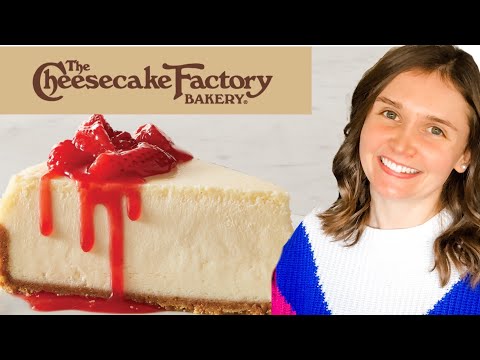
Step-by-step walkthrough that covers the water bath setup, proper mixing speeds, and the visual cues for knowing when the cheesecake is correctly set versus underdone. Best resource for understanding the jiggle test.
2. Why Your Cheesecake Cracks (And How to Fix It)
Focused breakdown of the science behind cracking — covers overmixing, thermal shock, and water bath failures. Watch before you bake your first one.
3. New York Cheesecake Master ClassDeep dive into cream cheese selection, crust ratios, and the chemistry of the slow oven cool. Useful for understanding why each step produces the texture it does.
🛠️ Core Equipment
- 9-inch springform pan ↗The removable sides let you release the cheesecake cleanly without destroying the crust. A regular cake pan produces an unmoldable block. A springform is the only vessel that works here.
- Large roasting pan ↗Has to be big enough that the springform fits inside with clearance on all sides. The water needs to reach halfway up the springform — a too-small pan defeats the entire water bath principle.
- Heavy-duty aluminum foil ↗Used to seal the outside of the springform against water infiltration. Standard foil tears. You need the thick stuff, wrapped in two overlapping layers, or you end up with a soggy crust.
- Stand mixer or electric hand mixer ↗Low-speed control is critical for both the cream cheese phase and the egg phase. A whisk and elbow grease introduces too much air and too much variability in speed. The [stand mixer](/kitchen-gear/review/stand-mixer) gives you repeatable, low-torque mixing without hand fatigue.
Copycat Cheesecake Factory Cheesecake (The Water Bath Is Non-Negotiable)
🛒 Ingredients
- ✦2 cups graham cracker crumbs
- ✦6 tablespoons unsalted butter, melted
- ✦2 tablespoons granulated sugar
- ✦32 ounces cream cheese, room temperature
- ✦1 cup full-fat Greek yogurt, room temperature
- ✦3/4 cup granulated sugar
- ✦1/4 cup cornstarch
- ✦2 tablespoons all-purpose flour
- ✦2 large eggs, room temperature
- ✦1 large egg yolk, room temperature
- ✦2 teaspoons vanilla extract
- ✦1/2 teaspoon fresh lemon juice
- ✦1/4 teaspoon salt
- ✦1 cup sour cream, room temperature
- ✦Hot water for water bath
- ✦1 tablespoon powdered sugar for dusting
👨🍳 Instructions
01Step 1
Pull the cream cheese, Greek yogurt, sour cream, and eggs from the fridge at least 90 minutes before you start. Everything must be at true room temperature.
02Step 2
Preheat oven to 325°F. Wrap the outside of a 9-inch springform pan with two overlapping layers of heavy-duty aluminum foil, pressing it up the sides completely. The foil must be seamless — any gap lets water in.
03Step 3
Combine the graham cracker crumbs, melted butter, and 2 tablespoons granulated sugar in a bowl and mix until the mixture looks like wet sand. Press firmly and evenly into the bottom of the prepared springform pan.
04Step 4
Bake the crust for 8 minutes until lightly golden. Remove and cool while you make the filling.
05Step 5
Beat the room-temperature cream cheese in a stand mixer on low speed for 2 minutes, scraping the bowl and paddle frequently, until completely smooth with no lumps.
06Step 6
Add the Greek yogurt and beat on low for 1 minute until combined and uniform.
07Step 7
Whisk together the granulated sugar, cornstarch, and salt in a small bowl. Add to the cream cheese mixture and beat on low for 2 minutes, then increase to medium and beat for 1 minute more.
08Step 8
Add the eggs and egg yolk one at a time on the lowest speed, beating only until each one just disappears. Stop immediately. Do not mix further.
09Step 9
Stir the vanilla extract and flour together in a small cup until combined. Add to the batter and beat on low for 30 seconds.
10Step 10
Fold in the sour cream and lemon juice with a rubber spatula using slow, deliberate strokes until just combined. Do not use the mixer.
11Step 11
Pour the filling over the cooled crust and smooth the top level with a spatula.
12Step 12
Place the springform inside a large roasting pan. Pour hot water into the roasting pan until it reaches halfway up the sides of the springform.
13Step 13
Carefully transfer to the oven and bake for 55 to 65 minutes. The cheesecake is done when the outer 2 inches are set and the center 3 inches jiggle like Jell-O — not like liquid — when the pan is gently shaken.
14Step 14
Turn off the oven. Crack the door open 4 inches and leave the cheesecake undisturbed for exactly 1 hour.
15Step 15
Remove from the oven and water bath. Cool to room temperature on a wire rack for 30 minutes.
16Step 16
Cover loosely with plastic wrap and refrigerate for at least 8 hours, or overnight. Do not skip this step — the texture requires the full chill to set properly.
17Step 17
Release the springform collar, dust lightly with powdered sugar, and slice with a warm, clean knife wiped between each cut.
Nutrition Per Serving
Estimates based on standard preparation. Adjustments alter macros.
🔄 Substitutions
Instead of Full-fat cream cheese...
Use 24 oz cream cheese + 8 oz mascarpone
Slightly lighter mouthfeel with enhanced creaminess. Mascarpone has a lower water content, which means slightly less risk of a wet filling. The texture shifts toward silkier rather than dense.
Instead of Graham cracker crumbs...
Use 1.5 cups graham cracker crumbs + 0.5 cup almond flour
Adds a faint nuttiness and slightly more structure. The almond flour absorbs butter well and produces a crust that holds cleaner slices. Reduce butter by half a tablespoon to compensate for almond flour's fat content.
Instead of Granulated sugar...
Use 1/2 cup granulated sugar + 3 tablespoons honey or maple syrup
Adds subtle caramel undertones without significantly changing sweetness. Liquid sweeteners add moisture — compensate by reducing Greek yogurt by 2 tablespoons.
Instead of Sour cream...
Use Full-fat plain Greek yogurt
Slightly tangier and higher in protein. The texture difference is minimal if you use full-fat. Do not use low-fat — water content is too high and the filling will weep.
🧊 Storage & Reheating
In the Fridge
Store covered with plastic wrap or in an airtight container for up to 5 days. The texture actually improves through day 2 as the filling continues to firm.
In the Freezer
Freeze individual slices on a parchment-lined tray until solid, then wrap each in plastic and foil. Stores up to 2 months. Thaw overnight in the fridge — never at room temperature.
Reheating Rules
Cheesecake is served cold or at cool room temperature. Remove from the fridge 20 minutes before serving for the best texture. Do not microwave.
❓ Frequently Asked Questions
Why did my cheesecake crack?
One of four reasons: your dairy wasn't at room temperature, you overmixed after adding the eggs, you skipped or compromised the water bath, or you removed it from the oven too quickly. Any one of these causes the top to crack. The slow oven cool after baking is the most commonly skipped step and the most important one.
How do I know when the cheesecake is done baking?
The jiggle test. Gently shake the pan — the outer 2 inches should be completely set and the center 3 inches should jiggle like gelatin, not slosh like liquid. The center will look slightly underdone. That's correct. It sets fully during the oven cool and the overnight refrigeration.
Do I really need a water bath?
Yes. Without a water bath, the outside edge bakes at roughly 350-375°F while the oven is set to 325°F — because the pan conducts heat aggressively. The water bath holds the environment around the pan at a stable 212°F, which produces gentle, even cooking from edge to center. No water bath means rubbery edges, raw center, and a cracked top.
Can I make this without a springform pan?
Not successfully. The cheesecake needs to be released from the sides cleanly, and a regular cake pan doesn't allow that. If you absolutely must improvise, line a cake pan with a parchment sling and accept that the edges won't look restaurant-quality.
Why does it need 8 hours in the fridge?
The filling is still setting during refrigeration. At the 4-hour mark it's technically edible but the texture is loose and the flavor is flat. At 8 hours it's firm and sliceable. At 12-16 hours it's at its best — dense, clean-cutting, with fully developed flavor. The Cheesecake Factory makes theirs a day ahead for exactly this reason.
Can I add toppings?
Yes, but add them at serving, not before. Fresh strawberry compote, blueberry sauce, or chocolate ganache all work. Avoid adding wet toppings and then refrigerating — the moisture softens the crust within a few hours. Serve plain and let people top their own slices.
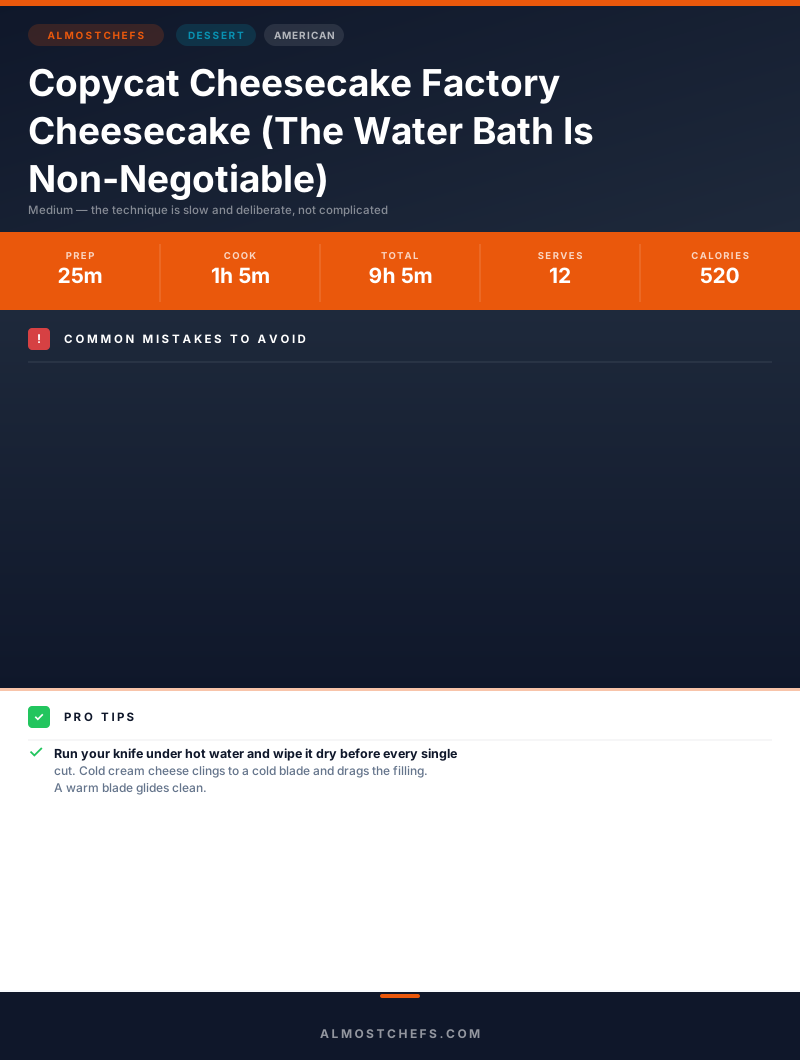
The Science of
Copycat Cheesecake Factory Cheesecake (The Water Bath Is Non-Negotiable)
We turned everything on this page into a beautiful, flour-proof PDF cheat sheet. Print it out, stick it to your fridge, and never mess up your copycat cheesecake factory cheesecake (the water bath is non-negotiable) again.
*We'll email you the high-res PDF instantly. No spam, just perfectly cooked meals.
AlmostChefs Editorial Team
We translate the internet's most popular cooking videos into foolproof, beginner-friendly written recipes. We analyze multiple methods, test them in our kitchen, and engineer a single "Master Recipe" that gives you the best possible result with the least possible stress.