Copycat Cheesecake Factory Avocado Egg Rolls (Better Than the Original)
Crispy fried egg rolls stuffed with creamy avocado, tangy cream cheese, and fresh herbs — served with sweet Thai chili sauce. We reverse-engineered the Cheesecake Factory's most-copied appetizer and fixed the one thing every copycat gets wrong: the filling texture.
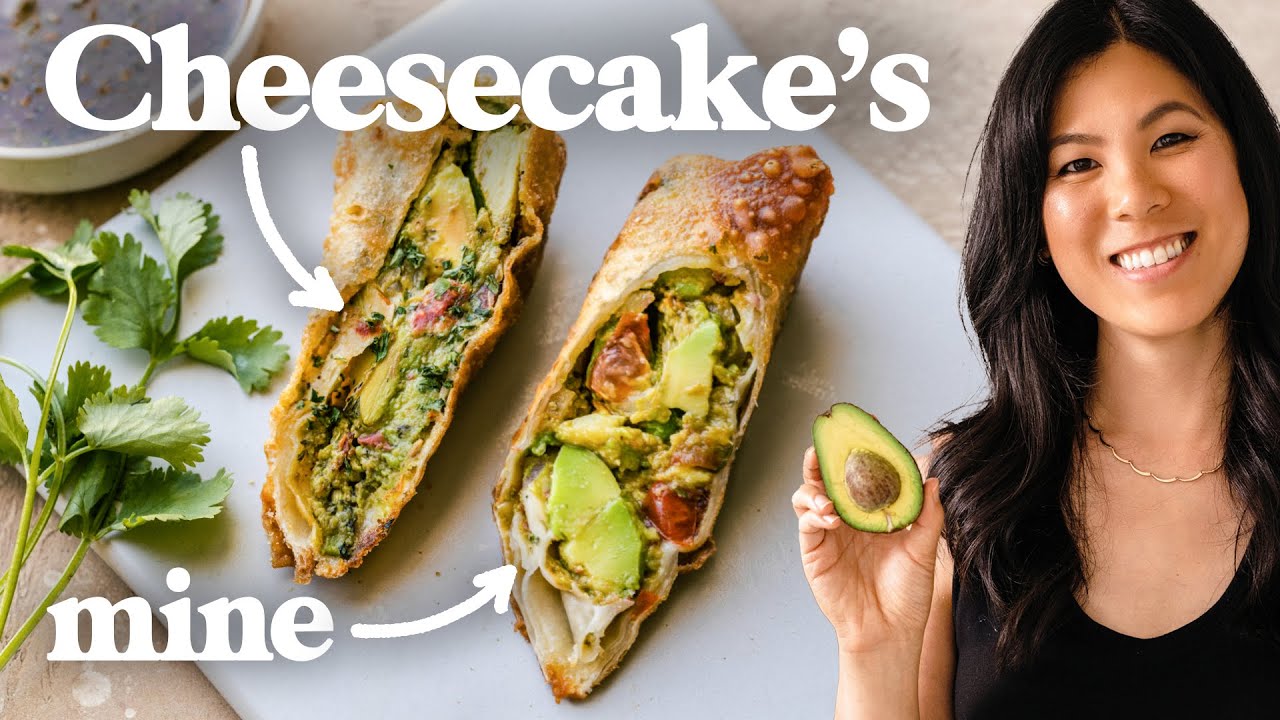
“The Cheesecake Factory charges $17 for eight egg rolls and a cup of Thai chili sauce. You can make better ones at home for under $6 — if you solve the one problem that kills every copycat attempt: watery avocado turning your crispy shell into a soggy disaster. The fix is simpler than you think, and it changes everything.”
Why This Recipe Works
The Cheesecake Factory built an empire on portion sizes and theatrical plating, but the Avocado Egg Roll earns its place on the menu through actual technique. The contrast of temperatures — hot, blistered exterior against cool, creamy interior — is the whole game. Every failure mode in copycat attempts traces back to one thing: compromising that contrast.
The Filling Architecture
Most copycat recipes treat this as a guacamole-in-a-wrapper problem. It isn't. Guacamole is designed to be scooped and spread. Egg roll filling needs structural integrity — enough body to stay in a cohesive mass when wrapped, enough moisture to be creamy, and enough contrast in texture to be interesting when you bite through.
The cream cheese is doing the structural work here. It acts as a binder that suspends avocado chunks in a stable matrix, preventing the filling from flowing out during frying and ensuring every bite has both smooth creaminess and textural variation. The ratio matters: four ounces of cream cheese to two avocados gives you binding without overwhelming the avocado flavor. More cream cheese and you're eating a cream cheese roll with avocado undertones. Less and the filling has no structural cohesion.
The fold technique is equally critical. Eight folds maximum. The moment you see uniform green throughout the bowl, you've destroyed the texture contrast that makes the filling interesting. Streaks of white cream cheese visible against the avocado green is what you're aiming for.
The Temperature Equation
Egg roll frying is a race between two competing processes: the Maillard reaction browning the exterior and the steam pressure building inside from the filling moisture. At 350°F, the exterior crisps faster than the steam builds — you get a crackling shell that seals before the inside pressure can blow the seam. Below 325°F, you're in the wrong race. The wrapper soaks in oil while the steam slowly builds, and you end up with a greasy roll whose seal eventually fails from the inside.
This is also why the filling temperature matters. Cold filling from the refrigerator creates less immediate steam when it hits the oil. Warm filling — made and used immediately — starts generating steam the second the roll hits 350°F oil, creating internal pressure before the wrapper has had time to crisp. Refrigerate the filling for at least 10 minutes before rolling.
A deep skillet or wok with high sides gives you the oil depth you need without requiring an industrial fry setup. At least two inches of oil is necessary for the rolls to float freely and brown on all sides without resting on the bottom and burning.
The Seal Is Everything
Professional egg roll chefs use a technique called "pressure sealing" — the egg white goes on thick, the final fold is pressed with the heel of the hand, and the roll rests seam-side down for two full minutes before it touches oil. The egg white needs time to bond with the wrapper surface. In a home kitchen, the instinct is to roll and immediately fry. Resist it. Those two minutes of rest time are the difference between a perfect roll and a blown-out mess.
The Wire Rack Rule
Paper towels feel like the right move. They're not. Paper traps steam between the roll and the surface, softening the very bottom of the wrapper you just worked to crisp. A wire rack elevated over a sheet pan lets air circulate on all sides and keeps every surface of the roll crackling. Transfer the moment they come out of the oil, and serve within five minutes. Egg rolls that wait longer than that are already in decline.
The original costs $17 at the restaurant. This version costs under $6 and takes 32 minutes. The only thing you're giving up is someone else doing the frying.
Where Beginners Mess This Up
Before we start, read this. These are the 4 reasons your copycat cheesecake factory avocado egg rolls (better than the original) will fail:
- 1
Using avocados that are too ripe: Overripe avocados release excess water as soon as you mash them. That liquid steams the wrapper from the inside during frying, turning a crispy shell into a pale, greasy tube. You want avocados that yield to gentle pressure but still have structure — not ones that dent at a touch.
- 2
Overmixing the filling: The contrast between chunky avocado and smooth cream cheese is what makes this filling interesting. Fold the two components together with no more than 6-8 strokes. You want visible avocado chunks suspended in the cream cheese base, not a uniform green paste.
- 3
Frying at the wrong temperature: Oil below 350°F means the wrapper absorbs grease before it crisps. Oil above 375°F browns the outside before the filling heats through, leaving a cold center. Use a thermometer — guessing doesn't work here. Let the oil recover to 350°F between every batch.
- 4
Sealing the rolls poorly: A leaky egg roll is a destroyed egg roll. The filling hits the hot oil, the seal fails, and you're fishing avocado chunks out of your frying pan. Brush the egg white generously on the final corner, press firmly, and rest the assembled rolls seam-side down for two minutes before frying.
The Video Reference Library
Want to see it in action? Here are the exact videos we analyzed and combined to build this foolproof recipe translation:
The most-watched version of this recipe, with a clear breakdown of the folding technique and filling ratios. Watch the sealing step closely — most home cooks underuse the egg white.
🛠️ Core Equipment
- Deep skillet or wokA wider vessel lets you fry 3 rolls at a time without crowding, which drops the oil temperature. Crowding steams instead of fries.
- Instant-read thermometerNon-negotiable for frying. The 350°F window is narrow and you will not be able to gauge it by eye with any consistency.
- Slotted spoon or spider strainerLets you pull the rolls without disturbing the other rolls in the oil and drains them quickly. Tongs puncture the wrapper and let grease pool inside.
- Wire rack over a sheet panSuperior to paper towels for draining. Paper towels trap steam under the rolls and soften the bottom. A rack lets air circulate on all sides.
Copycat Cheesecake Factory Avocado Egg Rolls (Better Than the Original)
🛒 Ingredients
- ✦2 ripe avocados, halved and pitted
- ✦4 ounces cream cheese, softened
- ✦1/4 cup diced red bell pepper
- ✦1/4 cup diced yellow onion
- ✦2 tablespoons fresh cilantro, finely chopped
- ✦1 tablespoon fresh lime juice
- ✦1/2 teaspoon garlic powder
- ✦1/4 teaspoon sea salt
- ✦1/8 teaspoon black pepper
- ✦8 egg roll wrappers
- ✦1 egg white, beaten
- ✦2 cups vegetable oil for frying
- ✦1/2 cup sweet Thai chili sauce for serving
- ✦1 teaspoon sesame seeds for garnish
- ✦1/4 teaspoon crushed red pepper flakes
- ✦2 green onions, finely sliced for garnish
👨🍳 Instructions
01Step 1
Scoop the avocado flesh into a medium bowl and gently mash with a fork, leaving small chunks for texture.
02Step 2
In a separate bowl, beat the softened cream cheese with diced red bell pepper, yellow onion, cilantro, lime juice, garlic powder, sea salt, and black pepper until smooth and well combined.
03Step 3
Fold the cream cheese mixture into the mashed avocado with no more than 6-8 folds until just combined. Do not overmix.
04Step 4
Refrigerate the filling for 10 minutes while you set up your work station. Cold filling holds its shape better during rolling and frying.
05Step 5
Lay one egg roll wrapper on a clean surface in a diamond orientation with one corner pointing toward you. Place 2 tablespoons of filling in the center, leaving a half-inch border.
06Step 6
Fold the bottom corner up over the filling, fold in the left and right corners tightly, then roll firmly away from you.
07Step 7
Brush the final top corner generously with beaten egg white, press firmly to seal, and set the roll seam-side down. Repeat with all 8 rolls.
08Step 8
Heat the vegetable oil in a deep skillet or wok to 350°F over medium-high heat. Use a thermometer.
09Step 9
Fry 2-3 rolls at a time for 2-3 minutes, turning occasionally, until deep golden brown on all sides.
10Step 10
Remove with a slotted spoon and transfer to a wire rack. Let the oil return to 350°F before adding the next batch.
11Step 11
Arrange on a serving platter, garnish with sesame seeds, crushed red pepper flakes, and sliced green onions. Serve immediately with Thai chili sauce.
Nutrition Per Serving
Estimates based on standard preparation. Adjustments alter macros.
🔄 Substitutions
Instead of Vegetable oil (deep frying)...
Use Air fryer with avocado oil spray
Reduces calories by approximately 150-180 per serving. Slight crispiness reduction but structurally sound. Cook at 400°F for 8-10 minutes, flipping once.
Instead of Cream cheese...
Use 2 ounces cream cheese + 2 ounces Greek yogurt
Reduces calories by 30, increases protein by 4g. Slightly tangier flavor that actually reads as brighter and fresher. Works well.
Instead of Standard egg roll wrappers...
Use Brown rice or chickpea-based egg roll wrappers
Higher fiber, nuttier flavor, slightly less crispy exterior. The filling still shines through. Good swap if you want more nutritional substance.
Instead of Sweet Thai chili sauce...
Use 1/4 cup Thai chili sauce + 1/4 cup Greek yogurt + fresh lime juice
Reduces sugar by 10-12g, adds protein and creaminess. Tastes more like a restaurant-style dipping sauce than the bottled version alone.
🧊 Storage & Reheating
In the Fridge
Store assembled unfried rolls on a parchment-lined sheet pan, loosely covered, for up to 4 hours. Do not refrigerate fried rolls — the wrapper turns soft and leathery.
In the Freezer
Freeze unfried assembled rolls on a sheet pan until solid, then transfer to a zip-lock bag. Fry directly from frozen at 325°F for 4-5 minutes. Do not thaw first or the wrapper becomes soggy.
Reheating Rules
Fried rolls do not reheat well. If you must, a 400°F air fryer for 3-4 minutes restores some crunch. Microwave is not an option.
❓ Frequently Asked Questions
Why are my egg rolls greasy instead of crispy?
The oil was too cold. Below 350°F, the wrapper absorbs grease instead of crisping immediately on contact. Use a thermometer. If you don't have one, drop a tiny piece of wrapper into the oil — it should sizzle aggressively and float within 2 seconds.
Can I make these ahead of time for a party?
Assemble and refrigerate unfried rolls up to 4 hours ahead. Fry in batches as guests arrive. Do not fry in advance — there is no recovery method that brings back the fresh-fried crunch.
My filling keeps leaking during frying. What am I doing wrong?
Two issues: either the seal is failing or the filling is too warm. Make sure the egg white goes on thick and the seam is pressed firmly. Rest rolls seam-side down for 2 minutes before frying. Also ensure filling is cold from the fridge — warm filling steams and expands inside the wrapper, blowing the seal.
Can I use guacamole instead of making the avocado filling from scratch?
Store-bought guacamole is too watery and often contains onion chunks that are too large. If you must use it, strain it through a paper towel for 10 minutes to remove excess moisture, then mix with the cream cheese. Results are inconsistent.
What's the difference between egg roll wrappers and spring roll wrappers?
Egg roll wrappers are thick wheat-flour-based and fry up opaque and blistered. Spring roll wrappers are thin rice paper that fries up translucent and shatteringly crispy. Either works here, but spring roll wrappers require more careful sealing — they tear easily when wet.
Is the air fryer version actually good or is it a compromise?
Honest answer: it's a compromise. The outside is crispy and the filling is excellent, but you lose the blistered, golden-brown exterior that makes the deep-fried version visually stunning. For a weeknight appetizer, the air fryer is fine. For guests, deep fry.
The Science of
Copycat Cheesecake Factory Avocado Egg Rolls (Better Than the Original)
We turned everything on this page into a beautiful, flour-proof PDF cheat sheet. Print it out, stick it to your fridge, and never mess up your copycat cheesecake factory avocado egg rolls (better than the original) again.
*We'll email you the high-res PDF instantly. No spam, just perfectly cooked meals.
AlmostChefs Editorial Team
We translate the internet's most popular cooking videos into foolproof, beginner-friendly written recipes. We analyze multiple methods, test them in our kitchen, and engineer a single "Master Recipe" that gives you the best possible result with the least possible stress.