Classic Cheese Blintzes (The Crispy-Edged Secret Most Recipes Miss)
Thin egg crepes wrapped around a sweetened farmer's cheese filling, pan-fried in butter until the exterior is golden and crackling while the inside stays silky and warm. We broke down the technique to solve the two problems that ruin most homemade blintzes: crepes that tear during folding and filling that weeps into the pan.

“Cheese blintzes look simple on paper — thin crepes, cheese filling, butter, pan. What the recipe card never tells you is that the crepe batter needs to rest, the filling must be cold when you fold, and the pan temperature during the final fry is the single variable that separates a restaurant-quality blintz from a sad, greasy pouch of warm cheese. We worked backward from every failure mode to give you the method that works the first time.”
Why This Recipe Works
Cheese blintzes occupy a specific, irreplaceable corner of the breakfast canon. They are not crepes — the assembly and double-cook make them an entirely different object. They are not filled pancakes — the crepe wrapper is too thin and neutral for that comparison to hold. They are their own thing: a precision-engineered packet of warm, sweetened cheese inside a crackling, butter-gilded shell, and every technical decision in this recipe exists to protect that specific experience.
The Batter Problem Nobody Talks About
The crepe batter is where most home cooks unknowingly sabotage the entire dish. Mix flour, eggs, and milk and you get a functional liquid — but the gluten strands are tense, the bubbles from the blender are still trapped in the batter, and the flour hasn't fully hydrated yet. Pour that into a hot pan and you get a crepe that's slightly too thick, slightly too rubbery, and inclined to tear the moment you try to fold it around anything cold and firm.
The rest period dissolves all three problems simultaneously. Gluten strands relax into a more extensible network, bubbles surface and dissipate, and every flour particle absorbs its full share of liquid. The result is a batter that spreads thinner in the pan, cooks more evenly, and produces a crepe with the flexibility of fabric rather than paper. Thirty minutes is the minimum. An overnight rest in the refrigerator produces a noticeable improvement in both texture and flavor — the slight tang of slow fermentation adds depth that no amount of vanilla can replicate.
Why the Filling Temperature Is a Structural Decision
Cold filling isn't just about food safety. It's about architecture. A cold filling block holds its rectangular shape when you fold the crepe around it, giving you clean corners and a tight seam. Warm or room-temperature filling slumps, spreads unevenly under the wrapper, and leaves you with a bloated, asymmetrical package that breaks open the moment it hits the hot pan.
More critically, cold filling creates a buffer during the final fry. The exterior of the blintz needs 6-7 minutes of medium heat to develop proper color and crunch. If the filling were already warm, it would overcook during that window — turning from silky and creamy to grainy and rubbery. Starting from cold means the interior reaches the perfect temperature at exactly the same moment the exterior reaches perfect color. The engineering is elegant when you understand it, and invisible when you don't.
The Pan Geometry
An 8-inch nonstick skillet is the correct tool for both the crepe stage and the fry stage, and the reasons differ for each. For crepes, the diameter determines thickness: a smaller pan produces a thicker crepe that folds stiffly; a larger pan spreads the batter too thin and you lose the structural integrity needed to contain the filling. Eight inches is calibrated for exactly 3 tablespoons of batter, which produces a crepe strong enough to fold but thin enough to be almost translucent when held to light.
For the final fry, the same pan size limits how many blintzes you cook at once — three to four maximum. Crowding the pan drops the surface temperature and causes the blintzes to steam rather than fry. Steamed blintzes are soft and pale. Fried blintzes have the crackling, caramelized crust that is the entire sensory point of the dish. A heavy-bottomed skillet retains heat better through the temperature drop of adding cold blintzes, which makes the difference between a consistent golden crust and a patchy, uneven one.
Butter as Flavor Architecture
The fat in this recipe is doing two separate jobs at two different stages, and conflating them is a mistake. During the crepe stage, the goal is a thin, invisible film — just enough to prevent sticking, not enough to contribute to browning. Too much butter and the crepe fries rather than sets, producing a speckled surface that doesn't fold cleanly.
During the final fry, butter is the flavor itself. It foams, clears, and then — if you hold the heat correctly at medium — begins to brown. The milk solids in the butter undergo the same Maillard reaction as the crepe exterior, producing a nutty, toasted complexity that makes a well-fried blintz taste deeply considered. This is why margarine or neutral oil produce technically functional but spiritually empty blintzes. The dairy fat is not a medium. It is an ingredient.
The Patience Requirement
Blintzes will not be rushed. This is a feature, not a limitation. The rest, the chill, the slow fry — each pause in the process is doing active structural work that no amount of high heat or impatient stirring can replicate. Make the batter the night before. Assemble in the morning. Fry slowly while the coffee brews. The reward is a breakfast that feels like it came from a Jewish deli on a Sunday in 1987, which is precisely the point.
Where Beginners Mess This Up
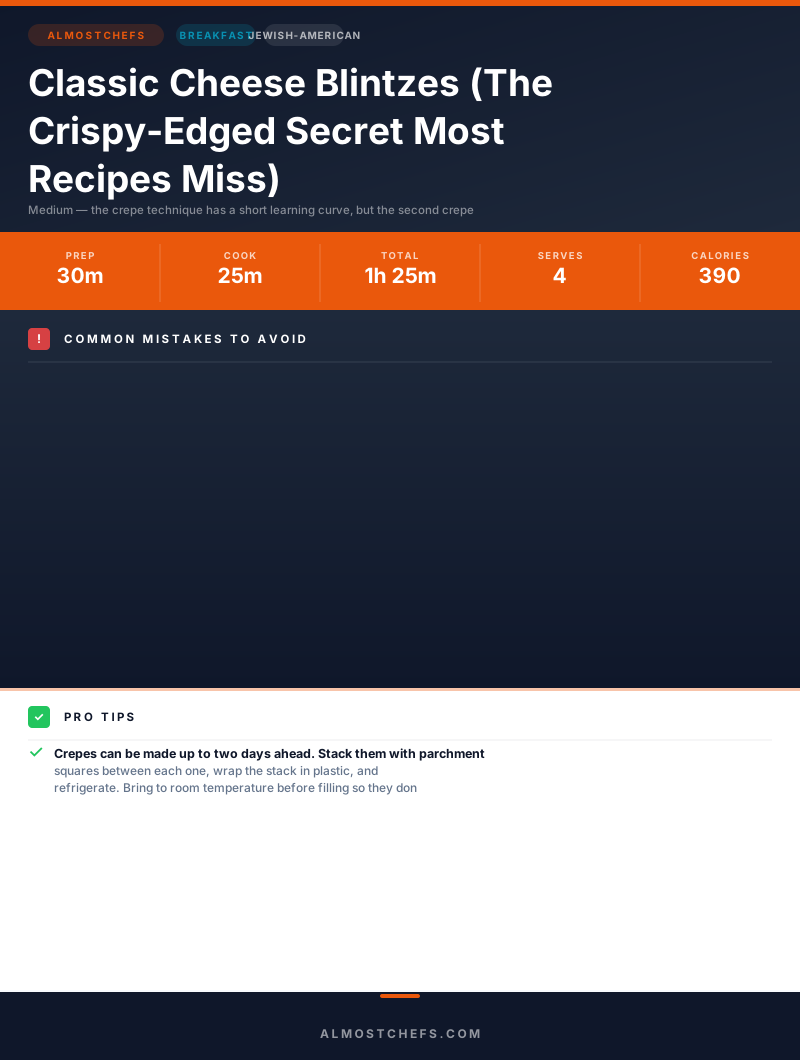
Before we start, read this. These are the 4 reasons your classic cheese blintzes (the crispy-edged secret most recipes miss) will fail:
- 1
Skipping the batter rest: Crepe batter that goes straight from blender to pan produces tough, chewy wrappers with uneven texture. A minimum 30-minute rest (an hour is better) allows the flour proteins to fully hydrate and the bubbles introduced by mixing to dissipate. The result is a thinner, more supple crepe that folds without cracking.
- 2
Filling that's too warm during assembly: If the cheese filling is at room temperature when you fold the blintzes, it relaxes during the final fry and weeps liquid into the pan. Cold filling holds its structure, crisps the exterior cleanly, and stays molten inside without breaking the crepe. Assemble straight from the fridge.
- 3
A pan that's too hot during the final fry: High heat browns the outside in 45 seconds but leaves the filling cold and grainy in the center. Medium heat — a solid 6 to 7 minutes total — gives the filling time to warm through completely while the butter slowly develops a deep, nutty crust. Patience is the entire job at this stage.
- 4
Overfilling the crepes: More than 3 tablespoons of filling per blintz creates a package that won't seal properly at the seam and will burst open in the pan. Restrain yourself. The crepe-to-filling ratio is what makes a blintz taste elegant rather than dense.
The Video Reference Library
Want to see it in action? Here are the exact videos we analyzed and combined to build this foolproof recipe translation:

A clear, technique-forward walkthrough covering batter consistency, proper pan temperature, and the folding sequence. Best reference for first-timers who need to see the crepe-swirl motion in real time.
2. Classic Blintz Technique — Crepes and Filling
Focused breakdown of the filling ratio and seam-side-down frying technique. Useful for understanding why the assembly order matters before the final pan stage.
3. Restaurant Cheese Blintzes at HomeCovers the resting step in detail and explains how to batch-cook crepes ahead and refrigerate them flat for same-day assembly. Practical for brunch prep.
🛠️ Core Equipment
- 8-inch nonstick skilletThe size matters — a pan too large spreads the batter too thin and the crepe tears when you flip it. Eight inches produces a crepe with enough structural integrity to fold without cracking. A well-seasoned carbon steel pan works equally well.
- Offset spatulaFor lifting and flipping delicate crepes cleanly. A standard spatula is too wide and drags. The angled blade of an offset spatula slides under the crepe edge without breaking it.
- Fine-mesh sieveFor pressing excess moisture out of the ricotta. Wet cheese filling leads directly to weeping blintzes and a greasy pan. Even five minutes of draining makes a measurable difference in texture.
- Pastry brushFor applying a thin, even coat of butter to the crepe pan between batches. Too much butter and the crepe fries instead of setting. Too little and it sticks. A brush gives you control that a paper towel does not.
Classic Cheese Blintzes (The Crispy-Edged Secret Most Recipes Miss)
🛒 Ingredients
- ✦1 cup all-purpose flour
- ✦3 large eggs
- ✦1 cup whole milk
- ✦1/4 cup water
- ✦2 tablespoons unsalted butter, melted, plus more for the pan
- ✦1 tablespoon granulated sugar
- ✦1/4 teaspoon fine sea salt
- ✦1.5 cups farmer's cheese (or well-drained whole-milk ricotta)
- ✦4 ounces full-fat cream cheese, softened
- ✦1 large egg yolk
- ✦3 tablespoons granulated sugar
- ✦1 teaspoon pure vanilla extract
- ✦1 teaspoon fresh lemon zest
- ✦Pinch of fine sea salt
- ✦2 tablespoons unsalted butter, for frying
- ✦Sour cream and fresh fruit, for serving
👨🍳 Instructions
01Step 1
Combine flour, eggs, milk, water, melted butter, sugar, and salt in a blender. Blend on high for 20 seconds until completely smooth.
02Step 2
Transfer the batter to a covered bowl or jar and refrigerate for at least 30 minutes, or up to 24 hours.
03Step 3
Make the filling: if using ricotta, press it through a fine-mesh sieve over a bowl for 5 minutes to drain excess liquid. Combine the farmer's cheese or drained ricotta with softened cream cheese, egg yolk, sugar, vanilla, lemon zest, and salt. Mix until smooth and uniform. Refrigerate until needed.
04Step 4
Heat an 8-inch nonstick skillet over medium heat. Brush very lightly with melted butter. Pour in approximately 3 tablespoons of batter and immediately tilt the pan in a circular motion to spread the batter into a thin, even round.
05Step 5
Cook the crepe for 60-75 seconds until the edges are set and lightly dry, and the surface no longer looks wet. Do not flip. Slide it out of the pan onto a plate, cooked-side-up. Repeat with remaining batter, stacking crepes as you go.
06Step 6
To assemble: place a crepe cooked-side-up on a work surface. Spoon 3 tablespoons of cold filling onto the lower third of the crepe. Fold the bottom edge up over the filling, fold in both sides like an envelope, then roll upward to seal. Place seam-side-down on a tray.
07Step 7
Refrigerate the assembled blintzes for at least 15 minutes before frying. This firms up the filling and helps the seams hold.
08Step 8
Heat 1 tablespoon of butter in the 8-inch skillet over medium heat until foaming. Add blintzes seam-side-down in batches of 3-4, leaving space between them. Fry for 3-4 minutes per side until deep golden brown on both faces.
09Step 9
Transfer to a plate and rest for 2 minutes before serving. The filling needs a moment to settle from molten to creamy.
10Step 10
Serve immediately with cold sour cream and fresh berries, or with a spoonful of warm cherry compote.
Nutrition Per Serving
Estimates based on standard preparation. Adjustments alter macros.
🔄 Substitutions
Instead of Farmer's cheese...
Use Whole-milk ricotta (well-drained)
Works well but is wetter. Drain through a fine-mesh sieve for at least 10 minutes and press gently with a spoon. Resulting filling is slightly looser but still holds during frying.
Instead of All-purpose flour...
Use 1-to-1 gluten-free flour blend
Produces a more fragile crepe that tears more easily. Rest the batter for the full 1 hour and handle crepes gently. The flavor difference is minimal.
Instead of Whole milk...
Use Oat milk or full-fat coconut milk
Oat milk produces crepes nearly identical in texture. Coconut milk adds faint sweetness and works well for a dairy-free version paired with cashew cream cheese.
Instead of Cream cheese...
Use Mascarpone
Richer, slightly sweeter result. Mascarpone has higher fat content than cream cheese, so the filling will be looser — compensate by using slightly less (3 ounces instead of 4).
🧊 Storage & Reheating
In the Fridge
Assembled unfried blintzes keep refrigerated for up to 2 days. Fried blintzes are best eaten immediately but can be refrigerated and reheated.
In the Freezer
Freeze assembled unfried blintzes for up to 2 months. Layer with parchment to prevent sticking.
Reheating Rules
Reheat fried blintzes in a 350°F oven for 10-12 minutes, uncovered. Avoid the microwave — it steams the exterior soft and eliminates the crispy crust entirely.
❓ Frequently Asked Questions
Why do my crepes keep tearing?
Either the batter didn't rest long enough, or the pan is too hot. A properly rested batter with hydrated proteins is far more elastic. If crepes are tearing mid-fold, let the assembled blintzes chill in the fridge for 15 minutes before frying — the cold firms everything up.
Can I use cottage cheese instead of farmer's cheese?
You can, but cottage cheese has significantly more moisture and a coarser texture. Drain it aggressively — overnight in a cheesecloth-lined sieve in the fridge — and pulse briefly in a food processor to smooth it out. The result is acceptable but noticeably wetter than farmer's cheese.
How do I know when the blintz is cooked through?
The exterior should be a deep, even golden brown on both sides — not just golden tan. At that color level, the filling has had enough time to heat through on medium heat. If you're unsure, press gently on the top; it should feel warm and slightly yielding, not cold and firm.
My blintzes keep opening in the pan. What am I doing wrong?
Two likely causes: the fold is too loose, or you moved them before the seam side set. Always place blintzes seam-side-down first and leave them untouched for the first 2-3 minutes. The heat seals the seam. Also, cold filling makes a tighter package — make sure it's chilled before folding.
Can I make sweet and savory blintzes from the same crepe batter?
Yes. The crepe itself is neutral. For savory blintzes, swap the cheese filling for sautéed mushrooms and herbs, or seasoned mashed potato with caramelized onion. Omit the sugar from the crepe batter for a savory application, or leave it — 1 tablespoon across 10 crepes is barely perceptible.
Do I need to cook the crepes on both sides before assembling?
No — and this is one of the most common blintz errors. Cook only one side. The pale, slightly damp second side becomes the interior of the package, where it cooks again during the final fry. If you cook both sides first, the crepe becomes too stiff to fold cleanly and the exterior over-browns before the filling warms through.
The Science of
Classic Cheese Blintzes (The Crispy-Edged Secret Most Recipes Miss)
We turned everything on this page into a beautiful, flour-proof PDF cheat sheet. Print it out, stick it to your fridge, and never mess up your classic cheese blintzes (the crispy-edged secret most recipes miss) again.
*We'll email you the high-res PDF instantly. No spam, just perfectly cooked meals.
AlmostChefs Editorial Team
We translate the internet's most popular cooking videos into foolproof, beginner-friendly written recipes. We analyze multiple methods, test them in our kitchen, and engineer a single "Master Recipe" that gives you the best possible result with the least possible stress.