Sticky Char Siu Pork (The Glaze Secret Takeout Won't Tell You)
Cantonese BBQ pork with a mahogany lacquer glaze built from soy, hoisin, honey, and five-spice — roasted in a home oven until caramelized and glistening. We broke down the technique behind that restaurant-quality crust and built a method that delivers it without a rotisserie or specialty equipment.

“Char siu is one of the most copied dishes in the world and one of the most misunderstood. The version most people make at home is sweet and vaguely pink. The version hanging in Cantonese barbecue windows is lacquered, deeply savory, and structurally complex. The difference is not a secret ingredient — it's the marinade time, the flip-and-glaze sequence, and understanding why you add a cornstarch slurry at the end instead of just brushing raw marinade on the meat. We tested the full sequence so you don't have to.”
Why This Recipe Works
Char siu is the most ordered protein at Cantonese BBQ windows worldwide, and the most disappointing result in home kitchens. The gap is not a secret ingredient. It's a sequence of decisions — marinade depth, flip timing, glaze construction — that most home recipes treat as optional and Cantonese BBQ shops treat as load-bearing.
The Marinade Is a Structure, Not a Sauce
The six-component marinade here (soy, hoisin, honey, oyster sauce, five-spice, sesame oil) is not random. Each element occupies a specific functional role. Soy sauce provides sodium and glutamates — the baseline umami signal. Hoisin adds fermented sweetness and body. Honey drives caramelization and surface color through its high fructose content. Oyster sauce deepens the savory floor. Five-spice powder supplies the aromatic complexity that makes the dish recognizably Cantonese rather than generic sweet pork. Sesame oil provides the fat vehicle that carries volatile aromatics into the meat fiber.
Remove any one of these and the dish loses structural integrity. The five-spice is particularly non-negotiable — the combination of star anise, cloves, cinnamon, Sichuan pepper, and fennel is what activates the olfactory memory that makes char siu taste like char siu.
Overnight marination is not about flavor depth alone. The salt concentration in the soy and oyster sauce creates osmotic pressure that draws the liquid into the meat's cell structure. At four hours, you have surface penetration. At twelve hours, you have full-cross-section flavor. The difference is audible in the first bite.
Caramelization Is a Chemistry Problem
Pork shoulder is an uneven cut — thick in places, tapered in others, marbled with fat that renders at different rates than lean muscle. The 400°F roast temperature is chosen deliberately: high enough to trigger the Maillard reaction on the exterior quickly, low enough that the interior can climb to 160°F before the outside burns.
The flip at 25 minutes is not cosmetic. Protein and sugars caramelize through direct radiant heat from above and conductive heat from the pan below. One side exposed to both simultaneously and the other insulated by the sheet surface creates a two-tone result — dark and lacquered on one face, pale and steamed on the other. The flip levels the playing field. Both sides earn their crust.
The Glaze Is a Separate Recipe
The finishing glaze is where most home versions collapse. Raw marinade brushed on finished meat is thin, watery, and food-safety questionable. It runs off the surface, pools in the pan, and evaporates before it can set. The cornstarch slurry reduction changes the physics entirely.
In the saucepan, the reserved marinade hits a simmer and the cornstarch molecules hydrate and swell, creating a network of thickened starch that holds the sauce together. The result is a glaze that behaves like lacquer — it coats the surface of the meat and holds position during the final 5-7 minutes in the oven, where the residual heat sets it into the glistening mahogany exterior that char siu is known for. Without the thickener, you have pork with sauce on it. With the thickener, you have char siu.
A pastry brush applies the glaze evenly. A spoon applies it where gravity allows. The distinction matters on the sides of each strip, which is where a spoon-glazed char siu always looks underdressed.
Resting and Slicing Direction
Five minutes of rest after the oven lets the carryover heat equalize and the muscle fibers relax, releasing their grip on the accumulated juices. Skip the rest and those juices run onto the cutting board. The slicing direction — against the grain — shortens the visible muscle fiber length, which translates directly to perceived tenderness. With the grain, you're chewing entire fiber strands end to end. Against it, you're cutting them into thumbnail-length segments that require a fraction of the work.
Every instruction in this recipe solves a specific mechanical problem. Follow the sequence and the result is a mahogany-glazed, deeply seasoned, genuinely restaurant-quality plate of char siu from a standard home oven. The technique is the recipe.
Where Beginners Mess This Up
Before we start, read this. These are the 4 reasons your sticky char siu pork (the glaze secret takeout won't tell you) will fail:
- 1
Under-marinating the pork: Four hours is the floor, not a recommendation. The soy-hoisin marinade needs time to penetrate the interior of thick pork shoulder strips. A two-hour marinade produces surface flavor only — you bite through the crust and the interior is bland. Overnight marinade means every layer of the meat is seasoned. This is the single biggest gap between home char siu and restaurant char siu.
- 2
Skipping the flip at the halfway mark: Pork shoulder strips are thick. One-sided roasting produces a beautiful crust on the contact side and a gray, steamed-looking top. The flip at 25 minutes exposes both surfaces to direct oven heat and ensures the Maillard reaction happens uniformly. Do not skip it.
- 3
Using raw marinade as a finishing glaze: Raw marinade brushed directly onto finished meat is thin, watery, and carries food safety risks. The cornstarch slurry reduction transforms the same liquid into a thick, glossy lacquer that sets on contact with the hot meat. This is the step that creates the signature char siu shine — not just the marinade itself.
- 4
Pulling the pork too early: The target is 160°F internal temperature with visible caramelization on the exterior. Pulling at 150°F because the outside looks done guarantees chewy, underdone pork. Use an [instant-read thermometer](/kitchen-gear/review/instant-read-thermometer) and trust the number, not the color.
The Video Reference Library
Want to see it in action? Here are the exact videos we analyzed and combined to build this foolproof recipe translation:
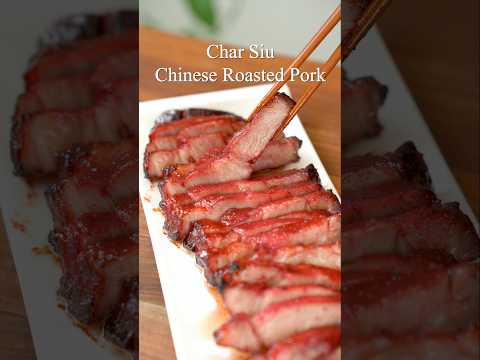
The source video for this recipe. Covers the marinade composition, roasting sequence, and glaze reduction step-by-step. Watch particularly for the color cues on the exterior during the final 10 minutes.
2. How to Make Perfect Char Siu at Home
Deep dive into the five-spice ratio and why white pepper is non-negotiable in authentic Cantonese char siu. Strong coverage of the overnight marinade technique.
3. Char Siu Glaze Science ExplainedFocuses on the Maillard reaction and caramelization chemistry specific to high-sugar marinades. Explains why the cornstarch slurry finish works and what happens chemically when you return glazed meat to the oven.
🛠️ Core Equipment
- Rimmed baking sheet ↗The rim catches marinade drips and rendered fat. A flat sheet pan lets liquid run into the oven and smoke the kitchen for 40 minutes. Line it with foil for easy cleanup.
- Instant-read thermometer ↗Pork shoulder has variable fat content — some pieces finish faster than others. The only reliable way to know each strip is done is to probe the thickest part. Visual cues alone will fail you on this cut.
- Small saucepan ↗For reducing the reserved marinade with the cornstarch slurry into a proper glaze. You cannot do this in the oven pan — you need direct heat and constant stirring to control the thickness.
- Pastry brush or silicone basting brush ↗Applies the finished glaze evenly across all surfaces including the sides of each strip. A spoon glaze is uneven. A brush glaze is lacquer.
Sticky Char Siu Pork (The Glaze Secret Takeout Won't Tell You)
🛒 Ingredients
- ✦3 pounds pork shoulder or butt, cut into 2-inch thick strips
- ✦1/2 cup low-sodium soy sauce
- ✦3 tablespoons hoisin sauce
- ✦3 tablespoons unseasoned rice vinegar
- ✦2 tablespoons honey or maple syrup
- ✦2 tablespoons sesame oil
- ✦4 cloves garlic, minced
- ✦1 tablespoon grated fresh ginger
- ✦1 teaspoon five-spice powder
- ✦1/2 teaspoon white pepper
- ✦2 tablespoons oyster sauce
- ✦1 teaspoon Sriracha or hot chili sauce, optional
- ✦1/4 cup chicken or vegetable broth
- ✦2 tablespoons cornstarch mixed with 3 tablespoons water, for glaze
- ✦3 green onions, chopped, for garnish
- ✦2 tablespoons fresh cilantro, chopped, for garnish
- ✦1 tablespoon sesame seeds, white or black
👨🍳 Instructions
01Step 1
Whisk together soy sauce, hoisin sauce, rice vinegar, honey, sesame oil, garlic, ginger, five-spice powder, white pepper, oyster sauce, and Sriracha in a large bowl until fully combined.
02Step 2
Pat the pork shoulder strips completely dry with paper towels, then place them in a large zip-top bag or shallow baking dish.
03Step 3
Pour the marinade over the pork, ensuring every surface is coated. Seal and refrigerate for at least 4 hours, preferably overnight, turning once or twice during the marinade period.
04Step 4
Remove the pork from the refrigerator and let it sit at room temperature for 30 minutes. Reserve 1/2 cup of the marinade in a small bowl before discarding the rest.
05Step 5
Preheat the oven to 400°F. Line a rimmed baking sheet with aluminum foil and arrange the pork strips in a single layer with space between each piece.
06Step 6
Roast for 25 minutes, then remove the baking sheet and flip each strip to expose the other side.
07Step 7
Continue roasting for 20-25 more minutes until the exterior is deeply caramelized and an instant-read thermometer inserted into the thickest piece reads 160°F.
08Step 8
While the pork finishes, combine the reserved marinade and broth in a small saucepan over medium heat. Bring to a gentle simmer.
09Step 9
Whisk the cornstarch slurry into the simmering liquid, stirring constantly until the sauce thickens and turns glossy, about 2-3 minutes. Remove from heat.
10Step 10
Remove the pork from the oven. Brush the thickened glaze generously over all surfaces of each strip using a pastry brush.
11Step 11
Return to the oven for 5-7 minutes to set the glaze and achieve a final layer of lacquered caramelization.
12Step 12
Transfer the pork to a cutting board and rest for 5 minutes. Slice against the grain into bite-sized pieces.
13Step 13
Arrange on a serving platter, drizzle with any remaining pan sauce, and garnish with green onions, cilantro, and sesame seeds. Serve over steamed rice or alongside stir-fried vegetables.
Nutrition Per Serving
Estimates based on standard preparation. Adjustments alter macros.
🔄 Substitutions
Instead of Honey...
Use Coconut sugar or date syrup
Lower glycemic index with more complex molasses undertones. Coconut sugar dissolves more slowly — whisk the marinade longer to ensure it's fully incorporated before adding pork.
Instead of Pork shoulder...
Use Pork tenderloin or lean pork loin
Significantly less fat, so it dries out faster. Reduce roasting time by 10 minutes and check temperature earlier. The flavor is cleaner but less rich.
Instead of Low-sodium soy sauce...
Use Coconut aminos or tamari
Coconut aminos are slightly sweeter and lower sodium. Tamari is closer in flavor to soy sauce and works as a 1:1 swap. Either eliminates soy allergens.
Instead of Hoisin sauce...
Use Miso paste mixed with balsamic vinegar (2:1 ratio)
More savory and less sweet. Reduce honey by half a tablespoon to compensate. The flavor is earthier and less traditionally Cantonese but still works in the marinade architecture.
🧊 Storage & Reheating
In the Fridge
Store sliced or whole in an airtight container for up to 4 days. The glaze becomes even more flavorful as it sits.
In the Freezer
Freeze in portions for up to 3 months. Freeze before glazing if possible — apply the glaze fresh when reheating for the best texture.
Reheating Rules
Reheat in a 350°F oven covered with foil for 10-12 minutes, or in a skillet over medium-low heat with a splash of broth to keep it moist. Microwave on 50% power to avoid drying the exterior.
❓ Frequently Asked Questions
Why isn't my char siu red like the restaurant version?
Cantonese BBQ shops typically add red fermented tofu (nam yu) or red food coloring to achieve the vivid red exterior. This recipe uses honey and hoisin, which produce a dark mahogany glaze. It's a different color, not an inferior one. The flavor profile is the same.
Can I use pork tenderloin instead of pork shoulder?
Yes, but reduce the cook time significantly — tenderloin reaches 160°F in about 25-30 minutes total. It's leaner and drier, so the marinade time becomes even more important. Don't go below 4 hours.
How do I know when the glaze is thick enough?
The cornstarch-thickened glaze should coat the back of a spoon and hold a clean line when you drag your finger through it. If it runs immediately like water, simmer for another minute. If it's gelatinous, it's too thick — add a tablespoon of broth and stir.
Can I make char siu on a grill instead of the oven?
Yes — and it's excellent. Use indirect heat at 400°F, turning every 10-15 minutes. The char from the grill grates adds smokiness the oven can't replicate. Apply the glaze in the final 5 minutes over direct heat for caramelization.
Why does my pork taste bland in the center even though the outside is flavorful?
Under-marination. The marinade needs a minimum of 4 hours to penetrate thick shoulder strips. Anything less produces surface flavor only. Overnight is the correct target.
Is it safe to use the leftover marinade as a sauce?
Only after cooking it. Raw pork marinades carry bacteria and cannot be used directly as a finishing sauce. This recipe addresses this correctly — you simmer the reserved marinade in a saucepan and bring it to a full boil before thickening it with the cornstarch slurry, which eliminates any food safety concern.
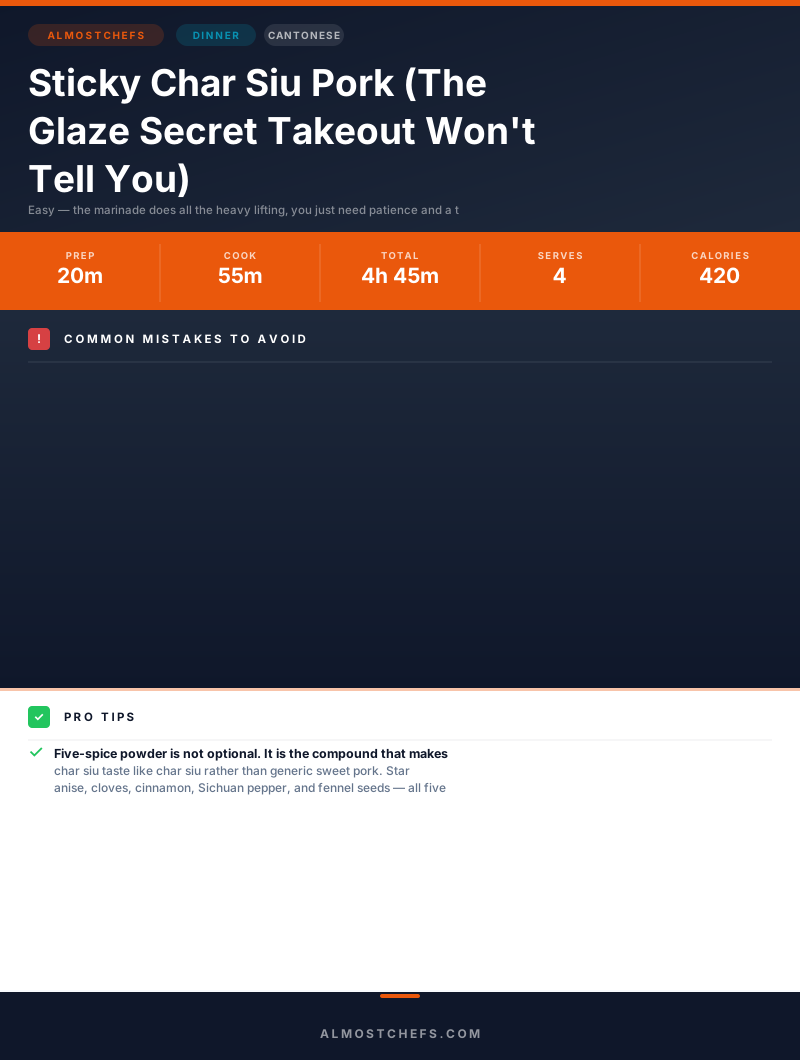
The Science of
Sticky Char Siu Pork (The Glaze Secret Takeout Won't Tell You)
We turned everything on this page into a beautiful, flour-proof PDF cheat sheet. Print it out, stick it to your fridge, and never mess up your sticky char siu pork (the glaze secret takeout won't tell you) again.
*We'll email you the high-res PDF instantly. No spam, just perfectly cooked meals.
AlmostChefs Editorial Team
We translate the internet's most popular cooking videos into foolproof, beginner-friendly written recipes. We analyze multiple methods, test them in our kitchen, and engineer a single "Master Recipe" that gives you the best possible result with the least possible stress.