Better-Than-Takeout Cashew Chicken (35-Minute Wok Method)
Tender cornstarch-crusted chicken, crunchy roasted cashews, and a savory-sweet soy-ginger sauce built fast in one pan. We broke down the technique that separates limp takeout cashew chicken from the kind with real wok char and sauce that actually clings.
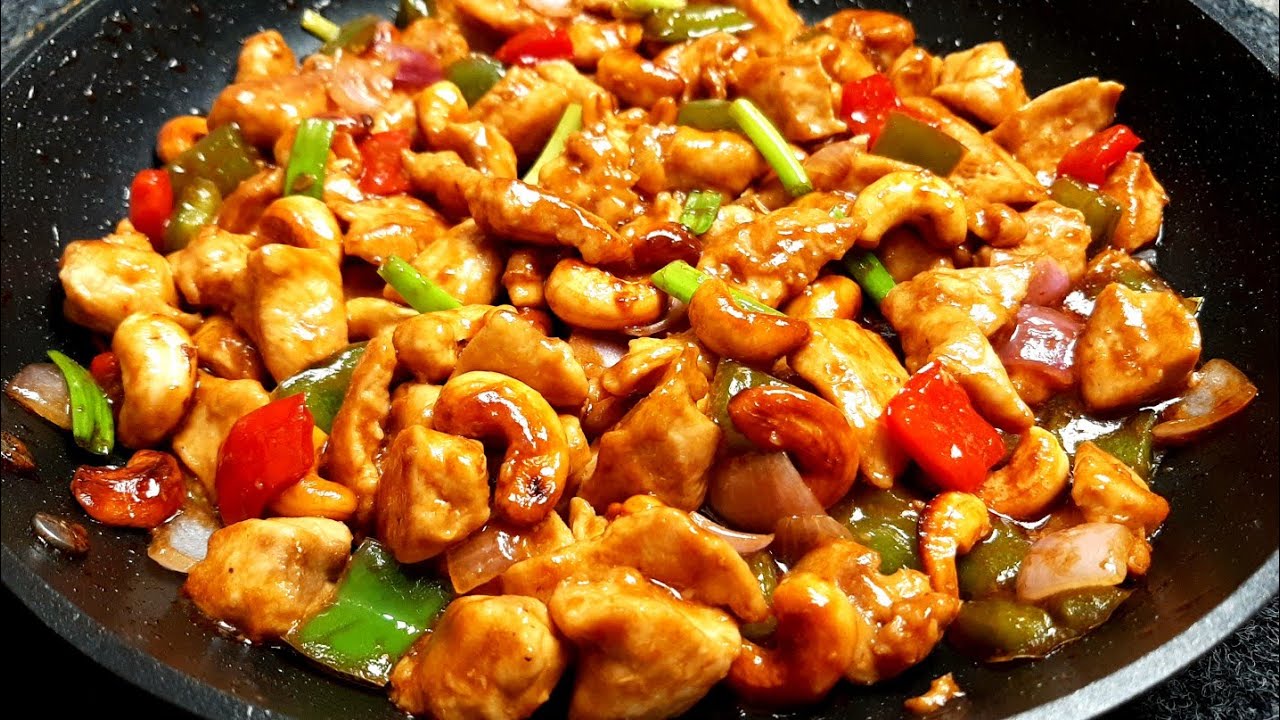
“Cashew chicken sounds simple because it is simple — until you make it and it tastes like nothing. Rubbery chicken, soggy cashews, watery sauce that pools at the bottom of the plate. The gap between bad cashew chicken and great cashew chicken is not the ingredient list. It's three technique decisions: cornstarch coating, undisturbed sear, and sauce timing. Get those right and you have a restaurant-quality stir-fry in 35 minutes without a wok.”
Why This Recipe Works
Cashew chicken is a one-pan dish that asks almost nothing of you — 35 minutes, common ingredients, minimal cleanup. And yet it has a failure mode that sends people back to the delivery app every time: the sauce goes watery, the chicken goes rubbery, the cashews go soft. None of these failures are mysterious. They are each the product of a specific skippable-seeming step that turns out to be load-bearing.
The Cornstarch Problem
Cornstarch coating is the most skipped step in any stir-fry recipe, and the most consequential. When cold, wet chicken hits hot oil without a starch barrier, the surface proteins immediately seize and release moisture into the pan. That moisture drops the pan temperature, the sear stops, and you're left with gray boiled chicken that no sauce will fix.
The cornstarch coating does two things simultaneously. It creates a thin, dry barrier that insulates the surface proteins from direct moisture loss. And it forms a roughened, slightly textured exterior that gives the sauce physical friction to cling to. Without it, sauce coats nothing. With it, every piece of chicken becomes a delivery vehicle. One tablespoon of cornstarch, mixed dry with salt and pepper, applied before the pan heats. That's the entire intervention.
The Sear Window
The instruction to cook the chicken undisturbed for three minutes is not a suggestion. It is the entire physics of crust formation. When protein first contacts a hot oiled surface, it immediately bonds to the metal. Moving it tears the forming crust. Leaving it allows the Maillard reaction to build the brown, flavorful exterior that differentiates seared chicken from something boiled.
Three minutes feels like a long time when you're standing over a hot pan. The instinct is to check, to prod, to rotate a piece to see if it's browning. Don't. The chicken releases from the pan cleanly when the crust is fully set — that's your signal. If it's still sticking, it's not ready. The pan tells you. A carbon steel skillet runs hotter and more evenly than most non-stick alternatives and gives you a more aggressive sear without adding weight to the cleaning process.
The Sauce Architecture
The sauce is a four-component system: umami depth from soy sauce, brightness from rice vinegar, body from chicken broth, and a thin sweetness from honey that rounds the edges without tipping into candy. The sesame oil goes into the sauce, not the pan — it has a low smoke point and its aromatic value is entirely in its fragrance, which burns off immediately at stir-fry temperatures. Keep it raw, add it to the sauce mixture, and it survives the brief simmer intact.
The cornstarch from the chicken coating migrates into the sauce during the final simmer, which is why the sauce thickens progressively as you stir. This is intentional. The starch from the chicken does the sauce's thickening work so you don't need a separate slurry. The timing consequence: don't rush the two-minute sauce reduction before returning the chicken. That's when the thickening happens. Pull it early and the sauce stays thin.
The Cashew Rule
Cashews are not decoration. They are the textural counterpoint to the tender chicken and soft bell pepper — the crunch that makes every bite interesting. They go in last, with the returned chicken, for exactly two minutes of heat. Long enough to warm through and absorb a thin coat of sauce. Short enough to keep their snap. Add them any earlier and they drink the sauce and go limp. Add them after the heat is off and they stay raw-tasting. Two minutes is the window.
The rest of the dish follows from these principles. Aromatics — garlic and fresh-grated ginger — go in after the onion softens, not before, because they burn in under a minute at high heat. Bell pepper goes in after the aromatics because it needs three minutes of direct heat to soften without losing its structure. The lime juice and scallions go in off-heat because their brightness is volatile and cooks away in seconds.
Every step has a reason. Follow the sequence and you don't need a wok, a restaurant burner, or twenty years of stir-fry experience. You need a hot pan, good timing, and the discipline not to crowd the chicken.
Where Beginners Mess This Up
Before we start, read this. These are the 4 reasons your better-than-takeout cashew chicken (35-minute wok method) will fail:
- 1
Skipping the cornstarch coating: Cornstarch creates a thin, crisp crust on the chicken that does two things: it locks in moisture so the interior stays tender, and it gives the sauce something to grip. Without it, the chicken steams in its own moisture, the exterior stays soft, and the sauce slides right off. There is no substitute for this step.
- 2
Crowding the pan: Dump too much chicken at once and the pan temperature drops immediately. Instead of searing, the chicken steams and turns gray before any crust can form. Work in batches if necessary. You want each piece sitting in direct contact with a screaming-hot pan surface.
- 3
Adding cashews too early: Cashews added at the start of cooking absorb moisture from the sauce and turn soft. They go in at the end — folded in with the returned chicken — so they retain their crunch through the final two-minute simmer.
- 4
Rushing the sauce reduction: The sauce needs two full minutes of constant stirring to thicken properly from the cornstarch residue and chicken broth. Pull it too early and it stays thin and watery. The sauce should coat the back of a spoon before you return the chicken.
The Video Reference Library
Want to see it in action? Here are the exact videos we analyzed and combined to build this foolproof recipe translation:
The source video for this recipe's core technique. Clear demonstration of the sear-then-rest approach that keeps the chicken tender while building a proper fond in the pan.
🛠️ Core Equipment
- Large heavy-bottomed skillet or carbon steel panYou need sustained high heat and even distribution to sear chicken properly. A thin non-stick pan can't hold temperature when cold protein hits it. [Carbon steel skillets](/kitchen-gear/review/carbon-steel-skillet) are the closest home approximation to a restaurant wok.
- Microplane or fine graterFresh grated ginger releases far more aromatic oil than minced. A microplane turns ginger into a fine paste that integrates into the sauce instead of leaving fibrous chunks.
- Small mixing bowlsPre-mixing both the sauce and the cornstarch coating before you touch the stove is not optional — this dish moves fast. If you're reaching for bottles mid-cook, you've already missed your timing window.
Better-Than-Takeout Cashew Chicken (35-Minute Wok Method)
🛒 Ingredients
- ✦1.5 pounds boneless, skinless chicken breast, cut into 1-inch cubes
- ✦1 cup roasted unsalted cashews
- ✦3 tablespoons low-sodium soy sauce
- ✦2 tablespoons rice vinegar
- ✦1 tablespoon honey or maple syrup
- ✦2 tablespoons avocado oil, divided
- ✦1 medium red bell pepper, cut into 1-inch chunks
- ✦1 medium yellow onion, finely diced
- ✦4 cloves garlic, minced
- ✦1 tablespoon fresh ginger, grated
- ✦2 medium green scallions, sliced into 1-inch pieces
- ✦1 teaspoon sesame oil
- ✦1/4 teaspoon red pepper flakes
- ✦1 tablespoon cornstarch
- ✦3 tablespoons low-sodium chicken broth
- ✦1 teaspoon lime juice
- ✦Kosher salt and black pepper to taste
👨🍳 Instructions
01Step 1
Combine the cornstarch with a pinch of salt and pepper in a small bowl, then toss the chicken cubes through until evenly coated.
02Step 2
Whisk together the soy sauce, rice vinegar, honey, sesame oil, and chicken broth until the honey dissolves completely. Set aside.
03Step 3
Heat 1 tablespoon avocado oil in a large skillet over medium-high heat until it shimmers, about 2 minutes.
04Step 4
Add the chicken in a single layer and cook undisturbed for 3 minutes until the bottom develops a golden crust. Stir and cook another 4 minutes until cooked through. Transfer to a clean plate.
05Step 5
Add the remaining tablespoon of avocado oil to the same skillet. Sauté the diced onion for 4 minutes until translucent and soft.
06Step 6
Stir in the minced garlic and grated ginger and cook for 1 minute until fragrant.
07Step 7
Add the bell pepper chunks and cook for 3 minutes, stirring occasionally until they begin to soften at the edges but still hold their shape.
08Step 8
Pour the sauce into the skillet and bring to a gentle simmer. Stir constantly for 2 minutes until the sauce thickens and coats the back of a spoon.
09Step 9
Return the cooked chicken to the skillet. Add the roasted cashews and red pepper flakes. Fold everything together gently.
10Step 10
Simmer for 2 minutes to let the flavors meld.
11Step 11
Remove from heat and stir in the lime juice and sliced scallions.
12Step 12
Taste and adjust seasoning with salt and pepper before serving.
Nutrition Per Serving
Estimates based on standard preparation. Adjustments alter macros.
🔄 Substitutions
Instead of Roasted unsalted cashews...
Use Raw unsalted almonds or walnuts
Almonds are more neutral; walnuts add earthiness. Both deliver similar crunch. Toast briefly in a dry pan first if using raw nuts.
Instead of Low-sodium soy sauce...
Use Coconut aminos or tamari
Coconut aminos are slightly sweeter and lower in sodium. Tamari is richer and gluten-free. Either works directly as a 1:1 swap.
Instead of Honey...
Use Monk fruit sweetener or coconut sugar
Monk fruit is neutral and calorie-free. Coconut sugar adds subtle caramel undertones. Both dissolve well into the sauce.
Instead of Rice vinegar...
Use Apple cider vinegar
Slightly tangier with apple notes. Use the same quantity but taste as you go — the flavor is more pronounced and can tip the sauce acidic quickly.
🧊 Storage & Reheating
In the Fridge
Store in an airtight container for up to 3 days. The cashews will soften slightly by day two — that's the only real casualty.
In the Freezer
Freeze the chicken and sauce without the cashews for up to 2 months. Add fresh cashews when reheating for proper texture.
Reheating Rules
Add a tablespoon of chicken broth or water to the pan, cover, and reheat over low heat for 5-7 minutes. Microwave works but steams the cashews soft — use a skillet if you care about texture.
❓ Frequently Asked Questions
Why is my sauce watery instead of glossy and thick?
Two causes: the cornstarch coating on the chicken wasn't complete, or you didn't simmer the sauce long enough before returning the chicken. The sauce needs a full two minutes of active simmering to thicken. If it's still thin, let it reduce another minute — it will catch.
Can I use chicken thighs instead of breast?
Yes, and they're arguably better. Thighs have more intramuscular fat, which means they stay juicy even if you slightly overcook them. Cut to the same 1-inch size and reduce the initial sear to 2 minutes per side.
My chicken is cooked through but has no crust. What happened?
The pan wasn't hot enough, or you crowded it. Both cause the chicken to steam in its own released moisture rather than sear. The oil should shimmer and move freely before any protein hits the surface. If in doubt, wait another minute.
Can I make this gluten-free?
Swap the soy sauce for tamari or coconut aminos. Everything else in the recipe is naturally gluten-free. Cornstarch is also gluten-free — just verify your brand if cross-contamination is a concern.
How do I keep the cashews crunchy?
Add them at the very end, after the chicken returns to the pan. Two minutes of gentle simmer is enough to warm them through without absorbing enough moisture to go soft. Anything longer and you lose the crunch that makes the dish work.
Can I prep this ahead for meal prep?
Yes. Marinate and coat the chicken up to 24 hours ahead and store covered in the fridge. Pre-mix the sauce and refrigerate separately. When ready to cook, the active time drops to under 15 minutes.
The Science of
Better-Than-Takeout Cashew Chicken (35-Minute Wok Method)
We turned everything on this page into a beautiful, flour-proof PDF cheat sheet. Print it out, stick it to your fridge, and never mess up your better-than-takeout cashew chicken (35-minute wok method) again.
*We'll email you the high-res PDF instantly. No spam, just perfectly cooked meals.
AlmostChefs Editorial Team
We translate the internet's most popular cooking videos into foolproof, beginner-friendly written recipes. We analyze multiple methods, test them in our kitchen, and engineer a single "Master Recipe" that gives you the best possible result with the least possible stress.