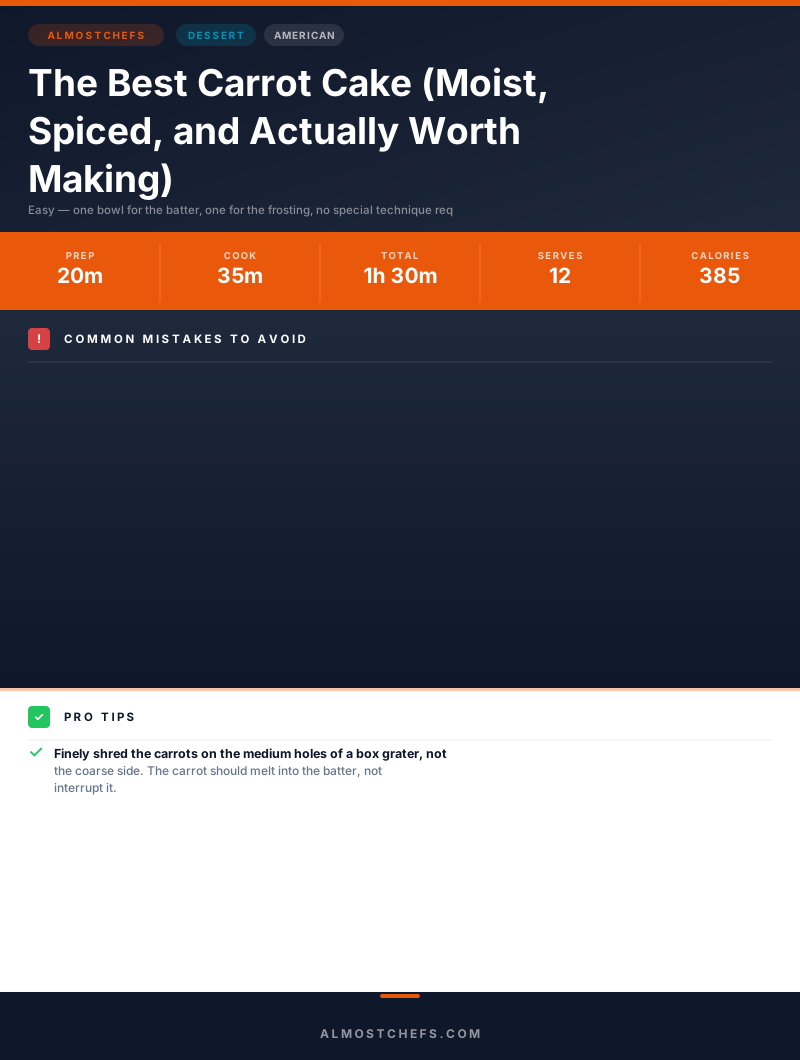
The Best Carrot Cake (Moist, Spiced, and Actually Worth Making)
A deeply spiced, impossibly moist carrot cake made with honey, pineapple, and a mix of all-purpose and whole wheat flour, topped with a tangy cream cheese frosting that sets in the fridge and slices clean. We synthesized the most common home baker failures to build one foolproof method that delivers a tender crumb every time.

“Most carrot cake recipes fail for one of three reasons: the batter is overmixed into a dense brick, the carrots are grated too coarsely so they don't integrate, or the cream cheese frosting is spread on a cake that's still warm and slides off in sheets. This recipe addresses all three. The pineapple is not optional. The resting time is not optional. The cooling is not optional. Everything else is.”
Why This Recipe Works
Carrot cake is the dessert that everyone has made badly at least once. The variables that separate a great one from a forgettable one are almost entirely about process, not ingredients — and most recipes don't explain the process. They just give you a list and a temperature.
The Moisture System
This cake's moisture doesn't come from one place. It comes from three: the oil, the carrots, and the pineapple. Each does something different. Oil coats flour proteins during mixing, physically blocking gluten development and keeping the crumb tender after baking. Carrots release their water slowly during the bake, steaming the interior of the crumb from within. Pineapple delivers two things simultaneously — juice that keeps the texture wet, and bromelain, a naturally occurring enzyme that gently breaks down proteins in the surrounding flour structure to create a more tender bite.
Remove any one of these three and the cake still works. Remove two of them and you have a dry, tight crumb that needs a glass of milk to choke down. This is why the pineapple isn't optional, and why you should not substitute the oil for applesauce unless you understand you're making a trade-off.
The Whole Wheat Question
One cup of whole wheat flour in a three-cup recipe is a meaningful inclusion, not a nutritional gesture. Whole wheat flour contains the bran and germ of the wheat kernel, both of which contribute nutty, complex flavor compounds that plain all-purpose flour lacks. But more importantly, bran particles physically interrupt gluten strand formation — they act like tiny blades that cut through developing gluten networks, preventing the cake from becoming chewy or tough even if you slightly overmix.
The downside: whole wheat absorbs more liquid than all-purpose flour, which can make cakes feel dry if you overdo it. One cup out of three is the sweet spot — enough to taste it, not enough to dry it out.
The Cream Cheese Frosting Problem
Cream cheese frosting fails more often than any other component in home baking, and the failure always traces back to fat temperature. Cream cheese is an emulsion of fat and water held in suspension by proteins. When you beat it with butter, you're creating a new emulsion that depends on both fats being soft enough to combine but cold enough to hold air. Too cold and you get lumps. Too warm and you get a pourable glaze instead of a spreadable frosting.
The practical solution: pull the cream cheese and butter from the refrigerator 45-60 minutes before you need them. Not 10 minutes. Not 30 minutes. An hour. You're aiming for the consistency of putty — indentable with a finger but not greasy or slick to the touch.
A stand mixer makes this process genuinely easier — two minutes at medium speed creates a degree of aeration you simply can't achieve by hand. But a hand mixer is perfectly sufficient. The technique matters more than the tool.
Why the Cake Rests
The mandatory 1-hour refrigeration after frosting isn't about impatience — it's about physics. The frosting needs time to firm against the cake surface, the layers need to bond through the frosting between them, and the whole structure needs to set before you cut it. A cake sliced immediately after frosting collapses at the cut edge, pushes the layers apart, and looks like it was assembled by someone who didn't care. A chilled, rested cake slices into clean, structured pieces that hold their shape on the plate.
The flavor argument for waiting is equally strong. Carrot cake, like biryani and barbecue, tastes meaningfully better the next day. The spices — cinnamon, nutmeg, ginger, cloves — are fat-soluble compounds that continue to migrate through the oil in the crumb over 12-24 hours, distributing themselves more evenly and mellowing from sharp individual notes into a unified, warm background flavor.
Make it today. Eat it tomorrow. You'll taste the difference.
Where Beginners Mess This Up
Before we start, read this. These are the 4 reasons your the best carrot cake (moist, spiced, and actually worth making) will fail:
- 1
Overmixing the batter: Once the dry ingredients hit the wet, gluten development begins. Every extra stroke of the spatula builds more structure — and more structure means a tighter, tougher crumb. Fold until the flour streaks just disappear. There will be lumps. Leave them. They bake out. An undermixed carrot cake is always better than an overmixed one.
- 2
Grating the carrots too coarsely: Large carrot shreds don't hydrate evenly during baking. You end up with identifiable wet strings running through the cake instead of distributed moisture. Use the fine or medium holes of a box grater. The goal is for the carrot to essentially disappear into the crumb, contributing moisture and sweetness without texture contrast.
- 3
Frosting a warm cake: Cream cheese frosting is an emulsion held together by cold fat. A warm cake surface immediately begins melting the butter and cream cheese, turning your frosting into a glaze that pools at the edges and slides down the sides. The cake must be completely cool — room temperature at minimum, cold from the fridge is better.
- 4
Skipping the pineapple: Crushed pineapple reads like a weird addition until you understand what it's doing: the juice keeps the crumb wet during baking and the bromelain enzyme in pineapple gently tenderizes the surrounding flour structure. Cakes made without it are noticeably drier. Don't taste the pineapple in the final product — that's the point.
The Video Reference Library
Want to see it in action? Here are the exact videos we analyzed and combined to build this foolproof recipe translation:
The primary video source for this recipe. Covers the grating technique, batter consistency checkpoints, and how to tell when the cake is done without overbaking.
🛠️ Core Equipment
- Box graterThe medium holes are your target for carrot shreds that integrate fully into the batter. A food processor shreds too coarsely and a microplane turns carrots to pulp. Neither produces the right texture.
- Two 9-inch round cake pansDividing the batter into two layers gives you more surface area for frosting and a better cake-to-frosting ratio per slice. A single deep pan requires 50+ minutes in the oven, which dries the edges before the center sets.
- Wire cooling rackCooling the cakes in the pan traps steam on the bottom, creating a soggy crust that tears when you try to remove them. A wire rack allows airflow on all sides, setting the structure evenly.
- Stand or hand mixerFor the frosting only — not the batter. Beating cream cheese and butter by hand never achieves the same lightness as a mixer. Two minutes at medium speed is the minimum to get a properly aerated, spreadable frosting.
The Best Carrot Cake (Moist, Spiced, and Actually Worth Making)
🛒 Ingredients
- ✦2 cups all-purpose flour
- ✦1 cup whole wheat flour
- ✦2 teaspoons baking soda
- ✦1 teaspoon baking powder
- ✦1 teaspoon ground cinnamon
- ✦1/2 teaspoon ground nutmeg
- ✦1/4 teaspoon ground ginger
- ✦1/4 teaspoon ground cloves
- ✦1/2 teaspoon fine sea salt
- ✦3/4 cup vegetable oil
- ✦3/4 cup honey
- ✦2 large eggs, room temperature
- ✦1 teaspoon vanilla extract
- ✦3 cups finely shredded carrots, loosely packed
- ✦1/2 cup crushed pineapple, well drained
- ✦1/2 cup chopped walnuts or pecans
- ✦8 ounces cream cheese, softened
- ✦4 tablespoons unsalted butter, softened
- ✦1 1/2 cups powdered sugar
👨🍳 Instructions
01Step 1
Preheat your oven to 350°F and position the rack in the center. Grease and flour two 9-inch round cake pans, tapping out any excess flour.
02Step 2
Whisk together both flours, baking soda, baking powder, cinnamon, nutmeg, ginger, cloves, and salt in a medium bowl until fully combined.
03Step 3
In a large bowl, beat the vegetable oil and honey together vigorously for 1 minute until slightly lighter in color and fully combined.
04Step 4
Add the eggs and vanilla extract to the oil-honey mixture and beat on medium speed for 2 minutes until smooth and emulsified.
05Step 5
Add the dry ingredients to the wet mixture and fold with a rubber spatula using broad, gentle strokes until the flour just disappears. Do not overmix.
06Step 6
Fold in the shredded carrots, drained crushed pineapple, and chopped nuts until evenly distributed.
07Step 7
Divide the batter equally between the two prepared pans and smooth the tops with a spatula.
08Step 8
Bake for 30-35 minutes, until a toothpick inserted in the center comes out with just a few moist crumbs — not wet batter, not completely clean.
09Step 9
Cool in the pans for 15 minutes, then turn out onto wire racks and cool completely — at least 1 hour at room temperature.
10Step 10
Make the frosting: beat the softened cream cheese and butter together on medium speed for 2 minutes until light and fluffy.
11Step 11
Add the powdered sugar gradually, beating continuously for about 3 minutes until smooth and spreadable.
12Step 12
Place the first cake layer on a plate and spread a generous, even layer of frosting over the top surface.
13Step 13
Set the second layer on top and frost the entire cake — top and sides — with the remaining frosting.
14Step 14
Refrigerate for at least 1 hour before slicing. The frosting needs to firm up and the flavors need time to settle.
Nutrition Per Serving
Estimates based on standard preparation. Adjustments alter macros.
🔄 Substitutions
Instead of Vegetable oil...
Use 1/2 cup unsweetened applesauce
Reduces fat significantly. The crumb becomes slightly denser and the mouthfeel is lighter — less rich. The moisture stays good because applesauce is 80% water. Acceptable trade-off for a lighter cake.
Instead of Honey...
Use 1/2 cup maple syrup plus 2 tablespoons coconut sugar
Maple syrup has a lower water content than honey — the bake time may drop by 3-4 minutes. The coconut sugar adds back some body. The finished cake has a subtle earthy sweetness instead of floral honey notes.
Instead of Crushed pineapple in syrup...
Use Fresh crushed pineapple or unsweetened canned pineapple
Better choice, actually. The syrup version adds unnecessary refined sugar. Fresh or water-packed pineapple contributes the same moisture and bromelain without the sweetness overload.
Instead of Cream cheese frosting...
Use Greek yogurt frosting with honey and vanilla
Combine 1 cup full-fat Greek yogurt, 2 tablespoons honey, 1 teaspoon vanilla, and 1/4 teaspoon salt. Tangier and lighter than the original. It won't hold a swirl — apply as a thin, flat layer. Refrigerate immediately after frosting.
🧊 Storage & Reheating
In the Fridge
Store covered in the refrigerator for up to 5 days. The cream cheese frosting requires cold storage — this is not a room temperature cake.
In the Freezer
Freeze unfrosted cake layers wrapped tightly in plastic wrap, then foil, for up to 3 months. Thaw overnight in the refrigerator before frosting and serving.
Reheating Rules
Carrot cake is served cold or at room temperature — not warm. Remove from the fridge 20-30 minutes before serving to take the chill off without softening the frosting.
❓ Frequently Asked Questions
Why is my carrot cake dense and heavy?
Almost certainly overmixing. Once the dry ingredients are added, gluten forms with every stir. Fold only until the flour disappears — the batter should look slightly lumpy and that is correct. Also check your leaveners: baking soda and baking powder lose potency after 6 months. Test baking soda by dropping a teaspoon in hot water — it should fizz aggressively.
Can I make this as a 9x13 sheet cake instead of two round layers?
Yes. Use a greased and floured 9x13 pan and bake at 350°F for 40-45 minutes. Start checking at 38 minutes. The increased depth means longer bake time, but the risk of drying the edges before the center sets is higher — watch it closely.
My frosting is lumpy. What went wrong?
The cream cheese or butter wasn't at true room temperature. Cold cream cheese never fully incorporates and leaves tiny white lumps throughout the frosting. If this happens, continue beating — sometimes 3-4 additional minutes of mixing will work the lumps out. If not, microwave the bowl in 5-second bursts, stirring between each, until the frosting warms slightly and smooths out.
Do I really need both all-purpose and whole wheat flour?
No. You can use 3 cups of all-purpose flour and the cake will be slightly lighter with a more open crumb. The whole wheat flour adds nuttiness, structure, and fiber, but it's not what makes this recipe work. The carrots, pineapple, and oil are the moisture system — the flour ratio is a flavor and texture variable, not a critical structural element.
Can I skip the nuts?
Yes, completely optional. If nut allergies are a concern, omit them entirely — the cake doesn't need them structurally. If you want to keep the textural contrast, substitute 1/2 cup raisins or shredded coconut.
How do I know when the cake is actually done?
The toothpick test tells you when to stop, but carrot cake is moist by design — a perfectly baked carrot cake will always show a few moist crumbs on the toothpick. If the toothpick comes out clean with no crumbs, you've overbaked it. Also look for the edges pulling slightly away from the pan sides and the top springing back lightly when pressed in the center.
The Science of
The Best Carrot Cake (Moist, Spiced, and Actually Worth Making)
We turned everything on this page into a beautiful, flour-proof PDF cheat sheet. Print it out, stick it to your fridge, and never mess up your the best carrot cake (moist, spiced, and actually worth making) again.
*We'll email you the high-res PDF instantly. No spam, just perfectly cooked meals.
AlmostChefs Editorial Team
We translate the internet's most popular cooking videos into foolproof, beginner-friendly written recipes. We analyze multiple methods, test them in our kitchen, and engineer a single "Master Recipe" that gives you the best possible result with the least possible stress.