Spaghetti Carbonara (Authentic Roman — No Cream, Just Technique)
Authentic Roman carbonara — silky egg and Pecorino sauce clinging to al dente spaghetti with crispy guanciale. No cream. Just technique.

“Carbonara has five ingredients. Every cooking school in Italy lists it as a test of technique, not talent, because the dish doesn't forgive sloppiness but it rewards understanding. The cream thing — let's get it out of the way immediately. Cream is not in carbonara. The silky, almost sauce-like coating on authentic Roman carbonara comes entirely from the emulsion of eggs, Pecorino Romano, rendered guanciale fat, and starchy pasta water. When that emulsion is working, you get a sauce that clings to every strand of spaghetti in a way cream never achieves. When it breaks, you get scrambled eggs in greasy pasta. The margin between the two is a matter of about 20°F.”
Why This Recipe Works
Carbonara has five ingredients. The technique is the sixth. Every decision in this recipe exists to control one thing: temperature. Understand that and you understand carbonara.
The cold-start guanciale is a fat-rendering strategy. Guanciale is about 60% fat by weight. That fat needs to render out slowly to produce two things: crispy, golden meat pieces and clean, liquid pork fat. If the pan is already hot when the guanciale goes in, the exterior sears before the interior fat has a chance to melt. You get chewy, fatty pieces with a charred exterior — not the crispy, rendered lardons the recipe requires. Starting in a cold skillet and building heat gradually gives the fat time to render completely. After 8-10 minutes on medium-low, you have crispy guanciale and a pan full of clear, fragrant rendered fat. That fat is the flavor base of the entire dish.
Extra yolks make the sauce richer and more stable. The recipe calls for 4 yolks plus 2 whole eggs rather than 6 whole eggs. Egg yolks contain more fat (primarily lecithin), more emulsifying proteins, and far less water than egg whites. The higher lecithin content in yolks means a more stable emulsion — the lecithin molecules bridge the fat-phase (rendered guanciale fat) and the water-phase (pasta water) more effectively than whole eggs. The result is a sauce that's noticeably richer and golden rather than pale, and that holds together longer without breaking. The whole eggs contribute structure; the extra yolks contribute richness and stability.
Pasta water is the emulsifier — literally. Starch molecules that leach out of the pasta during cooking accumulate in the water. These starch molecules are amphiphilic — they have both hydrophilic (water-loving) and hydrophobic (fat-loving) ends — making them natural emulsifiers. When you toss the pasta with the egg-cheese mixture and add pasta water, the starch molecules position themselves at the fat-water interface in the sauce, creating a stable emulsion. This is identical to how roux-based sauces work, except the thickener is dissolved pasta starch rather than cooked flour. Using less water (4 quarts rather than 6-8 quarts) produces a more starch-concentrated cooking liquid. That difference in starch concentration is significant enough that the sauce made with the starchier water holds together and coats the pasta differently than one made with a large pot of boiling water.
Off-heat tossing prevents scrambled eggs. Egg proteins denature progressively from about 140°F to 185°F. Below 140°F, they won't thicken. Above 165°F, they begin to curdle irreversibly. The ideal carbonara sauce sets between 145°F and 160°F — warm enough to thicken the yolks into a custard-like coating, cool enough to prevent curdling. A hot pan makes this narrow window impossible to hit consistently. By removing the pan from heat, waiting 30 seconds for it to cool slightly, and then adding the egg mixture while tossing constantly, you rely on the residual heat of the pasta itself (which holds heat much longer than the pan) to gently warm the eggs without exceeding the scrambling threshold.
Pecorino Romano, not Parmesan. This is not a preference, it's a flavor argument. Pecorino Romano is made from sheep's milk. It's sharper, saltier, and more intensely flavored than Parmigiano-Reggiano. In a dish with only five ingredients, the quality and character of each one is amplified. Pecorino's assertive flavor holds its own against the rich guanciale and eggs; Parmesan alone produces a blander, less distinctly Roman result. Use a fine grater — large shreds won't melt smoothly and will clump in the sauce.
The black pepper is also not decorative. It should be coarse, freshly cracked, and aggressive — at least a full teaspoon. In Rome, carbonara is sometimes called pasta cacio e pepe con uova (pasta with cheese, pepper, and egg) to emphasize that pepper is a structural ingredient, not a garnish. The heat from the rendered fat blooms the aromatic compounds in the pepper, making it rounder and more complex than raw pepper added at the end.
Where Beginners Mess This Up
Before we start, read this. These are the 3 reasons your spaghetti carbonara (authentic roman — no cream, just technique) will fail:
- 1
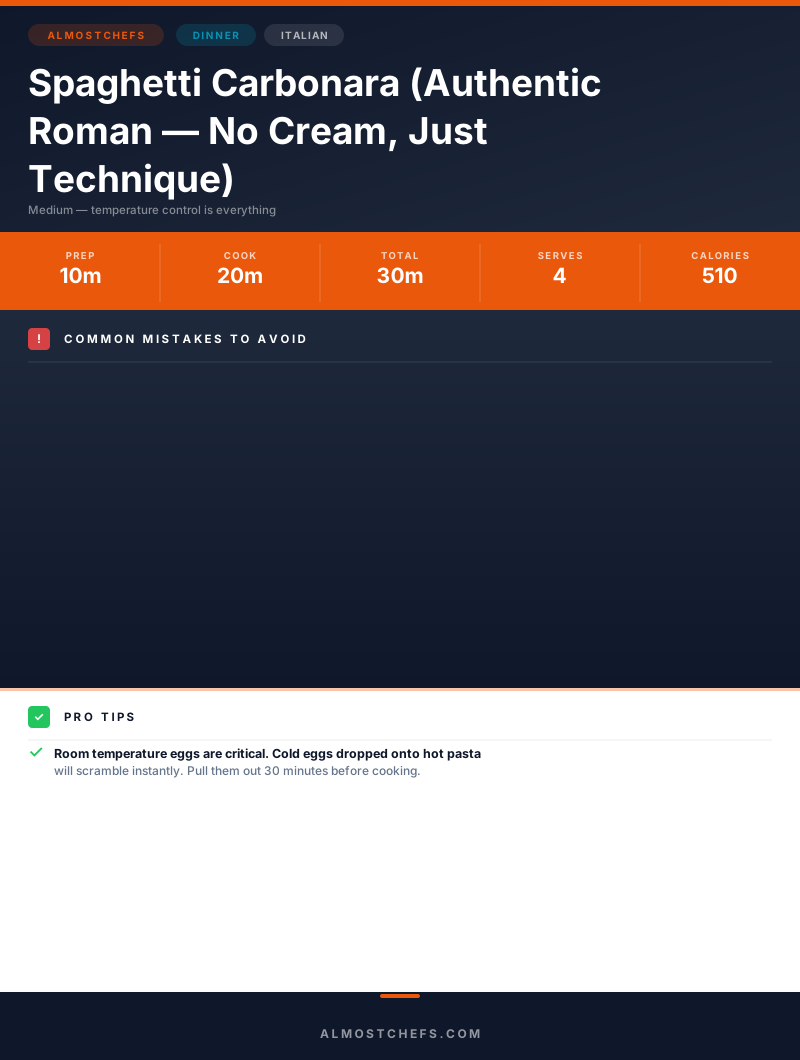
Scrambled eggs instead of silky sauce: The pan is too hot when you add the egg mixture. Remove the skillet from heat entirely before adding the egg and cheese mixture. The residual heat from the pasta and pan is enough to thicken the sauce. If you're nervous, toss the pasta in a separate warm bowl instead.
- 2
Sauce too thick or gluey: You probably didn't add enough pasta water, or the cheese clumped. Add pasta water a tablespoon at a time while tossing — the sauce should be fluid and glossy, not pasty. Also, make sure your Pecorino is very finely grated — large shreds don't melt smoothly.
- 3
Guanciale greasy and chewy: Pan started too hot. Guanciale needs a cold-start — room temperature or cold skillet, medium-low heat. This renders the fat out gradually, leaving crispy, golden pieces swimming in clean pork fat. A hot pan chars the outside before the fat can render.
The Video Reference Library
Want to see it in action? Here are the exact videos we analyzed and combined to build this foolproof recipe translation:
Andrew Rea's authentic Roman carbonara with the step-by-step emulsification technique. The best home-cook reference for understanding off-heat tossing and pasta water management.
Weissman's take with the cold-start guanciale technique and a breakdown of what separates a broken sauce from a silky one. Good supplementary reference for the fat rendering stage.
The Roman source — chefs from Italy showing the traditional technique without shortcuts. Watch this for the authentic texture standard.
🛠️ Core Equipment
- Large pot for pastaEnough volume to cook pasta at a rolling boil without crowding. Use less water than usual — about 4 quarts — to produce starchier water, which is critical for the emulsion.
- 12-inch skillet (stainless or cast iron)For rendering guanciale and finishing the pasta. The pan carries residual heat that helps thicken the sauce off the burner.
- Large mixing bowl (warmed)An optional but smart setup — a warm bowl lets you toss the pasta away from the direct heat of the stove, giving you more control over the emulsification temperature.
- Fine grater (Microplane)Pecorino Romano must be grated extremely fine for smooth emulsification. A Microplane or the finest holes on a box grater produce the fluffiest cheese that dissolves into the sauce rather than clumping.
Spaghetti Carbonara (Authentic Roman — No Cream, Just Technique)
🛒 Ingredients
- ✦1 lb spaghetti (or rigatoni)
- ✦6 oz guanciale, cut into 1/4-inch strips
- ✦4 large egg yolks
- ✦2 whole eggs
- ✦1 1/2 cups finely grated Pecorino Romano
- ✦Freshly cracked black pepper (at least 1 teaspoon)
- ✦Kosher salt for pasta water
👨🍳 Instructions
01Step 1
Bring a large pot of water to a boil. Use less water than normal — about 4 quarts — to produce starchier cooking water. Salt generously.
02Step 2
Place guanciale in a cold skillet. Set over medium-low heat. Cook, stirring occasionally, for 8-10 minutes until the fat is fully rendered and the pieces are golden and crispy at the edges.
03Step 3
Remove skillet from heat and let it cool slightly while the pasta cooks.
04Step 4
Whisk egg yolks and whole eggs in a bowl. Add most of the Pecorino and a generous amount of cracked black pepper. Whisk until thick and paste-like. Reserve remaining Pecorino for serving.
05Step 5
Cook pasta one minute short of package al dente time. Before draining, ladle out a full cup of pasta water.
06Step 6
Drain pasta. Immediately add to the guanciale skillet off heat. Toss to coat every strand in the rendered fat. Wait 30 seconds for the pan to cool slightly.
07Step 7
Pour the egg mixture over the pasta. Toss constantly and aggressively while adding pasta water one tablespoon at a time until the sauce is fluid, glossy, and clings to the pasta.
08Step 8
Plate immediately. Finish with remaining Pecorino and more cracked black pepper.
Nutrition Per Serving
Estimates based on standard preparation. Adjustments alter macros.
🔄 Substitutions
Instead of Guanciale...
Use Pancetta
Widely available, slightly different flavor. Avoid regular bacon — too smoky.
Instead of Pecorino Romano...
Use Parmigiano-Reggiano
Milder, less salty. Use a 50/50 blend for balance.
Instead of Spaghetti...
Use Rigatoni or bucatini
Both traditional in Rome. Rigatoni traps sauce inside the tubes.
Instead of Egg yolks...
Use All whole eggs (4 total)
Slightly lighter sauce, works fine.
🧊 Storage & Reheating
In the Fridge
Carbonara is best eaten immediately. Leftovers can be stored for 1 day but the sauce texture changes significantly.
In the Freezer
Do not freeze carbonara — the egg sauce breaks when reheated from frozen.
Reheating Rules
Gently reheat in a skillet with a splash of water over very low heat, tossing constantly. The sauce will never be quite as silky as fresh.
❓ Frequently Asked Questions
Why does my carbonara turn into scrambled eggs?
The pan is too hot when you add the egg mixture. Remove the skillet from heat entirely before adding the egg and cheese mixture. The residual heat from the pasta and pan is enough to thicken the sauce. If you're nervous, toss the pasta in a separate warm bowl instead.
Does authentic carbonara have cream?
No. Traditional Roman carbonara never contains cream. The creamy texture comes from the emulsion of egg yolks, Pecorino Romano, rendered guanciale fat, and starchy pasta water. Adding cream masks the egg and cheese flavor and isn't necessary when the technique is right.
What is guanciale and where do I find it?
Guanciale is cured pork jowl — the cheek of the pig. It has a rich, porky flavor and renders into silky fat. Find it at Italian delis, specialty grocery stores, or online. If unavailable, pancetta is the closest substitute. Avoid regular bacon — its smokiness changes the dish.
Why is my carbonara too thick or gluey?
You probably didn't add enough pasta water, or the cheese clumped. Add pasta water a tablespoon at a time while tossing — the sauce should be fluid and glossy, not pasty. Also, make sure your Pecorino is very finely grated — large shreds don't melt smoothly.
Can I use spaghetti or does it have to be a specific pasta?
Spaghetti is the most common shape for carbonara, but rigatoni and bucatini are equally traditional in Rome. Any long pasta or tube shape works. Avoid small shapes like penne — they don't carry the sauce the same way.
The Science of
Spaghetti Carbonara (Authentic Roman — No Cream, Just Technique)
We turned everything on this page into a beautiful, flour-proof PDF cheat sheet. Print it out, stick it to your fridge, and never mess up your spaghetti carbonara (authentic roman — no cream, just technique) again.
*We'll email you the high-res PDF instantly. No spam, just perfectly cooked meals.
AlmostChefs Editorial Team
We translate the internet's most popular cooking videos into foolproof, beginner-friendly written recipes. We analyze multiple methods, test them in our kitchen, and engineer a single "Master Recipe" that gives you the best possible result with the least possible stress.