Pan-Seared Caprese Chicken (Done in 35 Minutes, No Shortcuts)
Juicy chicken breasts seared to a golden crust, topped with melted fresh mozzarella, ripe tomatoes, and a hit of aged balsamic — finished under the broiler in under 4 minutes. We mapped the most common failures so you get it right the first time.
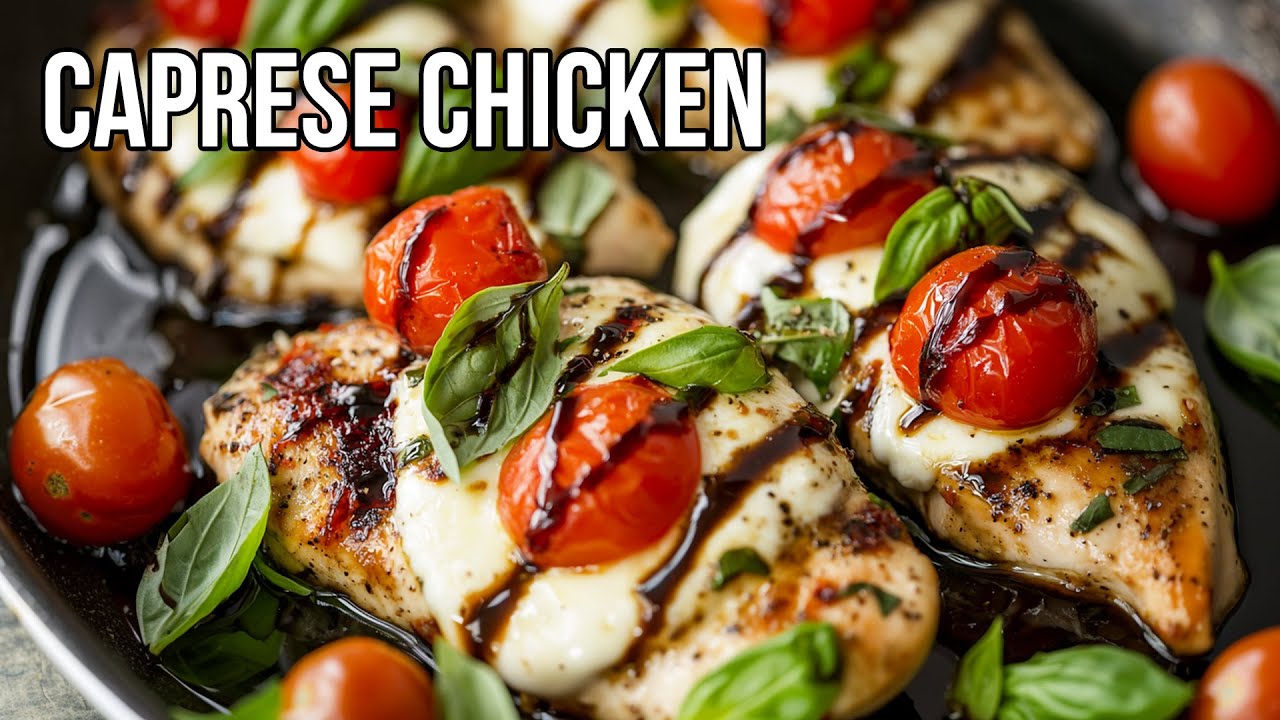
“Caprese chicken sounds like something you order when you can't decide. In practice, it's one of the most technically efficient weeknight dinners in the Italian repertoire — three distinct flavor elements (fat, acid, fresh herb) layered on a single protein in a single pan, finished under a broiler. The problem is that most people skip the two steps that actually make it work: drying the chicken before searing, and adding the basil after the heat. Get those right and the rest handles itself.”
Why This Recipe Works
Caprese chicken exists at the intersection of two Italian cooking principles: don't use more ingredients than necessary, and don't apply heat to anything that doesn't need it. Most recipes get one of these right. Almost none get both.
The dish is structurally simple — seared chicken topped with mozzarella, tomato, and basil, finished under a broiler. But the sequence of decisions within that simple structure determines whether you get something restaurant-worthy or something that tastes like assembly-line cafeteria food. The decisions that matter most are the ones most recipes gloss over.
Why Drying the Chicken Is the Whole Game
Chicken breast is about 75% water by weight. That moisture migrates to the surface the moment the breast is pulled from packaging, and it stays there until you actively remove it. When wet chicken hits a hot pan, the surface water must fully evaporate before the Maillard reaction — the browning reaction that creates crust, depth, and the roasted flavor compounds that make seared meat taste seared — can begin. Depending on how much moisture is present, this can take 90 additional seconds, during which your chicken is steaming instead of searing.
Paper towels solve this completely. Thirty seconds of thorough drying per breast. The payoff is a golden-brown crust that forms immediately on contact, sealing the surface and contributing complex flavor that no amount of seasoning can replicate on a pale, gray exterior.
The Physics of Even Thickness
A standard chicken breast ranges from ½ inch at the tapered end to nearly 1.5 inches at the thickest point. At medium-high heat, ½-inch chicken is done in roughly 4 minutes per side. 1.5-inch chicken takes 8-9 minutes per side. You cannot cook both simultaneously in the same pan without one of them failing. The thin end overcooks. The thick end stays raw. Pounding to a uniform ¾ inch collapses that range — every part of the breast hits 165°F within the same 30-second window.
Use the flat side of a meat mallet, work from the center outward, and stop at ¾ inch. This isn't tenderizing — it's geometry.
The Broiler as a Precision Tool
The broiler is underused in American home kitchens because it feels unpredictable. It isn't — it just works differently from an oven. A conventional oven heats by circulating air. A broiler heats by direct infrared radiation. That distinction matters here: you need the top surface of the mozzarella to melt in 3-4 minutes without the chicken underneath continuing to cook. Infrared heat does that. Oven convection does not.
Position the rack 6 inches from the element and watch it. The window between perfectly melted mozzarella and scorched tomatoes is about 45 seconds. This is not a step where you walk away and check your phone.
Basil and Balsamic: Finishing Elements Only
Fresh basil contains linalool and eugenol — volatile aromatic compounds that evaporate at sustained cooking temperatures. Cook basil for more than 30 seconds and you've destroyed what makes it basil. The leaves turn black, the flavor turns bitter, and you're left with a visual prop rather than an ingredient. Basil goes on after the chicken has rested. This is the rule.
Aged balsamic vinegar is made through years of evaporation in successive wood barrels. The result is a concentrated, layered syrup with acidity, sweetness, and complexity that no single ingredient can replicate. Applying heat to it strips those compounds. Drizzle it at the very last moment, straight from the bottle onto the plated chicken, and it stays structurally intact — you taste the wood, the grape, and the time that went into it.
This is the dish in its simplest form: quality ingredients, applied in the right sequence, at the right temperature, at the right time. Subtract any one of those variables and you feel the absence immediately.
Where Beginners Mess This Up
Before we start, read this. These are the 4 reasons your pan-seared caprese chicken (done in 35 minutes, no shortcuts) will fail:
- 1
Wet chicken that steams instead of sears: If you put a damp chicken breast in a hot pan, the surface moisture converts to steam before the Maillard reaction can start. You get a gray, steamed exterior with no crust. Pat each breast completely dry with paper towels — this is non-negotiable and takes ten seconds.
- 2
Uneven thickness causing dry edges and undercooked centers: A chicken breast is a wedge: thick on one end, thin on the other. Cook it as-is and the thin end is overcooked by the time the center hits 165°F. Pound it to a uniform ¾-inch thickness and every square inch hits the target temperature at the same time.
- 3
Adding basil under the broiler: Fresh basil is volatile. Any sustained heat above 150°F destroys the aromatic compounds and turns the leaves black and bitter. Basil goes on after the chicken comes out of the broiler and rests — not before, not during. This is a finishing herb, not a cooking herb.
- 4
Balsamic added too early: Aged balsamic is a finishing element. Its complex acidity and sweetness dissipate when cooked down in a hot pan alongside the cheese. Drizzle it at the very last moment, just before plating, to preserve its layered flavor.
The Video Reference Library
Want to see it in action? Here are the exact videos we analyzed and combined to build this foolproof recipe translation:
The source video for this recipe. Clean technique walkthrough covering the dry-pound-sear sequence and broiler timing for properly melted mozzarella without scorched tomatoes.
🛠️ Core Equipment
- Large oven-safe skillet or separate broiler-safe baking sheetYou need to sear on the stovetop and finish under the broiler. A cast iron skillet can do both, but a baking sheet gives you more control over spacing under the broiler element.
- Meat malletEven thickness is the foundation of the entire recipe. Without it, you're gambling on the thickest part being cooked through before the thinnest part turns to sawdust.
- Instant-read thermometerChicken breast has virtually no margin for error — it goes from perfect at 165°F to dry at 170°F. A thermometer removes all guesswork and pays for itself the first time you use it.
- Paper towelsSurface moisture is the enemy of a good sear. Use paper towels generously before seasoning. This is the cheapest performance upgrade in your kitchen.
Pan-Seared Caprese Chicken (Done in 35 Minutes, No Shortcuts)
🛒 Ingredients
- ✦4 boneless, skinless chicken breasts (6-8 oz each)
- ✦8 oz fresh mozzarella cheese, sliced into ¼-inch rounds
- ✦3 medium ripe tomatoes, sliced into ¼-inch rounds
- ✦3 tablespoons extra virgin olive oil, divided
- ✦3 cloves garlic, minced
- ✦1 teaspoon Italian seasoning
- ✦¼ cup fresh basil leaves, chopped
- ✦3 tablespoons aged balsamic vinegar
- ✦2 tablespoons grated Parmesan cheese
- ✦1 teaspoon sea salt
- ✦½ teaspoon freshly ground black pepper
- ✦½ teaspoon red pepper flakes (optional)
👨🍳 Instructions
01Step 1
Pat each chicken breast completely dry on both sides using paper towels.
02Step 2
Place each breast between two sheets of plastic wrap and pound with a meat mallet until uniformly ¾-inch thick throughout.
03Step 3
Season both sides generously with sea salt, black pepper, and Italian seasoning, pressing the seasonings gently into the surface.
04Step 4
Heat 2 tablespoons of olive oil in a large skillet over medium-high heat until shimmering and just beginning to smoke, about 2 minutes.
05Step 5
Add the minced garlic and cook for 30 seconds until fragrant. Carefully lay the seasoned chicken breasts flat in the pan.
06Step 6
Sear undisturbed for 5-6 minutes until the bottom develops a deep golden-brown crust. Flip once and cook the other side for 5-6 minutes until cooked through (165°F internal temperature).
07Step 7
Preheat your oven broiler to high and position the rack 6 inches from the heating element.
08Step 8
Transfer the seared chicken to a broiler-safe baking sheet with space between each piece.
09Step 9
Layer fresh mozzarella rounds over each chicken breast, then overlap tomato slices on top. Drizzle with the remaining 1 tablespoon of olive oil and sprinkle with Parmesan and red pepper flakes if using.
10Step 10
Broil for 3-4 minutes until the mozzarella is fully melted and just beginning to bubble at the edges. Watch it continuously — the broiler works fast.
11Step 11
Remove from the broiler and rest for 2-3 minutes.
12Step 12
Top each breast with fresh chopped basil, then drizzle aged balsamic vinegar over each serving immediately before plating.
Nutrition Per Serving
Estimates based on standard preparation. Adjustments alter macros.
🔄 Substitutions
Instead of Fresh mozzarella...
Use Part-skim mozzarella or buffalo mozzarella
Part-skim melts more smoothly. Buffalo mozzarella adds tangy complexity but has higher moisture — blot it firmly before layering or it will water down the dish.
Instead of Balsamic vinegar...
Use Red wine vinegar with 1 teaspoon honey
Brighter and less syrupy. Whisk the honey into the vinegar before drizzling. It won't replicate aged balsamic's depth, but it works if that's what you have.
Instead of Olive oil...
Use Avocado oil
Higher smoke point makes it slightly more forgiving at searing temperatures. Neutral flavor means you lose some of the Italian character, but the technique works identically.
Instead of Italian seasoning blend...
Use Fresh oregano, thyme, and marjoram (1 teaspoon combined)
Fresh herbs provide brighter, more vibrant notes. Add them with the garlic rather than dry-rubbing onto the chicken — they'll burn otherwise.
🧊 Storage & Reheating
In the Fridge
Store in an airtight container for up to 3 days. Keep the balsamic and basil off until you reheat and serve — they don't survive refrigeration well.
In the Freezer
Freeze the seared (pre-broiler) chicken breasts for up to 2 months. Thaw overnight in the fridge, then top and broil fresh.
Reheating Rules
Reheat in a 325°F oven covered with foil for 10-12 minutes. Microwave will make the mozzarella rubbery and the chicken tough. Re-add fresh basil and balsamic after reheating.
❓ Frequently Asked Questions
Why is my chicken dry even though I followed the time?
Time is a guideline, temperature is the rule. Chicken breast is done at 165°F internal temperature — full stop. If your breast was thicker than ¾ inch, or your pan wasn't hot enough and you lost sear time, the chicken needed more time regardless of what the clock said. Use an instant-read thermometer.
Can I use chicken thighs instead of breasts?
Yes, and they're more forgiving. Boneless, skinless thighs won't dry out as quickly and have more fat to carry the flavor. They're slightly thinner and uneven, so pounding is still recommended. Cook to the same 165°F target.
My mozzarella didn't melt — it just got warm and oily. What happened?
You probably used low-moisture packaged mozzarella or didn't get close enough to the broiler element. Fresh mozzarella needs direct high heat to melt properly. Make sure the rack is 6 inches from the element, not lower, and that you're using real fresh mozzarella packed in brine.
Do I have to pound the chicken?
If you want consistent results, yes. Uneven thickness means uneven cooking. The thin end will be overcooked before the thick end is safe. The pounding step takes 90 seconds and it's the single biggest quality difference between a great result and a mediocre one.
Can I skip the broiler and just melt the cheese in the pan?
You can cover the pan with a lid for 2 minutes to melt the cheese on the stovetop, but you won't get the same result. The broiler provides direct top-down radiant heat that melts the cheese evenly and slightly browns the Parmesan. The lid-steam method makes the cheese melt unevenly and the tomatoes get soggy.
What should I serve this with?
Crusty bread to catch the balsamic and mozzarella, or a simple arugula salad with lemon. Pasta works but adds prep time. This dish is designed to stand alone as a light, complete dinner — the tomatoes and cheese cover your produce, the chicken covers your protein.
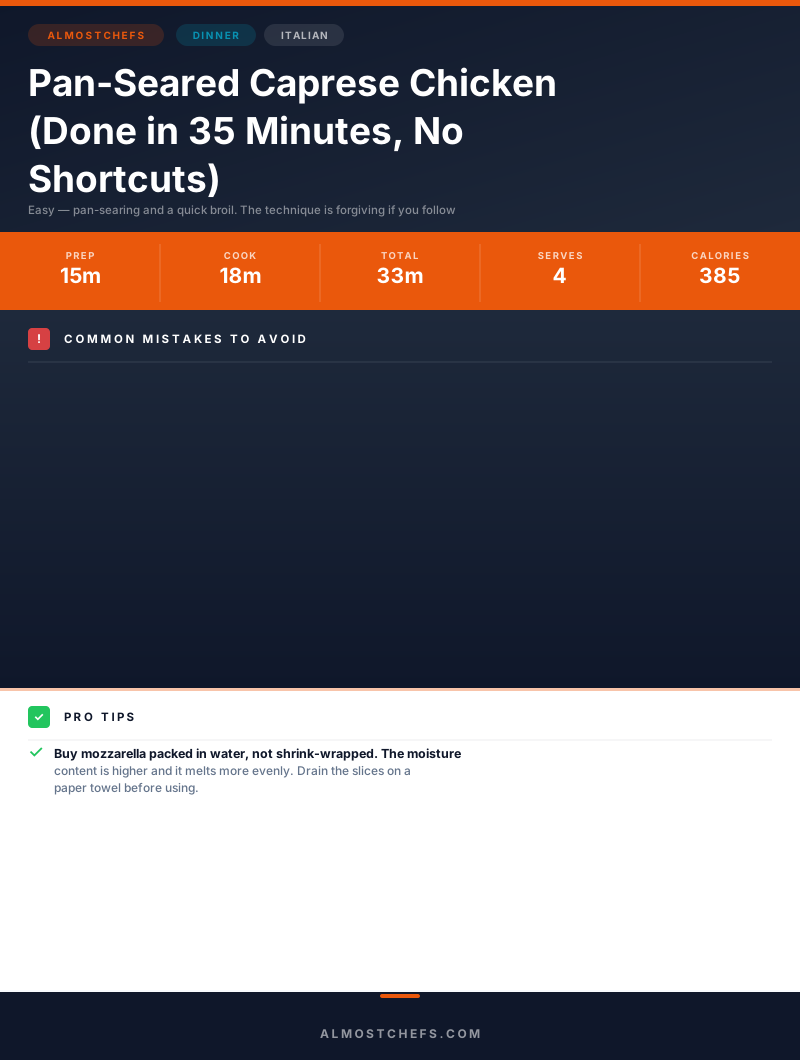
The Science of
Pan-Seared Caprese Chicken (Done in 35 Minutes, No Shortcuts)
We turned everything on this page into a beautiful, flour-proof PDF cheat sheet. Print it out, stick it to your fridge, and never mess up your pan-seared caprese chicken (done in 35 minutes, no shortcuts) again.
*We'll email you the high-res PDF instantly. No spam, just perfectly cooked meals.
AlmostChefs Editorial Team
We translate the internet's most popular cooking videos into foolproof, beginner-friendly written recipes. We analyze multiple methods, test them in our kitchen, and engineer a single "Master Recipe" that gives you the best possible result with the least possible stress.