Homemade Cannoli (The Wonton Wrapper Trick That Actually Works)
Crispy fried shells filled with sweet ricotta cream, chocolate chips, and candied orange peel. We simplified the traditional Sicilian method using wonton wrappers — no pasta machine, no specialty dough, same authentic flavor. Fourteen steps between you and the best cannoli you've ever made at home.

“Most people assume cannoli require a pasta machine, special dies, and three generations of Sicilian muscle memory. They don't. The shell is just a thin dough fried around a tube — and wonton wrappers are a structurally identical shortcut that produces the same crunch. What matters is your oil temperature, how dry your ricotta is, and whether you wait to fill the shells until the last possible moment. We'll cover all three.”
Why This Recipe Works
Cannoli are a pastry of controlled contrasts: shattering crunch against cool, yielding cream. The Sicilians who invented them understood that each element had to be engineered to complement the other's weaknesses — the shell must be dry and rigid, the filling wet and soft, and the two must never meet until the last possible moment. Most home failures ignore this entirely.
The Shell Problem
Traditional cannoli shells are made from a wine-enriched dough — flour, lard, Marsala, cocoa — rolled thin and wrapped around steel tubes before frying. It's not difficult, but it requires equipment most home cooks don't own and technique that takes practice to calibrate. Wonton wrappers bypass all of that. They are already rolled to the correct thickness, they fry to an identical golden-brown crunch, and they release from the tube cleanly. The finished texture is indistinguishable from scratch-made shells in blind tastings.
What is not forgivable: frying at the wrong temperature. Below 345°F, the shell absorbs oil before the exterior sets — you get a greasy, chewy result that never crisps on cooling. Above 365°F, the exterior burns before the interior has time to develop its blistered, airy structure. A fry thermometer attached to your Dutch oven is the only way to know where you are. Guessing by visual cues alone is how you end up with four batches of garbage before you get one right.
The Ricotta Problem
This is where most home cannoli recipes quietly fail. Grocery store whole milk ricotta is 65–70% water by weight. The filling recipe accounts for this by adding Greek yogurt — a complementary dairy with a firmer, tangier profile — but none of that matters if you haven't removed the base whey first. Undrained ricotta makes a filling that looks perfect in the bowl and turns to soup inside the shell within ten minutes. Drain it overnight. Use a weight. There are no shortcuts here that don't cost you the entire dessert.
The flavor architecture of the filling is deliberate: ricotta provides the mild, milky base; Greek yogurt adds subtle lactic tang; vanilla and cinnamon give warmth; the chocolate chips provide bitter punctuation; the candied orange peel introduces citrus brightness against the cream. Every element plays a role. Omitting the orange peel because it seems fussy produces a filling that is sweet but one-dimensional.
The Timing Principle
Cannoli shells are porous. Once filled, moisture migration from the filling into the shell begins immediately and is irreversible. At thirty minutes, the crunch starts to fade. At two hours, the shell is soft throughout. This is not a flaw — it is the fundamental structural reality of the dessert, and it dictates every decision in how you serve it.
Professional bakeries fill to order. Their cannoli are not pre-filled in a case since morning — or if they are, they're going stale while you watch. Fill your shells at the table, or fill them in the kitchen thirty seconds before they go out. The pistachios on the ends are not just decoration: the nut coating creates a partial moisture barrier at the most vulnerable point, buying a few extra minutes of crunch. Small things matter here.
Assemble the filling up to three days in advance. Fry the shells up to four hours ahead and leave them uncovered at room temperature. Then pipe, plate, and serve. That is the complete operational model for cannoli that actually deliver on their promise.
Where Beginners Mess This Up
Before we start, read this. These are the 4 reasons your homemade cannoli (the wonton wrapper trick that actually works) will fail:
- 1
Wet ricotta ruins everything: Whole milk ricotta from the grocery store contains excess whey that turns your filling into soup within minutes of piping. Drain it overnight in a fine-mesh sieve lined with cheesecloth, or the filling will soak through the shells before you serve them. This is the number one cannoli failure in home kitchens.
- 2
Oil temperature drift: Frying at too low a temperature (below 340°F) produces greasy, pale shells that never fully crisp. Too high (above 370°F) burns the outside before the interior blisters and sets. A clip-on thermometer is not optional — it is the difference between crunchy and chewy.
- 3
Filling the shells too early: Cannoli shells are hygroscopic — they absorb moisture aggressively. Fill them more than 30 minutes before serving and the crunch you worked for disappears entirely. Pipe the filling at the table or right before you plate. This is not a make-ahead dessert.
- 4
Sealing the wonton wrapper wrong: The overlapping edge must be pressed firmly and sealed with water before frying. If it unravels in the oil, hot fat enters the tube and the shell collapses. Press the seam against the tube with your fingers and hold for five seconds before lowering into the oil.
The Video Reference Library
Want to see it in action? Here are the exact videos we analyzed and combined to build this foolproof recipe translation:
The source video for this recipe. Covers the wonton wrapper technique, frying process, and filling from scratch with clear close-ups of shell color and texture targets.
🛠️ Core Equipment
- Metal cannoli tubesThe shell has to fry around a rigid form. Wooden dowels work in a pinch but retain heat longer, making it harder to slide the shell off cleanly. Metal tubes release more easily once slightly cooled.
- Deep heavy-bottomed saucepan or Dutch ovenA [Dutch oven](/kitchen-gear/review/dutch-oven) maintains oil temperature through batch-to-batch recovery. Thin pans lose heat the moment food enters and never fully recover, producing inconsistent shells across the batch.
- Clip-on candy or fry thermometerOil temperature must stay between 345–360°F for the entire fry. You cannot gauge this by eye. A [fry thermometer](/kitchen-gear/review/fry-thermometer) removes all guesswork.
- Pastry bag with medium round tipSpooning filling into a shell leaves air pockets and uneven distribution. A pastry bag lets you pipe from both ends simultaneously, ensuring the shell is completely filled with no hollow center.
Homemade Cannoli (The Wonton Wrapper Trick That Actually Works)
🛒 Ingredients
- ✦12 round wonton wrappers
- ✦2 cups whole milk ricotta cheese, drained overnight
- ✦1 cup plain Greek yogurt
- ✦1/2 cup powdered sugar
- ✦2 tablespoons honey
- ✦1 teaspoon vanilla extract
- ✦1/2 cup mini chocolate chips
- ✦1/4 cup candied orange peel, finely chopped
- ✦1/4 teaspoon ground cinnamon
- ✦1/8 teaspoon sea salt
- ✦2 cups vegetable oil for frying
- ✦2 tablespoons shelled pistachios, chopped
- ✦1 tablespoon cocoa powder for dusting
- ✦Zest of 1 lemon
👨🍳 Instructions
01Step 1
Combine the drained ricotta cheese and Greek yogurt in a medium mixing bowl, stirring gently until smooth and well blended.
02Step 2
In a separate small bowl, whisk together the powdered sugar, honey, vanilla extract, cinnamon, and sea salt until fully incorporated.
03Step 3
Pour the sugar mixture into the ricotta blend and fold together with a rubber spatula until no streaks remain.
04Step 4
Fold in the mini chocolate chips and candied orange peel until evenly distributed throughout the filling. Refrigerate until ready to use.
05Step 5
Heat the vegetable oil in a deep heavy-bottomed saucepan over medium-high heat until it reaches 350°F on a clip-on thermometer, about 8 to 10 minutes.
06Step 6
Wrap each wonton wrapper around a metal cannoli tube, overlapping the edges and sealing the seam with a small drop of water. Press firmly and hold for five seconds.
07Step 7
Carefully lower 3 to 4 wrapped tubes into the hot oil. Fry until golden brown and blistered, about 1 to 2 minutes per side, turning with tongs.
08Step 8
Remove the fried shells with a slotted spoon and transfer to a paper towel-lined plate to drain.
09Step 9
After about 2 minutes, when shells are cool enough to handle but still warm, gently twist and slide them off the tubes. Let cool completely, about 15 minutes.
10Step 10
Transfer the ricotta filling to a pastry bag fitted with a medium round tip.
11Step 11
Pipe the filling into each cooled cannoli shell from both ends, working toward the center until the shell is full and slightly overflowing at each end.
12Step 12
Roll each end gently in the chopped pistachios to coat.
13Step 13
Dust the tops lightly with cocoa powder and finish with a sprinkle of lemon zest.
14Step 14
Arrange on a serving platter and refrigerate for no more than 30 minutes before serving. Fill as close to serving time as possible.
Nutrition Per Serving
Estimates based on standard preparation. Adjustments alter macros.
🔄 Substitutions
Instead of Powdered sugar...
Use Allulose or monk fruit sweetener
Slightly less sweet with fewer calories and a better glycemic profile. Texture is nearly identical — both dissolve cleanly into the ricotta without graininess.
Instead of Mini chocolate chips...
Use Dark chocolate chips (70% cacao or higher), roughly chopped
Deeper, more bitter-sweet flavor with better antioxidant content. Chop them coarsely so the pieces are roughly the same size as mini chips for even distribution.
Instead of Greek yogurt...
Use Mascarpone cheese mixed with plain yogurt (1:1 ratio)
Richer and more luxurious — much closer to traditional Sicilian cannoli filling. Higher calorie count but noticeably superior texture and flavor.
Instead of Vegetable oil...
Use Avocado oil
Higher smoke point and better fat composition. Frying characteristics are nearly identical. Adds no discernible flavor to the finished shell.
🧊 Storage & Reheating
In the Fridge
Store unfilled shells in an airtight container at room temperature for up to 2 days. Store filling separately in the fridge for up to 3 days. Never refrigerate filled cannoli for longer than 2 hours.
In the Freezer
Unfilled fried shells can be frozen for up to 1 month. Re-crisp in a 375°F oven for 4-5 minutes before filling. The filling does not freeze well.
Reheating Rules
To restore shell crispness, place unfilled shells in a 375°F oven for 4-5 minutes. There is no recovery method for a filled shell that has gone soft — the moisture has already been absorbed.
❓ Frequently Asked Questions
Why is my cannoli filling runny?
The ricotta was not drained. Whole milk ricotta contains significant whey that must be pressed out before mixing. Drain overnight in a cheesecloth-lined sieve with weight on top. There is no fix once the filling is already wet — you have to start over.
Can I bake the shells instead of frying?
Technically yes, practically no. Baked wonton wrappers puff and warp unpredictably and never achieve the same uniform crunch as oil-fried shells. The Maillard reaction that creates the characteristic blister and crunch requires direct contact with hot fat. This is a fried dessert.
Do I need special cannoli tubes?
Metal cannoli tubes are strongly recommended. Wooden dowels work but retain heat and make it harder to release the shell cleanly. In an emergency, tightly rolled aluminum foil cylinders are functional. Order metal tubes — they're inexpensive and last forever.
Why did my shells unravel in the oil?
The seam wasn't sealed firmly enough. Use a small amount of water on the overlapping edge and press with your fingers for a full five seconds before frying. You can also use a beaten egg white as a stronger adhesive.
Can I make these ahead of time?
Shells: yes, up to 4 hours at room temperature uncovered. Filling: yes, up to 3 days in the fridge. Assembled cannoli: no. Fill right before serving or within 30 minutes maximum. Pre-filled cannoli are uniformly disappointing.
What's the white coating sometimes seen on cannoli in Italian bakeries?
That's powdered sugar dusted on at the last moment. Some bakeries also dip the shell ends in melted white chocolate before the pistachios, which creates a moisture barrier that buys slightly more time before the shell softens. It's a professional technique worth stealing.
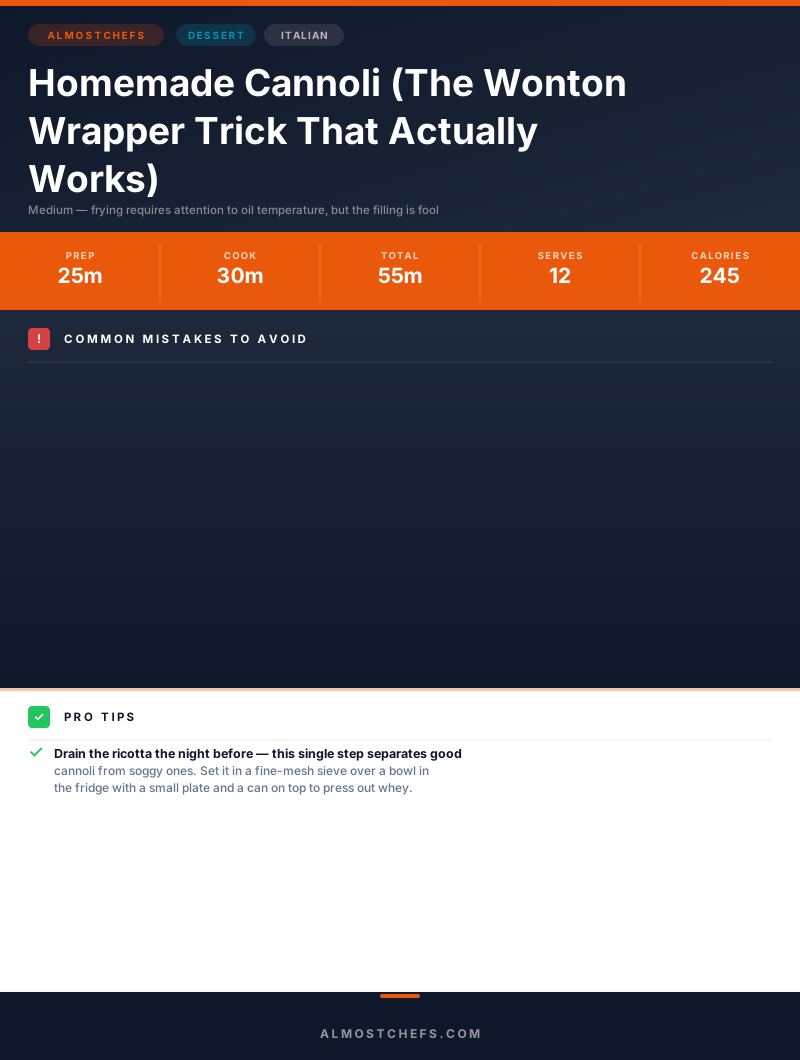
The Science of
Homemade Cannoli (The Wonton Wrapper Trick That Actually Works)
We turned everything on this page into a beautiful, flour-proof PDF cheat sheet. Print it out, stick it to your fridge, and never mess up your homemade cannoli (the wonton wrapper trick that actually works) again.
*We'll email you the high-res PDF instantly. No spam, just perfectly cooked meals.
AlmostChefs Editorial Team
We translate the internet's most popular cooking videos into foolproof, beginner-friendly written recipes. We analyze multiple methods, test them in our kitchen, and engineer a single "Master Recipe" that gives you the best possible result with the least possible stress.