Crispy Homemade Calamari (Restaurant Results in 30 Minutes)
Tender squid rings in a seasoned golden crust, fried to order in under two minutes per batch. We broke down the technique behind every great calamari — the dry squid rule, the oil temperature, the batch size — so you stop getting rubbery rings and start getting the real thing.
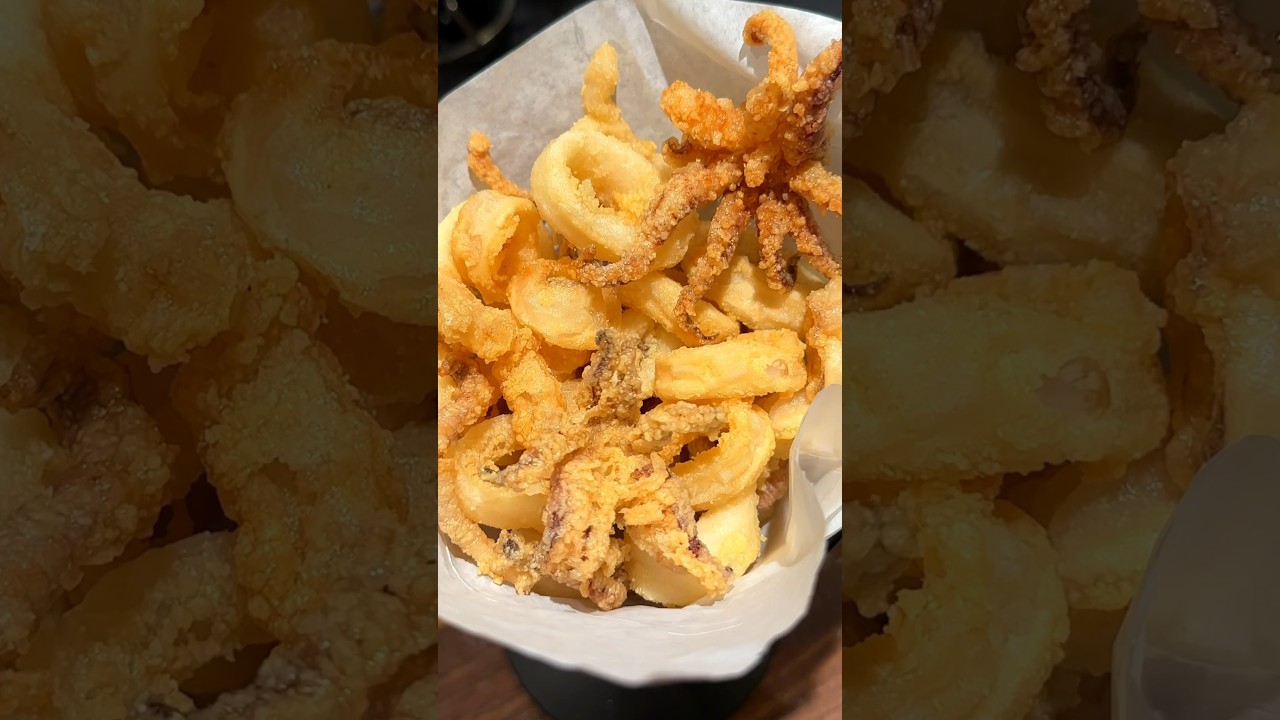
“Most homemade calamari fails for the same two reasons: wet squid and crowded oil. Wet squid steams instead of fries. Crowded oil drops the temperature and you get pale, chewy rings that taste like rubber bands. The fix for both problems takes less than five minutes and no special equipment. Once you understand why the technique works, you'll never order it out again.”
Why This Recipe Works
Calamari is one of those dishes that seems technical until you understand why it works, and then it seems almost embarrassingly simple. There are two ingredients doing all the heavy lifting — squid and hot oil — and exactly one thing that determines whether the result is restaurant-quality or a disappointment: moisture management.
The Squid Has to Be Dry
Fresh squid is roughly 80% water. When a wet surface hits 350°F oil, that water instantly converts to steam. The steam creates a barrier between the squid and the oil, preventing the coating from browning and causing it to separate from the surface. What you get is a pale, greasy shell that slides off when you pick it up.
The solution is violent and unglamorous: paper towels, applied with real pressure, to every piece. Rings, tentacles, everything. Take longer than you think you need to. If you can feel any dampness, keep going. This single step is responsible for more calamari failures than every other mistake combined.
The Coating Architecture
This recipe uses a three-flour blend — all-purpose for structure, whole wheat for a slightly nuttier crumb, and ground almonds for coarseness and texture contrast. The combination produces a coating that has both crunch and flavor, rather than the bland, homogeneous crust you get from all-purpose alone.
The egg-milk wash with lemon juice does two things simultaneously. The egg and milk provide adhesion and color. The lemon juice begins to gently denature the surface proteins of the squid, which slightly tenderizes the exterior before it even hits the oil — a technique borrowed from ceviche chemistry. It's a minor effect, but it adds up.
Temperature Is the Only Variable That Matters
At 350°F, a piece of squid is done in 60 to 90 seconds. The coating browns, the exterior seals, and the interior stays just barely cooked through — tender, sweet, and clean-tasting. Drop below 320°F and you're slow-frying: the coating absorbs oil rather than repelling it, and the squid overcooks by the time the crust develops any color. Exceed 375°F and the crust burns before the egg wash sets.
A deep-fry thermometer is not optional equipment. It's the tool that makes the entire recipe repeatable. Clip it to the side of a Dutch oven — the heavy walls hold temperature better than any other vessel when cold squid hits the oil — and don't add a single piece until the readout says exactly 350°F.
Batch Size Is a Form of Temperature Control
Every piece of cold squid you add to the oil lowers its temperature. A large batch drops the oil from 350°F to below 300°F before the second piece is even coated. Small batches — six to eight rings — allow the oil to recover between additions and stay in the functional frying window throughout the cook.
This is also why you must let the oil return to 350°F between batches. It takes 60 to 90 seconds. It feels like waiting for nothing. It is the difference between crispy and sad.
The Finish Makes the Dish
The garlic-parsley toss at the end is not garnish. It's seasoning. Raw garlic tossed onto calamari that just left 350°F oil softens from the residual heat — it loses its sharp bite and becomes savory and aromatic without burning. The parsley adds brightness that cuts through the richness of the fried coating. Skip it and the dish tastes flat. Add it and it tastes finished.
Serve immediately. Calamari is not a dish that waits.
Where Beginners Mess This Up
Before we start, read this. These are the 4 reasons your crispy homemade calamari (restaurant results in 30 minutes) will fail:
- 1
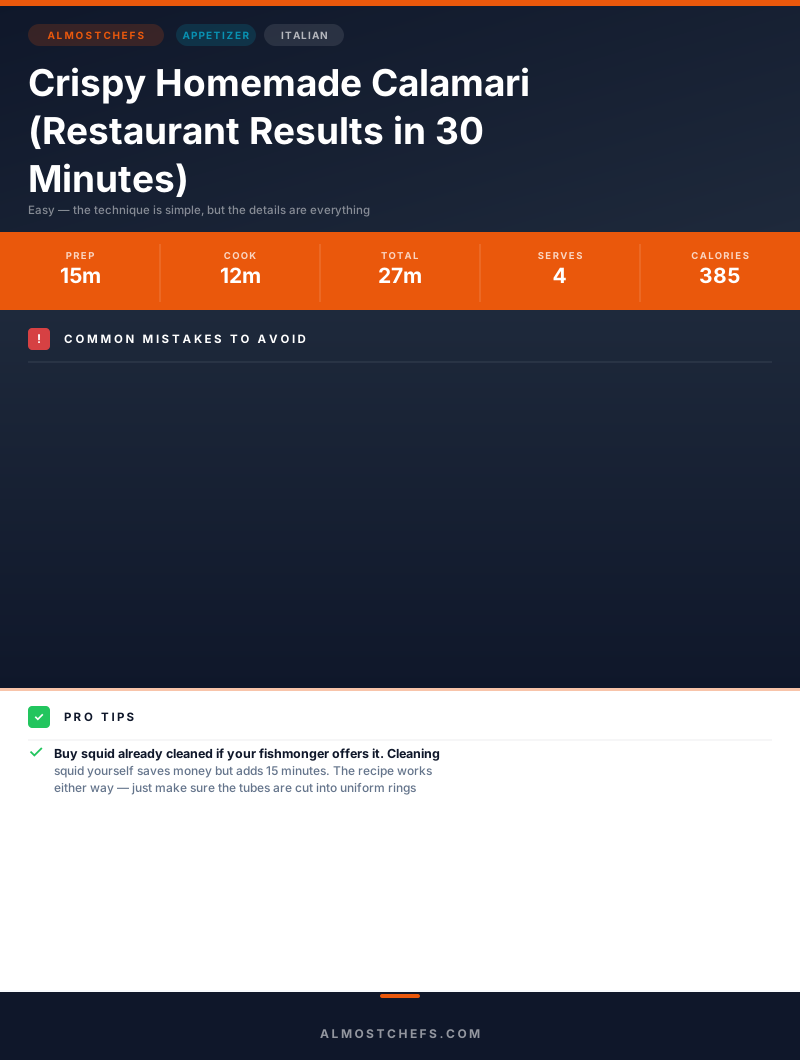
Not drying the squid completely: Moisture on the surface of the squid creates steam the instant it hits hot oil. That steam prevents the coating from adhering and turns your crust into a soggy shell that slides off. Pat every piece dry with paper towels — rings, tentacles, everything — before you even open the flour.
- 2
Frying in batches that are too large: Oil has a finite amount of thermal energy stored in it. Drop too many cold, wet squid pieces in at once and the temperature plummets from 350°F to below 300°F. Below 300°F you're braising, not frying. The result is greasy, pale calamari with no crunch. Small batches — 6 to 8 rings at a time — keep the oil hot and the crust crispy.
- 3
Frying more than 90 seconds per batch: Squid is 80% water by weight. At high heat it cooks almost instantly — the window between tender and rubbery is roughly 30 seconds. One minute is ideal. Ninety seconds is the outer limit. Beyond that, the proteins tighten into something resembling a rubber band. Set a timer.
- 4
Skipping the temperature check: Guessing the oil temperature produces inconsistent results. Too hot and the crust burns before the squid cooks. Too cool and the coating absorbs oil. A deep-fry thermometer removes all the guesswork — 350°F is the exact number, and it matters.
The Video Reference Library
Want to see it in action? Here are the exact videos we analyzed and combined to build this foolproof recipe translation:
The primary reference for this technique — clear walkthrough of the dry-dredge method, correct oil temperature, and the batch size that keeps the crust intact.
🛠️ Core Equipment
- Deep skillet or Dutch ovenDeep sides contain oil splatter and maintain heat more consistently than a shallow pan. A [Dutch oven](/kitchen-gear/review/dutch-oven) is ideal — the heavy walls hold temperature when cold squid hits the oil.
- Deep-fry thermometer350°F is non-negotiable. Without a thermometer you are guessing, and guessing produces rubber or grease. Clip it to the side of the pot and don't start frying until it reads exactly 350°F.
- Wire rack over a sheet panPaper towels trap steam under the calamari and soften the crust within seconds. A wire rack lets air circulate around every piece, keeping the coating crispy while the batch drains.
- Two shallow bowls for dredgingOne for the egg wash, one for the flour mixture. The assembly line — dry, egg, flour, oil — needs to be fast and uninterrupted. Set both bowls next to the pot before you start heating the oil.
Crispy Homemade Calamari (Restaurant Results in 30 Minutes)
🛒 Ingredients
- ✦1.5 pounds fresh squid, cleaned and cut into rings and tentacles
- ✦1 cup all-purpose flour
- ✦0.5 cup whole wheat flour
- ✦0.25 cup ground almonds
- ✦1 teaspoon fine sea salt
- ✦0.5 teaspoon freshly ground black pepper
- ✦0.5 teaspoon garlic powder
- ✦0.25 teaspoon cayenne pepper
- ✦1 large egg
- ✦0.25 cup whole milk
- ✦2 tablespoons fresh lemon juice
- ✦2 cups avocado oil or light olive oil for frying
- ✦4 fresh lemon wedges for serving
- ✦0.5 cup marinara sauce for dipping
- ✦3 tablespoons fresh Italian parsley, finely chopped
- ✦2 cloves garlic, minced
👨🍳 Instructions
01Step 1
Pat the squid rings and tentacles thoroughly dry with paper towels on all sides.
02Step 2
Whisk together the all-purpose flour, whole wheat flour, ground almonds, salt, black pepper, garlic powder, and cayenne pepper in a large shallow bowl.
03Step 3
Combine the egg, whole milk, and fresh lemon juice in a second shallow bowl and beat until fully blended.
04Step 4
Heat the avocado oil in a deep skillet or Dutch oven over medium-high heat until it reaches exactly 350°F on a deep-fry thermometer, about 8 minutes.
05Step 5
Working in small batches of 6 to 8 pieces, dip each squid piece into the egg mixture to coat, then dredge in the flour mixture until completely covered. Shake off any excess flour.
06Step 6
Carefully lower the coated squid into the hot oil. Fry until golden brown and crispy, about 1 to 1.5 minutes per batch, stirring once or twice to prevent sticking.
07Step 7
Transfer the cooked calamari to a wire rack set over a sheet pan to drain. Return the oil to 350°F before starting the next batch.
08Step 8
While the final batches fry, warm the marinara sauce gently in a small saucepan over low heat.
09Step 9
Toss all finished calamari with the minced garlic and fresh Italian parsley in a large bowl.
10Step 10
Arrange on a serving platter alongside lemon wedges and marinara sauce. Serve immediately.
Nutrition Per Serving
Estimates based on standard preparation. Adjustments alter macros.
🔄 Substitutions
Instead of Avocado oil (frying)...
Use Air-frying method with 2 tablespoons cooking spray
Reduces fat content by roughly 85%. Spray the coated squid lightly and air fry at 400°F for 8-10 minutes, flipping once. Slightly less rich but genuinely crispy.
Instead of All-purpose and whole wheat flour blend...
Use Chickpea flour (0.75 cup total)
Naturally gluten-free, adds a nutty savory flavor, and has higher protein content. The coating is slightly denser but still crispy. Good option for gluten-sensitive guests.
Instead of Marinara sauce...
Use Greek yogurt with fresh dill, parsley, and lemon
Tangier, fresher, and lower sodium. Mix 0.5 cup Greek yogurt with 2 tablespoons fresh dill, 2 tablespoons fresh parsley, and a squeeze of lemon. Better with the whole wheat coating than marinara is.
Instead of Ground almonds in breading...
Use Ground flaxseed (0.25 cup)
Adds omega-3s and a subtle nuttier note. Minimal flavor change. The coating color skews slightly darker — don't mistake it for burning.
🧊 Storage & Reheating
In the Fridge
Store in an airtight container for up to 2 days. It will lose its crunch — that's unavoidable. Reheat in the oven or air fryer, not the microwave.
In the Freezer
Freeze cooked calamari in a single layer on a sheet pan until solid, then transfer to a zip-lock bag. Keeps for up to 1 month. Re-fry from frozen at 375°F for 2-3 minutes.
Reheating Rules
Spread on a wire rack over a sheet pan and reheat at 400°F for 5-7 minutes. The oven restores most of the crunch. Microwaving turns it into a steamed rubber mess — don't do it.
❓ Frequently Asked Questions
Why is my calamari rubbery?
You fried it too long. Squid has a very narrow window — about 60 to 90 seconds at 350°F — before the proteins seize up and become rubbery. The fix is a reliable thermometer and a timer. Don't trust your eye for doneness; trust the clock.
Can I use frozen squid?
Yes, but thaw it completely overnight in the refrigerator and then dry it aggressively with paper towels. Frozen squid releases more water than fresh, which means the drying step is even more critical. Don't try to speed-thaw in warm water — it degrades the texture.
Why does my coating fall off in the oil?
Either the squid was still wet when you dredged it, or you skipped the resting step after dredging. Both cause the same problem — the coating has no mechanical grip on the surface and floats off the moment it hits hot oil. Dry completely, dredge, rest 60 seconds, then fry.
Can I make calamari ahead of time?
You can dredge the squid up to 30 minutes ahead and keep it on a wire rack in the fridge uncovered. Do not fry ahead — calamari is a last-minute dish by nature. The crust degrades within minutes of leaving the oil.
What oil is best for frying calamari?
Avocado oil is the gold standard — high smoke point (520°F), neutral flavor, stable at frying temperatures. Light olive oil works. Vegetable or canola oil are acceptable. Extra-virgin olive oil has too low a smoke point and will burn before you reach 350°F.
How do I keep calamari warm while frying in batches?
Set your oven to 200°F and place the wire rack inside. The low heat keeps finished batches warm without continuing to cook the squid. Don't go above 225°F or you'll push past the rubbery threshold.
The Science of
Crispy Homemade Calamari (Restaurant Results in 30 Minutes)
We turned everything on this page into a beautiful, flour-proof PDF cheat sheet. Print it out, stick it to your fridge, and never mess up your crispy homemade calamari (restaurant results in 30 minutes) again.
*We'll email you the high-res PDF instantly. No spam, just perfectly cooked meals.
AlmostChefs Editorial Team
We translate the internet's most popular cooking videos into foolproof, beginner-friendly written recipes. We analyze multiple methods, test them in our kitchen, and engineer a single "Master Recipe" that gives you the best possible result with the least possible stress.