Buttery Braised Cabbage (The Side Dish That Steals the Show)
A deeply caramelized, tender-crisp braised cabbage cooked low and slow in butter and broth until the leaves turn sweet, silky, and golden at the edges. We broke down the most-watched cabbage videos to isolate the one technique that turns a 40-cent vegetable into something people ask for the recipe.
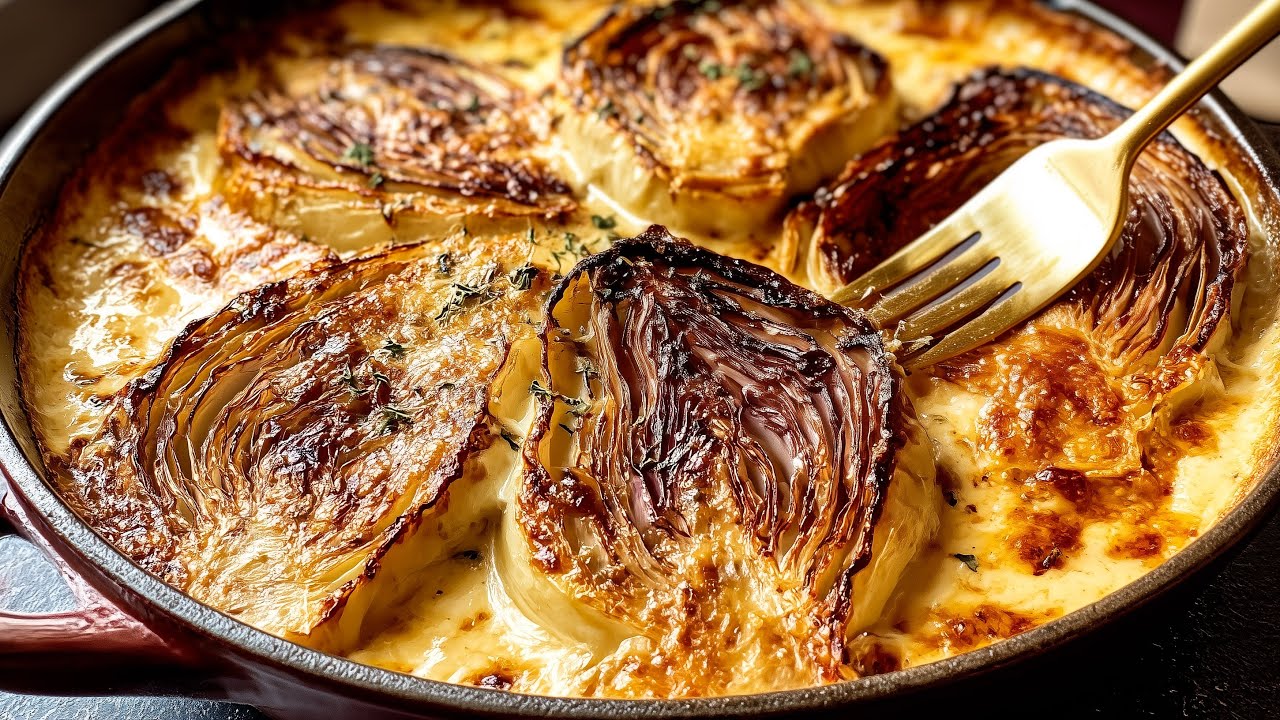
“Cabbage has a reputation problem. Most people learned it from a pot of boiling water on a school cafeteria stove, where it went gray and sulfurous and smelled like regret. That version of cabbage is a crime. The real version — cut thick, cooked slow in a heavy pan with butter, a splash of broth, and enough patience to let the sugars caramelize — tastes nothing like it. We studied the most-watched cabbage technique videos to find out what actually separates the sad boiled version from the kind that disappears off the plate.”
Why This Recipe Works
Cabbage is the most underestimated vegetable in any grocery store. It costs almost nothing, stores for weeks without complaint, and contains enough natural sugar — roughly 3.5 grams per cup — to caramelize dramatically when treated with even basic technique. The problem is that almost no one treats it with technique. They boil it. And boiled cabbage is an argument for not eating vegetables.
The Chemistry of Caramelization
Cabbage is 92% water. Every cooking method you apply to it is fundamentally a water-removal strategy, and the method you choose determines whether you end up with something delicious or something depressing. Boiling adds more water to an already water-saturated vegetable, diluting its natural sugars and releasing sulfur compounds that produce that distinctive, unpleasant aroma. It is the worst possible approach for flavor development.
Dry-heat cooking in a heavy cast iron skillet does the opposite. The high surface temperature of the pan drives moisture out of the cut face of the cabbage rapidly, and as that moisture evaporates, the natural sugars concentrate. At around 310°F, those concentrated sugars undergo the Maillard reaction — the same browning process responsible for the flavor of seared steak, toasted bread, and roasted coffee. The result is a caramelized crust that tastes sweet, nutty, and savory simultaneously. This is the transformation that makes braised cabbage worth eating.
The key to achieving this crust without burning the exterior while the interior stays raw is patience and heat management. You start at medium-high to generate the initial caramelization, then drop to medium-low and add broth to create a controlled steam environment that finishes the interior gently while the outside holds its color.
Why Thickness Is Non-Negotiable
The most common mistake in every cabbage recipe on the internet is the instruction to slice it thin. Thin cuts have their place — in slaws, in quick stir-fries, in situations where raw texture is the point. They have no place in a braise. A thin cut reaches 100% cooked in under three minutes at medium heat, which is not enough time for meaningful caramelization to develop on the cut surface. You get pale, limp, watery cabbage that collapses into itself.
A thick cut — three-quarters of an inch at minimum — gives the surface time to develop color while the interior slowly comes up to temperature. The difference in eating experience is not subtle. One is a garnish. The other is a dish. Use a sharp chef's knife to cut cleanly through the dense leaves, and resist the temptation to shred.
The Butter-Broth System
Butter serves two purposes here. The milk solids in butter brown alongside the cabbage through the Maillard reaction, adding a nutty, toasty layer of flavor that olive oil alone cannot replicate. The fat also carries fat-soluble flavor compounds from the garlic, caraway seeds, and paprika far more effectively than water-based cooking liquid. This is why you bloom the aromatics in fat before adding the broth.
The broth addition is not decoration — it is the braising medium that finishes the interior. A half-cup is enough to create the steam environment without waterlogging the cabbage. It reduces down over the final 8-10 minutes into a concentrated, silky glaze that coats every leaf. If you have been eating cabbage your whole life without ever experiencing this texture, this is the step you have been missing.
The Acid Finish
Braised cabbage is sweet — almost aggressively so. The caramelization process converts starches to sugars, and by the time the broth has reduced, the natural sugars in the leaves have intensified considerably. Without acid, the dish tastes flat, rich, and one-dimensional. A tablespoon and a half of apple cider vinegar added off-heat at the end provides the brightness that makes the other flavors snap into focus. It is the same principle behind squeezing lemon on fish or adding lime to guacamole — the acid does not make the dish sour, it makes every other flavor more itself.
Add it off-heat to preserve its sharp, volatile character. Heat destroys the acidity you are trying to introduce. This is a 10-second step that makes a 40% difference in the final result. Do not skip it, and do not add it early.
Where Beginners Mess This Up
Before we start, read this. These are the 4 reasons your buttery braised cabbage (the side dish that steals the show) will fail:
- 1
Cutting the cabbage too thin: Paper-thin shreds cook in under three minutes and go limp and watery before any caramelization can develop. You want wedges or thick ribbons — at least a half-inch width — so the leaves have structural integrity while the sugars have time to develop color and depth on the cut surfaces. Thin cuts are for slaws. Thick cuts are for cooking.
- 2
Cooking on high heat from the start: High heat at the beginning drives off moisture too fast, leaving the exterior scorched before the interior softens. Cabbage is mostly water — about 92% — and that water needs to slowly release and evaporate so the natural sugars concentrate and caramelize rather than steam the leaves into mush. Start medium-high to build initial color, then drop to medium-low and let time do the work.
- 3
Stirring constantly: Every time you move the cabbage, you interrupt the Maillard reaction forming on the cut surface. Leave it undisturbed for 3-4 minutes per side so a golden crust develops. That crust is not burning — it is flavor. Resist the spatula.
- 4
Skipping the acid finish: Cabbage is naturally sweet when cooked down, almost aggressively so. A splash of apple cider vinegar or lemon juice at the end cuts the sweetness, brightens the flavor, and makes the whole dish taste more complete. Leaving it out makes the final dish taste flat and one-dimensional.
The Video Reference Library
Want to see it in action? Here are the exact videos we analyzed and combined to build this foolproof recipe translation:
A focused breakdown of the slow-caramelization method with clear visuals on the color progression you are targeting — from raw white to pale gold to deep amber at the edges. The best reference for judging doneness.
Demonstrates the thick-cut method and explains why stirring frequency matters. Useful for understanding the relationship between heat level and moisture release.
Covers the acid-finish technique and seasoning layering. Includes a comparison of the boiled versus braised result that makes the case for this method more clearly than any written recipe can.
🛠️ Core Equipment
- Large cast iron skillet or heavy stainless panYou need a pan that holds and distributes heat evenly across the entire surface. A thin non-stick pan creates hot spots that scorch the outer leaves while leaving the interior underdone. Cast iron retains heat so well that the cabbage keeps cooking even after you reduce the flame.
- Sharp chef's knifeCabbage is dense and resists a dull blade, which leads to uneven cuts and bruised edges. Clean cuts mean the cabbage caramelizes evenly. A sharp knife is not a luxury here — it is a technique requirement.
- Wooden spoon or flat spatulaFor the infrequent turning. You want something wide enough to flip large wedge sections without breaking them apart. A thin spatula lets you get underneath the caramelized crust without tearing it off the leaf.
Buttery Braised Cabbage (The Side Dish That Steals the Show)
🛒 Ingredients
- ✦1 medium green cabbage (about 2 pounds), outer leaves removed
- ✦3 tablespoons unsalted butter, divided
- ✦1 tablespoon olive oil
- ✦1 large yellow onion, thinly sliced
- ✦4 cloves garlic, thinly sliced
- ✦1/2 cup chicken or vegetable broth
- ✦1.5 tablespoons apple cider vinegar
- ✦1 teaspoon caraway seeds (optional but recommended)
- ✦1/2 teaspoon smoked paprika
- ✦1/2 teaspoon crushed red pepper flakes
- ✦1 teaspoon sea salt, plus more to taste
- ✦1/2 teaspoon freshly ground black pepper
- ✦2 tablespoons fresh parsley, roughly chopped
👨🍳 Instructions
01Step 1
Quarter the cabbage through the core, then cut each quarter into 3/4-inch thick wedges or wide ribbons, keeping the core intact on wedges so they hold together.
02Step 2
Heat 2 tablespoons butter and the olive oil in a large cast iron skillet over medium-high heat until the butter foams and the foam subsides.
03Step 3
Add the cabbage in a single layer, cut side down. Do not crowd the pan — work in batches if necessary. Cook undisturbed for 4-5 minutes until deep golden brown on the bottom.
04Step 4
Flip the cabbage pieces and cook the other cut side for another 3-4 minutes until similarly golden. Transfer to a plate if working in batches.
05Step 5
Reduce heat to medium. Add the remaining tablespoon of butter and the sliced onion. Cook for 5-6 minutes, stirring occasionally, until the onion is soft and translucent.
06Step 6
Add the garlic and caraway seeds. Cook for 1 minute until fragrant.
07Step 7
Return all the cabbage to the pan. Add the broth, smoked paprika, red pepper flakes, salt, and black pepper. Stir gently to combine.
08Step 8
Cover loosely and cook on medium-low for 8-10 minutes until the cabbage is completely tender and the broth has reduced to a glossy, concentrated sauce clinging to the leaves.
09Step 9
Remove from heat. Drizzle the apple cider vinegar over the cabbage and toss to coat.
10Step 10
Taste and adjust seasoning. Scatter fresh parsley over the top and serve immediately.
Nutrition Per Serving
Estimates based on standard preparation. Adjustments alter macros.
🔄 Substitutions
Instead of Unsalted butter...
Use Vegan butter or refined coconut oil
Vegan butter performs nearly identically for caramelization. Refined coconut oil works but adds subtle sweetness. Unrefined coconut oil will make the whole dish taste like a tropical beach.
Instead of Chicken broth...
Use Vegetable broth or dry white wine
Vegetable broth keeps the dish fully plant-based with no flavor compromise. Dry white wine adds complexity and a faint acidity that reduces the need for the vinegar finish.
Instead of Apple cider vinegar...
Use Fresh lemon juice or white wine vinegar
Lemon juice is slightly brighter and more citrus-forward. White wine vinegar is cleaner and more neutral. Both achieve the same acid balance — use the same quantity.
Instead of Green cabbage...
Use Savoy cabbage or napa cabbage
Savoy has a more tender, crinkled leaf and cooks slightly faster — reduce the braise time by 2-3 minutes. Napa is the most delicate and best suited to a quick sauté rather than a full braise.
🧊 Storage & Reheating
In the Fridge
Store in an airtight container for up to 4 days. The flavors deepen significantly by day two.
In the Freezer
Freeze in portions for up to 2 months. Texture becomes slightly softer after thawing — best used in soups or stews rather than as a standalone side.
Reheating Rules
Reheat covered in a skillet over medium-low heat with a splash of broth or water for 5-7 minutes. Avoid the microwave — it drives off the moisture unevenly and makes the cabbage rubbery.
❓ Frequently Asked Questions
Why does my cabbage smell bad when I cook it?
Sulfur compounds in cabbage — the same compounds responsible for its distinct aroma — release rapidly when boiled or steamed at high heat for a long time. The quick, dry-heat caramelization method minimizes sulfur release by cooking the cabbage faster and at the right temperature. If you smell sulfur, your heat is too low and you are effectively slow-steaming rather than caramelizing.
Can I use pre-shredded bagged cabbage?
For this specific recipe, no. Pre-shredded cabbage is cut far too thin to caramelize properly and will turn soggy within minutes of hitting the pan. The thick-cut technique is the entire point. Buy a whole head and cut it yourself — it takes four minutes and makes a fundamental difference.
Is this dish actually healthy?
Cabbage is one of the most nutrient-dense vegetables per dollar available. It is high in vitamin C, vitamin K, and fiber, and genuinely low in calories. The butter adds fat, but not a problematic amount for a side dish. This is not a salad, but it is not a guilty pleasure either.
What protein pairs well with braised cabbage?
Braised cabbage is structurally designed to sit next to pork — sausage, pork chops, or roasted pork shoulder. It also pairs well with salmon, chicken thighs, and fried eggs if you are keeping it vegetarian. The sweetness and acidity of the cabbage cut through fatty proteins particularly well.
How do I know when the cabbage is done?
The leaves should be completely tender when pierced with a knife — no resistance at the core. The edges should be deeply golden or amber, and the broth should have reduced to a thick, glossy coating on the leaves rather than pooling in the bottom of the pan. If it is still pale and the broth is still liquid, cook longer uncovered.
Can I make this ahead for a dinner party?
Yes, and it is actually a smart move. Cook through to completion, then refrigerate. Reheat gently in the covered skillet with a splash of broth just before serving. The flavors improve with rest and you free up a burner during service.

The Science of
Buttery Braised Cabbage (The Side Dish That Steals the Show)
We turned everything on this page into a beautiful, flour-proof PDF cheat sheet. Print it out, stick it to your fridge, and never mess up your buttery braised cabbage (the side dish that steals the show) again.
*We'll email you the high-res PDF instantly. No spam, just perfectly cooked meals.
AlmostChefs Editorial Team
We translate the internet's most popular cooking videos into foolproof, beginner-friendly written recipes. We analyze multiple methods, test them in our kitchen, and engineer a single "Master Recipe" that gives you the best possible result with the least possible stress.