Silky Butternut Squash Soup (One-Pot, No Tricks)
A velvety, naturally sweet butternut squash soup built on roasted aromatics, coconut milk, and warming spices. We broke down the most popular methods to find the one technique that delivers restaurant-level silkiness every time — in under an hour, in a single pot.
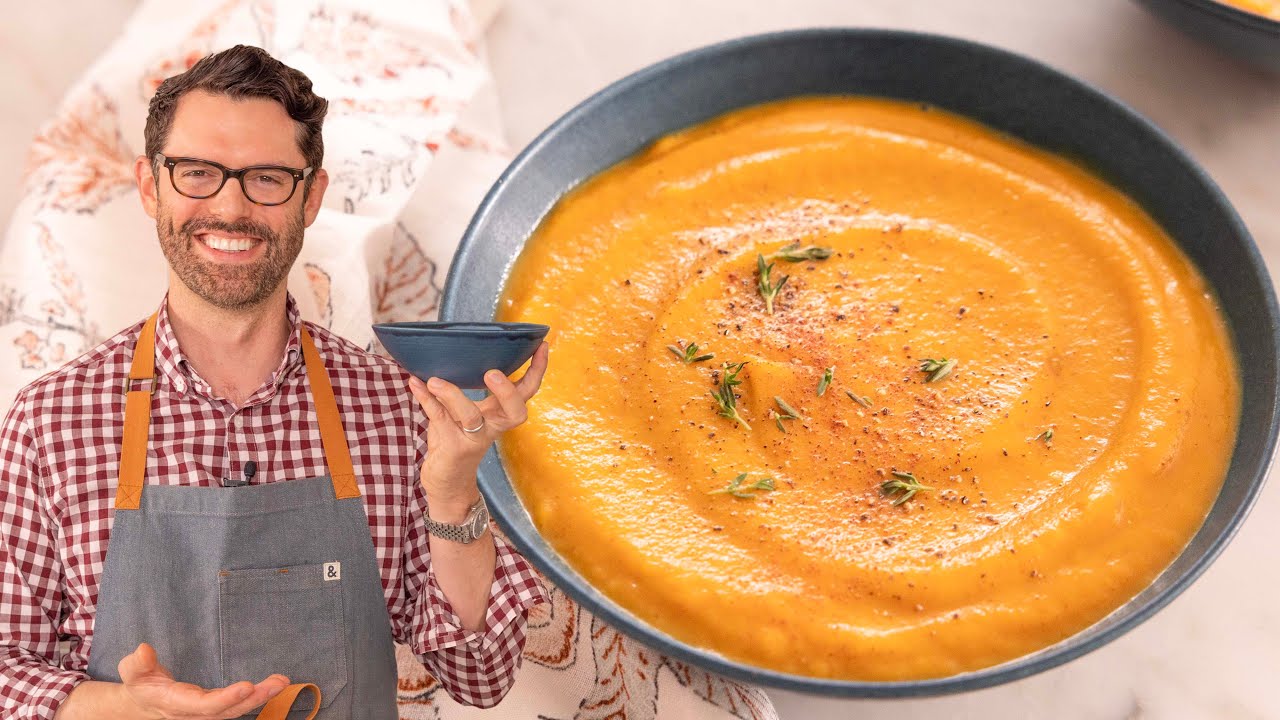
“Most butternut squash soup fails in one of two ways: it's thin and watery with raw-tasting spices, or it's thick and grainy because the squash was never fully tenderized. The fix isn't more ingredients — it's understanding two things: why the squash needs to fully surrender to the broth before you blend, and why the spices go in after, not before.”
Why This Recipe Works
Butternut squash soup sits in a frustrating category of recipes that seem simple until they're not. The ingredient list is short. The technique is basic. And yet the results range from transcendent to disappointing based on decisions that most recipes never explain. The difference comes down to three variables: the state of the squash before you blend it, the timing of the spices, and what the coconut milk is actually doing in the pot.
The Squash Must Fully Surrender
Butternut squash is built to last. Its dense, fibrous cell structure is what makes it a storage vegetable — it survives months in a root cellar without rotting. That same structure is the enemy of smooth soup. Blending squash that is 85% tender instead of 100% tender produces a soup with a subtle but persistent graininess, like there's sand mixed into the velvet. No amount of additional blending fixes this. The cell walls have to break down in hot liquid before you can blend them into submission.
The test is simple and unambiguous: push a fork into a cube from the bottom of the pot. It should slide through with the resistance of room-temperature butter — not cold butter, not soft clay. If you feel any push-back, put the lid back on and give it five more minutes. There is no penalty for overcooking squash before blending. There is a significant penalty for undercooking it.
Why the Spices Go in Last
This is the step that separates competent soup from excellent soup. Ground spices — nutmeg, cinnamon, cumin, cayenne — are intensely volatile. Their aromatic compounds evaporate when subjected to prolonged high heat. Simmering them for 25 minutes in broth doesn't build flavor; it destroys the most interesting parts of it and leaves behind the heavier, slightly harsh base notes.
By adding the ground spices after blending, you expose them to moderate heat for only 3-4 minutes, just long enough for the fat from the coconut milk to absorb and carry the volatile compounds throughout the soup. The result tastes bright and layered rather than flat. The whole spices — thyme and bay leaf — are the exception. They can handle the long simmer because their aromatic compounds are locked inside intact plant structures that release slowly.
The Fat Architecture
Full-fat coconut milk is doing two jobs. First, the fat emulsifies during blending, creating a suspension that gives the soup its characteristic velvet texture. Second, fat is a flavor carrier — the spices added post-blend dissolve into the coconut fat and distribute evenly throughout the pot in a way they couldn't in a purely water-based liquid. Light coconut milk has insufficient fat content for either job. The texture becomes thin, and the spices taste like they're floating in the soup rather than integrated into it.
The almond milk added at the end is purely a consistency dial. It has no fat and minimal flavor — it's there to let you adjust thickness without adding richness you may not want. If the soup is already at your preferred consistency after blending with coconut milk, you can skip it entirely.
The Garnish Is Structural
Sage and pumpkin seeds aren't decorative. Butternut squash soup is uniformly soft — every spoonful has the same temperature, the same texture, the same resistance. The pumpkin seeds provide the one textural contrast in an otherwise monolithic bowl. Toast them in a dry skillet for two minutes before serving and they go from neutral to nutty and deeply savory. The fresh sage adds a herbal sharpness that cuts through the fat and sweetness right at the moment of eating.
This is a soup that rewards the small decisions. The big technique is straightforward enough that a first-time cook can execute it. What separates a good bowl from a great one is whether those last details — fully cooked squash, post-blend spicing, toasted seeds — actually happened.
Where Beginners Mess This Up
Before we start, read this. These are the 4 reasons your silky butternut squash soup (one-pot, no tricks) will fail:
- 1
Adding spices too early: Ground nutmeg, cinnamon, and cumin turn bitter when simmered for 25 minutes in liquid. They should go in after blending, when the heat is lower and the fat from the coconut milk can properly carry the aromatic compounds. Early spicing produces flat, slightly harsh flavor.
- 2
Under-cooking the squash: Butternut squash must be completely fork-tender before blending — not just soft on the outside. If there's any resistance at the center, you will get a grainy soup no matter how long you blend. A fork should slide through a cube with zero effort.
- 3
Blending hot soup in a standing blender without venting: Steam expands violently in a sealed blender. Either use an immersion blender directly in the pot, or vent the standing blender lid with a towel pressed over it. Skipping this step is how people end up with soup on the ceiling.
- 4
Skipping the final simmer: After adding the spices and almond milk post-blend, the soup needs 3-4 more minutes on heat for the flavors to integrate. Serving immediately after blending means the spices taste separate, not cohesive.
The Video Reference Library
Want to see it in action? Here are the exact videos we analyzed and combined to build this foolproof recipe translation:
The primary method this recipe is built around. Clear breakdown of the simmer-then-blend sequence, with good visual cues for when the squash is correctly tender.
🛠️ Core Equipment
- Large heavy-bottomed potEven heat distribution prevents the onion and garlic base from scorching. A thin pot will burn the aromatics before they soften properly. A [Dutch oven](/kitchen-gear/review/dutch-oven) is ideal.
- Immersion blenderThe safest and most efficient tool for pureeing hot soup. A good [immersion blender](/kitchen-gear/review/immersion-blender) eliminates the danger of transferring scalding liquid to a standing blender and produces a uniformly smooth result.
- Fine-mesh sieve (optional)If you want an ultra-silky, restaurant-grade texture, strain the blended soup through a fine-mesh sieve. It removes any remaining fibrous squash material that even high-powered blenders leave behind.
- LadleFor controlled portioning when serving. Butternut soup is thick — a wide ladle prevents spilling and keeps your garnish work clean.
Silky Butternut Squash Soup (One-Pot, No Tricks)
🛒 Ingredients
- ✦1 large butternut squash, about 3 pounds, peeled and cubed
- ✦2 tablespoons extra virgin olive oil
- ✦3 medium yellow onions, finely diced
- ✦4 cloves garlic, minced
- ✦1 tablespoon fresh ginger, grated
- ✦6 cups low-sodium vegetable broth
- ✦1 can full-fat coconut milk, 14 ounces
- ✦1 teaspoon ground nutmeg
- ✦1/2 teaspoon ground cinnamon
- ✦1/4 teaspoon cayenne pepper
- ✦1/2 teaspoon ground cumin
- ✦2 fresh thyme sprigs
- ✦1 bay leaf
- ✦1 cup unsweetened almond milk
- ✦Sea salt and freshly cracked black pepper to taste
- ✦2 tablespoons fresh sage, chopped, for garnish
- ✦1 tablespoon pumpkin seeds, for garnish
👨🍳 Instructions
01Step 1
Heat the olive oil in a large pot over medium-high heat until it shimmers, about 1 minute.
02Step 2
Add the diced onions and sauté, stirring frequently, until translucent and softened, about 6 minutes.
03Step 3
Stir in the minced garlic and grated ginger, cooking until fragrant, approximately 1 minute.
04Step 4
Pour in the vegetable broth and add the cubed butternut squash, thyme sprigs, and bay leaf. Bring to a gentle boil.
05Step 5
Reduce heat to medium and simmer uncovered until the squash is completely tender and easily pierced with a fork, about 20-25 minutes.
06Step 6
Remove from heat. Discard the thyme sprigs and bay leaf using a slotted spoon.
07Step 7
Pour in the coconut milk and stir to combine.
08Step 8
Use an immersion blender to puree the soup directly in the pot until completely smooth, about 2-3 minutes.
09Step 9
Return the blended soup to medium heat. Whisk in the nutmeg, cinnamon, cumin, and cayenne until fully incorporated.
10Step 10
Stir in the almond milk to reach your desired consistency. Add more for a thinner soup, less for a thicker one.
11Step 11
Season generously with sea salt and freshly cracked black pepper.
12Step 12
Simmer gently for 3-4 minutes to allow the flavors to meld.
13Step 13
Ladle into bowls and finish each serving with chopped fresh sage and a sprinkle of pumpkin seeds.
Nutrition Per Serving
Estimates based on standard preparation. Adjustments alter macros.
🔄 Substitutions
Instead of Full-fat coconut milk...
Use Light coconut milk or Greek yogurt
Reduces saturated fat but produces a slightly thinner, tangier soup. Greek yogurt must be stirred in off heat to prevent curdling.
Instead of Vegetable broth...
Use Bone broth
Adds deeper savory flavor and collagen. Note this makes the soup no longer vegetarian. Use low-sodium bone broth to keep the salt level manageable.
Instead of Fresh ginger...
Use Turmeric with a pinch of black pepper
Earthier and more peppery than ginger. Add black pepper specifically — it activates turmeric's curcumin compounds and significantly boosts anti-inflammatory properties.
Instead of Sea salt...
Use Low-sodium miso paste
Stir in 1-2 teaspoons at the end, off heat. Adds umami depth and probiotic benefit. Do not boil after adding — heat kills the active cultures.
🧊 Storage & Reheating
In the Fridge
Store in an airtight container for up to 4 days. The soup thickens considerably when cold — add a splash of broth or almond milk when reheating to restore consistency.
In the Freezer
Freeze in individual portions for up to 3 months. Soups with coconut milk can separate slightly after freezing; blend briefly after reheating to restore texture.
Reheating Rules
Reheat gently on the stovetop over medium-low heat, stirring frequently. Add liquid as needed. Microwave works but tends to create hot spots — stir halfway through.
❓ Frequently Asked Questions
Why is my soup grainy instead of silky?
The squash wasn't fully cooked before blending. Butternut squash has fibrous cell walls that only break down completely with sustained heat. If there's any firmness left when you test with a fork, simmer another 5-10 minutes before blending.
Can I roast the squash instead of simmering it?
Yes, and many cooks prefer it. Roasting at 400°F for 25-30 minutes caramelizes the natural sugars and adds a deeper, nuttier flavor. You'll use less broth since the squash arrives pre-cooked — start with 4 cups and adjust from there.
Is this soup freezer-friendly?
Yes. Portion it into containers before freezing. The coconut milk may cause slight separation after thawing, but a quick blend or vigorous stir after reheating brings it back together completely.
How do I make this vegan?
It already is. Every ingredient is plant-based. Just confirm your vegetable broth doesn't contain any animal-derived additives — most commercial varieties are fine.
Can I make this without an immersion blender?
Yes, but carefully. Transfer the hot soup in batches to a standing blender, filling it no more than halfway. Remove the center cap from the lid and cover it with a folded dish towel, holding it firmly. Blend on low first, then increase. The towel vents steam and prevents the lid from blowing off.
Why add the almond milk after blending instead of before?
Adding it before means it gets blended with the hot squash, which can make it foam and introduce air into the texture. Adding it post-blend lets you control the final consistency precisely without affecting the smooth, dense base the coconut milk creates.
The Science of
Silky Butternut Squash Soup (One-Pot, No Tricks)
We turned everything on this page into a beautiful, flour-proof PDF cheat sheet. Print it out, stick it to your fridge, and never mess up your silky butternut squash soup (one-pot, no tricks) again.
*We'll email you the high-res PDF instantly. No spam, just perfectly cooked meals.
AlmostChefs Editorial Team
We translate the internet's most popular cooking videos into foolproof, beginner-friendly written recipes. We analyze multiple methods, test them in our kitchen, and engineer a single "Master Recipe" that gives you the best possible result with the least possible stress.