The 15-Minute Veggie & Egg Breakfast Bowl (Busy Morning Solved)
A protein-packed vegetarian breakfast bowl with scrambled eggs, sautéed seasonal vegetables, quinoa, and crumbled feta — built for weekdays when you have 15 minutes and zero patience for bad food. We analyzed the technique to make every component cook in a single pan without turning to mush.

“Most quick breakfasts are either nutritionally empty or require a culinary degree to execute before 8am. This bowl solves both problems. Eggs scrambled directly into sautéed vegetables, layered over quinoa, finished with feta and fresh basil — it's the kind of breakfast that makes you feel like you have your life together even when you don't. The whole thing is done in 15 minutes if you move with any urgency at all.”
Why This Recipe Works
Most weekday breakfast advice falls into one of two useless categories: elaborate meals that require 45 minutes and full concentration, or grab-and-go options that are nutritionally equivalent to eating directly from a cereal box. This bowl is neither. It's a real meal — eggs, vegetables, whole grains, fresh herbs — built around a technique that keeps everything from collapsing into a lukewarm mess before you've finished your coffee.
The Single-Pan Principle
Everything cooks in one 12-inch non-stick skillet. Not because we're lazy, but because it's faster and produces better results. Each ingredient picks up the flavor left behind by the previous one — the garlic aromatics that bloom in olive oil get absorbed by the bell pepper, which transfers into the zucchini, which seasons the eggs. You lose that layering the moment you cook components in separate pans and combine them at the end.
The non-stick surface also does something critical for the eggs: it lets you cook them low and slow without them seizing to the pan. Eggs cooked in stainless steel on medium-high heat grab the surface and go from liquid to overcooked in about 30 seconds of inattention. Non-stick gives you margin for error.
Staggered Vegetable Timing
This is the technique most people skip and the reason most vegetable scrambles end up as either mush or crunch. Bell pepper and zucchini have dense cell walls that require 4-5 minutes of direct heat to soften properly. Cherry tomatoes are mostly water — they need 60 seconds or they collapse and waterlog the entire pan. Baby spinach wilts in 2 minutes and turns army-green and slimy if it goes in any earlier.
The sequence is not arbitrary: onion and garlic first to build the base, dense vegetables second to cook through, tomatoes third to just warm and burst slightly, eggs fourth into a well you've cleared in the center, spinach last so it barely wilts and keeps its color. Invert that order and you have a different, worse dish.
Eggs as Binder, Not Star
The eggs in this bowl are scrambled directly into the vegetables, which means they function as binder and protein hit rather than as the centerpiece. This is intentional. Cook them with a folding motion — not a scrambling one — so you get large, soft curds that nestle around the vegetables rather than tiny dry pellets distributed unevenly through the pan.
Pull the pan off the heat about 30 seconds before the eggs look fully set. They will finish cooking from residual heat while you're plating the quinoa. This is the single most important technique adjustment between decent scrambled eggs and excellent ones.
Quinoa as Foundation
Pre-cooked quinoa sits at the bottom of the bowl and does three things: it adds complex carbohydrates that extend satiety, it provides textural contrast against the soft scrambled eggs, and it absorbs the lemon-bright pan juices that run off the egg-vegetable mixture. Brown rice works if that's what you have, but quinoa's slightly nutty flavor and finer grain structure integrate more cleanly.
The weekly batch-cook habit is what makes this recipe genuinely useful on a weekday. Cook a full cup of dry quinoa on Sunday — it yields about 3 cups cooked — and this recipe transforms from a 25-minute commitment into a 12-minute one. A small saucepan is all you need.
The Feta and Lemon Finish
Lemon juice added at the end — off the heat if you want maximum brightness — cuts through the richness of the eggs and olive oil and makes every other flavor sharper and more defined. Feta provides salt, creaminess, and mild tang in a single component that requires zero preparation. The nutritional yeast is subtle but contributes genuine umami depth that rounds out what would otherwise be a slightly one-dimensional dish. These finishing touches are not optional garnish — they are the final 20% that separates a bowl you'd make again from one you'd forget.
Where Beginners Mess This Up
Before we start, read this. These are the 4 reasons your the 15-minute veggie & egg breakfast bowl (busy morning solved) will fail:
- 1
Adding all the vegetables at once: Bell pepper and zucchini need 4-5 minutes to soften. Cherry tomatoes need 60 seconds. Spinach needs 2 minutes. If you dump everything in simultaneously, you get overcooked tomatoes that disintegrate and raw zucchini that squeaks against your teeth. Stagger the additions in order of cook time — dense vegetables first, delicate ones last.
- 2
Scrambling the eggs too aggressively: The eggs should be folded gently into the vegetables, not beaten to oblivion. Large, soft curds that still glisten slightly are what you're after. Rapid stirring on high heat gives you dry, rubbery eggs that need to be buried under toppings to be edible. Medium heat, slow hand.
- 3
Skipping the lemon juice: The lemon juice is not optional garnish — it's the acid that ties the entire dish together. Without it, the bowl tastes flat, like the sum of its parts rather than a cohesive dish. Add it at the end and fold it through everything. The difference is immediate and obvious.
- 4
Using cold quinoa straight from the fridge: Cold quinoa clumps and sits heavy in the bowl, creating a temperature contrast that makes the whole dish feel unfinished. Reheat it in the microwave for 60 seconds with a splash of water, or warm it briefly in the pan before adding the egg-veggie mix.
The Video Reference Library
Want to see it in action? Here are the exact videos we analyzed and combined to build this foolproof recipe translation:
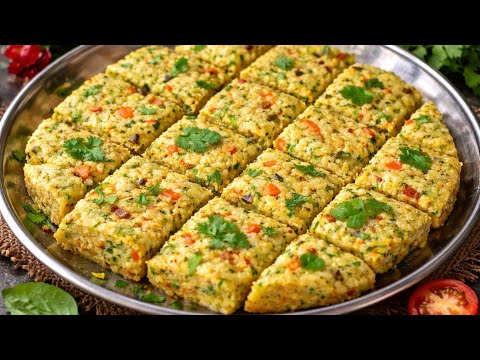
The source video that inspired this recipe. Shows the single-pan technique and vegetable staggering sequence that keeps every component at the right texture.
2. How to Scramble Eggs Perfectly Every Time
A thorough breakdown of low-and-slow egg scrambling technique — the difference between soft curds and rubbery pucks explained clearly with close-up footage.
3. Meal Prep Quinoa for the WeekBatch-cooking quinoa once on Sunday eliminates the biggest weekday bottleneck. This video covers the 1:1.75 ratio and resting technique that keeps grains fluffy and separate.
🛠️ Core Equipment
- Large non-stick skillet (12-inch) ↗Everything — vegetables, eggs, spinach — cooks in this one pan. A [12-inch non-stick skillet](/kitchen-gear/review/non-stick-skillet) gives you enough surface area to sauté the vegetables without steaming them and space to scramble the eggs gently without crowding.
- Wooden spoon or silicone spatula ↗For folding the eggs. Metal utensils scratch non-stick surfaces and are too rigid to coax eggs into soft curds. A [flexible silicone spatula](/kitchen-gear/review/silicone-spatula) lets you scrape the pan surface cleanly without breaking the eggs into crumbs.
- Small saucepan or microwave-safe bowl ↗For reheating the pre-cooked quinoa. If you're batch-cooking quinoa for the week — which is strongly recommended — you'll need a way to bring it back to temperature without drying it out.
The 15-Minute Veggie & Egg Breakfast Bowl (Busy Morning Solved)
🛒 Ingredients
- ✦3 large organic eggs
- ✦2 cups fresh baby spinach, roughly chopped
- ✦1 medium red bell pepper, finely diced
- ✦1 cup diced zucchini
- ✦1 medium yellow onion, thinly sliced
- ✦2 cloves garlic, minced
- ✦1/2 cup cherry tomatoes, halved
- ✦2 tablespoons extra virgin olive oil
- ✦1/4 cup fresh basil leaves, torn
- ✦1/4 teaspoon sea salt
- ✦1/8 teaspoon black pepper
- ✦1/4 cup low-fat feta cheese, crumbled
- ✦1/2 cup cooked quinoa or brown rice
- ✦2 tablespoons fresh lemon juice
- ✦1 teaspoon nutritional yeast
- ✦Pinch of red pepper flakes
👨🍳 Instructions
01Step 1
Warm 2 tablespoons of extra virgin olive oil in a large non-stick skillet over medium-high heat for about 1 minute until shimmering.
02Step 2
Add the sliced yellow onion and cook, stirring frequently, until translucent and fragrant, about 3-4 minutes.
03Step 3
Stir in the minced garlic and cook for 30 seconds until very aromatic.
04Step 4
Add the diced red bell pepper and zucchini. Sauté, stirring occasionally, until slightly softened, about 4-5 minutes.
05Step 5
Add the halved cherry tomatoes and cook for 1 minute just until they begin releasing their juices.
06Step 6
Create a small well in the center of the vegetables and crack the 3 eggs directly into the skillet.
07Step 7
Scramble the eggs gently with the vegetables, folding the curds slowly as they cook for about 3 minutes. Do not stir aggressively.
08Step 8
Add the chopped baby spinach in two batches, folding between additions until fully wilted, about 2 minutes total.
09Step 9
Season with sea salt, black pepper, and red pepper flakes. Stir to combine.
10Step 10
Drizzle the fresh lemon juice over the skillet and fold gently to distribute throughout.
11Step 11
Divide the warm cooked quinoa or brown rice evenly between two bowls.
12Step 12
Top each bowl with half of the vegetable and egg mixture.
13Step 13
Garnish with crumbled feta, torn fresh basil, and a light sprinkle of nutritional yeast. Serve immediately.
Nutrition Per Serving
Estimates based on standard preparation. Adjustments alter macros.
🔄 Substitutions
Instead of Eggs...
Use 1/2 cup silken tofu, crumbled, plus 1/4 teaspoon turmeric
Fully vegan alternative with comparable protein. Turmeric adds color. The texture is slightly more delicate — fold even more gently than you would with eggs.
Instead of Quinoa or brown rice...
Use Cooked farro or cubed sprouted grain toast
Farro adds an earthier, nuttier base with more fiber. Toast cubes give a contrasting crunch that some people strongly prefer.
Instead of Feta cheese...
Use 2 tablespoons nutritional yeast plus 1 tablespoon finely chopped raw almonds
Dairy-free option that still delivers savory, umami-forward flavor. The almonds add texture where feta would add creaminess.
Instead of Yellow onion...
Use 1/2 cup sliced scallions plus 2 tablespoons minced fresh chives
Lighter, fresher allium flavor that takes only 90 seconds to cook down. Good choice when you want the onion presence without the sweetness.
🧊 Storage & Reheating
In the Fridge
Store the egg and vegetable mixture in an airtight container for up to 2 days. Keep the quinoa separate. Quality degrades noticeably after day 2 — the eggs tighten and the vegetables lose their color.
In the Freezer
Not recommended. Scrambled eggs become grainy and watery after freezing. The vegetables also lose their texture completely. Make this fresh.
Reheating Rules
Reheat the vegetable and egg mixture in a covered skillet over low heat with a splash of water for 2-3 minutes. Microwave works in a pinch — 60 seconds covered, stir once halfway through. Add the feta and fresh basil after reheating, not before.
❓ Frequently Asked Questions
Can I make this the night before?
Partially. You can sauté the vegetables (without the eggs) and store them overnight. In the morning, reheat the vegetables in the pan, add the eggs, and cook as directed. This cuts active morning time to under 8 minutes.
Why are my eggs coming out rubbery?
Two causes: heat too high or stirred too aggressively. Scramble on medium heat with slow, folding motions and pull the pan 30 seconds before the eggs look done. Residual heat finishes the job. Rubbery eggs are always overcooked eggs.
Can I use egg whites instead of whole eggs?
Yes. Use 5-6 egg whites in place of 3 whole eggs. The texture will be slightly firmer and less rich, but the technique is identical. You'll lose some of the yolk fat that helps the eggs fold together — compensate by not stirring them at all until they begin to set.
What vegetables work best in this bowl?
Anything that can be diced and sautéed. Mushrooms, corn, asparagus tips, broccoli florets, and kale all work well. Avoid high-water vegetables like cucumber — they release too much liquid and make the eggs watery. If using frozen vegetables, thaw and pat them completely dry first.
Is this actually filling enough for breakfast?
At 385 calories with 18g of protein, 6g of fiber, and complex carbs from quinoa, yes — for most people this holds through a mid-morning without hunger. If you need more, add a third egg or double the quinoa portion. The bowl scales easily.
Can I use regular feta instead of low-fat?
Absolutely, and it will taste better. Full-fat feta is creamier, less crumbly, and has more pronounced flavor, which means you can use less of it. The nutrition numbers above reflect low-fat feta — full-fat adds roughly 30 calories and 3g saturated fat per serving.
The Science of
The 15-Minute Veggie & Egg Breakfast Bowl (Busy Morning Solved)
We turned everything on this page into a beautiful, flour-proof PDF cheat sheet. Print it out, stick it to your fridge, and never mess up your the 15-minute veggie & egg breakfast bowl (busy morning solved) again.
*We'll email you the high-res PDF instantly. No spam, just perfectly cooked meals.
AlmostChefs Editorial Team
We translate the internet's most popular cooking videos into foolproof, beginner-friendly written recipes. We analyze multiple methods, test them in our kitchen, and engineer a single "Master Recipe" that gives you the best possible result with the least possible stress.