Borderline Perfect Burritos (The Fold That Changes Everything)
A tightly wrapped flour tortilla packed with seasoned ground beef, cilantro-lime rice, refried beans, cheddar, and crema. We broke down the most-watched YouTube burrito videos to identify the exact fold technique and layering order that keeps every bite intact from first to last.
“A burrito that falls apart in your hands isn't a burrito — it's a bowl with commitment issues. The difference between a tightly sealed, structurally sound burrito and one that explodes on the third bite comes down to three things: tortilla temperature, filling moisture control, and the fold sequence. We watched every major YouTube burrito video to extract the one method that actually holds.”
Why This Recipe Works
A burrito is not a complicated dish. It is four or five ingredients rolled into a tortilla. The reason most homemade burritos disappoint is not the ingredients — it is the physics. Specifically, the structural engineering failure that happens when people treat a burrito like a grocery bag instead of a precision-wrapped object with a specific load-bearing architecture.
The Tortilla Is a Structural Component
Flour tortillas contain a network of gluten strands that give them elasticity — but only when warm. Cold gluten is rigid and brittle. You cannot fold a cold tortilla cleanly any more than you can bend a cold copper pipe. Thirty seconds on a dry skillet activates that elasticity, giving you a pliable surface that stretches under tension instead of cracking at the fold lines.
This is why professional taqueros work fast. The window between "warm and pliable" and "cooled and stiffening" is about 90 seconds. Everything about efficient burrito production is optimized around that window — fillings pre-staged, portions pre-measured, fold sequence muscle-memorized. At home, you don't need the speed, but you do need to work one burrito at a time and fold immediately after warming.
Moisture Is the Enemy of Structure
Every wet ingredient you add to a burrito is slowly dissolving the tortilla from the inside. Refried beans have moisture. Salsa has moisture. Underreduced ground beef has moisture. The cumulative effect is a tortilla that turns translucent and soft within minutes of wrapping, creating what structural engineers would call a catastrophic load failure and what normal people call a burrito that collapses in your hands.
The solution is obsessive moisture management at every stage. Drain the beef fat, then reduce the cooking liquid until the pan is almost dry. Drain your salsa through a fine-mesh sieve before adding it. Warm the refried beans until they're spreadable but not soupy — the right texture is thick hummus, not black bean soup. A cast iron skillet helps here because its retained heat is aggressive enough to evaporate cooking liquid quickly without burning the beef.
The final counter-intuitive truth: cheese goes directly on the warm beans, not on top of the cold salsa. Warm beans melt the cheese into the filling, creating a cohesive layer that holds the interior together. Cold salsa under the cheese keeps it firm and separate — a structural liability in the middle of your burrito.
The Fold Sequence Is Non-Negotiable
The burrito fold is not a casual origami project. It is a tension management exercise with a specific sequence that exists for mechanical reasons. The two short sides fold in first to cap the ends — preventing filling from escaping left or right during the forward roll. The bottom edge then folds up and over the filling, and the key move is pulling it toward you with firm downward pressure before rolling forward. This generates the tension that compresses the filling and seals the lower half of the tortilla against itself.
A loose roll means air pockets. Air pockets mean uneven pressure distribution. Uneven pressure means the burrito opens at the weakest point — always at the seam, always on the third bite.
The sear is where everything locks in. Seam-side down on a hot cast iron skillet for 60-90 seconds applies direct heat to the outer folds, welding them together while simultaneously toasting the exterior to a light golden crust. That crust is not just texture — it is a structural skin that holds the burrito together as the interior cools and the filling settles.
The Filling Ratio
The single variable that beginners consistently get wrong is volume. More filling feels more generous, but it is actually less functional. A properly proportioned burrito has filling covering the bottom third of the tortilla in a strip no taller than 1.5 inches. The remaining two-thirds of the tortilla is the mechanical apparatus that wraps around and seals everything in. Reduce that margin and you have no room to generate tension, no room to fold the sides cleanly, and no room for the forward roll to complete before you run out of tortilla.
Respect the ratio. A burrito with perfect structure and modest filling is a better object than an overstuffed tortilla bursting at every seam. The former you can eat standing up over a sink on a Tuesday. The latter requires a fork and a certain acceptance of defeat.
Where Beginners Mess This Up
Before we start, read this. These are the 4 reasons your borderline perfect burritos (the fold that changes everything) will fail:
- 1
Using a cold tortilla: A cold flour tortilla has no elasticity. When you try to fold it, the edges crack and the seal fails before you even finish wrapping. Thirty seconds on a dry skillet or 15 seconds in a microwave under a damp paper towel transforms a brittle disc into a pliable wrap that folds clean and seals tight.
- 2
Overfilling the tortilla: More filling does not mean a better burrito. It means an unwrappable burrito. The filling strip should cover no more than the bottom third of the tortilla, leaving a full two-thirds of real estate for the fold. If you can't fold the sides in without filling spilling out, you've already lost.
- 3
Adding wet ingredients without draining: Watery salsa, undrained beans, and excess cooking liquid from the beef are the structural enemies of a good burrito. Every source of excess moisture softens the tortilla from the inside, turning your wrap into a soggy bag. Drain everything. Reduce the meat liquid down until it's almost dry. Pat ingredients before loading.
- 4
Skipping the sear after wrapping: The final 60-second sear in a dry skillet seam-side down is not optional. It welds the tortilla shut, adds a faint toasted crust, and drives any remaining moisture toward the center where it belongs. A non-seared burrito unravels the moment it cools.
The Video Reference Library
Want to see it in action? Here are the exact videos we analyzed and combined to build this foolproof recipe translation:
The source video that breaks down the professional fold technique step by step. Clear demonstration of the correct filling-to-tortilla ratio and why the final sear is the structural keystone of a burrito that holds.
Focused entirely on the wrapping mechanics — side tucks, tension management, and the sear. Watch this if your burritos consistently unravel before you finish eating them.
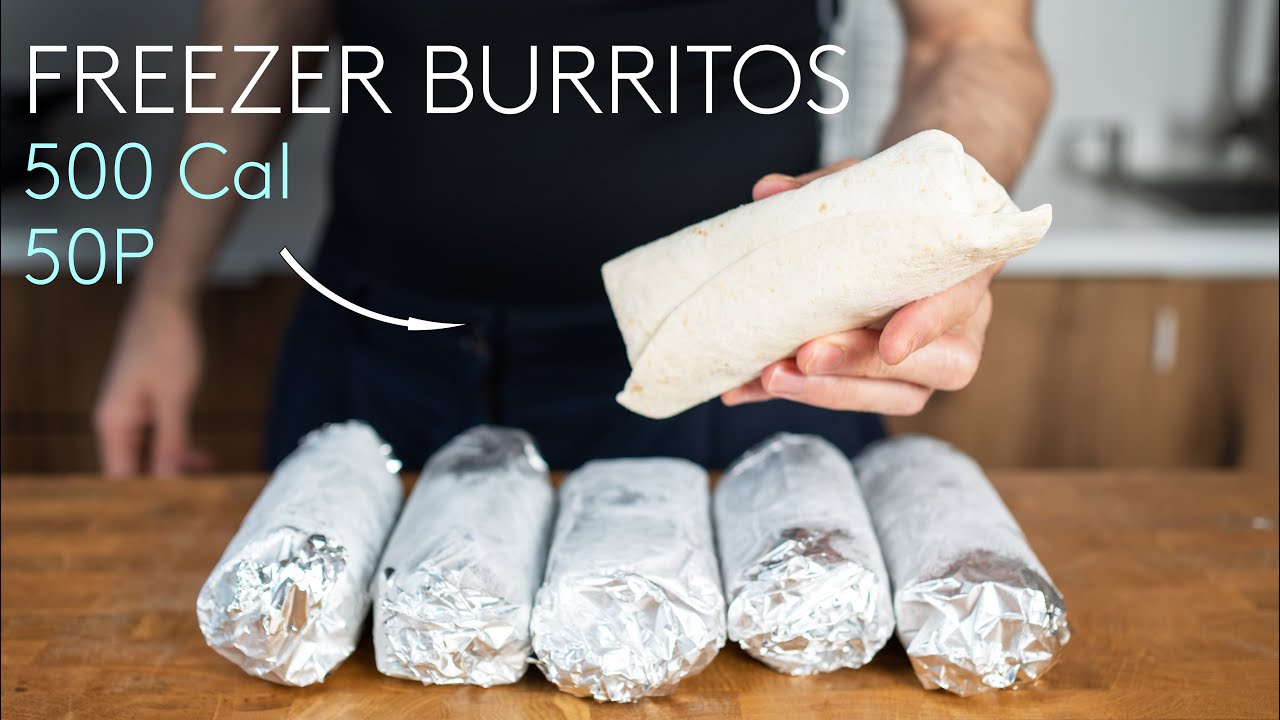
Covers batch production of burritos, foil wrapping for freezer storage, and reheating without losing structural integrity. Practical for anyone making more than two at a time.
🛠️ Core Equipment
- Large cast iron skilletFor both cooking the beef and finishing the wrapped burrito. The retained heat creates even browning without hot spots that scorch the tortilla. A [cast iron skillet](/kitchen-gear/review/cast-iron-skillet) does double duty here and is non-negotiable for the sear.
- Small saucepanFor heating refried beans and keeping them at the right viscosity — warm enough to spread without being liquid enough to leak. Cold beans seize up and crack the tortilla when you fold.
- Rice cooker or medium saucepan with lidA [rice cooker](/kitchen-gear/review/rice-cooker) removes all guesswork from the cilantro-lime rice. Fluffy, separated rice is load-bearing structure inside the burrito. Sticky or clumped rice compresses into a gummy mass that makes the burrito dense and hard to bite through.
- Aluminum foilEssential for holding the finished burrito together during the first few minutes after wrapping, especially for meal prep. The foil maintains the sear's pressure while the tortilla sets.
Borderline Perfect Burritos (The Fold That Changes Everything)
🛒 Ingredients
- ✦4 large (12-inch) flour tortillas
- ✦1 pound ground beef (80/20)
- ✦1 cup long-grain white rice, uncooked
- ✦1 can (15 oz) refried beans
- ✦1 cup shredded sharp cheddar cheese
- ✦1/2 cup Mexican crema or sour cream
- ✦1/2 cup fresh salsa or pico de gallo, well-drained
- ✦1 tablespoon neutral oil
- ✦1 teaspoon ground cumin
- ✦1 teaspoon chili powder
- ✦1/2 teaspoon garlic powder
- ✦1/2 teaspoon smoked paprika
- ✦1/4 teaspoon onion powder
- ✦1/4 teaspoon cayenne pepper
- ✦Juice of 1 lime, divided
- ✦1/4 cup fresh cilantro leaves, roughly chopped
- ✦Sea salt and freshly ground black pepper to taste
👨🍳 Instructions
01Step 1
Cook the rice according to package directions. While still warm, fluff with a fork and stir in the cilantro and half the lime juice. Season with salt and set aside.
02Step 2
Heat oil in a large cast iron skillet over medium-high heat. Add the ground beef and break it into small crumbles. Cook for 7-9 minutes until browned with no pink remaining.
03Step 3
Drain all fat from the beef using a colander, then return it to the skillet. Add cumin, chili powder, garlic powder, smoked paprika, onion powder, and cayenne. Stir to coat. Add the remaining lime juice and cook for 1-2 minutes until the liquid evaporates completely.
04Step 4
Warm the refried beans in a small saucepan over low heat, stirring occasionally, until they're smooth and spreadable. Season with salt.
05Step 5
Warm each tortilla in a dry skillet over medium heat for 30 seconds per side, or microwave under a damp paper towel for 15 seconds. The tortilla should be pliable and slightly steamy.
06Step 6
Lay the warm tortilla flat. Spread 2 tablespoons of refried beans across the center third of the tortilla in a horizontal strip, leaving at least 2 inches bare on all sides.
07Step 7
Add a layer of cilantro-lime rice over the beans, followed by a strip of seasoned beef. Top with shredded cheddar, a spoonful of drained salsa, and a drizzle of crema.
08Step 8
Fold the two short sides of the tortilla inward over the filling, applying gentle downward pressure. Then fold the bottom edge up and over the filling, tucking it tightly against the filling. Roll forward firmly, keeping constant tension, until fully wrapped.
09Step 9
Place the wrapped burrito seam-side down in the same cast iron skillet over medium heat. Sear for 60-90 seconds until golden and sealed. Flip and sear the opposite side for another 30 seconds.
10Step 10
Serve immediately, or wrap tightly in aluminum foil to hold for up to 20 minutes.
Nutrition Per Serving
Estimates based on standard preparation. Adjustments alter macros.
🔄 Substitutions
Instead of Ground beef...
Use Ground turkey or shredded rotisserie chicken
Turkey is leaner and requires 1 tablespoon of oil added back to prevent dryness. Rotisserie chicken skips the cooking step entirely — shred, season with the spice blend, and use as-is.
Instead of Flour tortilla...
Use Whole wheat or spinach tortilla
Slightly less elastic than white flour tortillas — be extra careful not to overfill. The sear step becomes even more important for structural integrity.
Instead of Refried beans...
Use Black beans, whole and lightly mashed
Less adhesive than refried beans, so they act more as a filling ingredient than a structural layer. Add a tablespoon of the bean liquid back in for moisture without making the burrito wet.
Instead of Mexican crema...
Use Full-fat Greek yogurt
Tangier and slightly thicker than crema. Works well and adds a small protein boost. Avoid low-fat versions, which become watery at room temperature.
🧊 Storage & Reheating
In the Fridge
Wrap individually in foil and refrigerate for up to 4 days. The tortilla softens slightly but remains intact.
In the Freezer
Freeze foil-wrapped burritos (without salsa and crema) for up to 3 months. Label with date and filling.
Reheating Rules
For fridge burritos: unwrap foil, place seam-side down in a dry skillet over medium heat for 3-4 minutes per side. For frozen: thaw overnight in the fridge, then reheat the same way. Microwave as a last resort — wrap in a damp paper towel and heat in 90-second intervals.
❓ Frequently Asked Questions
Why does my burrito always fall apart?
Two likely causes: overfilling or a cold tortilla. The tortilla needs to be warm and pliable before you fold. And the filling strip should cover no more than the center third of the tortilla — anything more and you can't generate the tension needed to seal it. The final sear seam-side down is also non-negotiable.
Can I make burritos ahead of time?
Yes. Wrap tightly in foil immediately after the sear and they hold for up to 20 minutes at room temperature and up to 4 days refrigerated. For meal prep, omit wet ingredients like salsa and crema before storing — add them after reheating.
What size tortilla should I use?
12-inch is the minimum for a properly stuffed burrito. Anything smaller forces you to reduce the filling so dramatically that it stops being satisfying. The extra tortilla real estate is what gives you the margin to fold cleanly.
How do I keep the rice from making my burrito soggy?
The rice should be fully cooked and cooled slightly before adding to the burrito — hot rice steams the tortilla from the inside. Also ensure the rice is dry and fluffy, not sticky. If using day-old rice from the fridge, warm it in a dry pan first so it isn't cold and dense.
Is the final sear actually necessary?
Yes. The sear welds the seam shut so the burrito doesn't unravel as it cools. It also adds a faint crunch to the exterior that contrasts with the soft interior. A non-seared burrito is structurally unstable and will open on the second or third bite.
Can I use a different protein?
Absolutely. Carnitas, barbacoa, grilled shrimp, and black beans all work. The key constant is moisture control — whatever protein you use, it needs to be cooked down until the pan is nearly dry before it goes into the tortilla.

The Science of
Borderline Perfect Burritos (The Fold That Changes Everything)
We turned everything on this page into a beautiful, flour-proof PDF cheat sheet. Print it out, stick it to your fridge, and never mess up your borderline perfect burritos (the fold that changes everything) again.
*We'll email you the high-res PDF instantly. No spam, just perfectly cooked meals.
AlmostChefs Editorial Team
We translate the internet's most popular cooking videos into foolproof, beginner-friendly written recipes. We analyze multiple methods, test them in our kitchen, and engineer a single "Master Recipe" that gives you the best possible result with the least possible stress.