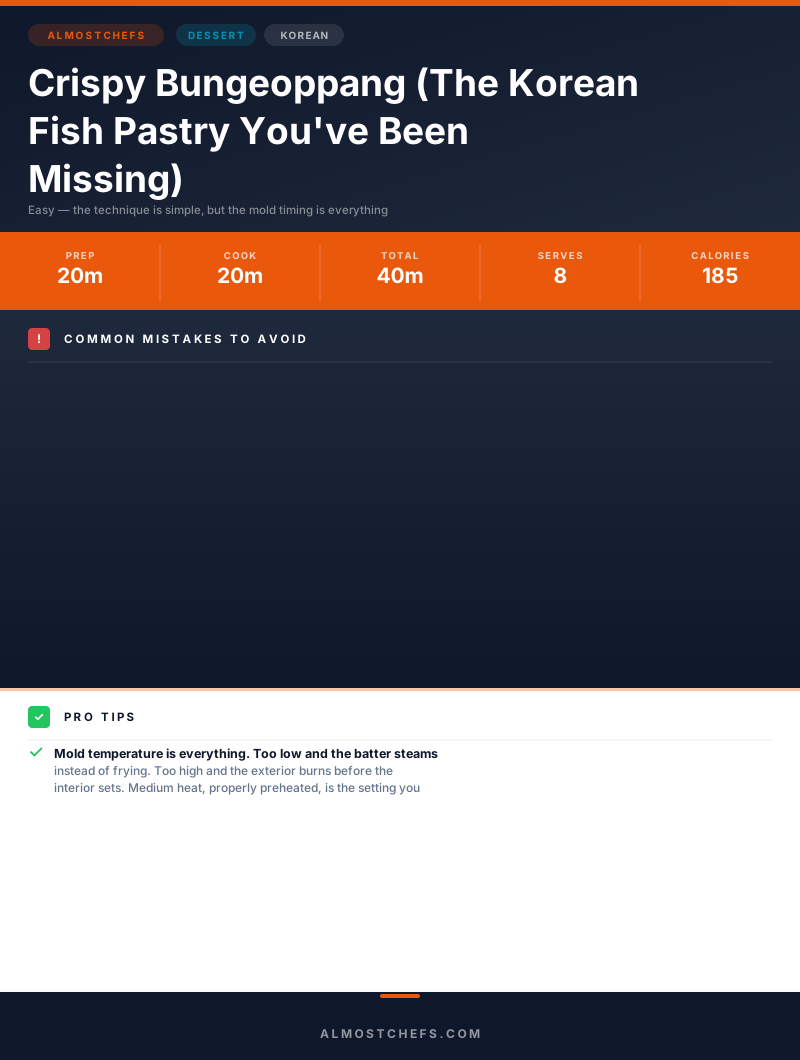
Crispy Bungeoppang (The Korean Fish Pastry You've Been Missing)
A crispy, golden fish-shaped Korean street pastry filled with warm sweetened red bean paste. We broke down what makes street vendor bungeoppang so satisfying — and why most homemade versions come out pale, rubbery, and underfilled.

“Every Korean winter is measured in bungeoppang. The fish-shaped pastry that appears at street carts the moment the temperature drops is a study in contrast: shattering crisp shell, yielding sweet red bean core, cheap enough to buy by the bag. Making it at home should be simple. And it is — once you understand why most batters produce pale, chewy fish instead of the mahogany-shelled, fragrant originals the vendors pull from their cast iron molds.”
Why This Recipe Works
Bungeoppang is a precision argument disguised as a casual snack. The fish shape is not aesthetic whimsy — it is the exact geometry needed to produce a uniform shell thickness around a central filling mass, with enough surface area for rapid heat transfer and enough depth to protect the filling from direct contact with the mold. Korean street vendors have been running this geometry through cast iron since the 1930s, and the physics have not changed.
The Mold Is the Technique
Every element of bungeoppang production flows from the mold. A cast iron fish mold preheated over medium heat becomes a miniature oven and frying surface simultaneously — the batter in direct contact with the hot iron fries into a crispy shell while the enclosed steam space finishes the interior. This dual mechanism is what produces the contrast that makes bungeoppang worth eating: shattering crust, yielding core. Disrupt either side of that equation and the whole thing collapses into mediocrity.
The preheat requirement is non-negotiable. A cold mold turns batter into a gray, steamed pudding. You need the surface to be hot enough that batter sets on contact — the same principle behind a properly seasoned cast iron skillet for searing. If you don't hear a sizzle when batter hits the cavity, you're not ready.
The Batter Architecture
The batter is intentionally simple — flour, egg, milk, a small amount of oil, leavening. There is no complexity here by design. The batter exists as a structural shell, not the primary flavor. Its job is to fry into something crispy, not to express itself. This is why you don't overmix it. Gluten development turns the shell chewy, and chewy is the enemy.
The two-stage pour — thin base layer, filling, thin cover layer — creates a sealed chamber around the red bean paste. The base layer needs thirty seconds of contact heat before filling goes in: enough time to firm slightly and hold the filling in place, not enough time to set fully. This is the timing window most home cooks miss by rushing.
Red Bean Paste: The Soul of the Fish
The filling is where bungeoppang's identity lives. Sweetened red bean paste — danpat-angeum — has a dense, earthy sweetness that is the reason people buy these fish in freezing weather. The paste should be thick enough to hold its shape when scooped. If it runs, it spreads before the batter seals around it and you end up with filling pockets instead of a filling core.
Use more than feels reasonable. A full tablespoon per cavity, placed dead center, pulled away from the edges. Street vendor bungeoppang always feels generously filled. Home versions always disappoint on filling ratio because home cooks hedge. Stop hedging.
The Flip Protocol
The top cavity of any mold runs cooler than the bottom because it relies on radiated heat rather than direct contact. Flip the mold completely at the halfway mark. This is not optional. Without the flip, you get one mahogany half and one pale half — a visual and textural failure. With the flip, both shells develop identical color and crunch.
Why They're Better From a Cart
Street vendors run their cast iron continuously at temperature for six hours straight. The mold never drops below operating temperature between batches. At home, each batch cools the cast iron slightly. Compensate by preheating an extra 30 seconds before each subsequent pour. This is the single adjustment that closes most of the gap between home bungeoppang and the real thing.
Eat them immediately. The shell softens within fifteen minutes as the steam from the filling migrates outward. This is not a failure of technique — it is the nature of the pastry. The vendors know this. It's why the line never disappears.
Where Beginners Mess This Up
Before we start, read this. These are the 4 reasons your crispy bungeoppang (the korean fish pastry you've been missing) will fail:
- 1
Pale, soft shell instead of crispy and golden: The mold must be properly preheated and well-oiled before the first pour. A cold or dry mold produces batter that steams rather than fries, resulting in a pale, rubbery exterior. You want to hear a sizzle the moment batter hits the pan — if you don't, the mold isn't ready.
- 2
Filling leaking out the sides: The most common mistake is adding the filling before the base layer has set enough to hold it in place. Pour a thin base layer of batter, wait 30 seconds for it to firm slightly, then add the filling in the center well away from the edges. Cover with the second batter layer immediately.
- 3
Underfilled, hollow fish: Street vendors pack their bungeoppang tight with red bean paste. Home cooks always underfill out of caution. Use a generous tablespoon of filling per fish — the batter layers around it and puffs during cooking. Stingy filling produces a pastry that's mostly air and disappointment.
- 4
Uneven browning between the two halves: The top of the mold cooks slower than the bottom. Flip the mold completely — 180 degrees — halfway through the cook time so both sides develop even color. Most people forget this step and end up with one golden half and one pale half.
🛠️ Core Equipment
- Bungeoppang mold (fish-shaped cast iron or non-stick pan)There is no substitute. The fish-shaped cavities create the shell through direct contact heat. Cast iron holds temperature better and produces a more even crust. Non-stick versions are more forgiving for beginners but run slightly cooler.
- Pastry brush or paper towelFor oiling the mold cavities evenly before each batch. Uneven oil application is the direct cause of patchy browning and sticking. A silicone brush reaches every corner of the cavity.
- Squeeze bottle or small ladleFor controlling batter pour precisely. The base layer should fill the cavity about 40% — too much and the fish has no room for filling, too little and the shell is too thin to hold together when removed.
- Small spoonFor placing red bean filling accurately in the center of the mold cavity. You want the filling positioned well clear of the edges so the batter layers seal cleanly around it.
Crispy Bungeoppang (The Korean Fish Pastry You've Been Missing)
🛒 Ingredients
- ✦1 cup all-purpose flour
- ✦1 teaspoon baking powder
- ✦1/4 teaspoon baking soda
- ✦2 tablespoons sugar
- ✦1/4 teaspoon fine sea salt
- ✦1 large egg
- ✦1 cup whole milk
- ✦1 tablespoon neutral oil (plus more for the mold)
- ✦1 teaspoon vanilla extract
- ✦1 cup sweetened red bean paste (danpat-angeum / 단팥앙금)
- ✦Neutral oil for brushing the mold
👨🍳 Instructions
01Step 1
Whisk together flour, baking powder, baking soda, sugar, and salt in a medium bowl.
02Step 2
In a separate bowl, whisk egg, milk, 1 tablespoon oil, and vanilla extract until combined. Pour wet ingredients into dry and whisk until just smooth. A few small lumps are acceptable — do not overmix.
03Step 3
Let the batter rest for 10 minutes at room temperature. This allows the leavening agents to activate and the flour to fully hydrate.
04Step 4
Heat the bungeoppang mold over medium heat for 3-4 minutes. Test the temperature by flicking a drop of water onto the surface — it should sizzle and evaporate immediately. Brush all cavities generously with neutral oil.
05Step 5
Pour batter into each cavity to fill approximately 40% of the depth. Close the mold and cook for 30 seconds over medium heat.
06Step 6
Open the mold. Add a generous tablespoon of red bean paste to the center of each cavity, keeping it away from the edges.
07Step 7
Pour a second thin layer of batter over the filling to cover it completely. Close the mold firmly.
08Step 8
Cook for 1.5 minutes, then flip the mold 180 degrees and cook for another 1.5 minutes.
09Step 9
Open the mold carefully. The bungeoppang should release cleanly and be uniformly deep golden brown on both sides. If pale spots remain, close and cook 30 seconds more per side.
10Step 10
Remove to a wire rack. Brush the mold with fresh oil before each new batch. Serve warm.
Nutrition Per Serving
Estimates based on standard preparation. Adjustments alter macros.
🔄 Substitutions
Instead of Red bean paste (danpat-angeum)...
Use Sweet potato paste or custard cream
Sweet potato paste is earthy and less sweet, popular in artisan versions. Custard is the most common modern substitution — thicken it well before using or it will run into the shell seams.
Instead of Whole milk...
Use Oat milk or almond milk
Works for a dairy-free version. Oat milk produces a slightly more golden shell due to its natural sugars. Almond milk is thinner — reduce it by 2 tablespoons to maintain batter consistency.
Instead of All-purpose flour...
Use Rice flour blend (70% all-purpose, 30% rice flour)
The rice flour addition produces an even crispier shell that stays crunchy longer. Popular in premium street vendor versions.
Instead of Neutral oil (in batter)...
Use Melted unsalted butter
Adds a subtle richness and slightly more browning. The flavor difference is noticeable in a good way — more pastry-like than wafflelike.
🧊 Storage & Reheating
In the Fridge
Store cooled bungeoppang in an airtight container for up to 2 days. The shell softens significantly — factor this in before making large batches.
In the Freezer
Freeze in a single layer on a baking sheet, then transfer to a bag for up to 1 month. Reheat directly from frozen.
Reheating Rules
Air fryer at 350°F for 3-4 minutes is the best method. Oven at 375°F for 5-6 minutes also works. Microwave is not recommended — it destroys the shell texture completely.
❓ Frequently Asked Questions
Can I make bungeoppang without a fish mold?
Not really. The mold isn't just decorative — it creates the enclosed cooking environment that produces the shell. You could make a functionally similar stuffed pancake in a regular pan, but it won't have the crispy shell-to-filling ratio that defines bungeoppang.
Why is my bungeoppang sticking to the mold?
Either the mold wasn't hot enough, wasn't oiled thoroughly enough, or both. Brush oil into every corner of the cavity — the tail and fins are the areas most likely to stick. For a new cast iron mold, season it properly with several oil applications before the first use.
Why does my batter bubble up and spill out when I close the mold?
You're filling the cavity too full. The base layer should cover only about 40% of the depth. The batter expands as it cooks — it needs space to puff without overflowing the seam.
Can I use canned red bean paste from a Korean grocery?
Yes, and it's what most vendors use. Look for 단팥앙금 (sweet red bean paste) rather than the chunky style (통팥). The smooth paste fills the cavity more evenly and doesn't create air pockets around bean chunks.
How do I know when bungeoppang is perfectly done?
Deep golden brown on both sides — the color of a good waffle, not a pale pancake. The fish should release from the mold cleanly without pulling. If you need to pry it out, it either isn't done yet or the mold wasn't properly oiled.
What makes street vendor bungeoppang better than homemade?
Volume and temperature consistency. Vendors run their molds continuously, so the cast iron stays at perfect operating temperature for hours. At home, the mold cools slightly between batches. Preheat the mold for an extra 30 seconds before each subsequent batch to compensate.
The Science of
Crispy Bungeoppang (The Korean Fish Pastry You've Been Missing)
We turned everything on this page into a beautiful, flour-proof PDF cheat sheet. Print it out, stick it to your fridge, and never mess up your crispy bungeoppang (the korean fish pastry you've been missing) again.
*We'll email you the high-res PDF instantly. No spam, just perfectly cooked meals.
AlmostChefs Editorial Team
We translate the internet's most popular cooking videos into foolproof, beginner-friendly written recipes. We analyze multiple methods, test them in our kitchen, and engineer a single "Master Recipe" that gives you the best possible result with the least possible stress.