Addictive Buffalo Chicken Dip (The Only Party Recipe You Need)
Shredded rotisserie chicken, cream cheese, sharp cheddar, and crumbled blue cheese baked into a bubbling, spicy dip that delivers every flavor of buffalo wings without the mess. We combined the best techniques from the most-watched YouTube methods to nail the cheese pull, heat balance, and texture in one foolproof bake.
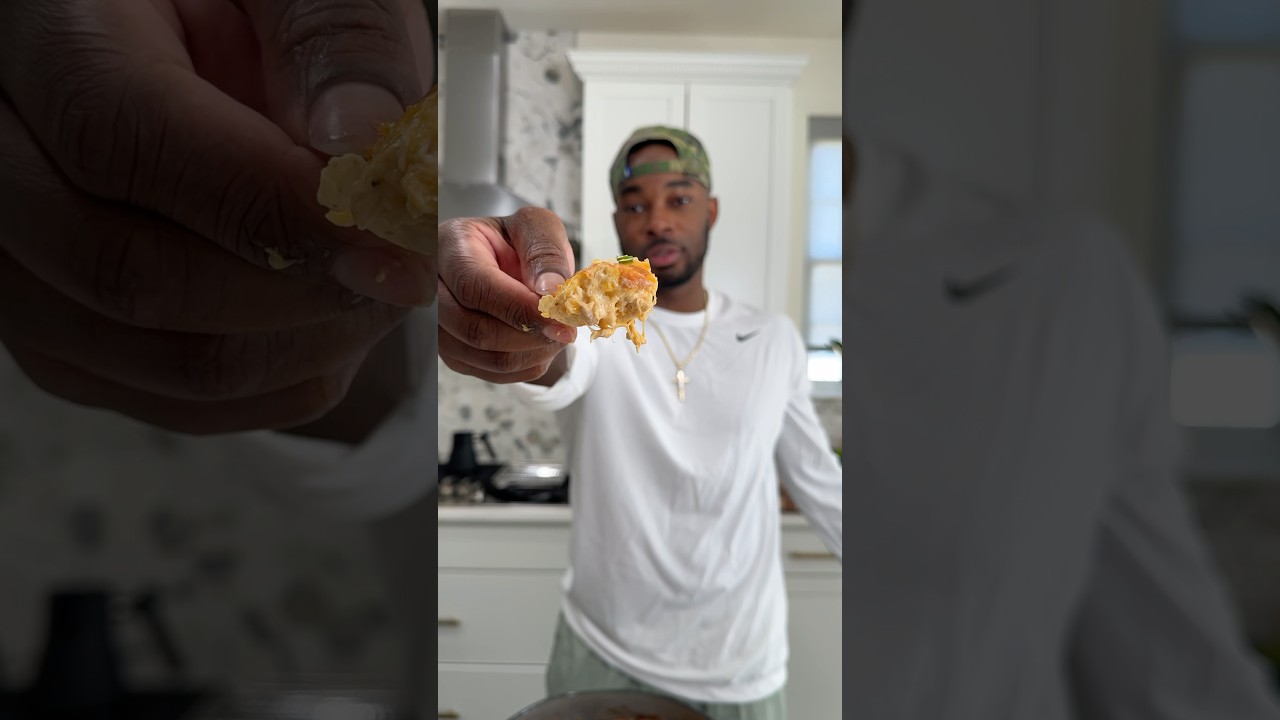
“Most buffalo chicken dip recipes produce a greasy, separated mess or a bland, cream-cheesy brick. The difference between a dip that disappears in 10 minutes and one that sits in the corner getting cold comes down to two things: drying your chicken properly and not skimping on the blue cheese. We tested every major technique to find the exact ratios that hold together, stay creamy, and actually taste like buffalo wings.”
Why This Recipe Works
Buffalo chicken dip is not complicated food. It's also not easy to do correctly. The ingredient list is short, the technique is minimal, and yet most versions of this dish arrive at the table greasy, bland, or texturally wrong — the kind of dip that looks promising from across the room and disappoints on contact. The margin for error is small precisely because the component count is small. There's nowhere to hide a mistake.
The Moisture Problem
Every failure in buffalo chicken dip traces back to water. Rotisserie chicken — the correct choice, always — retains significant residual moisture from the cooking process. When you skip drying and fold wet chicken directly into cream cheese, that moisture has one destination: out. During baking, it releases into the cheese matrix, breaks the fat-protein emulsion, and produces the signature failure state: a dense brick of coagulated cheese floating in a moat of orange liquid.
The fix takes 45 seconds. Press the shredded chicken firmly between paper towels until the surface is visually dry. Then mix. The difference in final texture is dramatic — a cohesive, scoopable dip versus the separated mess that ends up getting stirred back together at the party and never quite recovers.
The Cream Cheese Architecture
Cream cheese is the structural binder that holds this dip together through 25 minutes of oven heat. For it to function properly, it needs to be fully softened before you add anything else. Cold cream cheese doesn't incorporate — it breaks into chunks that melt unevenly in the oven, leaving white streaks and pockets of undissolved dairy in the finished dip.
The sour cream and ranch combine with the cream cheese to form the base before the chicken ever enters the bowl. Get this mixture completely smooth first — a hand mixer or stand mixer is faster and more reliable than a spatula — then fold in the protein. A smooth base produces a smooth dip. A lumpy base produces a lumpy dip. There is no stage at which this corrects itself.
The Blue Cheese Argument
Blue cheese is the ingredient that most recipes treat as optional and most cooks underdose. It is neither. The funky, tangy, slightly bitter quality of blue cheese is the direct equivalent of the creamy blue cheese dressing that makes buffalo wings buffalo wings. Without it, you have spicy cream cheese. With enough of it, you have a dip that actually tastes like what it's supposed to taste like.
Go heavy. Fold a full third-cup into the base mixture, then scatter another quarter-cup across the top before it goes into the oven. The top layer melts into a concentrated, cratered surface that provides bursts of intense flavor against the creamy background. Don't substitute it without acknowledging what you're trading away.
The Bake Dynamic
A 9-inch baking dish at 350°F for 22–28 minutes is the window. The lower temperature gives the cream cheese time to loosen and integrate with the buffalo sauce before the edges begin browning. Higher heat causes rapid fat separation — the cheese proteins seize before the fat can emulsify, producing grease pooling at the edges and a dry, grainy center.
Done looks like this: active bubbling at the perimeter, a lightly golden top with visible browning on the cheese layer, and an internal temperature of 165°F. The rest period after baking is not optional — it's the step that converts a liquid, flowing dip into a scoopable one. Two to three minutes. Then the chives. Then the table.
Where Beginners Mess This Up
Before we start, read this. These are the 4 reasons your addictive buffalo chicken dip (the only party recipe you need) will fail:
- 1
Wet chicken ruins the texture: Rotisserie chicken holds a significant amount of moisture. If you skip patting it dry before mixing, that water releases into the dip during baking, breaking the emulsion and producing a greasy, separated pool of orange liquid around a dense cheese brick. Dry the chicken aggressively — paper towels, then a quick press — before it touches anything else.
- 2
Cold cream cheese creates lumps: Cream cheese straight from the fridge does not incorporate evenly. You end up with white streaks and clumps that never fully melt into the dip. Pull it out at least 30 minutes before you start, or cube it small and let it sit. A smooth base before baking means a smooth dip after.
- 3
Under-seasoning the buffalo layer: Buffalo sauce alone is not enough. Worcestershire sauce adds umami depth that straight hot sauce lacks, and garlic powder ties the dairy components to the spice. Without them, the dip tastes like spicy cream cheese — sharp and one-dimensional. The Worcestershire is non-negotiable.
- 4
Skipping the rest after baking: Pull it from the oven and the cheese is still in motion — liquid and pooled at the edges. Two to three minutes of rest lets the fat redistribute and the dip firms up slightly into a scoopable, cohesive texture. Serve it immediately and you're fighting a tide of orange grease.
The Video Reference Library
Want to see it in action? Here are the exact videos we analyzed and combined to build this foolproof recipe translation:
The foundational walkthrough for this recipe. Clear technique on cream cheese incorporation and the exact visual cues for when the dip is done baking.
🛠️ Core Equipment
- 9-inch baking dishThe right depth ensures even heat penetration. Too shallow and the edges overcook before the center sets. Too deep and you never get that bubbling golden top. A standard ceramic or glass dish is ideal.
- Stand mixer or hand mixerCream cheese is dense. A fork and determination will get you there eventually, but a mixer produces a uniformly smooth base in 60 seconds. Lumps in the base become lumps in the final dip.
- Slow cookerOptional but transformative for parties. Once the dip comes out of the oven, transfer it to a slow cooker set on low. It stays warm and creamy for hours without drying out or forming a skin.
- Instant-read thermometerThe dip is done when the internal temperature hits 165°F. Relying on visual cues alone — bubbling edges, golden top — is unreliable because your oven's true temperature may vary by 25 degrees. A thermometer removes all guesswork.
Addictive Buffalo Chicken Dip (The Only Party Recipe You Need)
🛒 Ingredients
- ✦2.5 cups cooked shredded chicken (rotisserie preferred)
- ✦8 oz cream cheese, softened to room temperature
- ✦1 cup shredded sharp cheddar cheese
- ✦3/4 cup buffalo sauce
- ✦1/2 cup sour cream
- ✦1/3 cup ranch dressing or 1 packet ranch seasoning mix
- ✦1/3 cup blue cheese crumbles, plus 1/4 cup for topping
- ✦3 tablespoons unsalted butter
- ✦1/2 teaspoon garlic powder
- ✦1 teaspoon Worcestershire sauce
- ✦1/4 teaspoon black pepper
- ✦1/4 teaspoon cayenne pepper (optional, for extra heat)
- ✦2 tablespoons chopped fresh chives or scallions, for garnish
👨🍳 Instructions
01Step 1
Pat the shredded chicken thoroughly dry with paper towels to remove excess moisture.
02Step 2
Cube the softened cream cheese into small pieces and place in a large mixing bowl with the sour cream and ranch dressing. Beat with a hand mixer or stand mixer until completely smooth with no lumps.
03Step 3
Fold the shredded chicken into the cream cheese mixture using a spatula, breaking up any clumps as you go.
04Step 4
Stir in the buffalo sauce, Worcestershire sauce, and garlic powder until the chicken is evenly coated and the sauce is fully incorporated.
05Step 5
Gently fold in most of the cheddar cheese and blue cheese crumbles, reserving a generous handful of each for the top layer.
06Step 6
Butter a 9-inch baking dish, then transfer the mixture in and spread into an even layer.
07Step 7
Scatter the reserved cheddar and blue cheese crumbles evenly across the top.
08Step 8
Bake in a preheated 350°F oven for 22–28 minutes, until the edges are actively bubbling and the top is lightly golden.
09Step 9
Season with black pepper and cayenne if using. Remove from the oven and let rest for 2–3 minutes.
10Step 10
Garnish with fresh chives or sliced scallions just before serving.
Nutrition Per Serving
Estimates based on standard preparation. Adjustments alter macros.
🔄 Substitutions
Instead of Cream cheese...
Use Greek yogurt (8 oz, full-fat)
Tangier and slightly thinner. The dip holds together but has a looser texture. Reduce bake time by 3–4 minutes and watch the edges carefully.
Instead of Buffalo sauce (store-bought)...
Use Homemade: 1/2 cup hot sauce + 2 tablespoons melted butter + 1 teaspoon apple cider vinegar
Fresher flavor with better vinegar balance and lower sodium. The control over heat level alone is worth making it yourself.
Instead of Ranch dressing...
Use Fresh herb blend: 2 tablespoons fresh dill, 1 tablespoon fresh parsley, 1/2 teaspoon onion powder, 1/2 teaspoon garlic powder
Eliminates preservatives and cuts sodium. The result tastes cleaner and brighter — slightly less creamy but more herbaceous.
Instead of Shredded cheddar cheese...
Use Reduced-fat sharp cheddar or half cheddar, half feta
The feta version is excellent — lower fat with stronger tang that punches through the buffalo sauce. Don't go mild cheddar; you need the sharpness.
🧊 Storage & Reheating
In the Fridge
Store covered in an airtight container for up to 4 days. The flavor improves on day two. Press plastic wrap directly onto the surface to prevent a skin from forming.
In the Freezer
Freeze for up to 2 months in a sealed container. Dairy-based dips can separate slightly on thawing — stir vigorously while reheating and it comes back together.
Reheating Rules
Add 1 tablespoon of milk or sour cream, cover tightly, and reheat at 325°F for 15 minutes, or on the stovetop over low heat with frequent stirring. Microwaving works in a pinch — 60 seconds at 50% power, stir, repeat.
❓ Frequently Asked Questions
Why is my buffalo chicken dip greasy and separated?
Wet chicken is the primary culprit. Rotisserie chicken holds residual moisture that releases during baking and breaks the cheese emulsion. Pat the chicken thoroughly dry before mixing. The second cause is baking at too high a temperature — above 375°F, the cheese fat separates before the proteins can hold it together.
Can I make this in a slow cooker instead of the oven?
Yes. Combine all ingredients directly in the slow cooker, set to high for 1 hour or low for 2 hours, stirring once halfway through. You won't get the golden top, but the texture is excellent and the hands-off approach is ideal for parties.
How spicy is this dip?
At 3/4 cup of standard buffalo sauce, it reads as medium heat — noticeable warmth that builds over several bites but isn't punishing. For mild, reduce to 1/2 cup and increase sour cream by 2 tablespoons. For hot, add the full 1/4 teaspoon cayenne and consider going up to 1 cup of buffalo sauce.
Do I have to use blue cheese?
No, but you're losing the ingredient that makes this taste like buffalo wings rather than spicy cream cheese. Blue cheese provides the funky, tangy counterpoint that the dish is built around. If you genuinely can't stand it, substitute crumbled feta — it provides tang without the funk.
Can I use canned chicken?
Technically yes, but the texture suffers noticeably. Canned chicken is finer and mushier than hand-shredded rotisserie, producing a dip that reads more like a spread than a chunky, textured dip. Rotisserie chicken shreds into irregular pieces that give you something to bite into.
What do I serve with buffalo chicken dip?
Tortilla chips are standard. Add celery sticks and carrot sticks for crunch and to balance the heat. Toasted baguette slices, pretzel chips, and pita triangles all work well. If you're serving a crowd, offer a mix — some people want the sturdy scoop of a thick chip, others want the cool snap of a vegetable.

The Science of
Addictive Buffalo Chicken Dip (The Only Party Recipe You Need)
We turned everything on this page into a beautiful, flour-proof PDF cheat sheet. Print it out, stick it to your fridge, and never mess up your addictive buffalo chicken dip (the only party recipe you need) again.
*We'll email you the high-res PDF instantly. No spam, just perfectly cooked meals.
AlmostChefs Editorial Team
We translate the internet's most popular cooking videos into foolproof, beginner-friendly written recipes. We analyze multiple methods, test them in our kitchen, and engineer a single "Master Recipe" that gives you the best possible result with the least possible stress.