Budae Jjigae (Korean Army Stew)
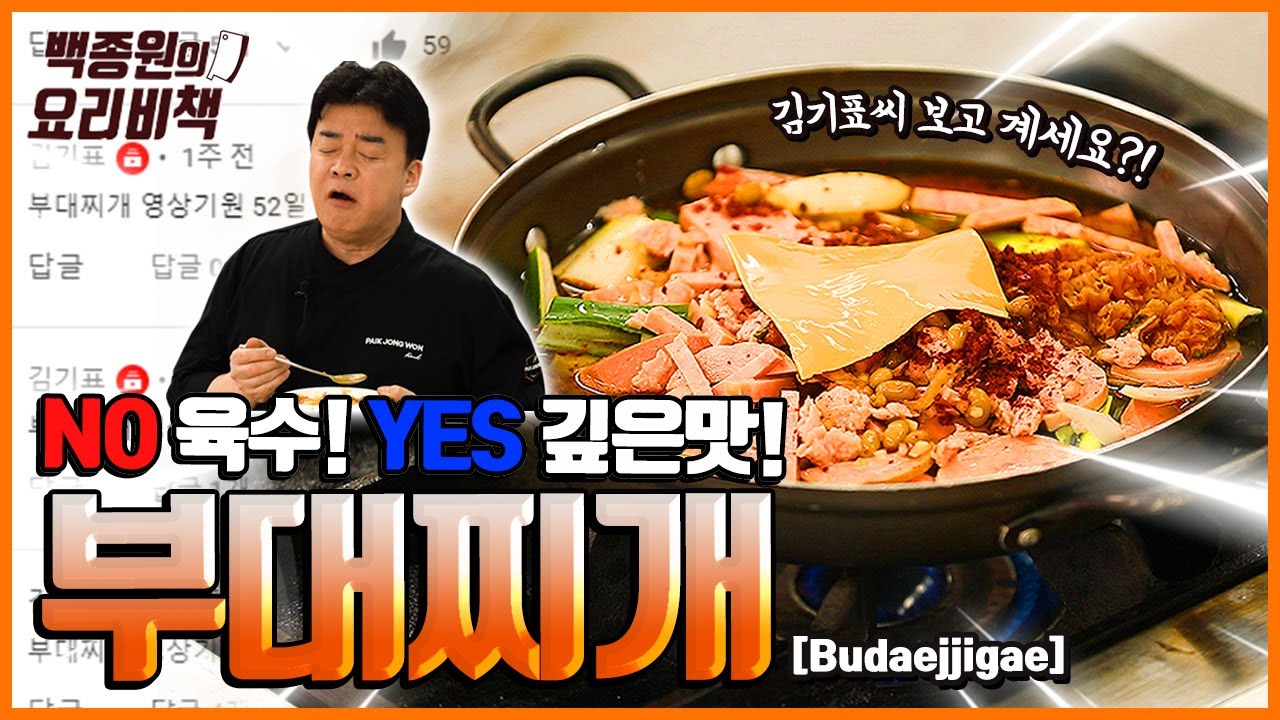
A bubbling hot pot of Spam, hot dogs, ramen noodles, kimchi, and gochugaru in a spicy broth. Korea's iconic fusion stew born from wartime ingenuity.
Why This Recipe Works
Budae jjigae is not a recipe that needs to justify itself. It has already survived a war, a famine, several decades of food snobbery, and the perpetual anxiety of fine dining critics who cannot decide whether processed meat is ironic or sincere. It doesn't care what you think. It bubbles. It feeds people. It works. But since you are here asking why — and since the answer is actually interesting — let's get into it with the precision this dish deserves.
The Stock Is Load-Bearing Infrastructure
Every recipe that calls itself a stew lives or dies on its liquid base. In budae jjigae, the conventional instinct is to dismiss the broth entirely — after all, you're adding instant noodle seasoning packets, sodium-laden Spam, and canned beans. What could the stock possibly contribute on top of all that? Everything. The anchovy-dashima stock is the reason this dish tastes like Korean cuisine rather than a dorm room catastrophe. Dried anchovies and dashima (kelp) produce a broth with genuine umami depth — glutamates from the kelp stacking cleanly on the inosinates from the anchovy. This is not folk chemistry. It is demonstrable flavor science. When you replace this base with plain water, you get a flat, aggressively salty mess. When you use the proper stock, the processed meats find context. They belong somewhere. The wide, shallow pot matters here too — the surface area allows the broth to reduce and concentrate at the edges while the center boils vigorously, creating pockets of varying intensity that make each bite slightly different from the last.
Aged Kimchi Is Doing Heavy Structural Work
This is not a suggestion to use old kimchi because fresh kimchi is unavailable. It is a technical requirement. Fresh kimchi is bright, vegetal, mildly fermented. Aged kimchi — one month minimum, ideally two or three — is sour, funky, and acidic in a way that completely changes the chemistry of the dish. That acidity is what cuts through the fat from the Spam and the hot dogs. Without it, the broth becomes greasy and cloying by the second bowl. The lactic acid produced during fermentation also suppresses the overly sweet notes from the baked beans, keeping the flavor profile anchored in savory rather than drifting toward something unpleasant. You cannot replicate this by adding vinegar. The fermentation byproducts are not just acid — they are a complex mixture of flavor compounds that took weeks to develop. Use the old kimchi.
Why the Processed Meat Is Not a Compromise
There is a persistent and wrong idea that Spam in a recipe is a concession to convenience or a nostalgic novelty. In budae jjigae, Spam is a precisely calibrated ingredient. Its fat content, salt level, and texture profile are consistent in ways that fresh pork never is. When sliced and arranged in the budae jjigae pot and then simmered in anchovy broth with gochugaru and gochujang, the fat renders slowly and emulsifies into the broth. It's the same principle that makes a good ramen tonkotsu work — fat in suspension creating a rich, coating mouthfeel. Hot dogs add a second fat register and a slight smokiness that Spam lacks. Together they build the broth's body in a way that lean proteins simply cannot. If you substitute chicken breast, you have made a completely different dish. A worse one.
Gochugaru Plus Gochujang: Two-Stage Heat
The recipe uses both gochugaru — coarsely ground Korean red pepper flakes — and gochujang, the fermented red pepper paste. These are not redundant. They are operating on different dimensions simultaneously. Gochugaru delivers heat that is direct and front-loaded, with a slightly fruity, smoky undertone. Gochujang contributes heat that arrives later and lingers, layered on a foundation of fermented depth and gentle sweetness from the rice flour in the paste. Used together, they create a spice arc across a full mouthful: immediate warmth, then a building back-of-throat heat, then the fermented complexity that keeps the flavor interesting after the fire fades. The ratio matters. Too much gochujang and the stew becomes muddy and sweet. Too much gochugaru and it flattens into one-dimensional heat. The balance in this recipe is not accidental.
The American Cheese Problem (And Why It Solves Everything)
American cheese does not belong in Korean cuisine. And yet here it is, mandatory, in one of Korea's most beloved dishes. The reason it works is casein phosphate — a stabilizing salt added during processing that prevents American cheese from breaking when it melts. Real cheese, when added to an acidic, high-sodium broth like budae jjigae, would break immediately into greasy clumps and grainy solids. American cheese melts into a uniform, creamy layer that coats the noodles and softens the aggressive heat of the gochugaru. It is a functional ingredient performing a specific emulsification role. Mozzarella is a passable substitute. Cheddar is not. The fat and moisture content of the cheese must behave predictably under high heat in an acidic environment. American cheese was, accidentally or not, engineered to do exactly this.
Communal Cooking as Technique
The instruction to keep the wide, shallow pot on a low flame at the table is not a serving suggestion — it is the last step of the cooking process. The stew continues to reduce and concentrate as you eat. The noodles continue absorbing broth. The Spam renders further. The kimchi softens from sour-crisp to meltingly tender. Eating budae jjigae too fast, all at once, from individual bowls, produces an inferior result. The progressive reduction and the slow pace of communal eating are what carry it from a single flavor state to a full arc of experience across the meal. Serve it at the table. Keep the heat on. Eat slowly.
From Wartime to National Dish
After the Korean War, food scarcity near American military bases produced some of the most honest cooking in Korean history. Surplus Spam, hot dogs, and canned beans from US military commissaries were combined with kimchi, gochugaru, and whatever else was available. The dish was named budae — army base — jjigae, and it fed people who had nothing else. Uijeongbu, the city adjacent to one of the largest US bases, eventually developed an entire street dedicated to the dish. What began as poverty food became a beloved national stew, consumed at every income level, celebrated without apology. The ingredients are still processed. The technique is still simple. The result is still undeniably correct.
Budae Jjigae (Korean Army Stew)
🛒 Ingredients
- ✦1 can (12 oz) Spam, sliced
- ✦4 hot dogs, sliced diagonally
- ✦1 cup aged kimchi, chopped
- ✦1 block (8 oz) firm tofu, sliced
- ✦1 pack instant ramen noodles (reserve seasoning packet)
- ✦2 slices American cheese
- ✦1 can (15 oz) baked beans (or canned kidney beans)
- ✦2 tablespoons gochugaru (Korean red pepper flakes)
- ✦1 tablespoon gochujang (Korean red pepper paste)
- ✦2 tablespoons soy sauce
- ✦2 cloves garlic, minced
- ✦3 cups anchovy-dashima stock (or water)
- ✦2 green onions, sliced
- ✦1 slice rice cake (tteok), optional
👨🍳 Instructions
01Step 1
Arrange the ingredients in sections in a wide, shallow pot or Korean budae jjigae pot: Spam on one side, hot dogs next, kimchi, tofu, and beans each in their own section.
02Step 2
In the center, place the gochugaru, gochujang, soy sauce, and garlic. Pour the stock around the edges.
03Step 3
Bring to a boil over high heat. As it boils, the spice paste dissolves and colors the broth. Stir gently to distribute.
04Step 4
Once boiling, add instant ramen noodles and rice cakes. Cook for 3-4 minutes until noodles are tender.
05Step 5
Lay American cheese slices on top. Cover for 30 seconds until the cheese melts into the stew.
06Step 6
Garnish with green onions. Serve bubbling in the pot with steamed rice on the side. Keep the heat on low at the table.
Nutrition Per Serving
Estimates based on standard preparation. Adjustments alter macros.
🔄 Substitutions
Instead of Spam...
Use Canned ham or luncheon meat
Any canned meat works — Spam is traditional but not mandatory
Instead of Instant ramen noodles...
Use Korean ramyeon noodles (no seasoning)
Use the noodles only — budae jjigae has its own broth seasoning
Instead of American cheese...
Use Mozzarella
Melts similarly but less creamy — American is traditional
🧊 Storage & Reheating
In the Fridge
Store for 1 day max. Noodles absorb all the broth overnight.
In the Freezer
Not recommended.
Reheating Rules
Add fresh broth when reheating — the noodles will have absorbed the original liquid.
❓ Frequently Asked Questions
What is the history of budae jjigae?
After the Korean War, food was scarce near American military bases. Korean cooks obtained surplus Spam, hot dogs, and canned beans from the bases and combined them with Korean staples — kimchi, gochugaru, and ramen. The dish was born from necessity and named 'budae' (army base) jjigae. What started as poverty food became one of Korea's most beloved stews.
Is budae jjigae healthy?
It's high in sodium from the processed meats and instant noodles. But the kimchi provides probiotics, the tofu adds protein, and the broth is nourishing. Like most comfort food, it's about balance — not something you eat daily, but deeply satisfying when you do.

The Science of
Budae Jjigae (Korean Army Stew)
We turned everything on this page into a beautiful, flour-proof PDF cheat sheet. Print it out, stick it to your fridge, and never mess up your budae jjigae (korean army stew) again.
*We'll email you the high-res PDF instantly. No spam, just perfectly cooked meals.
AlmostChefs Editorial Team
We translate the internet's most popular cooking videos into foolproof, beginner-friendly written recipes. We analyze multiple methods, test them in our kitchen, and engineer a single "Master Recipe" that gives you the best possible result with the least possible stress.