Homemade Bubble Tea (Better Than the Shop, Made in 40 Minutes)
Creamy Taiwanese milk tea with chewy tapioca pearls, built from scratch at home. We broke down the most popular boba methods to find the exact pearl cooking window, the right tea strength, and the sweetness ratio that actually holds up over ice without turning cloying.
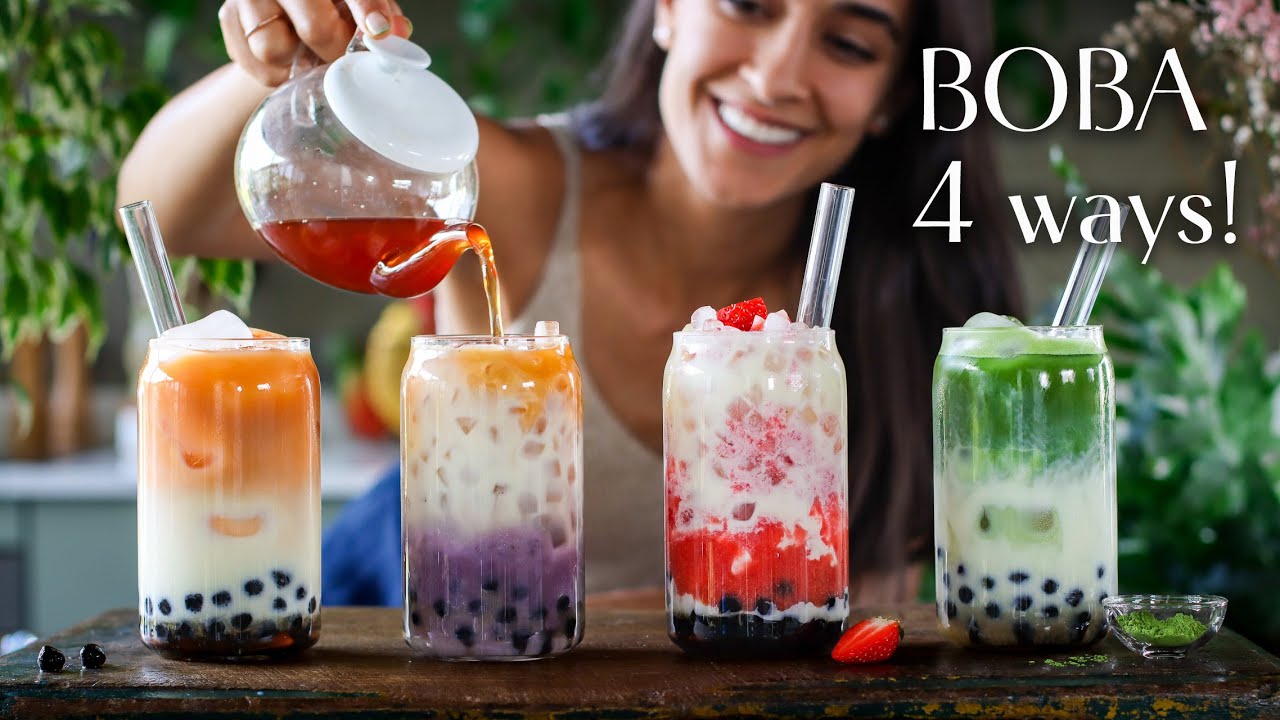
“Every boba shop has a line. Most of them also have ingredient lists that read like a chemistry exam. The good news: bubble tea is genuinely simple to make at home, and the homemade version beats the commercial one in every way that matters — texture control, sweetness control, and the satisfaction of never waiting behind someone ordering seventeen customizations. The only thing standing between you and perfect boba is understanding what the pearls are actually doing when they cook.”
Why This Recipe Works
Bubble tea looks like a novelty drink. It behaves like a precision operation. The gap between a cup of boba that tastes like the real thing and one that tastes like disappointing milk with bouncy marbles is almost entirely a function of two things: pearl doneness and tea strength. Get those right and the rest assembles itself.
The Pearl Problem
Tapioca pearls are made from cassava starch, which is one of the most unforgiving starches to cook. Underdone and the center is a hard, chalky marble. Overdone and they dissolve into the liquid and turn your tea into a starchy paste. The window between perfect and ruined is narrower than it looks — about 4 minutes either way.
The translucency test is the only reliable indicator. A properly cooked pearl is uniformly see-through from edge to center when held up to light. Any remaining white opacity means starch that hasn't fully gelatinized — which means a hard, gritty center. Taste one. Bite it in half. Trust your eyes and your teeth, not the clock alone.
The coating step after draining is not a finishing touch — it's structural. Hot tapioca starch is essentially food glue, and pearls piled on top of each other without separation will bond permanently within seconds. The cornstarch slurry creates a thin, neutral barrier between each pearl that stops the fusion while adding no flavor of its own. You have roughly 90 seconds after draining to coat them. Have the mixture already mixed in a bowl before you touch the strainer.
Tea Strength Is Everything
The single most common homemade bubble tea failure is weak tea. Four cups of milk is an enormous amount of dairy to flavor with 4 tea bags, and the ice further dilutes everything as it melts. The brewed tea going into this recipe needs to be aggressively strong — dark amber, nearly opaque, the kind of color that makes you think it's too intense to drink straight. That's correct. It's not being drunk straight.
Steep for the full 4-5 minutes. Don't rush it, don't squeeze the bags (bitter tannins), and use water that's fully boiling, not merely hot. Then let it cool completely before combining with the milk. Warm tea melts the ice instantly, which waters down the drink before it ever reaches the glass.
The Assembly Architecture
The layering order — pearls first, then ice, then milk tea — is not aesthetic. Pearls at the bottom stay in contact with the liquid throughout the drink, which keeps them from drying out and hardening. Ice in the middle creates thermal separation so the pearls don't get crushed. Milk tea poured over ice chills instantly without warming the pearls.
A wide bubble tea straw is not an accessory — it's the mechanism. Standard drinking straws have an inner diameter of about 4-5mm. A tapioca pearl is 6-8mm. The math doesn't work. Skipping the wide straw means drinking milk tea and fishing for pearls with a spoon, which is technically a different drink.
The vanilla extract and salt in the base are supporting cast, not soloists. Vanilla rounds off the sharp sweetness of the honey. Salt amplifies the tea flavor through contrast — the same reason salted caramel works. Neither should be detectable on its own. If your drink tastes like vanilla or tastes salty, you've used too much of either.
This is a drink built on simple ingredients and specific timing. Nail the pearls, strengthen the tea, and the rest follows.
Where Beginners Mess This Up
Before we start, read this. These are the 4 reasons your homemade bubble tea (better than the shop, made in 40 minutes) will fail:
- 1
Undercooking the tapioca pearls: Raw tapioca pearls look identical to properly cooked ones from the outside. The giveaway is the center — bite into an underdone pearl and you get a hard, starchy core surrounded by a gummy exterior. Cook them until they're fully translucent all the way through, with a uniform chew from edge to center. 8-10 minutes is the window, but always taste before draining.
- 2
Not coating the pearls immediately after draining: Hot, drained tapioca pearls are essentially starch glue. The moment they hit each other in the strainer without coating, they fuse into a single inedible clump. You have about 90 seconds after draining to toss them in the cornstarch-water mixture. Have it ready before you drain — not after.
- 3
Making the tea too weak: The milk dilutes everything. A tea that tastes correct on its own will taste like vaguely tan water once you add four cups of milk and a glass of ice. Steep until the liquid is deep amber — nearly opaque. This is not the moment for a delicate cup of tea.
- 4
Serving too warm: Bubble tea is a cold-drink experience. The contrast between icy tea and chewy pearls is part of what makes it work. If the brewed tea hasn't cooled completely before mixing, you melt the ice during service, water everything down, and lose the chill within minutes. Let the tea cool to room temperature — or speed it up in the fridge — before building the drink.
The Video Reference Library
Want to see it in action? Here are the exact videos we analyzed and combined to build this foolproof recipe translation:
The clearest walkthrough of the pearl cooking and coating technique. Pay close attention to the translucency test and how quickly they move to coat the pearls after draining.
🛠️ Core Equipment
- Fine-mesh strainerFor draining the tapioca pearls quickly and completely. A colander with large holes lets pearls fall through. Speed matters at this step — every extra second in the hot water is overcooking.
- Large pitcherThe milk tea needs room to stir without splashing. Mixing in the serving glass leads to uneven sweetener distribution — some glasses get all the honey, others get none.
- Wide bubble tea strawsStandard straws are too narrow for tapioca pearls. A wide straw is not optional equipment — it's the entire delivery mechanism. Without it, you're just drinking milk tea and chasing pearls with a spoon.
- Tall glassesThe layering of pearls, ice, and milk tea needs vertical space. Standard glasses overflow before you've added the ice. Pint glasses or tall tumblers give you the room to build the drink properly.
Homemade Bubble Tea (Better Than the Shop, Made in 40 Minutes)
🛒 Ingredients
- ✦4 cups whole milk
- ✦3 cups water, divided
- ✦4 black tea bags or 3 tablespoons loose black tea leaves
- ✦1 cup small tapioca pearls
- ✦3 tablespoons honey or agave nectar
- ✦2 tablespoons brown sugar
- ✦1 teaspoon vanilla extract
- ✦4 cups ice cubes
- ✦2 tablespoons cornstarch
- ✦3 tablespoons water for coating pearls
- ✦1 teaspoon sea salt
- ✦Optional: 2 tablespoons sweetened condensed milk for richness
👨🍳 Instructions
01Step 1
Bring 1 cup of water to a boil in a small saucepan over medium-high heat.
02Step 2
Steep the black tea bags in the hot water for 4-5 minutes until the liquid reaches a deep amber color, then remove the tea bags and set the brewed tea aside to cool for 10 minutes.
03Step 3
Bring 4 cups of water to a boil in a separate pot and add the tapioca pearls, stirring gently to prevent sticking.
04Step 4
Cook the pearls for 8-10 minutes, stirring occasionally, until they turn translucent with a slight chewy resistance when bitten.
05Step 5
Mix the cornstarch and 3 tablespoons of water together in a small bowl before draining the pearls — have it ready.
06Step 6
Drain the cooked pearls immediately through a fine-mesh strainer and toss at once with the cornstarch mixture to prevent clumping.
07Step 7
Pour the cooled brewed tea into a large pitcher and add 4 cups of whole milk, stirring until well combined.
08Step 8
Mix in the honey and brown sugar, stirring until fully dissolved, then add vanilla extract and a pinch of sea salt.
09Step 9
Divide the cooked tapioca pearls evenly among 4 tall glasses, filling each about one-quarter full.
10Step 10
Fill each glass halfway with ice cubes.
11Step 11
Pour the prepared milk tea mixture over the ice, filling each glass three-quarters full.
12Step 12
Stir well to combine and distribute the pearls, about 30 seconds. Top with additional ice if desired and serve immediately with wide bubble tea straws.
Nutrition Per Serving
Estimates based on standard preparation. Adjustments alter macros.
🔄 Substitutions
Instead of Black tea bags...
Use Oolong or green tea
Oolong gives floral, semi-roasted notes that work well with milk. Green tea produces a lighter, more herbaceous drink. Both need slightly shorter steeping times to avoid bitterness — 3 minutes maximum.
Instead of Whole milk...
Use Oat milk or full-fat coconut milk
Oat milk mimics whole milk's body most closely. Coconut milk adds richness and faint tropical sweetness. Avoid thin nut milks like almond — they're too watery to hold the flavor.
Instead of Tapioca pearls...
Use Chia seeds or popping boba
Chia seeds need 15 minutes to hydrate in the milk tea before serving. Popping boba (fruit juice filled) requires no cooking and adds a burst of flavor with each bite. Different experiences, but both viable.
Instead of Brown sugar...
Use Maple syrup or coconut sugar
Maple syrup adds a faint caramel note that plays well with black tea. Coconut sugar has a lower glycemic index and a similar molasses depth. Both dissolve easily in the milk tea base.
🧊 Storage & Reheating
In the Fridge
Store the milk tea base separately in an airtight container for up to 2 days. Do not store assembled drinks — the ice melts and the pearls harden.
In the Freezer
The milk tea base freezes well for up to 1 month. Thaw overnight in the fridge and stir well before using.
Reheating Rules
Tapioca pearls that have hardened in the fridge can be briefly revived by microwaving with a splash of water for 20-30 seconds. It's imperfect — cook fresh pearls whenever possible.
❓ Frequently Asked Questions
Why are my tapioca pearls hard in the center?
They're undercooked. Tapioca pearls need to be fully translucent when done — no white or opaque center. Increase your cook time by 2-minute increments, tasting each time, until the chew is uniform from edge to center.
Why did my pearls clump into one solid mass?
You didn't coat them quickly enough after draining. Hot, wet tapioca pearls fuse on contact. The cornstarch-water coating needs to happen within 90 seconds of the strainer. Have the coating mixture ready before you drain.
Can I make bubble tea without cornstarch for the coating?
You can substitute a light honey or simple syrup coating instead. It won't prevent clumping as effectively as cornstarch, so you'll need to stir more frequently and serve immediately. The cornstarch method is more reliable.
How do I keep the pearls from getting hard before serving?
Store cooked, coated pearls at room temperature in a small amount of simple syrup — never refrigerate them. Cold temperatures cause the starch to retrograde, turning the pearls dense and chewy in the wrong way. Use within 4 hours of cooking.
Can I use large tapioca pearls instead of small?
Yes, but the cook time increases to 20-30 minutes and they require a wider straw. Large pearls have a more substantial chew. Small pearls are more forgiving for first attempts — start there.
Why does my bubble tea taste watered down?
Your tea was too weak before adding the milk. The milk dilutes the tea significantly — you need to steep to a very deep amber, nearly opaque color. If it looks like the right strength for drinking straight, it's already too weak for bubble tea.
The Science of
Homemade Bubble Tea (Better Than the Shop, Made in 40 Minutes)
We turned everything on this page into a beautiful, flour-proof PDF cheat sheet. Print it out, stick it to your fridge, and never mess up your homemade bubble tea (better than the shop, made in 40 minutes) again.
*We'll email you the high-res PDF instantly. No spam, just perfectly cooked meals.
AlmostChefs Editorial Team
We translate the internet's most popular cooking videos into foolproof, beginner-friendly written recipes. We analyze multiple methods, test them in our kitchen, and engineer a single "Master Recipe" that gives you the best possible result with the least possible stress.