Classic Bruschetta with Tomato (The Italian Original, Done Right)
Crispy toasted bread rubbed with raw garlic and topped with a fresh tomato-basil mixture — the Italian appetizer that has been ruined by every mediocre restaurant in the Western world. We break down the three things that actually matter: the bread, the tomato prep, and the timing.

“Bruschetta is three ingredients and five minutes. It is also one of the most frequently butchered dishes in home cooking — soggy bread, watery tomatoes, jarred garlic paste, dried basil from a tin. The original is so good precisely because it's so simple. But simple means every shortcut shows. Here's how to make the version that tastes like it was made by someone who actually learned it in Italy.”
Why This Recipe Works
Bruschetta is proof that Italian cooking is not actually simple. It just looks that way because the complexity is hidden inside the ingredients, not the technique. Three tomatoes, some basil, good bread, good oil. Anyone can make it. Almost no one makes it well.
The word itself tells you something: bruschetta comes from the Roman dialect verb bruscare — to roast over coals. The original dish was peasant food, a way to check whether the new olive oil harvest was any good by pouring it over charred bread. The tomatoes came later, after they arrived from the Americas in the 16th century. The entire point of the dish, from the beginning, was to showcase the quality of a single ingredient. That framing matters.
The Bread Problem
Most people treat the bread as a delivery mechanism. It's not. It's the foundation, and it needs to be treated like one. The toast needs to be genuinely crisp — not just warm, not just lightly golden, but properly crunchy all the way through. This is what stands between you and a soggy mess two minutes after assembly.
Toasting at 400°F for five to seven minutes achieves this by driving moisture out of the crumb quickly. Lower temperatures dry the bread slowly and produce something closer to crouton consistency — hard rather than crisp. The diagonal cut matters too: more surface area per slice means more room for topping, and the angled cut creates a natural trough that helps hold the tomato mixture in place.
The garlic rub is the step most home cooks skip because it sounds fussy. It isn't. While the bread is still hot from the oven, drag a cut garlic clove across the surface. The bread's texture acts like a microplane, and the heat from the crust softens the garlic's raw edge. You get garlic flavor integrated into the bread itself, not sitting on top of it. This is what makes bruschetta taste like bruschetta and not like tomatoes on toast.
The Tomato Logic
Roma tomatoes are the correct choice because they have the geometry for this application: lower water content, denser flesh, fewer seeds, and thicker walls. Beefsteak tomatoes are beautiful for slicing but release a flood of liquid the moment you dice them. Hothouse tomatoes have all the visual cues of ripeness and none of the flavor. At the peak of summer, use whatever heirloom variety smells most intensely of tomatoes at the market. That smell is the only reliable quality indicator.
Dicing technique matters more than people think. Cut too large and every bite is unbalanced. Cut too small and you've made salsa. A ¼-inch dice is the target — small enough to fit cleanly on each bite of bread, large enough to retain distinct texture. And when you combine the tomatoes with the other ingredients, fold once and stop. Every additional fold crushes more cells, releases more liquid, and moves you closer to sauce. Two folds is the maximum.
The Timing Constraint
Bruschetta has a shelf life measured in seconds after assembly. The moment the tomato mixture touches the bread, osmosis begins — liquid migrates from the wet topping into the dry bread, and within 90 seconds you have noticeably softer toast. Within five minutes you have wet toast. Within ten minutes you have a structural failure.
This is not a dish you assemble and plate while you finish getting ready. It is a dish you assemble at the counter, carry immediately to the table, and eat. Use a slotted spoon to drain excess liquid as you scoop — the longer the topping has sat, the more liquid it's released, and all of that liquid is the enemy of a crisp base.
If you're feeding a crowd, toast the bread, prep the topping, and keep them completely separate until the last possible moment. Both components hold well independently for up to an hour. The assembly is the only step that has to happen at the last second.
That's the whole dish. No technique beyond patience with the tomatoes and urgency at the end. Simple, in exactly the way Italian food is always simple: everything visible, nowhere to hide.
Where Beginners Mess This Up
Before we start, read this. These are the 4 reasons your classic bruschetta with tomato (the italian original, done right) will fail:
- 1
Using underripe or refrigerated tomatoes: Cold tomatoes are flavor-dead tomatoes. Refrigeration suppresses the volatile compounds that give ripe tomatoes their sweetness and acidity. Use Roma or heirloom tomatoes at room temperature, fully ripe — they should smell like tomatoes when you hold them up. If you can't find good fresh tomatoes, wait. There is no substitute.
- 2
Letting the topping sit on the bread: Bruschetta is an assembly-to-plate dish. The moment the tomato mixture touches the toasted bread, the bread starts absorbing liquid and softening. You have about 90 seconds before it turns into wet toast. Spoon it on right before serving, not five minutes beforehand while you finish setting the table.
- 3
Skipping the garlic rub: This is the step that separates bruschetta from crostini with tomatoes. While the bread is still hot from the oven, you rub a raw cut clove across the surface. The heat softens the garlic slightly and the rough bread surface grates it directly into the crust. You get garlic flavor without any harsh bite. Do not skip this. Do not use minced garlic spread on top instead.
- 4
Over-mixing the tomato topping: Tomatoes crush easily. The moment you crush them, they release their liquid and turn the topping soupy. Fold gently, once, and stop. You want distinct diced pieces, not salsa.
The Video Reference Library
Want to see it in action? Here are the exact videos we analyzed and combined to build this foolproof recipe translation:
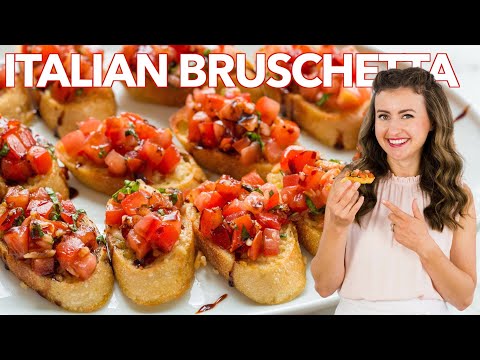
The primary reference video. Demonstrates the garlic rub technique and the correct tomato consistency — diced, not crushed — that most recipes skip over.
2. Italian Appetizer Fundamentals
Covers the broader context of Italian antipasto and where bruschetta fits in the meal structure. Useful for understanding why simplicity is the point.
3. How to Pick and Use Ripe TomatoesA practical breakdown of tomato selection and why room-temperature fruit makes a measurable difference in flavor output.
🛠️ Core Equipment
- Rimmed baking sheet ↗For toasting the bread slices in a single, even layer. Parchment paper prevents sticking and makes cleanup instant — skip it and you're scraping bread off a pan.
- Serrated bread knife ↗Clean diagonal cuts without compressing the crumb. A straight chef's knife tears baguette rather than slicing it, which ruins the even thickness you need for consistent toasting.
- Slotted spoon ↗Essential for serving. The tomato mixture releases liquid as it sits. A slotted spoon lets you drain that excess liquid back into the bowl before each scoop, keeping the bread crisp for a few extra seconds.
- Medium mixing bowl ↗Wide enough to fold the tomato mixture without crushing it. Narrow bowls force you to stir vertically, which breaks down the tomatoes faster.
Classic Bruschetta with Tomato (The Italian Original, Done Right)
🛒 Ingredients
- ✦1 French baguette or crusty Italian bread loaf
- ✦4 medium ripe Roma tomatoes, finely diced
- ✦4 cloves fresh garlic, minced (plus 1 whole clove for rubbing)
- ✦8 fresh basil leaves, torn by hand
- ✦3 tablespoons extra virgin olive oil
- ✦2 tablespoons balsamic vinegar
- ✦1 teaspoon sea salt
- ✦½ teaspoon freshly ground black pepper
- ✦¼ teaspoon red pepper flakes
- ✦½ small red onion, finely minced
- ✦2 tablespoons freshly grated Parmesan cheese
- ✦½ teaspoon Italian seasoning blend
👨🍳 Instructions
01Step 1
Preheat your oven to 400°F and line a rimmed baking sheet with parchment paper.
02Step 2
Slice the baguette diagonally into ½-inch thick pieces and arrange them in a single layer on the prepared baking sheet.
03Step 3
Brush each bread slice lightly with 1 tablespoon of olive oil, distributing it evenly across the surface.
04Step 4
Bake for 5 to 7 minutes until the edges are light golden brown and the surface is crispy.
05Step 5
Remove from the oven and immediately rub each slice with the cut side of a whole garlic clove while still hot.
06Step 6
Combine the diced Roma tomatoes, minced red onion, torn basil, remaining 2 tablespoons olive oil, balsamic vinegar, sea salt, black pepper, red pepper flakes, and Italian seasoning in a medium mixing bowl.
07Step 7
Gently fold the mixture once or twice with a wooden spoon. Stop before it looks fully combined — you want it just barely mixed.
08Step 8
Let the tomato mixture sit for 5 minutes to allow the flavors to meld.
09Step 9
Using a slotted spoon, spoon the tomato topping generously onto each garlic-rubbed slice, letting excess liquid drain back into the bowl.
10Step 10
Sprinkle grated Parmesan over each finished bruschetta.
11Step 11
Arrange on a serving platter and serve immediately.
Nutrition Per Serving
Estimates based on standard preparation. Adjustments alter macros.
🔄 Substitutions
Instead of French baguette...
Use Whole grain or sprouted grain bread
Denser crumb holds up slightly longer under the tomato topping. Nuttier flavor that works well with the balsamic. More fiber per slice.
Instead of Extra virgin olive oil...
Use Avocado oil
Higher smoke point — better for the oven toast step. Nearly identical taste at room temperature. Slightly lighter mouthfeel on the finished bruschetta.
Instead of Balsamic vinegar...
Use Red wine vinegar with a small pinch of honey
More acidic and less sweet. Add the honey in tiny amounts — a quarter teaspoon is usually enough. Brightens the topping without the thick sweetness of balsamic.
Instead of Parmesan cheese...
Use Nutritional yeast or omit entirely
Nutritional yeast delivers a savory, cheesy note without dairy. Omitting entirely is also a valid choice — the tomato-basil-garlic combination is complete without it.
🧊 Storage & Reheating
In the Fridge
Store the tomato topping and toasted bread separately. Topping keeps in an airtight container for up to 24 hours, though it will release more liquid as it sits. Drain before serving. Toasted bread keeps at room temperature in an open bag for up to 2 days.
In the Freezer
Not recommended. Tomatoes turn mushy after freezing and the bread loses its crispness.
Reheating Rules
Re-crisp stored bread slices in a 375°F oven for 3-4 minutes. Never microwave — it steams the bread and destroys the crunch entirely.
❓ Frequently Asked Questions
Why is my bruschetta soggy?
Two reasons: you either assembled too early and let the tomato mixture sit on the bread, or your tomatoes released too much water into the topping before it hit the bread. Fix the first by assembling immediately before serving. Fix the second by salting and draining the diced tomatoes for 10 minutes before mixing.
Can I make the tomato topping ahead of time?
Yes, up to an hour in advance. Keep it in the bowl, uncovered, at room temperature. It will release liquid as it sits — drain it with a slotted spoon before spooning onto the bread. Don't mix it hours ahead; the basil will turn black and the tomatoes will turn to mush.
Do I really need to rub the bread with garlic?
Yes. This is the defining technique of bruschetta as a dish. It deposits raw garlic flavor directly into the hot crust without the harshness of raw minced garlic sitting on top. It's a five-second step. Do it.
What tomatoes work best?
Roma tomatoes are the standard choice — lower water content, meatier flesh, less seedy than beefsteak varieties. In peak summer, heirloom tomatoes are exceptional. Cherry tomatoes, halved, also work well and require no draining. Avoid hothouse tomatoes — they're bred for shelf life, not flavor.
Can I use dried basil instead of fresh?
You can, but the result is not bruschetta. Dried basil tastes medicinal and completely lacks the bright, floral quality that fresh basil brings. If you don't have fresh basil, substitute fresh flat-leaf parsley instead. It won't be the same dish, but it won't be a disappointment either.
What bread is best if I can't find a baguette?
Any crusty, open-crumbed bread with a solid crust works — ciabatta, sourdough, Italian country loaf. Avoid soft sandwich bread, brioche, or anything with a tight, pillowy crumb. The bread needs to be structural enough to support the topping without immediately collapsing.
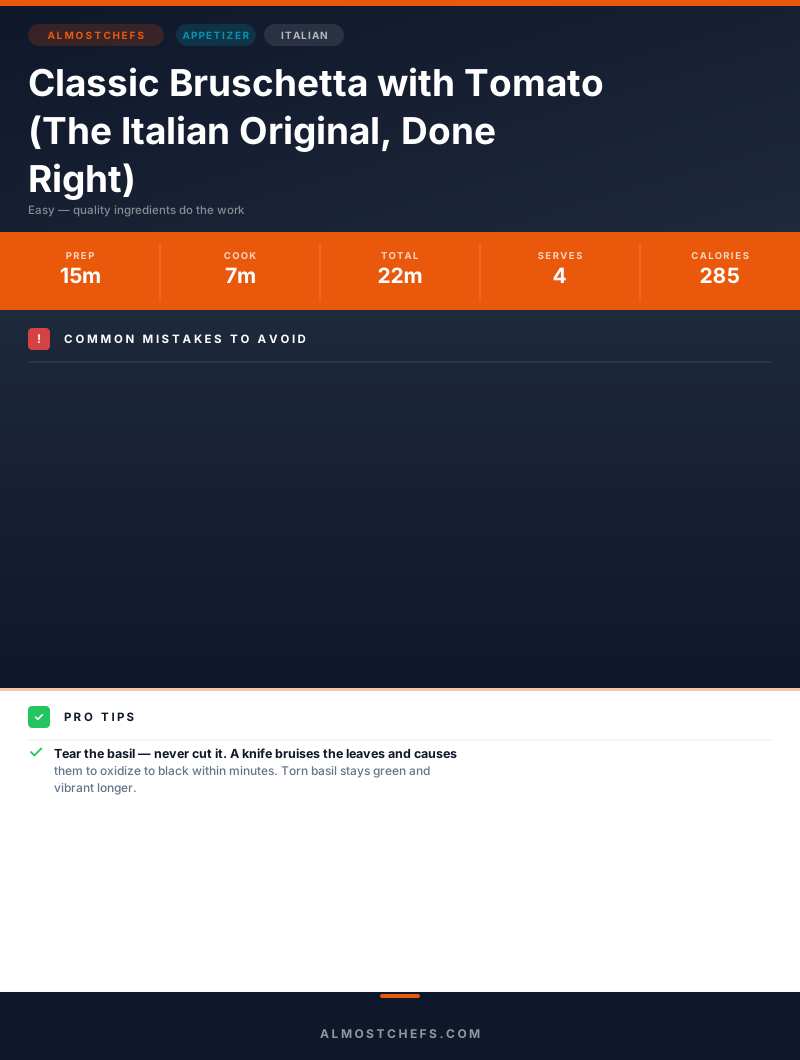
The Science of
Classic Bruschetta with Tomato (The Italian Original, Done Right)
We turned everything on this page into a beautiful, flour-proof PDF cheat sheet. Print it out, stick it to your fridge, and never mess up your classic bruschetta with tomato (the italian original, done right) again.
*We'll email you the high-res PDF instantly. No spam, just perfectly cooked meals.
AlmostChefs Editorial Team
We translate the internet's most popular cooking videos into foolproof, beginner-friendly written recipes. We analyze multiple methods, test them in our kitchen, and engineer a single "Master Recipe" that gives you the best possible result with the least possible stress.