Classic Italian Bruschetta (Stop Drowning It in Soggy Tomatoes)
Crispy garlic-rubbed toasted bread topped with a fresh mixture of ripe Roma tomatoes, torn basil, and aged balsamic that's had time to meld. We broke down the technique so the bread stays crunchy and the topping stays bright — right up until the moment it hits the table.
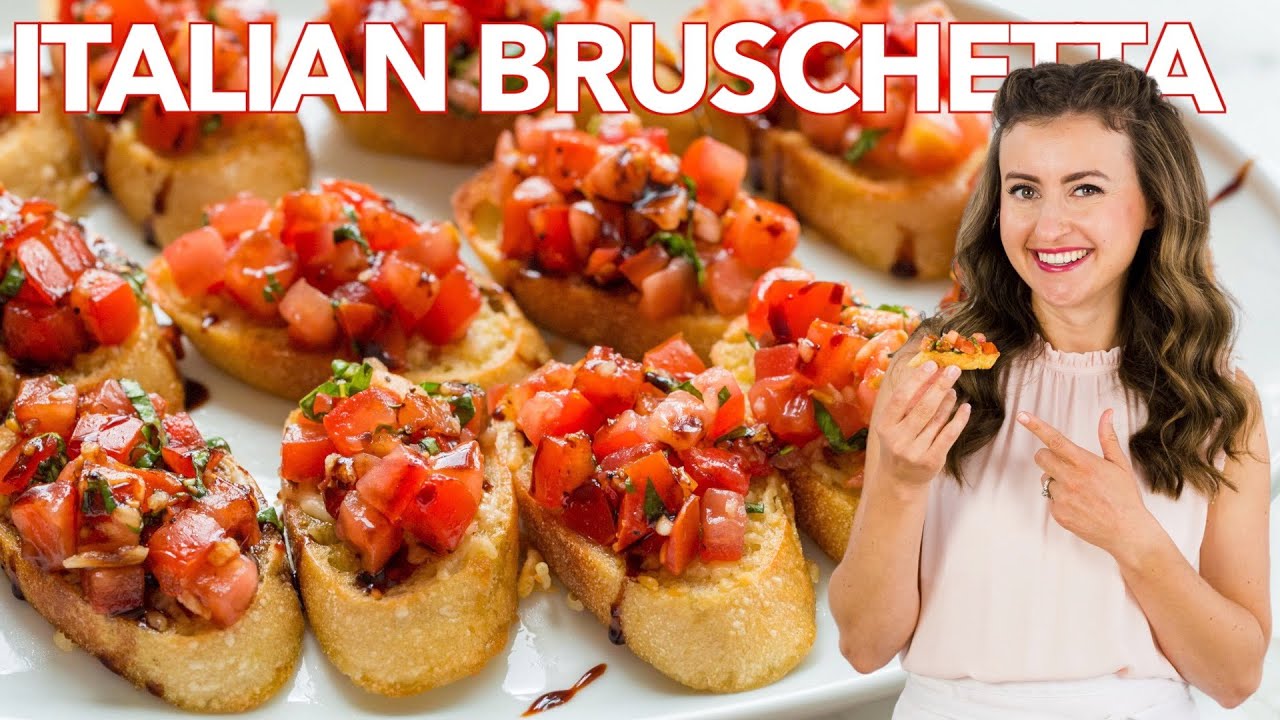
“Bruschetta is four ingredients pretending to be complicated. The reason most versions disappoint is not the recipe — it's the sequence. Wet tomatoes on warm bread is a clock ticking toward soggy. This recipe fixes that by teaching you the exact order of operations that keeps the bread crispy and the topping vibrant from first bite to last.”
Why This Recipe Works
Bruschetta is the simplest possible test of whether you understand Italian cooking. Four core ingredients. No heat after the toast. No technique more complicated than dicing. And yet most versions are either drowning in tomato water, piled on limp bread, or tasting like the garlic is an afterthought. The recipe doesn't fail. The sequence does.
The Moisture Problem Is Everything
Roma tomatoes are approximately 94% water by weight. When you dice them, you rupture cell walls and release that moisture into the bowl. When you add salt, you accelerate the release further. By the time a poorly-prepped topping hits the bread, it's already carrying enough liquid to destroy any crunch in under three minutes.
The fix is mechanical and unglamorous: paper towels, applied with actual pressure, before the tomatoes go anywhere near a bowl. Press hard. Use two layers. The goal is to remove the free-surface moisture — the liquid sitting on the cut faces of the dice — not to squeeze the tomatoes dry. Over-pressing turns them to pulp. You want them damp, not wet.
The 15-to-20-minute macerating rest is not optional either. Salt pulls a controlled amount of moisture from the interior of the tomato, which then emulsifies with the extra virgin olive oil and balsamic into a light, coherent dressing. This is the flavor base. Skip the rest and you have individual ingredients sitting next to each other, not a topping.
What the Garlic Rub Actually Does
There is a fundamental difference between garlic bread and bruschetta, and it lives in this step. Garlic bread uses butter or oil pre-infused with cooked garlic — mellow, soft, sweet. Bruschetta uses raw garlic dragged across a hot rough surface, which grates it directly into the toast's open crumb. The heat of the bread slightly blooms the garlic's volatile allicin compounds without cooking them away entirely.
The result is sharp, aromatic, and present — not background noise. It's why bruschetta from a restaurant that pre-makes everything tastes flat: they've toasted cold bread, or rubbed it after it cooled, and the garlic has nowhere to go. The rub has to happen within thirty seconds of the bread leaving the oven. This is not a suggestion.
Bread Selection Is Structural
The bread is not a neutral vehicle. It's load-bearing. A sharp chef's knife cutting half-inch slices gives you the right ratio of crust to crumb — thick enough to hold the topping without bending, thin enough to toast evenly all the way through at 425°F without burning the outside before the center crisps.
Ciabatta's open crumb structure absorbs the garlic rub more deeply and gives a slightly chewier bite. Baguette's denser crumb produces a crisper, more uniform snap. Both work. Soft sandwich bread does not work, ever, under any circumstances. If a slice bends when held at one end, it will not survive the topping.
Assembly Is a Window, Not a Schedule
The single most important thing to understand about bruschetta is that it is a moment in time, not a dish that can be prepared in advance. The assembly window — from topping hitting bread to optimal eating — is roughly five minutes. After that, moisture migration has begun and cannot be reversed.
For a dinner party, this means toasting bread in rounds rather than all at once. It means keeping the topping refrigerated until twenty minutes before service. It means assembling at the table, not in the kitchen. Bruschetta rewards organization, not multitasking.
Everything else — the balsamic, the Parmesan, the red pepper flakes — exists to add dimension to a dish that is fundamentally about tomato, garlic, bread, and timing. Get the timing right and the ingredients do the rest.
Where Beginners Mess This Up
Before we start, read this. These are the 4 reasons your classic italian bruschetta (stop drowning it in soggy tomatoes) will fail:
- 1
Skipping the tomato drying step: Roma tomatoes contain a significant amount of free moisture. If you skip patting them dry before mixing, that liquid releases into the topping and immediately soaks into the toasted bread, turning it soft within two minutes. Press them firmly between paper towels and don't rush it.
- 2
Assembling too early: Bruschetta is a last-second dish. The moment the tomato topping hits the bread, moisture migration begins. Assemble more than five minutes before serving and the bread is already softening. The topping can sit for 20 minutes — the assembly cannot.
- 3
Rubbing cold bread with garlic: The garlic rub only works on hot bread. Heat from the oven opens the surface of the toast, allowing the garlic's volatile oils to absorb directly into the crumb. On cooled bread, you're just dragging garlic across a closed surface. Rub immediately when the pan comes out of the oven.
- 4
Using under-ripe tomatoes: Bruschetta is not a sauce. There is nowhere to hide a mealy, flavorless tomato. Roma tomatoes should be deep red, slightly soft to the touch, and smell like tomatoes — not cardboard. If your tomatoes have no aroma, they will have no flavor.
The Video Reference Library
Want to see it in action? Here are the exact videos we analyzed and combined to build this foolproof recipe translation:
The primary reference video for this recipe. Covers the full technique from tomato prep through assembly, with good close-ups of the garlic rub step and the correct bread color to pull from the oven.
🛠️ Core Equipment
- Large rimmed baking sheetA flat, heavy sheet ensures even contact between the bread and the oven rack heat, giving you uniform crisping across every slice. Dark pans absorb more heat and brown the bottom faster — keep that in mind and shorten your toast time slightly.
- Pastry brushFor applying the olive oil to the bread in a controlled, thin layer. Too much oil and the bread becomes greasy and never fully crisps. A brush gives you even coverage without pooling.
- Sharp chef's knifeDicing Roma tomatoes into uniform quarter-inch cubes matters more than it sounds. Rough, uneven chunks mean some pieces release more moisture faster than others, making the topping inconsistent. A sharp knife also avoids crushing the tomato cells unnecessarily.
Classic Italian Bruschetta (Stop Drowning It in Soggy Tomatoes)
🛒 Ingredients
- ✦1 loaf Italian baguette or ciabatta bread, sliced into ½-inch thick pieces
- ✦5 medium Roma tomatoes, diced into ¼-inch cubes
- ✦3 cloves fresh garlic, minced fine
- ✦1 whole garlic clove for rubbing
- ✦¼ cup fresh basil leaves, hand-torn into rustic pieces
- ✦4 tablespoons extra virgin olive oil, divided
- ✦1½ tablespoons aged balsamic vinegar
- ✦¼ cup red onion, finely diced
- ✦½ teaspoon kosher salt
- ✦¼ teaspoon freshly ground black pepper
- ✦½ teaspoon dried oregano or Italian seasoning blend
- ✦3 tablespoons freshly grated Parmesan cheese
- ✦¼ teaspoon garlic powder
- ✦Pinch of red pepper flakes, optional
👨🍳 Instructions
01Step 1
Pat the diced tomatoes firmly dry with clean paper towels to remove excess moisture, then transfer to a medium mixing bowl.
02Step 2
Add the minced garlic, finely diced red onion, torn basil leaves, and dried oregano to the tomatoes and stir gently to combine.
03Step 3
Drizzle 3 tablespoons of extra virgin olive oil and the balsamic vinegar over the tomato mixture, then season with kosher salt, black pepper, and garlic powder.
04Step 4
Toss the topping with a wooden spoon, then set aside at room temperature for 15 to 20 minutes to allow the flavors to meld.
05Step 5
Preheat the oven to 425°F and arrange baguette slices in a single layer on a large baking sheet.
06Step 6
Brush the top of each bread slice lightly with the remaining 1 tablespoon of olive oil.
07Step 7
Toast in the oven for 5 to 7 minutes until edges are golden and the surface is firm and crispy. Watch closely after the 5-minute mark.
08Step 8
Remove from the oven and immediately rub the hot surface of each slice with the cut side of the whole garlic clove while the bread is still hot.
09Step 9
Spoon a generous portion of the tomato topping onto each garlic-rubbed slice, dividing the mixture evenly.
10Step 10
Sprinkle freshly grated Parmesan over each piece and add a pinch of red pepper flakes if desired.
11Step 11
Arrange on a serving platter and serve immediately while the bread is still warm and crispy.
Nutrition Per Serving
Estimates based on standard preparation. Adjustments alter macros.
🔄 Substitutions
Instead of Italian baguette...
Use Whole grain or sprouted bread
Slightly nuttier and denser. Requires an extra 1-2 minutes of toasting time to achieve the same crunch. The earthier flavor actually pairs well with a sharper balsamic.
Instead of Extra virgin olive oil...
Use Avocado oil
Higher smoke point and more neutral flavor. Lets the tomato and basil come forward without olive oil's peppery finish. Use the same quantity.
Instead of Roma tomatoes...
Use Cherry tomatoes, halved and quartered
Sweeter and naturally lower in water content, which reduces sogginess. Faster to prep. The irregular shapes add visual interest on the toast.
Instead of Parmesan cheese...
Use Nutritional yeast
Adds umami and a mild cheesy quality without dairy. Use about half the quantity — nutritional yeast is more intensely savory than Parmesan by volume.
🧊 Storage & Reheating
In the Fridge
Store the tomato topping separately in an airtight container for up to 2 days. Do not store assembled bruschetta — the bread will be soggy and unrecoverable.
In the Freezer
Not recommended. Tomatoes lose their texture completely when frozen and thawed, and the topping becomes watery and flat.
Reheating Rules
Re-toast the bread slices in a 400°F oven for 3-4 minutes if made ahead. Re-assemble with fresh topping. There is no way to revive assembled bruschetta — prevent the problem by storing components separately.
❓ Frequently Asked Questions
Why does my bruschetta always turn out soggy?
Two causes, usually both at once: tomatoes weren't dried thoroughly before mixing, and you assembled too early. Pat the tomatoes aggressively dry, and do not put topping on bread more than five minutes before serving. Bruschetta waits for no one.
Can I make bruschetta ahead of time for a party?
You can make the topping up to two hours ahead and refrigerate it. Toast the bread up to 30 minutes ahead and leave it uncovered at room temperature so it stays crispy. Assemble in rounds right before serving — never all at once.
What kind of bread works best?
A crusty Italian baguette or ciabatta. The crust needs to be sturdy enough to hold the topping without bending. Soft sandwich bread collapses immediately. If the bread bends when you pick up a slice, it's the wrong bread.
Do I have to use Roma tomatoes specifically?
No, but Roma is ideal because it has less water content and fewer seeds than beefsteak or vine tomatoes. Cherry tomatoes are a strong alternative. Avoid using very large tomatoes — they release too much liquid too fast.
Why rub garlic on the bread instead of just using garlic bread?
The hot toast acts like a microplane — the rough surface grates the raw garlic as you rub, releasing its oils directly into the bread without cooking them. You get raw garlic's sharpness and heat, not the mellow sweetness of roasted or sautéed garlic. It's a completely different flavor profile.
Can I use dried basil instead of fresh?
Technically yes, but it completely changes the dish. Fresh basil is aromatic and floral — dried basil is muted and slightly medicinal by comparison. Bruschetta is one of those recipes where the fresh herb is load-bearing. If you can't get fresh basil, flat-leaf parsley is a better substitute than dried basil.
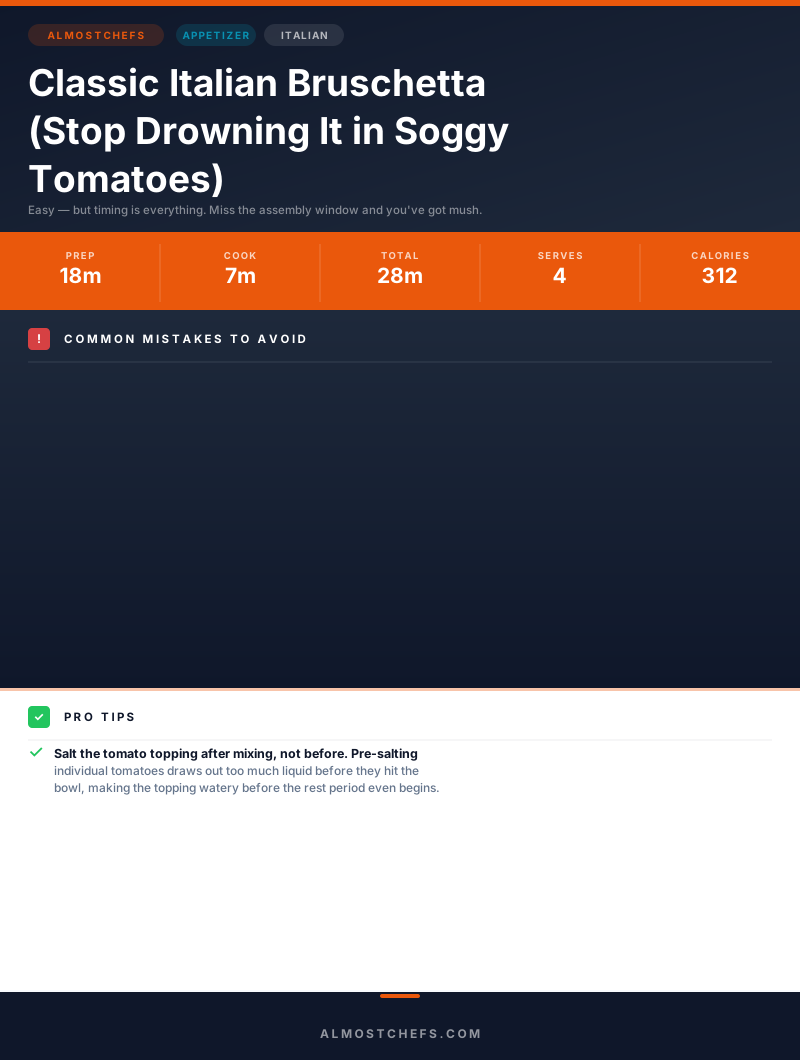
The Science of
Classic Italian Bruschetta (Stop Drowning It in Soggy Tomatoes)
We turned everything on this page into a beautiful, flour-proof PDF cheat sheet. Print it out, stick it to your fridge, and never mess up your classic italian bruschetta (stop drowning it in soggy tomatoes) again.
*We'll email you the high-res PDF instantly. No spam, just perfectly cooked meals.
AlmostChefs Editorial Team
We translate the internet's most popular cooking videos into foolproof, beginner-friendly written recipes. We analyze multiple methods, test them in our kitchen, and engineer a single "Master Recipe" that gives you the best possible result with the least possible stress.