Fudgy Brownies (Melted Chocolate Method, Underbake Technique, Dense-Chewy Result)
Fudgy brownies built on melted chocolate (not cocoa powder alone), a high fat-to-flour ratio, and a deliberate underbake. The melted chocolate method produces a denser, fudgier result that no cocoa-only recipe can match.

“The brownie debate — fudgy versus cakey — is actually a ratio debate. Fudgy brownies have a high fat-to-flour ratio, relatively less leavening, and they are deliberately underbaked. The most common mistake is overbaking, usually because home cooks trust the toothpick test. The toothpick test tells you when a baked good has no liquid batter remaining. For brownies, 'no liquid batter remaining' means 'overcooked.' The correct doneness indicator for fudgy brownies is timing and the edges-set-center-glossy visual cue — not a clean toothpick.”
Why This Recipe Works
Brownies are a ratio problem. Every choice in this recipe — the type of chocolate, the sugar blend, the amount of flour, the baking time — is a decision about the final texture on a spectrum from fudgy to cakey. Fudgy brownies are not better than cakey brownies in any absolute sense, but the melted chocolate method, high fat ratio, and deliberate underbake in this recipe are specifically engineered to produce the densest, most chocolate-forward result possible. Understanding why each element works also tells you exactly what to change if you want to adjust the output.
Melted chocolate versus cocoa powder is a fat argument. Cocoa powder is manufactured by pressing cacao beans to extract cocoa butter, then grinding the remaining cocoa solids into powder. The pressing removes the majority of the fat — cocoa powder is only about 10-22% fat by weight, compared to cacao beans, which are 50-55% fat. Dark chocolate is roughly 30-40% cocoa butter. When you replace some of the cocoa powder in a brownie recipe with melted chocolate, you're adding back cocoa butter — a highly saturated fat with a melting point of around 93-97°F (just below human body temperature). That fat does two specific things in the baked brownie: it inhibits gluten formation (fat coats flour proteins, preventing them from hydrating and forming gluten networks), and it contributes to the mouth-coating, melt-on-the-tongue sensation that defines fudgy brownies. A cocoa-only brownie has more gluten structure and less fat — it's chewier, lighter, and less dense. A melted-chocolate brownie is denser, richer, and fudgier because of the additional cocoa butter. This is not a small difference — side-by-side, the texture gap is significant and immediately noticeable.
The fat-to-flour ratio controls everything. The ratio in this recipe is approximately 1:0.84 by weight (fat to flour). That's a high fat-to-flour ratio — for comparison, a typical chocolate cake is closer to 1:2.5. The flour in a baked good provides structure through gluten development and starch gelatinization. The fat suppresses both processes by coating the flour proteins (preventing gluten formation) and interfering with starch granule hydration. High fat relative to flour means less structure, which translates directly to a denser, more tender crumb that doesn't hold together with the same rigidity as cake. This is why cutting a warm fudgy brownie produces a collapsed, smeared result — there's not enough structure at warm temperatures to maintain the shape. Cooling (and refrigerating) firms the cocoa butter back into a semi-solid state, providing temporary structure for clean cuts.
Sugar structure does two jobs. This recipe uses both granulated sugar and brown sugar. Granulated sugar (sucrose) is hygroscopic — it attracts and retains moisture. In a baked brownie, undissolved sugar crystals pull moisture from the surrounding structure, contributing to a moist, dense crumb. Brown sugar is granulated sugar with molasses mixed back in. Molasses contains invert sugar (glucose and fructose) plus organic acids and water. The higher moisture content of brown sugar compared to white contributes additional fudginess. More importantly, brown sugar is more acidic than white sugar (from the molasses), which slightly retards gluten development (acid weakens gluten) and produces a marginally denser crumb. The combination of both sugars — primarily white for dissolved sugar volume, brown for moisture and slight acidity — produces a more complex result than either alone. The vigorous whisking of sugars into the warm chocolate-butter mixture is also responsible for the papery, crinkled top crust: dissolved sugar migrates to the surface during baking and forms a thin, crispy meringue-like layer from the egg proteins in the batter.
The toothpick test is wrong for this application. The toothpick test was developed for cakes, where the goal is a fully set, dry crumb. It tests whether liquid batter remains — a clean toothpick means the proteins have set and the starch has gelatinized throughout the crumb. For a fudgy brownie, that's the overcook condition. A fudgy brownie has a semi-liquid center at the correct doneness — not raw batter (which would be dangerous from a food safety standpoint with eggs), but a dense, moist, fudge-like set. A toothpick inserted in the correct-doneness brownie comes out with moist, fudgy crumbs clinging to it. The visual cue from the pan is more reliable: set edges pulling slightly from the pan wall, a glossy (not dry or matte) center surface, and a center that has a slight jiggle but is no longer liquid. A dry, matte center means overcooked.
Cooling before cutting is structural, not optional. Cocoa butter has a relatively sharp melting transition — it goes from solid to liquid over a narrow temperature range around body temperature. At oven temperature, the brownie's cocoa butter fat is fully liquid, and the entire fudgy structure is in a fluid state despite the set egg and starch matrix. As the brownies cool, the cocoa butter re-solidifies into a semi-crystalline structure that holds the brownie's shape. At room temperature the structure is adequate for cutting; refrigerating briefly takes the cocoa butter firmly below its melting range and produces clean, intact cuts. Using a sharp knife dipped in hot water between cuts melts the thin layer of fat on the cutting edge, preventing it from dragging through the brownie and compressing the fudgy center.
Flaky sea salt is a legitimate finishing ingredient here, not a trend. Salt suppresses bitterness at the receptor level and enhances sweetness — the salt ions bind to the same receptors that respond to bitter compounds, effectively blocking the bitterness signal. In a high-cocoa-content brownie, there's significant bitterness from the chocolate. The flaky salt on the surface doesn't make the brownie salty — it makes it taste more chocolatey and sweeter than it would without.
Where Beginners Mess This Up
Before we start, read this. These are the 4 reasons your fudgy brownies (melted chocolate method, underbake technique, dense-chewy result) will fail:
- 1
Cakey, dry brownies when fudgy was the goal: The most common failure. Either the brownies were overbaked (even 3-4 minutes past the correct time dramatically changes texture), too much flour was added, or a chemical leavener (baking powder) was included. Fudgy brownies have no baking powder. They use only the steam from eggs and liquid fat as lift, which produces a dense, tight crumb. Baking powder adds gas bubbles that lighten the structure and push the texture toward cake.
- 2
Greasy, separated layer on top: The butter and chocolate weren't fully combined before adding the eggs, or the chocolate mixture was too hot when the eggs were added. If the fat wasn't emulsified properly into the batter, it separates during baking and floats to the surface. The chocolate mixture should be warm, not hot (below 115°F) when the eggs go in. Above that temperature, the eggs begin to scramble before they can emulsify.
- 3
Dry, crumbly edges with gooey center: The pan is likely too large (spreading the batter too thin) or the oven temperature is uneven. Use an 8x8-inch pan for this recipe. In a 9x13-inch pan, the batter is too shallow and the edges overcook before the center sets.
- 4
Brownies fall apart when cut: They weren't cooled completely before cutting. The starch structure in the brownies sets as they cool — cutting warm brownies collapses the still-fluid fudgy center, which hasn't firmed. Cool to room temperature in the pan (at least 1 hour), then refrigerate for 30 minutes before cutting for clean, intact squares.
The Video Reference Library
Want to see it in action? Here are the exact videos we analyzed and combined to build this foolproof recipe translation:
The definitive science-forward brownie breakdown — covers fat-to-flour ratio, the role of each sugar, the melted chocolate method, and a direct comparison between cocoa-only and melted chocolate brownies. Watch the first 4 minutes for the ratio explanation alone.
Weissman's recipe with emphasis on the underbake technique and cooling protocol. Good visual reference for the correct doneness cues — edges set, center glossy, toothpick with moist crumbs.
Andrew Rea's brownie technique with a focus on the chocolate quality and sugar structure. Useful supplementary reference for understanding why the specific chocolate-to-cocoa ratio matters.
🛠️ Core Equipment
- 8x8-inch metal baking panGlass and ceramic pans conduct heat differently than metal — they heat more slowly and unevenly, which extends baking time and changes the set of the edges. A metal pan browns the exterior slightly faster, producing the characteristic crinkled crust. Use the correct size — a larger pan produces thin brownies that overbake.
- Double boiler or heatproof bowlChocolate scorches above 120°F. A double boiler (or a heatproof bowl set over simmering water) melts chocolate gently, keeping it below scorching temperature. The water in the saucepan should simmer, not boil — steam alone provides enough heat.
- Instant-read thermometerFor checking the temperature of the chocolate-butter mixture before adding eggs. Above 115°F, eggs begin to cook — which scrambles them rather than incorporating them into the batter. Below 90°F, the mixture is too cool to emulsify smoothly. Target 95-110°F.
- Rubber spatulaFor folding flour into the batter with minimal agitation. Over-mixing after flour is added develops gluten, which creates a tougher, chewier texture in the wrong direction — rubbery rather than fudgy.
- Sharp chef's knife or bench scraperFor cutting cooled brownies. A [sharp knife](/kitchen-gear/review/chefs-knife) dipped in hot water and dried between cuts produces clean edges. A dull knife or a sawing motion compresses the fudgy center and creates ragged cuts.
Fudgy Brownies (Melted Chocolate Method, Underbake Technique, Dense-Chewy Result)
🛒 Ingredients
- ✦4 oz semi-sweet chocolate, roughly chopped (about 113g)
- ✦4 oz (1 stick / 113g) unsalted butter, cut into pieces
- ✦1 cup (200g) granulated sugar
- ✦1/4 cup (50g) brown sugar, packed
- ✦3 large eggs, room temperature
- ✦2 teaspoons pure vanilla extract
- ✦3/4 cup (95g) all-purpose flour
- ✦1/4 cup (25g) Dutch-process cocoa powder
- ✦1/2 teaspoon fine salt
- ✦1 cup chocolate chips or roughly chopped walnuts (optional)
- ✦Flaky sea salt (such as Maldon) for finishing
👨🍳 Instructions
01Step 1
Preheat oven to 350°F (175°C). Line an 8x8-inch metal baking pan with parchment paper, leaving overhang on two sides for easy removal. Lightly grease the parchment.
02Step 2
Melt chopped chocolate and butter together in a double boiler (or heatproof bowl set over simmering water), stirring until smooth. Remove from heat. Let cool to 95-110°F.
03Step 3
Add granulated sugar and brown sugar to the warm chocolate mixture. Whisk vigorously for 60-90 seconds until the mixture is smooth and the sugars have partially dissolved.
04Step 4
Add eggs one at a time, whisking well after each addition. Add vanilla. Whisk until the batter is thick, glossy, and falls in ribbons.
05Step 5
Sift flour, cocoa powder, and salt directly over the chocolate mixture. Fold with a rubber spatula using as few strokes as possible — fold just until no dry flour streaks remain.
06Step 6
Fold in chocolate chips or walnuts if using.
07Step 7
Pour batter into the prepared pan. Spread to an even layer. Sprinkle flaky sea salt over the surface.
08Step 8
Bake at 350°F for 23-27 minutes. The edges should be set and pulling slightly from the pan. The center should look glossy, slightly under-set, and a toothpick inserted in the center should come out with moist, fudgy crumbs — not wet batter, but not clean. This is correct.
09Step 9
Remove from oven. Cool completely in the pan on a wire rack — minimum 1 hour, ideally 2. Refrigerate for 30 minutes before cutting for the cleanest slices. Lift out by the parchment, cut into 16 squares with a sharp knife dipped in hot water between cuts.
Nutrition Per Serving
Estimates based on standard preparation. Adjustments alter macros.
🔄 Substitutions
Instead of Semi-sweet chocolate...
Use Bittersweet chocolate (60-72% cacao)
Produces a less sweet, more intensely chocolatey brownie. Reduce sugar by 2 tablespoons. Higher cacao percentage = more cocoa butter = slightly fudgier result.
Instead of Unsalted butter...
Use Coconut oil (refined)
Refined coconut oil produces a slightly fudgier brownie due to its saturated fat structure. Use the same quantity. The flavor is neutral with refined coconut oil — unrefined adds a coconut note.
Instead of All-purpose flour...
Use 1-to-1 gluten-free flour blend
Gluten-free blends work well in brownies because gluten development is minimal in the original recipe anyway. The texture may be slightly denser. Measure by weight, not volume.
Instead of Eggs...
Use Flax eggs (1 tablespoon ground flaxseed + 3 tablespoons water per egg)
Vegan substitution. The brownies will be slightly denser and less glossy on top — the meringue-like crust doesn't form without egg proteins. The fudgy texture is largely preserved.
🧊 Storage & Reheating
In the Fridge
Store at room temperature in an airtight container for up to 4 days — refrigeration makes them firmer and drier. If you want to extend freshness, wrap individual squares in plastic wrap.
In the Freezer
Freeze individually wrapped squares for up to 3 months. Thaw at room temperature for 45 minutes — they're excellent directly from frozen if you prefer a very dense, almost ice-cream-like texture.
Reheating Rules
Microwave individual squares 10-15 seconds to restore the warm, fudgy texture. Any longer and the chocolate chips melt out completely.
❓ Frequently Asked Questions
Why does melted chocolate produce fudgier brownies than cocoa powder alone?
Melted chocolate contains cocoa butter — the natural fat found in cacao beans. Cocoa powder has had most of the cocoa butter removed during processing. More fat in the batter means less gluten development, denser structure, and a moister, fudgier texture. The cocoa butter specifically has a melt point near human body temperature, which is why good chocolate feels like it's melting on your tongue. That same fat in the brownie produces the characteristic fudgy, mouth-coating texture.
The toothpick came out clean. Are the brownies done?
They're likely overdone. A clean toothpick means no wet batter remains — which for a fudgy brownie means the center has set completely. The target doneness is moist, fudgy crumbs on the toothpick — not wet batter, but not clean. If your toothpick comes out clean at 25 minutes, your brownies will be on the cakey side. Check at 23 minutes and look for the glossy, slightly under-set center as your primary visual cue.
What causes the crinkled, papery crust on top?
The thin, shiny crust forms when dissolved sugar rises to the surface during baking and forms a thin layer of meringue-like crust as it bakes. The whisking step — vigorously mixing the sugars into the warm chocolate mixture — partially dissolves the sugar crystals and incorporates air. During baking, this sugar-and-egg-white mixture rises to the surface and sets into the characteristic paper-thin crust. More vigorous whisking = more pronounced crust.
Can I double the recipe?
Yes. Double all ingredients and use a 9x13-inch pan. Baking time increases to approximately 30-35 minutes. Check at 28 minutes using the same visual cues — glossy center, set edges. The thicker batter in the larger pan takes longer to set in the center.
What is the difference between fudgy and cakey brownies, technically?
Fat-to-flour ratio and leavening. Fudgy brownies: high fat (melted chocolate + butter), no baking powder, minimal flour. Cakey brownies: lower fat ratio, baking powder or baking soda included, more flour. The leavening creates gas bubbles that open up the crumb structure — exactly what you don't want for fudgy. Fat suppresses gluten formation and adds moisture; flour provides the gluten structure. More fat, less flour = denser, fudgier result.
Can I add mix-ins without affecting the texture?
Chocolate chips and walnuts are safe additions that don't significantly change the batter structure — they're folded in at the end without developing gluten. Avoid wet additions like peanut butter swirls added in large quantities, which can introduce water that affects baking time. Caramel swirls work if the caramel is thick enough to not thin the batter.
The Science of
Fudgy Brownies (Melted Chocolate Method, Underbake Technique, Dense-Chewy Result)
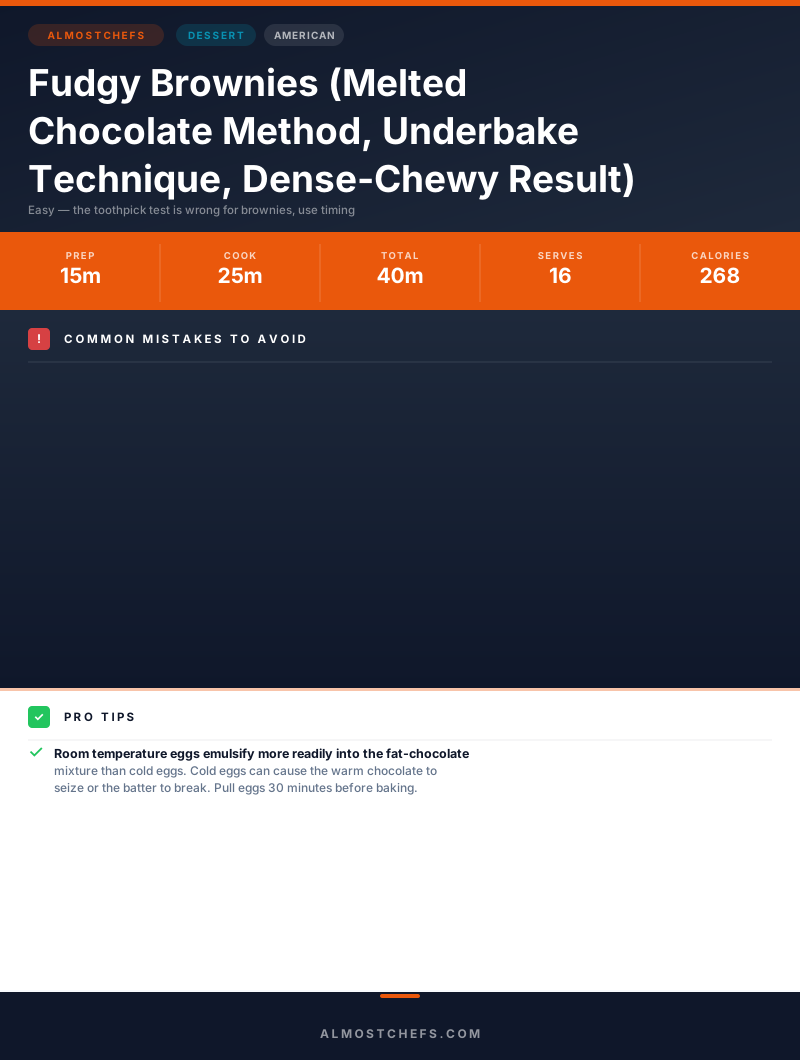
We turned everything on this page into a beautiful, flour-proof PDF cheat sheet. Print it out, stick it to your fridge, and never mess up your fudgy brownies (melted chocolate method, underbake technique, dense-chewy result) again.
*We'll email you the high-res PDF instantly. No spam, just perfectly cooked meals.
AlmostChefs Editorial Team
We translate the internet's most popular cooking videos into foolproof, beginner-friendly written recipes. We analyze multiple methods, test them in our kitchen, and engineer a single "Master Recipe" that gives you the best possible result with the least possible stress.