Creamy Broccoli Cheddar Soup (The One-Pot Comfort Fix)
A rich, velvety soup combining fresh broccoli florets with roasted carrots, potato, and sharp cheddar cheese in a creamy broth. We analyzed the most requested techniques to build one foolproof method that nails the texture — half pureed, half chunky — every single time.

“Broccoli cheddar soup has one real enemy: broken texture. Either the broccoli turns to army-green mush, the cheese clumps into rubbery strings, or you end up with something that tastes like a grade-school cafeteria. None of those problems are inevitable. They're all technique failures. Get the roux right, control your heat before the cream goes in, and add the cheese in stages — and you'll have the kind of soup that makes a Tuesday feel like it meant something.”
Why This Recipe Works
Broccoli cheddar soup is one of those dishes people assume they can freestyle. It's soup. How hard can it be? The answer: harder than it looks, in exactly two places — the roux and the cheese. Get those two steps right and every other decision becomes forgiving. Get them wrong and no amount of quality broccoli or expensive cheddar will save you.
The Roux Is the Architecture
This soup's body comes entirely from the flour-butter roux built in the first five minutes. The roux works through starch gelatinization: when flour proteins and starches are cooked in fat and then exposed to liquid, they absorb water and swell, converting a thin broth into something that coats the back of a spoon. Without it, you have a watery vegetable broth with things floating in it. With it, you have a soup.
Two minutes is the minimum cook time for the roux — not a suggestion. Raw flour carries a chalky, slightly gluey taste that doesn't cook out during the simmer phase. The heat needs to work through the flour while it's still in direct contact with the fat. The visual cue: pale blonde paste, not brown. The aromatic cue: a faint warm, slightly nutty smell. When you pour the broth in, you should get a smooth, lump-free base almost immediately if you whisk as you pour.
The Half-Blend Rule
Fully blended broccoli cheddar soup is a mistake in either direction — too thin and elegant, or too thick and uniform. The texture that makes this soup work is contrast: a silky, creamy base against distinct pieces of broccoli and carrot. The half-blend technique produces exactly that. You get the body and smoothness of a pureed soup without sacrificing the chunkiness that signals real ingredients.
The reserved broccoli florets — added at the end and simmered for just 3-4 minutes — anchor the whole bowl. They should be bright green, barely tender, and slightly resistant. They're the visual proof that this is a real bowl of soup and not something that came out of a can.
Cheese Science
Sharp cheddar is mostly fat and protein held together in a carefully structured emulsion. Apply direct, sustained heat and that structure collapses: fat pools on the surface, protein tightens into rubbery granules, and you get greasy broth with clumps. The fix is thermal control. Turn off the burner completely. Add the cheese in three stages, stirring gently after each addition. Let the residual heat of the soup do the melting rather than the flame.
A box grater is not optional. Pre-shredded cheese is coated in potato starch and cellulose to prevent bag-clumping — those same additives impede melting and leave a slightly chalky finish in the soup. Block cheddar, freshly grated, melts into the broth cleanly and completely in a way bagged cheese simply cannot.
Why Nutmeg
Nutmeg in a cheese sauce is an old French trick — it's present in every classic béchamel, and broccoli cheddar soup is essentially a béchamel with vegetables. The compound 3-carene in nutmeg suppresses the perception of bitterness while amplifying dairy richness. You won't taste nutmeg in the finished soup if you use the right amount. You'll just taste a version of the soup that somehow seems deeper and more complete than you expected. Leave it out and the cheese flavor is flatter than it should be.
The Day-Two Effect
Like most dairy-based soups, this one improves overnight. The starches continue to absorb liquid slowly in the refrigerator, the spices mellow and integrate, and the cheese fully binds with the broth rather than sitting in it. If you're serving this for guests, make it the night before and reheat it gently — you'll get a noticeably more cohesive bowl. The reheating rule is the same as the original cooking rule: low heat, add a splash of broth to restore consistency, and don't let it boil once the cheese is already in.
Where Beginners Mess This Up
Before we start, read this. These are the 4 reasons your creamy broccoli cheddar soup (the one-pot comfort fix) will fail:
- 1
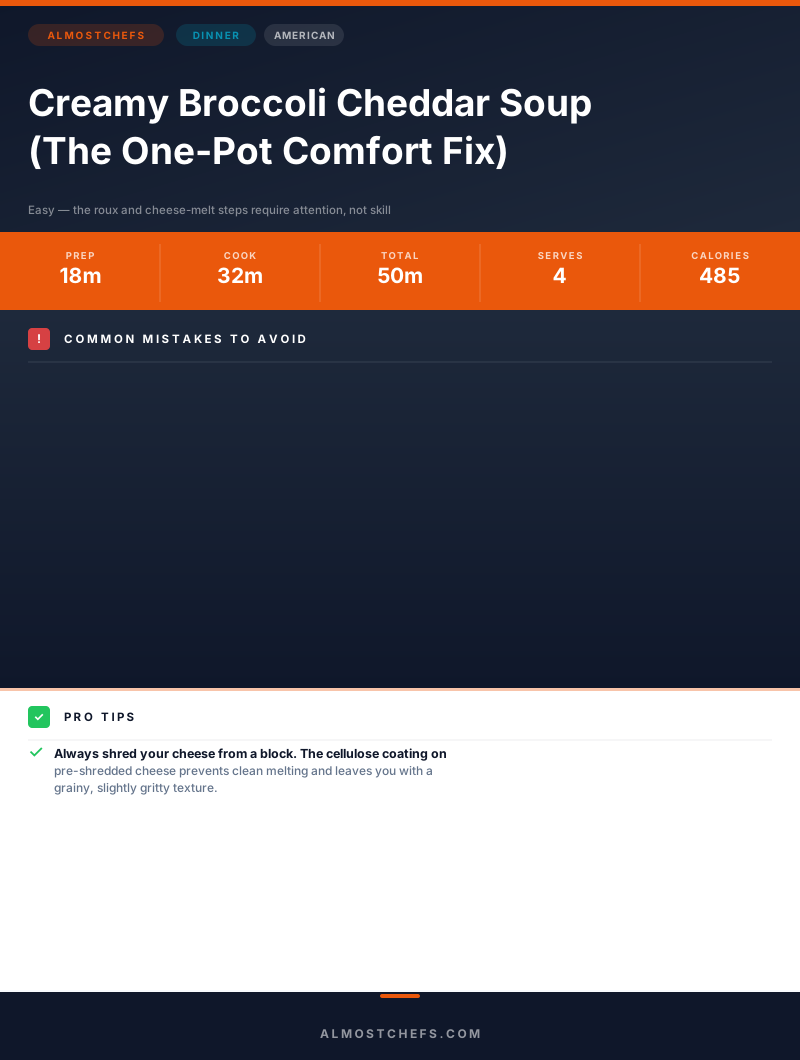
Adding cheese over direct heat: Cheddar breaks when it hits a boiling or near-boiling liquid. The fat separates from the protein, leaving you with greasy broth and rubbery clumps. Always turn off the heat completely before adding cheese, and add it in three stages — not all at once.
- 2
Skipping the roux step: The flour-butter roux is what gives this soup body. Without it, you get a thin broth with vegetables floating in it. Cook the roux for the full two minutes to eliminate the raw flour taste — that chalky, gluey aftertaste in weak versions of this soup is always undercooked roux.
- 3
Blending the whole pot: Fully blended broccoli cheddar soup is baby food. The half-blend method — puree half, leave half chunky — creates a creamy base with real texture. It's the difference between a soup people finish and a soup people push to the side.
- 4
Overcooking the reserved broccoli: The florets added at the end need only 3-4 minutes. They should be bright green and just tender, providing both color and textural contrast against the creamy base. If they turn army-green, you've gone too far and taken the visual appeal with them.
The Video Reference Library
Want to see it in action? Here are the exact videos we analyzed and combined to build this foolproof recipe translation:
The foundational walkthrough. Covers the roux technique, the half-blend method, and the cheese-addition sequence with clear visual cues for each stage.
🛠️ Core Equipment
- Large heavy-bottomed potEven heat distribution prevents scorching the roux and ensures gentle simmering. A thin-bottomed pot creates hot spots that burn the butter and turn the flour bitter before you've even started.
- Blender or immersion blenderFor the half-puree technique. A [countertop blender](/kitchen-gear/review/blender) gives a silkier result; an immersion blender is faster and cuts cleanup in half. Either works — control the portion you blend.
- Box grater or food processorShred your own cheese. Pre-shredded cheddar is coated in cellulose and starch to prevent clumping in the bag — those same additives prevent it from melting smoothly into your soup. Block cheese, freshly grated, melts clean.
- LadleFor the blending transfer step. Scooping hot soup into a blender requires control — a [ladle](/kitchen-gear/review/ladle) is safer and more precise than pouring directly from the pot.
Creamy Broccoli Cheddar Soup (The One-Pot Comfort Fix)
🛒 Ingredients
- ✦3 tablespoons unsalted butter
- ✦1 medium yellow onion, finely diced
- ✦3 cloves garlic, minced
- ✦2 tablespoons all-purpose flour
- ✦5 cups vegetable broth
- ✦5 cups fresh broccoli florets, divided
- ✦1 medium Yukon Gold potato, diced small
- ✦1 medium carrot, diced small
- ✦1 teaspoon Worcestershire sauce
- ✦1 cup heavy cream or half-and-half
- ✦2 1/2 cups sharp cheddar cheese, freshly shredded
- ✦1/4 teaspoon freshly grated nutmeg
- ✦3/4 teaspoon kosher salt
- ✦1/2 teaspoon freshly cracked black pepper
- ✦Pinch of cayenne pepper (optional)
👨🍳 Instructions
01Step 1
Measure and prep all ingredients before you turn on the burner. Set aside 1 cup of the broccoli florets — these go in at the end.
02Step 2
Melt butter in a large heavy-bottomed pot over medium heat, allowing it to foam gently for about 1 minute.
03Step 3
Add the diced onion and cook, stirring frequently, until softened and translucent, about 5-7 minutes.
04Step 4
Add the minced garlic and cook for 60 seconds, stirring constantly, until fragrant.
05Step 5
Sprinkle the flour over the onion and garlic mixture. Stir continuously for 2 full minutes to cook out the raw flour taste and build a smooth roux.
06Step 6
Slowly pour the vegetable broth into the pot while whisking constantly to prevent lumps. Add in a thin stream at first, then increase once the roux has loosened.
07Step 7
Add the diced potato, carrot, and the larger portion of broccoli florets. Stir to distribute evenly.
08Step 8
Bring to a gentle boil, then reduce heat to medium-low and simmer uncovered for 15-18 minutes, until all vegetables are completely tender when pierced with a fork.
09Step 9
Remove the pot from heat and let it cool for 2-3 minutes. Transfer half the soup to a blender and puree until completely smooth. Return to the pot and stir to combine.
10Step 10
Return the pot to medium-low heat. Stir in the Worcestershire sauce and the reserved broccoli florets. Simmer for 3-4 minutes until the florets turn bright green and just tender.
11Step 11
Turn off the heat completely. Stir in the heavy cream in a slow, steady pour.
12Step 12
Add the nutmeg. Sprinkle the shredded cheddar over the surface in three separate additions, stirring gently after each until fully melted and incorporated.
13Step 13
Taste and adjust seasoning with salt, pepper, and cayenne if using. Remember: the cheese has added significant salt. Taste before reaching for the salt shaker.
14Step 14
Ladle into warm bowls and serve immediately with crusty bread or oyster crackers.
Nutrition Per Serving
Estimates based on standard preparation. Adjustments alter macros.
🔄 Substitutions
Instead of Heavy cream...
Use Greek yogurt or cashew cream
Greek yogurt adds slight tang and more protein with less saturated fat. Add it off the heat the same way you'd add the cream — heat causes yogurt to curdle. Cashew cream is the dairy-free option; blend soaked raw cashews with water to a smooth consistency.
Instead of Sharp cheddar cheese...
Use Gruyère or aged white cheddar
Gruyère melts exceptionally clean and adds a nutty, complex depth that sharp cheddar can't match. Aged white cheddar stays in the same flavor family with slightly more sophistication. Both work with the same technique.
Instead of All-purpose flour...
Use Cornstarch or rice flour
Use 1.5 tablespoons instead of 2. Creates a slightly lighter, clearer thickener. Good for gluten-free needs. Mix the cornstarch with a small amount of cold broth before adding to avoid lumps.
Instead of Butter...
Use Ghee or olive oil
Ghee has a higher smoke point and a cleaner, nutty flavor — it's actually excellent in this soup. Olive oil works but produces a lighter, less rich mouthfeel. Either substitute builds the roux the same way.
🧊 Storage & Reheating
In the Fridge
Store in an airtight container for up to 4 days. The soup thickens considerably as it cools — this is normal. It will loosen when reheated.
In the Freezer
Freeze in portions for up to 2 months. Note that cream-based soups can separate slightly upon thawing. Reheat slowly over low heat and whisk gently to re-emulsify.
Reheating Rules
Reheat gently on the stovetop over low heat, stirring frequently and adding a splash of broth or water to restore consistency. The microwave works in a pinch but tends to unevenly heat and can cause the cheese to seize at the edges.
❓ Frequently Asked Questions
Why is my broccoli cheddar soup grainy?
Grainy texture is almost always caused by adding cheese over heat that's too high. Cheddar's fat separates from its protein above about 160°F — the result is a greasy, gritty soup instead of a smooth one. Turn off the heat completely before the cheese goes in, and add it in stages.
Can I use frozen broccoli?
You can, but the texture suffers. Frozen broccoli has already been blanched and partially broken down — it will go mushy faster during the simmer, and the reserved florets won't hold their bright green color as well. Fresh is strongly preferred. If you must use frozen, add it in the last 8 minutes of simmering rather than at the beginning.
Why does my soup taste floury?
You didn't cook the roux long enough. The flour needs a full two minutes of cooking in the hot butter to shed its raw, starchy taste. It should smell faintly nutty — like popcorn or a warm kitchen — not like raw dough.
Can I make this soup vegetarian or vegan?
It's already vegetarian as written. For vegan: substitute butter with olive oil or vegan butter, use cashew cream instead of heavy cream, and use vegan cheddar-style shreds. Note that vegan cheese melts differently — add it even more gradually and keep the heat lower than you think necessary.
How do I make this soup thicker?
Three options: increase the flour in the roux to 3 tablespoons, add a second small potato, or blend a larger portion of the soup. Don't add more cheese hoping it will thicken things — beyond a certain point, more cheese just breaks the emulsion.
Can I make this in a slow cooker?
Partially. Sauté the onion, garlic, and roux on the stovetop first — the slow cooker cannot replicate this step. Add everything except the cream and cheese to the slow cooker and cook on low for 6-7 hours or high for 3-4 hours. Then do the half-blend, add cream, and stir in cheese off heat. Skipping the stovetop roux step produces a thin, watery soup.
The Science of
Creamy Broccoli Cheddar Soup (The One-Pot Comfort Fix)
We turned everything on this page into a beautiful, flour-proof PDF cheat sheet. Print it out, stick it to your fridge, and never mess up your creamy broccoli cheddar soup (the one-pot comfort fix) again.
*We'll email you the high-res PDF instantly. No spam, just perfectly cooked meals.
AlmostChefs Editorial Team
We translate the internet's most popular cooking videos into foolproof, beginner-friendly written recipes. We analyze multiple methods, test them in our kitchen, and engineer a single "Master Recipe" that gives you the best possible result with the least possible stress.