Better Breakfast Burritos (The Meal-Prep Method That Actually Holds)
Crispy hash browns, fluffy scrambled eggs, seasoned sausage, and melted cheddar wrapped in a warm tortilla. We broke down the most-made burrito mistakes and built one foolproof method that works fresh, refrigerated, or pulled from the freezer at 6am on a Tuesday.
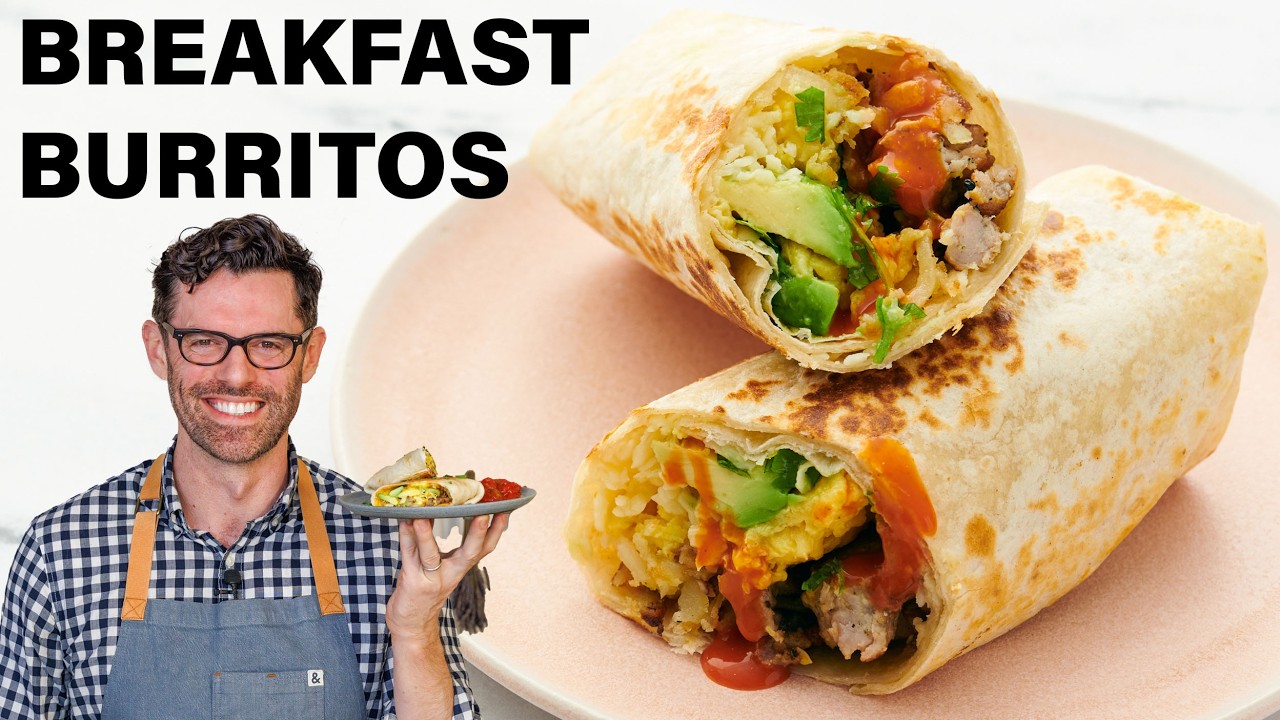
“Most breakfast burritos fail the same way: soggy potatoes, rubbery eggs, a tortilla that explodes on the first bite. The problem is almost never the ingredients — it's the sequence. Cook things in the wrong order, scramble the eggs wrong, skip the tortilla warm-up, and you've built a structural disaster before you've even started rolling. This method fixes all of it.”
Why This Recipe Works
A breakfast burrito is a delivery mechanism. That's it. Its entire job is to contain hot, flavorful filling in a portable package that doesn't detonate when you pick it up. The ingredients are almost irrelevant — eggs, potato, some kind of meat, cheese. Every diner in America has a version. The reason most homemade versions disappoint isn't the shopping list. It's that people treat the assembly as an afterthought instead of the main event.
The Sequence Is the Recipe
Everything in a breakfast burrito cooks in the same large skillet, and the order is load-bearing. Potatoes go first because they take the longest and need high heat to crisp — they also season the pan. Sausage goes second and leaves behind rendered fat that flavors the vegetables. Onions and peppers go third, absorbing what the sausage left behind. Eggs go last because they're the most temperature-sensitive component in the lineup and need a clean, lightly buttered surface.
Cook them out of order and you're constantly managing cross-contamination and temperature mismatches. Do them in sequence and the pan builds flavor with each round. It's one pan. The sequence is the recipe.
The Potato Problem
Hash browns are the most frequently ruined element in a breakfast burrito. The failure mode is always the same: gray, soft potato cubes that release steam inside the wrap and turn the tortilla into wet paper. The fix is restraint — specifically, the restraint not to stir constantly.
Diced potato crisps through the Maillard reaction, the same mechanism that browns steak and toast. That reaction requires direct, sustained contact with a hot surface. Every time you stir, you interrupt it. Let the potatoes sit untouched for 3-4 minutes, then stir, then leave them alone again. Medium-high heat. Not more butter than the recipe calls for — excess fat steams instead of crisps. Transfer them to a plate and let surface steam escape for a minute before assembly.
The Egg Window
Scrambled eggs have a brief window between underdone and overdone that most people miss because they're watching the pan instead of thinking ahead. The window closes fast — about 30 seconds on a medium burner. The technique: pull the pan off the heat when the eggs still look slightly wet. Residual heat in the pan and the filling-wrapped burrito will finish them. If they look perfect in the pan, they'll be dry and rubbery inside the burrito.
Whisking until frothy — genuinely frothy, not just mixed — introduces air that keeps the scramble light. Salt goes in before cooking, not after; it seasons throughout rather than sitting on the surface.
The Tortilla Is Structural
A 10-inch flour tortilla straight from the bag is close to useless as a wrapping material. It's stiff, it cracks, and it has no give. Thirty seconds over a dry skillet or open flame changes its entire mechanical behavior. The starches relax, the surface becomes slightly tacky, and it becomes flexible enough to fold without cracking. This step takes half a minute and prevents the single most common burrito failure — the blowout seam.
The resting step after rolling is equally important and equally ignored. Seam-side down, one to two minutes. The residual heat seals the overlapping layers together. Skip it and you're relying on surface tension to hold a pound of hot filling in place. Surface tension loses.
The Meal Prep Math
This recipe scales cleanly to eight or twelve burritos with no technique changes. Cool everything completely before assembly — hot filling trapped in foil generates steam that softens the tortilla overnight. Keep the avocado, fresh tomato, and sour cream out of the freezer batch entirely and add them fresh at reheat. Everything else survives freezing without meaningful texture loss.
The result is a weekday breakfast that requires zero decisions at 6am. That's the actual point of this recipe.
Where Beginners Mess This Up
Before we start, read this. These are the 4 reasons your better breakfast burritos (the meal-prep method that actually holds) will fail:
- 1
Skipping the tortilla warm-up: A cold tortilla is a brittle tortilla. Thirty seconds over direct heat — a dry skillet or an open gas flame — transforms it from a cracking liability into something pliable enough to roll without splitting. This is not optional. Every burrito that explodes at the seam skipped this step.
- 2
Scrambling the eggs over high heat: High heat makes eggs rubbery and weeping. You want medium heat, constant gentle movement, and the burner off before they look fully done. Residual heat finishes them. Slightly creamy eggs hold moisture inside the burrito instead of turning into a dry, chewy layer by the second bite.
- 3
Overloading the center: There is a maximum volume a 10-inch tortilla can contain and still roll cleanly. Most people exceed it by 30%. The rule: filling should span a horizontal line about 4 inches wide and stay centered. Two inches of bare tortilla on each side is not wasted space — it's your structural margin.
- 4
Not resting the burrito seam-side down: The burrito needs 1-2 minutes resting seam-side down before it moves. The residual heat seals the seam closed. Flip it immediately and the whole roll comes apart. This is the simplest fix in this entire recipe and the most consistently ignored.
The Video Reference Library
Want to see it in action? Here are the exact videos we analyzed and combined to build this foolproof recipe translation:
The foundational walkthrough. Covers the full cook sequence, filling ratios, and rolling technique in real time. Best video for first-timers who want to see the fold-and-roll motion before attempting it.
🛠️ Core Equipment
- Large 12-inch skilletEverything cooks in this pan sequentially — potatoes first, then sausage, then vegetables, then eggs. A wide base gives the potatoes enough surface area to crisp instead of steam. A crowded pan makes soggy hash browns.
- Whisk or forkEggs need air introduced before they hit the pan. Whisking until frothy — not just stirred — creates the fluffiness that survives being wrapped and reheated. Beaten eggs produce flat, dense scrambles.
- Aluminum foilFor meal-prep batches. Wrapping each burrito individually in foil before freezing preserves moisture and prevents freezer burn. It also makes reheating in the oven possible without a wrapper explosion.
Better Breakfast Burritos (The Meal-Prep Method That Actually Holds)
🛒 Ingredients
- ✦4 large flour tortillas (10-12 inch)
- ✦10 large eggs
- ✦8 ounces breakfast sausage, cooked and crumbled
- ✦2 cups shredded cheddar cheese
- ✦3 cups diced potatoes (fresh or frozen hash browns)
- ✦1 medium yellow onion, finely diced
- ✦1 cup bell peppers, diced (red or green)
- ✦3 tablespoons butter or vegetable oil
- ✦1/2 cup fresh salsa (mild or spicy)
- ✦1/2 cup diced fresh tomatoes
- ✦1/2 cup sour cream
- ✦2 ripe avocados, sliced
- ✦1/4 cup fresh cilantro, chopped
- ✦1/4 cup jalapeños, diced (optional)
- ✦Salt and black pepper to taste
👨🍳 Instructions
01Step 1
Cook the diced potatoes in a large skillet over medium-high heat with 1 tablespoon of butter, stirring occasionally, until golden and crispy on the edges, about 12-15 minutes. Season generously with salt and pepper, then transfer to a plate.
02Step 2
Brown the breakfast sausage in the same skillet over medium heat, breaking it apart with a spoon, until fully cooked and no longer pink, about 5-7 minutes. Transfer to a separate plate.
03Step 3
Sauté the diced onions and bell peppers in the remaining fat (add a little butter if the pan looks dry) until softened and fragrant, about 4-5 minutes. Transfer to a plate.
04Step 4
Whisk the 10 eggs with a pinch of salt and pepper until well combined and slightly frothy. Pour into the skillet over medium heat and scramble gently with a rubber spatula, pulling from the edges inward, until just set but still slightly creamy — about 3-4 minutes. Pull off heat while they still look underdone.
05Step 5
Warm each tortilla individually in a dry skillet or directly over a gas flame for 10-15 seconds per side until pliable and lightly charred in spots.
06Step 6
Lay a warm tortilla flat. Arrange filling in a horizontal line down the center: a quarter of the potatoes, then eggs, sausage, sautéed vegetables, and 1/4 cup cheese. Leave 2 inches of bare tortilla on each side.
07Step 7
Top the filling with salsa, diced tomatoes, sliced avocado, a dollop of sour cream, cilantro, and jalapeños if using.
08Step 8
Fold the left and right sides inward by 2 inches, then roll tightly from the bottom edge upward, keeping the sides tucked throughout.
09Step 9
Place each burrito seam-side down on a plate and let rest 1-2 minutes before serving.
10Step 10
Serve with extra salsa, sour cream, and guacamole on the side.
Nutrition Per Serving
Estimates based on standard preparation. Adjustments alter macros.
🔄 Substitutions
Instead of Breakfast sausage...
Use Turkey bacon or plant-based sausage
Leaner texture with milder, less smoky flavor. Turkey bacon benefits from a touch more seasoning — smoked paprika in the egg whisk compensates.
Instead of Flour tortillas...
Use Whole wheat or sprouted grain tortillas
Slightly nuttier flavor and more substantial texture. Warm them longer — 20 seconds per side — as they're less pliable cold than white flour.
Instead of Shredded cheddar...
Use Part-skim mozzarella or reduced-fat cheese blend
Milder taste with slightly less richness. Melts evenly and creates less grease pooling inside the burrito.
Instead of Potatoes...
Use Sweet potatoes or cauliflower hash
Sweet potatoes run sweeter and take 2-3 minutes longer to crisp. Cauliflower cooks faster and absorbs sausage fat aggressively — use less butter if going this route.
🧊 Storage & Reheating
In the Fridge
Wrap each burrito tightly in foil or plastic wrap. Keeps for up to 4 days. The filling consolidates overnight and the second-day burrito is genuinely better.
In the Freezer
Cool completely, wrap in foil, place in a zip-lock freezer bag. Keeps for up to 3 months. Label with the date — frozen burritos are indistinguishable from each other after week two.
Reheating Rules
From frozen: foil on, 350°F oven for 35-40 minutes. From fridge: 350°F for 15-18 minutes. Microwave at 50% power for 2-3 minutes if you're in a genuine emergency.
❓ Frequently Asked Questions
Why does my burrito fall apart when I roll it?
Two causes: the tortilla was cold (it needs to be warmed until pliable before rolling), or the filling was overloaded. Both problems have the same result — cracking or blowout at the seam. Warm the tortilla, stay within the 4-inch filling width, and rest it seam-side down for two minutes after rolling.
Can I make these the night before?
Yes. Cook all the filling components, cool them completely, and store separately in the fridge. Assemble and roll in the morning using freshly warmed tortillas. Pre-rolled overnight burritos work too — the tortilla softens slightly but holds. Skip the fresh avocado and tomato in the make-ahead version; add those fresh.
How do I prevent soggy potatoes inside the burrito?
Two things: get them genuinely crispy before adding to the burrito (golden-brown edges, not just cooked through), and cool them for a minute before assembling. Hot, steaming potatoes release moisture directly into the tortilla. A brief rest lets surface steam escape.
Can I freeze these with avocado inside?
You can, but frozen avocado thaws into a gray-green paste with a texture that reads as 'medical.' Leave it out of the freezer batch entirely and add fresh when reheating.
What's the best cheese for a breakfast burrito?
Sharp cheddar melts well and provides contrast to the mild eggs. Pepper jack adds heat. A 50/50 cheddar-Monterey Jack blend is the classic diner move — good melt, neutral enough to not compete with the salsa. Avoid pre-shredded cheese with anti-caking agents if you can; it doesn't melt as cleanly.
Can I make this vegetarian?
Easily. Drop the sausage and double the vegetables — add mushrooms, spinach, or black beans to compensate for the volume and protein. Black beans are the most effective substitute: they add protein, fiber, and enough heft that you won't notice the sausage is gone.
The Science of
Better Breakfast Burritos (The Meal-Prep Method That Actually Holds)
We turned everything on this page into a beautiful, flour-proof PDF cheat sheet. Print it out, stick it to your fridge, and never mess up your better breakfast burritos (the meal-prep method that actually holds) again.
*We'll email you the high-res PDF instantly. No spam, just perfectly cooked meals.
AlmostChefs Editorial Team
We translate the internet's most popular cooking videos into foolproof, beginner-friendly written recipes. We analyze multiple methods, test them in our kitchen, and engineer a single "Master Recipe" that gives you the best possible result with the least possible stress.