The Only Breakfast Bread You Need (Soft, Golden, Done in One Bowl)
A tender, lightly sweet loaf built for mornings — fluffy crumb, golden crust, and a forgiving one-bowl method that works whether you're a first-time baker or just short on time. We studied dozens of home baker techniques to find the exact hydration, mix order, and bake temperature that nails it every time.
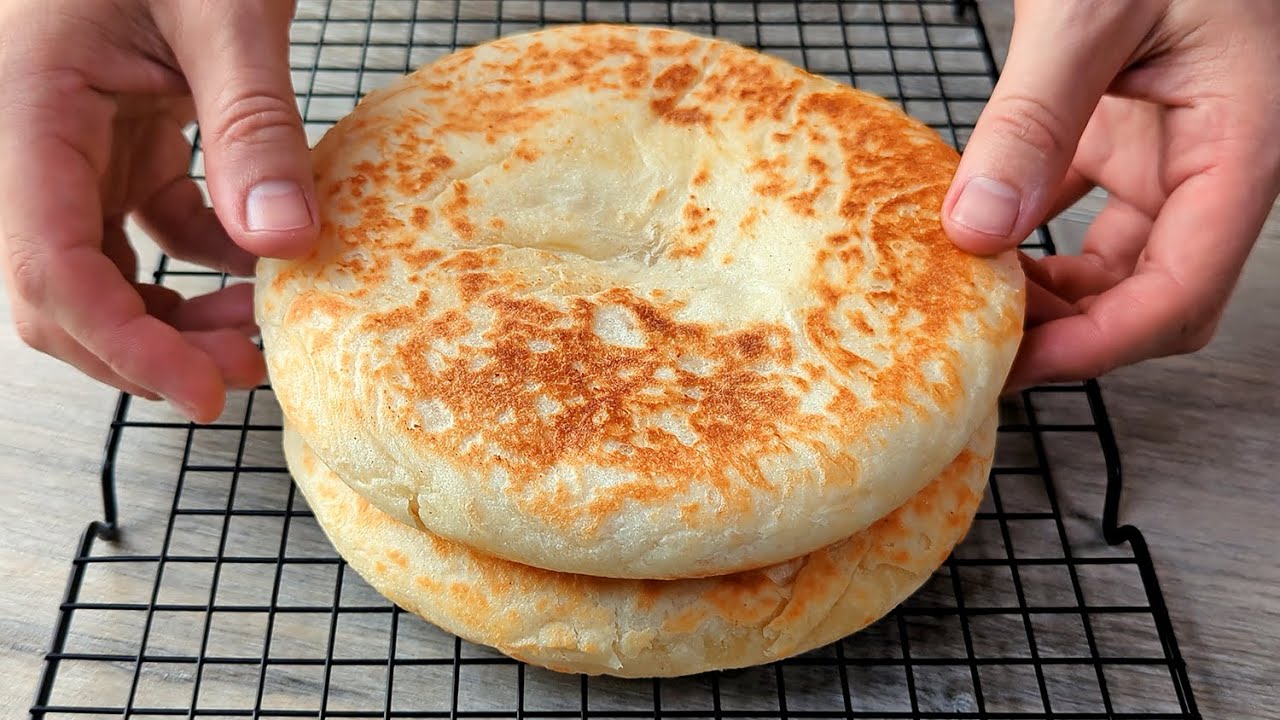
“Most breakfast bread recipes either require a stand mixer, a proofing drawer, and three hours of your morning — or they produce a dense, gummy brick that tastes like effort. Neither outcome is acceptable before coffee. The method here strips the process down to what actually matters: the right flour-to-liquid ratio, a single rise that doesn't require babysitting, and a bake temperature that builds crust without drying out the crumb. One bowl. One loaf. Done.”
Why This Recipe Works
Breakfast bread occupies an unfairly neglected corner of home baking. It isn't sourdough — which requires days of cultivation and a starter you have to feed like a pet. It isn't brioche — which demands a stand mixer, cold butter addition in stages, and a pastry chef's patience. Breakfast bread is the honest loaf: soft crumb, golden crust, ready in under two hours, designed to be eaten with butter before you've fully woken up. The only reason most people don't make it weekly is that they've been given recipes with unnecessary complexity dressed up as expertise.
The Hydration Math
Every bread recipe is, at its core, a hydration equation. Too little liquid and the gluten network tightens beyond what yeast gas can expand — you get a brick. Too much liquid and the structure collapses before it can set in the oven — you get a puddle with ambitions. For a soft sandwich loaf, the target hydration sits between 60-65% (flour weight to liquid weight). This recipe lands at 62%, which is deliberately on the lower end of soft — forgiving enough to handle minor measurement variation, structured enough to hold its shape through the second proof.
The milk is doing more work than water would. The fat in whole milk coats the gluten strands and tenderizes them, which is why milk-based loaves have a softer crumb than water-based ones. The proteins in milk also contribute to the Maillard browning reaction during baking, which is how this loaf achieves a deep golden crust without broiling. If you've ever wondered why your homemade bread is pale compared to bakery bread, the answer is usually fat content in the dough.
The Yeast Window
Yeast is a living organism with a very specific comfort range. Below 70°F, it works but slowly — useful for cold fermentation, not useful if you want bread before noon. Between 90-100°F, it works rapidly. Above 110°F, it dies. The standard recommendation to warm liquid to 105-110°F is not superstition — it is the top of the yeast's optimal range, chosen because it gives you the fastest activation without crossing the kill threshold. Every degree above that is a gamble.
The sugar in the activation step isn't there for sweetness — it's yeast food. Dissolving a small amount of sugar in the warm milk gives the yeast an immediate energy source and allows you to confirm viability before committing your flour and butter to a batch of dead microorganisms. A foamy, domed surface after ten minutes is confirmation of life. A flat, unchanged surface is confirmation that you need new yeast and should be glad you tested before proceeding.
One Bowl as a Philosophy
The one-bowl method isn't a marketing claim — it's a commitment to streamlining the steps that don't require separation. You don't need to bloom the yeast in one vessel, mix the dry ingredients in a second, and combine them in a third. The flour and salt are already in the bowl before the liquid goes in. This sequence — wet over dry, mixed in place — produces exactly the same result as any more elaborate approach while generating a fraction of the cleanup.
The important variable is mix order. Salt added directly to active yeast can slow fermentation by drawing water out of the yeast cells through osmosis. Keep the salt and yeast separated by the flour until everything is combined — at that point the dilution is sufficient to eliminate the interference.
The Knead Obligation
Kneading develops gluten — the protein matrix that traps yeast gas and creates the structure that holds a loaf together. Underdeveloped gluten produces a crumb that tears rather than slices, collapses rather than rises, and feels dense rather than light. Eight to ten minutes of hand kneading on a lightly floured surface is the minimum. The test is the windowpane: tear off a small piece of dough and stretch it slowly between your fingers. If it stretches thin enough to see light through without tearing, the gluten is developed. If it tears before thinning, keep kneading.
The kitchen scale is the piece of equipment that separates consistent bakers from frustrated ones. Volume measurement of flour — scooping a cup and leveling it off — can vary by up to 30% depending on whether the flour has been sifted, how tightly it's packed, and the humidity in your kitchen. That variance changes the hydration and, by extension, the crumb texture. Weight removes the variable completely. Three hundred sixty grams of flour is 360 grams of flour every single time, regardless of how it got into the bowl.
Why the Pan Matters
The 9x5 loaf pan controls the final shape of the bread as it bakes. The dough expands in the path of least resistance, and the pan walls redirect that expansion upward rather than outward. A pan that's too large produces a flat loaf with too much crust and not enough crumb. A pan that's too small causes the dough to push over the rim and bake unevenly — the center stays underdone while the edges set too firm. The 9x5 dimension is calibrated for standard home oven heat distribution with a one-loaf batch. Use it.
Rest the finished loaf on a wire rack, not a cutting board. A solid surface traps steam under the bottom crust, which softens it into the same texture as the top — and you lose the structural contrast that makes a well-baked loaf satisfying to cut. The rack allows air to circulate on all sides, keeping the bottom crust as firm as the top while the internal crumb finishes setting. Twenty minutes is the minimum. The loaf is still actively cooking from residual heat during that window, and the crumb won't slice cleanly until it has fully stabilized.
Where Beginners Mess This Up
Before we start, read this. These are the 4 reasons your the only breakfast bread you need (soft, golden, done in one bowl) will fail:
- 1
Killing the yeast with hot liquid: Yeast dies above 110°F. If your milk or water feels hot to the touch, it is too hot. It should feel comfortably warm — like bathwater for a baby, not a hot tub. Dead yeast means no rise, no air pockets, and a loaf with the texture of a rubber doorstop. Use an instant-read thermometer if you're unsure.
- 2
Adding too much flour while kneading: A sticky dough is a correct dough. Every baker's instinct is to dust the counter until the dough stops sticking — resist this completely. Extra flour tightens the gluten network and pushes your hydration below the threshold needed for a soft crumb. The bread will be dry, dense, and taste like it's been stored for a week.
- 3
Skipping the second rest after shaping: After you shape the loaf and transfer it to the pan, the gluten needs 30-40 minutes to relax and the yeast needs time to produce the gas that creates final rise. If you bake it immediately after shaping, the oven heat kills the yeast before it finishes the job and the loaf doesn't achieve its full height. You will have bread, but not breakfast bread.
- 4
Pulling the loaf too early: Golden-brown crust is not sufficient to declare a loaf done. The internal temperature must reach 190-195°F. An underbaked loaf collapses as it cools because the crumb structure hasn't fully set. Invest in a probe thermometer — it is the single most reliable test in bread baking.
The Video Reference Library
Want to see it in action? Here are the exact videos we analyzed and combined to build this foolproof recipe translation:
The source video for this recipe — clear demonstration of the one-bowl method, shaping technique, and visual cues for knowing when the loaf is properly proofed before baking.
Deep dive into why hydration ratios and fat content determine crumb texture. Useful if you want to understand the why behind each step rather than just the what.
Covers yeast activation, gluten development, and how to read visual proofing cues. A strong foundation primer for anyone making leavened bread for the first time.
🛠️ Core Equipment
- 9x5 inch loaf panThe correct pan size controls the loaf's shape and crust-to-crumb ratio. A pan that's too large spreads the dough into a flat brick. Too small and the loaf mushrooms over the sides and bakes unevenly. The 9x5 is the standard for a reason.
- Instant-read thermometerUsed twice: once to verify liquid temperature before adding yeast, and once to confirm the internal crumb temperature at 190-195°F when the loaf is done. No guessing, no tapping the bottom and hoping. Just a number.
- Kitchen scaleFlour measurement by volume is unreliable. A loosely scooped cup is 120g. A packed cup is 160g. That 40g difference changes the hydration by nearly 10%, which is the difference between a soft loaf and a dense one. Weigh your flour.
- Large mixing bowlBigger than you think you need. The dough doubles during the first rise and needs room. A bowl that's too small causes the dough to push against the top, which restricts rise and creates a tight crumb.
The Only Breakfast Bread You Need (Soft, Golden, Done in One Bowl)
🛒 Ingredients
- ✦3 cups (360g) all-purpose flour, plus extra for dusting
- ✦2.25 teaspoons (1 packet) active dry yeast
- ✦1 tablespoon granulated sugar
- ✦1 teaspoon fine sea salt
- ✦1 cup whole milk, warmed to 105-110°F
- ✦2 tablespoons unsalted butter, melted and slightly cooled
- ✦1 large egg, room temperature
- ✦1 tablespoon honey
- ✦1 tablespoon neutral oil (for greasing the bowl)
- ✦1 egg beaten with 1 tablespoon milk (for egg wash)
👨🍳 Instructions
01Step 1
Warm the milk to 105-110°F. Add the sugar and yeast, stir gently, and let sit for 5-10 minutes until foamy on the surface.
02Step 2
In a large mixing bowl, whisk together the flour and salt. Make a well in the center.
03Step 3
Pour the activated yeast mixture into the well, then add the melted butter, egg, and honey. Mix with a wooden spoon or your hand until a shaggy dough forms.
04Step 4
Turn the dough out onto a lightly floured surface and knead for 8-10 minutes until smooth, elastic, and slightly tacky. The dough should spring back slowly when you poke it.
05Step 5
Shape the dough into a ball and place it in a lightly oiled bowl, turning once to coat. Cover with a damp towel or plastic wrap and let rise in a warm place for 60-75 minutes, until doubled in size.
06Step 6
Punch the dough down gently to release the gas. Turn it out onto a lightly floured surface and flatten it into a rough rectangle approximately the width of your loaf pan.
07Step 7
Roll the rectangle into a tight log from the short end, pinching the seam closed as you go. Place seam-side down in a greased 9x5 inch loaf pan.
08Step 8
Cover loosely and let rise for 35-45 minutes, until the dough crowns about 1 inch above the rim of the pan.
09Step 9
Preheat the oven to 375°F (190°C). Brush the top of the loaf gently with egg wash.
10Step 10
Bake for 35-40 minutes until deep golden brown. Check the internal temperature with an instant-read thermometer — it should read 190-195°F.
11Step 11
Remove from the oven and let cool in the pan for 5 minutes, then turn out onto a wire rack. Cool for at least 20 minutes before slicing.
Nutrition Per Serving
Estimates based on standard preparation. Adjustments alter macros.
🔄 Substitutions
Instead of Whole milk...
Use Oat milk or almond milk
Works for dairy-free baking. Use unsweetened varieties. The loaf will be slightly less rich but still fully functional. Avoid coconut milk — the fat content changes the crumb structure.
Instead of Unsalted butter...
Use Coconut oil or vegan butter
Coconut oil adds subtle sweetness. Vegan butter (like Miyoko's) is the closest 1:1 substitute. Both produce a comparable crumb texture.
Instead of All-purpose flour...
Use Bread flour
Higher protein content (12-13% vs 10-11%) builds more gluten, producing a chewier, tighter crumb. Better for sandwich loaves. Reduce liquid by 1 tablespoon to compensate.
Instead of Active dry yeast...
Use Instant yeast
Use 1.75 teaspoons instead of 2.25. Instant yeast doesn't need to be activated in liquid first — mix it directly into the dry ingredients. Rise times will be 15-20% shorter.
🧊 Storage & Reheating
In the Fridge
Bread goes stale faster in the refrigerator due to starch retrogradation. Avoid refrigerating unless your kitchen is very humid or hot.
In the Freezer
Slice the cooled loaf completely before freezing. Lay slices flat on a baking sheet to freeze individually, then transfer to a zip-lock bag. Frozen slices go directly into the toaster from frozen — no thawing needed.
Reheating Rules
Wrap the loaf or individual slices in foil and warm in a 300°F oven for 10 minutes to restore softness. A quick 10-second microwave burst works in a pinch but creates a slightly gummy texture.
❓ Frequently Asked Questions
Why didn't my dough rise?
Ninety-nine times out of a hundred, it's the yeast. Either the liquid was too hot and killed it, or the yeast was old and already dead before you started. Always proof your yeast in warm liquid with a pinch of sugar first — if it doesn't foam within 10 minutes, replace it.
Can I make this without kneading?
Yes, but you need to compensate with time. No-knead bread relies on a long, cold ferment (12-18 hours in the refrigerator) to develop gluten through time rather than mechanical action. Skip the knead, cover the dough, refrigerate overnight, then shape and bake the next morning.
Why is my bread dense and gummy?
Two likely causes: you added too much flour during kneading (drying out the crumb) or you pulled it from the oven before the internal temperature reached 190°F (leaving the crumb undercooked and gummy). Use a thermometer. Every time.
Can I add mix-ins like seeds or dried fruit?
Yes. Fold in up to half a cup of mix-ins (sesame seeds, sunflower seeds, raisins, cranberries) after the first knead, before the first rise. More than half a cup and the add-ins interrupt the gluten network enough to produce a crumbly loaf.
How do I know when the dough has proofed enough?
The poke test: gently press two fingers about half an inch into the dough and pull them out. If the indentation springs back quickly, the dough needs more time. If it springs back slowly and partially, it's ready. If it doesn't spring back at all, it's over-proofed — bake it immediately.
Can I make rolls instead of a loaf?
Yes. After the first rise, divide the dough into 8-10 equal portions, shape into smooth balls, and arrange in a greased 9x13 baking dish. Second rise is 25-30 minutes. Bake at 375°F for 18-22 minutes. Internal temperature still needs to hit 190°F.

The Science of
The Only Breakfast Bread You Need (Soft, Golden, Done in One Bowl)
We turned everything on this page into a beautiful, flour-proof PDF cheat sheet. Print it out, stick it to your fridge, and never mess up your the only breakfast bread you need (soft, golden, done in one bowl) again.
*We'll email you the high-res PDF instantly. No spam, just perfectly cooked meals.
AlmostChefs Editorial Team
We translate the internet's most popular cooking videos into foolproof, beginner-friendly written recipes. We analyze multiple methods, test them in our kitchen, and engineer a single "Master Recipe" that gives you the best possible result with the least possible stress.