Classic Bread Pudding (The Custard Ratio That Changes Everything)
A rich, custardy dessert that transforms day-old whole wheat bread into something genuinely worth making. We analyzed the custard-to-bread ratio, the pre-toast step most recipes skip, and exactly how long to soak before baking — so you never get dry pockets or soggy center again.
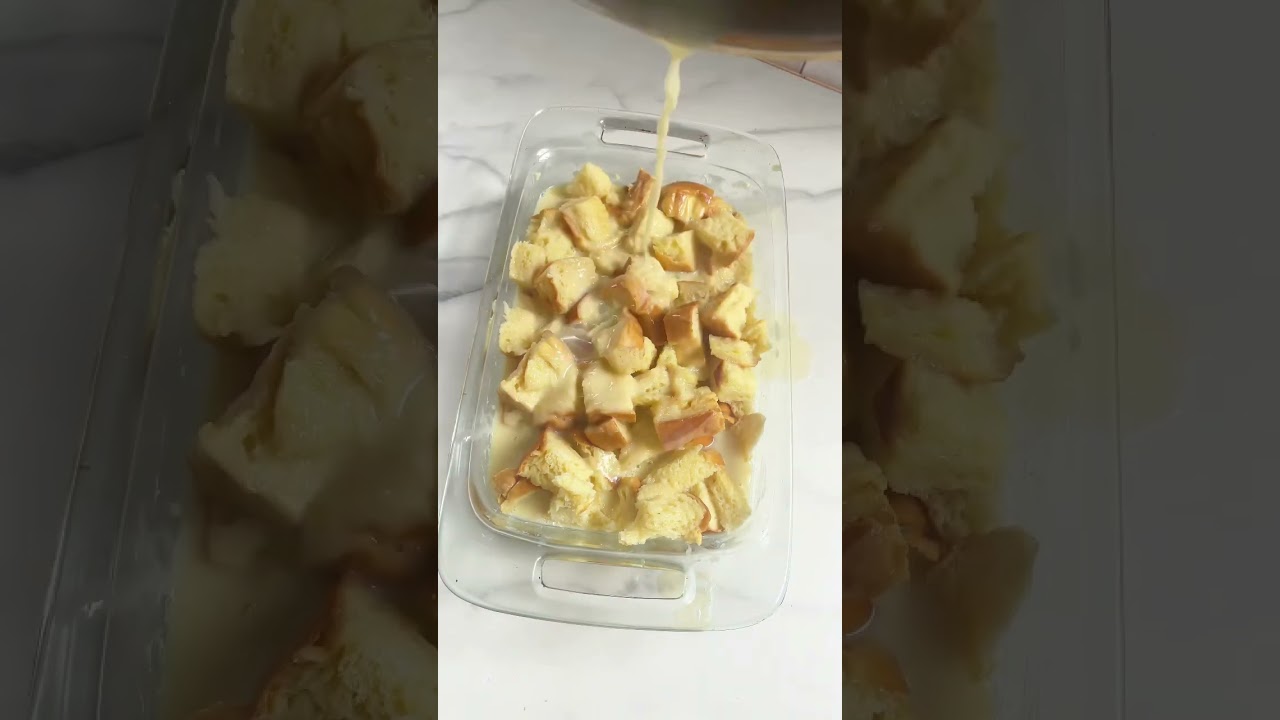
“Most bread pudding fails for one of two reasons: the bread wasn't dry enough before soaking, or the custard ratio was off and you baked liquid into submission instead of letting it set. The fix is embarrassingly simple — toast the bread first, nail the egg-to-milk ratio, and give the soak enough time to actually work. This recipe gets all three right.”
Why This Recipe Works
Bread pudding is a custard problem wearing a bread costume. The bread is structural scaffolding. The thing you're actually making is a baked egg-and-milk custard that happens to have croutons in it — and once you understand that, every decision in this recipe becomes obvious.
Why the Bread Has to Be Dry
Custard needs somewhere to go. When you soak fresh bread in an egg-milk mixture, the liquid hits an already-saturated sponge that can't absorb anything. The exterior turns to paste while the interior stays dry. The custard pools at the bottom of the dish and you end up baking a layer of wet bread sitting in a puddle of slowly scrambling egg.
Day-old bread — or bread you've deliberately dried in the oven — has open, dehydrated cell structure. When the custard hits it, the bread draws the liquid in capillary action, all the way to the center of each cube. Every bite ends up custardy from the outside in. The pre-toast step takes this further by firming the exterior crust, which gives each cube enough structural integrity to hold its shape through the bake instead of collapsing into a uniform mush.
Eight minutes at 350°F is the number. Beyond that, you're actually toasting the bread — which changes the flavor profile and creates a crust that resists absorption rather than accepting it.
The Custard Ratio
Four eggs to two and a half cups of milk gives you a set custard with a silky interior — firm enough to slice, tender enough to eat with a spoon. Go below this ratio and you're making wet bread. Go above it and you're making quiche. The coconut sugar adds structure alongside sweetness, the way all sugars do in baked custards — it interferes with protein coagulation slightly, keeping the texture from getting rubbery.
The ginger is not decorative. Fresh ginger contains proteases — enzymes that break down protein — but at the small quantity used here, the effect is minimal. What matters is the flavor: a half-teaspoon of grated ginger in a sweet, dairy-heavy baked dish does exactly what a pinch of salt does in caramel. It creates contrast that keeps the sweetness honest.
The Soak Is Active, Not Passive
Pouring custard over bread and expecting even absorption is wishful thinking. You have to press every cube into the liquid and hold it there. The manual pressure forces custard past the crust and into the crumb. A heavy-bottomed baking dish helps here — it retains heat evenly during baking and produces a consistent set from edge to center.
The 10-minute rest after baking is non-negotiable. Custard is a gel — it firms as it cools. Cut it hot and the structure hasn't formed yet. The pudding will hold a clean slice at 10 minutes post-oven. It won't at five. Set a timer and leave it alone.
Coconut Sugar and the Caramel Crust
Coconut sugar caramelizes at a lower temperature than white sugar because of its fructose content. This means the top of the pudding gets a deeper, more complex crust color before the interior has time to overbake. It's one of the few cases where a sugar substitute produces a better result than white sugar for structural reasons, not just health ones. The darker crust also amplifies the pecans — the contrast between the sweet caramelized surface and the slightly bitter toasted nut is what makes the top layer worth eating on its own.
The honey drizzle at serving is a finish, not a bake-in ingredient. Added before baking, honey caramelizes and concentrates into a sticky, cloying glaze. Drizzled on the warm-but-resting pudding, it flows into the crevices and stays bright and floral. Same ingredient, completely different result based on when it's applied.
Where Beginners Mess This Up
Before we start, read this. These are the 4 reasons your classic bread pudding (the custard ratio that changes everything) will fail:
- 1
Using fresh bread: Fresh bread is too moist to absorb the custard properly. It saturates from the outside while the center stays doughy, and it falls apart in the dish. Day-old bread — or bread you've deliberately dried out in the oven — has open, thirsty structure that soaks custard all the way through and holds its shape during baking.
- 2
Skipping the pre-toast step: Even day-old bread benefits from 8 minutes in a 350°F oven before soaking. It firms the exterior crust, which prevents total structural collapse, and concentrates the bread flavor through light Maillard browning. Recipes that skip this step produce a pudding that's texturally indistinct — wet all the way down with no contrast.
- 3
Not pressing the bread into the custard: Pouring custard over the bread and walking away is not soaking — it's hoping. You need to press each cube down with a spoon and let it absorb for at least 2 minutes before baking. Unsoaked pockets bake dry and pale while the rest of the pudding sets around them, leaving chalky bread islands in every slice.
- 4
Cutting it too soon: Bread pudding needs 10 minutes of resting time after it comes out of the oven. The custard is still liquid at the center when it exits the oven and sets during that rest. Slice immediately and it collapses into warm soup. Wait 10 minutes and it holds a clean edge.
The Video Reference Library
Want to see it in action? Here are the exact videos we analyzed and combined to build this foolproof recipe translation:
The source video for this recipe's technique. Clear walkthrough of the pre-toast step and custard pour that most home bakers skip.
🛠️ Core Equipment
- 8x8-inch baking dishThe depth-to-surface ratio of an 8x8 dish gives you the right balance of custardy interior and golden top crust. A larger dish spreads the pudding too thin and dries it out; a smaller dish leaves the center underbaked.
- Large mixing bowlYou need room to whisk the custard vigorously without splashing, and enough volume to confirm it's fully emulsified before pouring. A bowl that's too small means undermixed custard with pockets of raw egg.
- Rimmed baking sheetFor pre-toasting the bread cubes evenly. A rimmed sheet keeps the cubes from rolling off when you stir them halfway through.
- WhiskA fork will not fully emulsify four eggs into two and a half cups of milk. You need a proper whisk to break up the yolks completely and distribute them through the custard so every bite sets evenly.
Classic Bread Pudding (The Custard Ratio That Changes Everything)
🛒 Ingredients
- ✦6 cups cubed day-old whole wheat bread
- ✦4 large eggs
- ✦2 cups unsweetened almond milk
- ✦1/2 cup whole milk
- ✦1/3 cup coconut sugar
- ✦2 teaspoons vanilla extract
- ✦1 teaspoon ground cinnamon
- ✦1/2 teaspoon ground nutmeg
- ✦1/4 teaspoon sea salt
- ✦2 tablespoons unsalted butter, melted
- ✦1/4 cup chopped pecans
- ✦2 tablespoons raisins
- ✦1 tablespoon honey
- ✦1/2 teaspoon grated fresh ginger
👨🍳 Instructions
01Step 1
Preheat your oven to 350°F and grease an 8x8-inch baking dish with butter or cooking spray.
02Step 2
Spread the bread cubes on a rimmed baking sheet and bake for 8 minutes, stirring halfway through, until the exterior feels firm and dry to the touch.
03Step 3
Whisk together the eggs, almond milk, whole milk, coconut sugar, vanilla extract, cinnamon, nutmeg, sea salt, and fresh ginger in a large mixing bowl until the custard is completely smooth and the eggs are fully incorporated.
04Step 4
Transfer the toasted bread cubes to the prepared baking dish in an even layer.
05Step 5
Pour the custard mixture slowly over the bread cubes. Using the back of a spoon, press each cube down firmly into the custard and hold for a moment. Work across the entire surface for about 2 minutes until all cubes are saturated.
06Step 6
Scatter the chopped pecans and raisins evenly across the top.
07Step 7
Drizzle the melted butter over the entire surface and dust with an extra pinch of cinnamon.
08Step 8
Bake uncovered for 35 to 40 minutes, until the top is deep golden brown and a knife inserted in the center comes out with just a few moist crumbs — not wet custard.
09Step 9
Remove from the oven and let rest at room temperature for 10 minutes before cutting. The center will finish setting during this time.
10Step 10
Drizzle with honey immediately before serving. Portion while still warm.
Nutrition Per Serving
Estimates based on standard preparation. Adjustments alter macros.
🔄 Substitutions
Instead of Whole wheat bread...
Use Sprouted grain bread
Slightly nuttier flavor and better digestive tolerance. Sprouted grains have lower anti-nutrients and soak custard slightly faster — reduce soak pressing time by 30 seconds.
Instead of Coconut sugar...
Use Monk fruit sweetener or erythritol blend
Eliminates sugar spikes entirely. Slightly reduced sweetness perception — you may want to add an extra teaspoon of vanilla to compensate for the lost caramel depth.
Instead of Whole milk...
Use Cashew milk or oat milk
Oat milk adds fiber and produces a slightly thicker custard. Cashew milk is closer to whole milk in fat content and gives the most similar texture. Both work well.
Instead of Pecans...
Use Walnuts or sliced almonds
Walnuts bring omega-3s and a more assertive bitterness that balances the sweet custard. Almonds stay crunchier through the bake, giving a more pronounced textural contrast.
Instead of Raisins...
Use Chopped dried apricots or figs
Lower sugar concentration and higher fiber. Apricots add a bright tartness; figs add jammy depth. Both need to be chopped small or they create dense pockets in the custard.
🧊 Storage & Reheating
In the Fridge
Store covered in the baking dish or transferred to an airtight container for up to 4 days. The custard firms further as it chills — this is expected and not a sign it's overcooked.
In the Freezer
Freeze individual portions wrapped tightly in plastic wrap, then foil, for up to 2 months. Thaw overnight in the refrigerator.
Reheating Rules
Add a tablespoon of milk or almond milk over each portion before reheating, covered, at 300°F for 12-15 minutes. The added liquid replaces moisture lost to refrigerator evaporation. Microwave works but flattens the texture — use the oven when you can.
❓ Frequently Asked Questions
Why is my bread pudding soggy in the middle?
Either the bread wasn't dried out enough before soaking, or the pudding needed more time in the oven. The knife test is the reliable indicator — it should come out with a few moist crumbs, not wet custard. If it's already been in for 40 minutes and the center is still liquid, tent with foil and add 8-10 minutes.
Can I use white bread instead of whole wheat?
Yes. White sandwich bread produces a softer, more pillowy texture with less structural integrity — the whole thing will be more uniformly tender. Whole wheat gives you more chew and a slightly nuttier flavor. Both are correct; it's a style preference.
Do I have to use both almond milk and whole milk?
The whole milk is doing specific work here — its fat content helps the custard set with a silky texture. Pure almond milk custards can be slightly watery. If you want fully dairy-free, cashew milk or full-fat oat milk are closer substitutes than standard almond milk.
Can I make this the night before?
Yes, and it's actually better that way. Assemble the dish through step 7, cover tightly, and refrigerate overnight. Pull it out 20 minutes before baking to take the chill off, then bake as directed. The extended soak produces a more evenly custardy result than a 2-minute press.
Why is the top dark but the inside underdone?
Your oven is running hot, or the dish is on a rack that's too high. Move the rack to the center position and tent the top with foil after 25 minutes if it's browning too fast. The goal is a slow, even bake that sets the custard from the outside in.
What's the best sauce to serve with bread pudding?
Bourbon caramel is the American classic — the bitterness of the alcohol cuts the sweetness of the pudding. For a lighter option, a simple pour of cold heavy cream or vanilla Greek yogurt at room temperature works beautifully against the warm custard.
The Science of
Classic Bread Pudding (The Custard Ratio That Changes Everything)
We turned everything on this page into a beautiful, flour-proof PDF cheat sheet. Print it out, stick it to your fridge, and never mess up your classic bread pudding (the custard ratio that changes everything) again.
*We'll email you the high-res PDF instantly. No spam, just perfectly cooked meals.
AlmostChefs Editorial Team
We translate the internet's most popular cooking videos into foolproof, beginner-friendly written recipes. We analyze multiple methods, test them in our kitchen, and engineer a single "Master Recipe" that gives you the best possible result with the least possible stress.